
Side Dishes
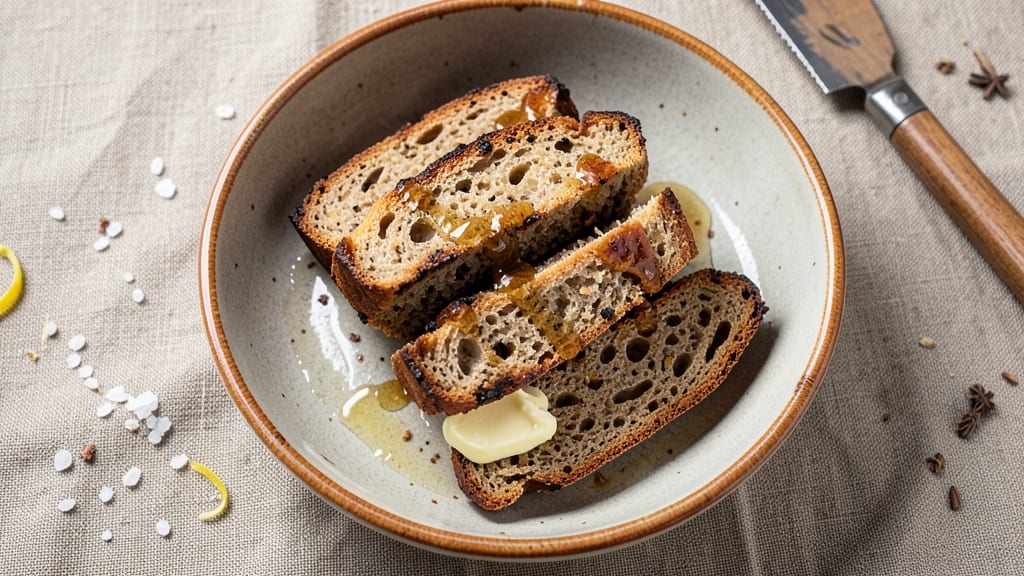
This 50/50 whole wheat sourdough bread delivers the perfect balance of rustic texture and nutty depth—ideal for sandwiches, toast, or serving alongside soups. The Dutch oven baking creates that signature crispy crust while keeping the interior tender and airy.
I developed this recipe after years of experimenting with whole wheat sourdough, refining it to ensure maximum flavor and texture without sacrificing ease.
The secret lies in the 50/50 ratio of whole wheat flour to all-purpose flour, which adds hearty nutrition without making the bread dense. A well-fed sourdough starter provides the tangy complexity, while proper kneading and proofing ensure a light, open crumb.
This method eliminates guesswork—just follow the steps, and you’ll achieve a loaf with a crisp exterior, soft interior, and satisfying chew.
Whether you're a seasoned baker or new to sourdough, this recipe is designed for success. The Dutch oven method simplifies baking, while the straightforward process ensures consistent results every time.
Once baked, the aroma alone will make your kitchen feel like a bakery. Ready to bake a loaf that rivals artisanal bread? Let’s get started.
Perfect for meal prep, gifting, or daily use, this bread stays fresh for days and freezes beautifully. The nutty flavor from whole wheat pairs well with butter, jam, or even as a side for hearty stews.
With just a few ingredients and patience, you’ll master a loaf that’s both wholesome and impressive.
Ingredients for 50 50 whole wheat sourdough bread
Nine ingredients, Dutch oven magic, and the perfect 50/50 flour blend for nutty, crispy sourdough.
| Ingredient | Amount | Notes |
|---|---|---|
| Active Sourdough Starter 🍞 | ½ cup | Unfed, 100% hydration, bubbly |
| Whole Wheat Flour 🌾 | 2 cups | Unbleached, stone-ground preferred |
| All-Purpose Flour 🌾 | 2 cups | Bread flour for better structure |
| Water 💧 | 1 ½ cups | Room temperature, filtered |
| Unsalted Butter 🧈 | ¼ cup | Cold, cubed, European preferred |
| Granulated Sugar 🍚 | 1 tbsp | White or raw cane |
| Diamond Crystal Kosher Salt 🧂 | 1 ½ tsp | Fine grain, 18% salt content |
| Honey 🍯 | 1 tbsp | Raw, unprocessed preferred |
| Extra-Virgin Olive Oil 🫒 | 1 tbsp | For dough handling |
The sourdough starter is non-negotiable—it must be active and bubbly, with a 100% hydration ratio for optimal fermentation. For the flours, King Arthur whole wheat and Bread Sifter's Choice all-purpose deliver consistent results, but any high-quality brands work. The butter should be European-style (like Plugrá) for higher fat content—this creates that signature tender crumb. If you can't find it, Land O'Lakes unsalted works in a pinch. Measure your flours by weight if possible (250g each) for precision, but volume works fine for home baking. The honey adds subtle sweetness while feeding the starter during proofing.
No whole wheat flour? Substitute with rye flour at the same ratio for deeper flavor, though texture will differ slightly. Short on butter? Olive oil or coconut oil can replace it, but reduce by 10% to account for moisture differences. The salt is critical—Diamond Crystal measures differently than Morton, so adjust if using another brand. For a sweeter loaf, maple syrup swaps one-for-one with honey. The olive oil should be fruity and peppery (like Colavita), not mild—it enhances dough elasticity. If your starter isn't ready, instant yeast at 1 tsp can substitute, but the flavor won't be authentic.
Store the starter in a glass jar with a loose lid in the fridge—it'll last indefinitely. The dough can be refrigerated overnight for deeper flavor, covered with a damp towel. Once baked, let the loaf cool on a wire rack for at least 2 hours to prevent sogginess. Wrap in beeswax wrap or foil for up to 5 days at room temperature, or freeze sliced and wrapped for 3 months. The crust stays crisp for 3 days if stored properly—slice just before serving for maximum freshness.
Why You'll Love This Recipe
- No-Knead Magic: I swear by this—just mix, let it rise, and walk away. The whole wheat and starter do the heavy lifting while you sip coffee or scroll through your phone. No stand mixer, no arm workout, just pure hands-off baking.
- Nutty Crust, Soft Core: That 50/50 flour blend gives it a chewy interior with a golden, buttery crust that cracks open like a fresh-baked baguette. Honestly, the butter in the dough seals the deal—it’s the kind of bread you’ll fight over at the table.
- Weeknight Workhorse: Toss a slice in a pan with eggs for breakfast, tear it over salads, or use it to soak up marinara like a sponge. Between us, I’ve even turned stale slices into croutons—zero waste, all flavor.
- Budget Bread, Big Payoff: Whole wheat flour’s cheaper than artisanal loaves, and a single batch stretches for days. Freeze half the dough for later, or stash slices in the freezer for toast that tastes homemade. My wallet and my lunchbox thank me weekly.
Step-by-step instructions for 50/50 whole wheat sourdough bread
Master this technique and you'll achieve a perfect balance of crisp crust and tender crumb with nutty depth.
Mix the Sourdough Starter and Hydrate the Flours
In a large mixing bowl, combine the 0.5 cup active sourdough starter with 1.5 cups room temperature water. Stir until fully incorporated, then add the 1 tbsp granulated sugar and 1 tbsp honey. Let this mixture sit for 5 minutes while you prepare the flours.
In a separate bowl, whisk together the 2 cups whole wheat flour and 2 cups all-purpose flour with the 1.5 tsp diamond crystal kosher salt. This dry blend should be completely homogeneous—no flour streaks should remain. The salt will dissolve completely during mixing, enhancing flavor distribution throughout the loaf.
Develop the Dough with Autolyse and Kneading
Pour the wet starter mixture into the dry flour blend and stir vigorously with a wooden spoon until a shaggy dough forms. Cover the bowl with a damp kitchen towel and let it rest for 30 minutes—this autolyse stage allows the gluten to begin developing while the whole wheat flour absorbs moisture.
After resting, add the 0.25 cup cold cubed unsalted butter and 1 tbsp extra-virgin olive oil to the dough. Using your hands, work the butter and oil into the dough until fully incorporated. Then turn the dough onto a lightly floured surface and knead for 8-10 minutes until smooth and elastic. The dough should spring back slowly when poked—this indicates proper gluten development for oven spring.
Bulk Fermentation with Stretch and Folds
Shape the dough into a loose ball, place it back in the bowl, and cover with the damp towel. Perform 3 sets of stretch and folds at 30-minute intervals during the 2-3 hour bulk fermentation at room temperature (70-75°F). For each set, wet your hands, grab one side of the dough, stretch it upward, and fold it over itself. Rotate the bowl and repeat on all sides.
During fermentation, the dough should increase by 50-75% in volume. You'll notice bubbles forming on the surface and a slight jiggle when the bowl is shaken gently. The whole wheat flour will contribute a slightly denser texture, but proper fermentation ensures good rise and open crumb structure. If your kitchen is cooler, extend fermentation up to 4 hours—the dough should pass the float test (when placed in water, it should float).
Shape and Final Proof in the Dutch Oven
Preheat your Dutch oven with lid in a 475°F oven for 45 minutes to ensure proper heat transfer. On a lightly floured surface, perform a tight boule shape by pulling the dough toward you in four directions and tucking it under. Seal the seam by pressing gently with your fingertips.
Transfer the shaped dough to a piece of parchment paper, cover with a clean kitchen towel, and let it proof for 45-60 minutes until it has risen by 50% and springs back slowly when poked. The surface should look slightly domed and feel firm to the touch. While proofing, prepare a baking sheet with a metal bowl filled with ice water—this creates steam for the baking process.
Bake for Crisp Crust and Open Crumb
Carefully transfer the dough (with parchment) into the preheated Dutch oven. Immediately pour 1 cup hot water from the kettle into the bottom of the Dutch oven, then quickly place the lid on. Bake covered for 30 minutes at 475°F, then remove the lid and bake uncovered for an additional 15-20 minutes until the crust is deep golden brown and sounds hollow when tapped on the bottom.
The internal temperature should reach 205-210°F at the center. The steam from the initial baking creates that signature open crumb structure while the Dutch oven traps heat for even baking. For extra crispiness, broil for 1-2 minutes at the very end if needed. Let the bread cool on a wire rack for at least 1 hour before slicing—this allows the crumb to set properly and prevents a gummy texture.
Pro Tips For Making 50 50 Whole Wheat Sourdough Bread
- Autolyse First: Mix the whole wheat flour and water alone for 30 minutes before adding starter and AP flour. I learned this the hard way—skipping it makes the dough dense and gummy, especially with whole wheat’s extra fiber. The wait pays off with a lighter crumb.
- Hydrate the Wheat: Whole wheat flour soaks up water like a sponge—add 10% extra (about 20g more per cup) to compensate. Under-hydrated dough sticks to your hands and won’t rise properly. Trust me, your future self will notice the difference.
- Shape Tightly: Whole wheat dough resists stretching, so fold it like a letter—tuck the edges firmly under and roll it into a tight log. Loose shaping leads to uneven oven spring and a sad, flat loaf. Yes, it takes a few tries to get the tension right.
- Dutch Oven Steam: Skip the steam if you’re lazy, but your crust will suffer. Place a metal bowl of boiling water in the cold oven, then slide in the dough. The burst of steam at 425°F (220°C) guarantees that crackly, bakery-style crust you’re craving. Worth the extra step.
Regional styles of this dish
Italian Rustic Style
In Italy, this 50/50 blend becomes Pane di Segale e Frumento—a rustic loaf often baked in wood-fired ovens. Italians traditionally use type 00 flour for the all-purpose portion and add 1 tbsp olive oil directly to the dough for extra richness.
For an authentic touch, sprinkle coarse sea salt and semolina on the dough before baking. The result? A crispier crust with a slightly chewy interior that pairs perfectly with tomato-based sauces or aged pecorino cheese. 🌾
French Baguette Twist
French bakers adapt this recipe by shaping it into a long batard instead of a boule.
Replace 1 cup of whole wheat flour with 1 cup bread flour for a lighter texture, then bake in a combi-steam oven at 450°F for 20 minutes with steam, then 250°F for 30 minutes to develop a thin, crisp crust.
Finish with a quick brush of melted butter and flaky sea salt for a baguette-like experience. Perfect for dipping in olive oil or serving with charcuterie. 🥖
German Whole Grain
German bakeries often use rye flour instead of whole wheat, but this 50/50 blend works beautifully for a Vollkornbrot (whole grain bread). Add 1 tsp caraway seeds and ½ tsp coriander to the dough for a traditional Dinkelbrot flavor.
Shape into a round loaf and bake in a stoneware pot at 425°F for 40 minutes with a water spray every 10 minutes for a moist, dense crumb. Serve with mustard or liverwurst for a classic pairing. 🌱
American Artisan Adaptation
In the U.S., this recipe often includes 1 tbsp honey replaced with maple syrup for a sweeter loaf, popular in New England bakeries. Add 1 tsp cinnamon and ½ cup raisins for a cinnamon raisin sourdough twist.
Bake in a cast-iron skillet for a crispier bottom crust. This version is a hit at farmers' markets and pairs well with apple butter or peanut butter. 🍂
Mexican Corn-Inspired
For a Mexican-inspired twist, replace ½ cup whole wheat flour with ½ cup masa harina (corn flour) and add 1 tsp cumin and ½ tsp smoked paprika to the dough. Shape into a round flatbread and bake at 450°F for 25 minutes with a corn husk underneath for extra crispiness.
Serve with salsa verde or queso fresco for a fusion favorite. 🌶️
Scandinavian Seed Boost
Nordic bakers enhance this loaf with 2 tbsp mixed seeds (sunflower, flax, and pumpkin) and 1 tsp fennel seeds for a Scandinavian-style rugbröd. Shape into a thick round and bake at 400°F for 35 minutes with a steam tray underneath.
The seeds add crunch and nutrition, making it a perfect open-faced sandwich bread. Pair with smoked salmon or herbed cream cheese. 🌽
Nutrition facts
Frequently asked questions
Why does this recipe use a 50/50 flour blend instead of 100% whole wheat?
Whole wheat flour absorbs more water and lacks the gluten structure of all-purpose flour, which can make bread dense. The 50/50 blend balances nutrition with texture—you get the hearty flavor and fiber of whole wheat while maintaining a light, airy crumb. This ratio also makes the dough easier to handle during shaping and proofing.
Can I substitute bread flour for all-purpose in this recipe?
Yes! Bread flour has more protein for better gluten development, which helps compensate for whole wheat's density. Replace the all-purpose flour with bread flour for a slightly taller rise and crispier crust. Just reduce the water by 1 tablespoon since bread flour absorbs less moisture.
How do I know when my sourdough starter is ready for this recipe?
Your starter should be bubbly, doubled in size, and have a slightly tangy aroma. For best results, use a starter that's been fed 4-6 hours before mixing. If it's sluggish, try feeding it with equal parts flour and water 2-3 times before baking day to boost activity.
Why did my bread turn out dense instead of light and airy?
Dense bread usually means underproofed dough or insufficient gluten development. Try kneading longer (10-12 minutes) and extending bulk fermentation by 1 hour at room temperature. Also ensure your starter is active—weak fermentation is the #1 cause of dense sourdough. For whole wheat bread, a slightly denser crumb is normal, but it shouldn't be rock-hard!
Can I bake this without a Dutch oven?
Use a heavy oven-safe pot with a lid or even a pizza stone. For steam, place a metal bowl of boiling water on the lower rack while baking. The crust won't be as crispy, but you'll still get a good rise and flavor. If using a stone, bake at 450°F for 20 minutes with steam, then 425°F for 25-30 minutes uncovered.