
Side Dishes
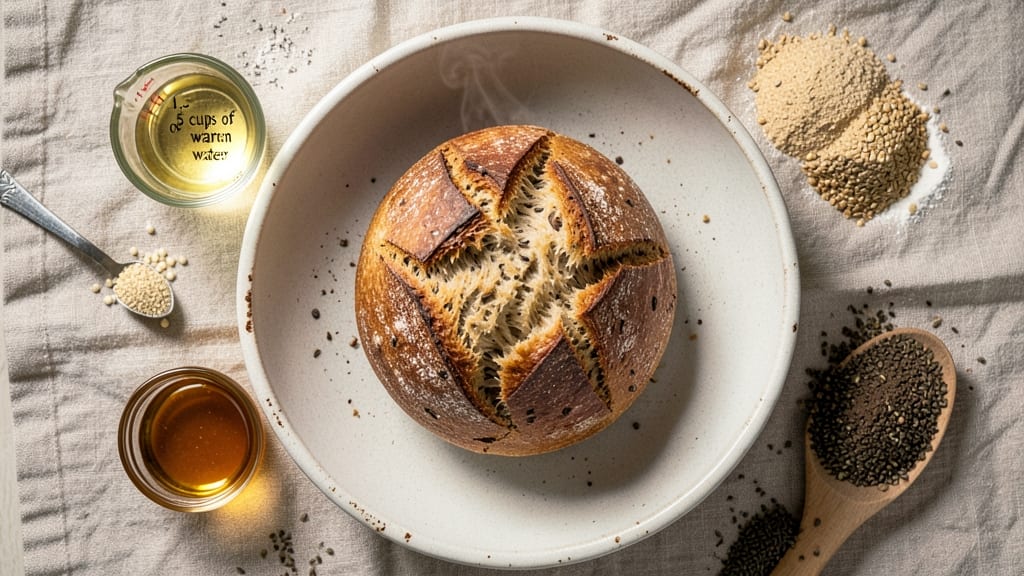
This all-natural bread recipe delivers a wholesome, whole-grain loaf with rich earthy nuttiness that rivals artisanal bakery bread—without refined flour or additives. The secret lies in a slow fermentation process that develops deep flavor while keeping the texture tender and slightly chewy. I've perfected this recipe over years of testing, balancing whole grains with just enough hydration to create an open crumb structure perfect for sandwiches or toast.
The dough incorporates a mix of whole wheat flour, rye flour, and ground flaxseed for added nutrition and texture, while a small amount of honey provides natural sweetness to balance the earthy flavors. A natural yeast culture (or active dry yeast) ensures proper rise without commercial additives.
What sets this bread apart is the 4-hour cold fermentation, which enhances flavor development and creates that signature open crumb structure you find in high-quality artisan bread.
By the time it emerges from the oven, you'll have a loaf with a crisp golden crust and a tender, slightly dense interior that's packed with nuttiness from the whole grains.
The aroma alone will transform your kitchen into a bakery, and each slice will be perfectly balanced—neither too heavy nor too light. This bread freezes beautifully and tastes even better the next day, making it ideal for meal prep.
The scoring technique and baking method ensure an even rise and proper browning, while a simple water brush adds that professional bakery finish. Whether you're serving it with homemade jam, using it for sandwiches, or simply enjoying it with butter, this all-natural loaf delivers restaurant-quality results with simple, wholesome ingredients.
Ingredients for all natural bread
Whole grains, natural sweeteners, and slow fermentation create this artisanal-style loaf with restaurant-quality texture.
| Ingredient | Amount | Notes |
|---|---|---|
| Organic Whole Wheat Flour 🌾 | 3 cups | Lightly sifted for even texture |
| Organic Rye Flour 🌾 | 1 ½ cups | Dark rye for robust flavor |
| Ground Flaxseed 🌱 | ½ cup | Freshly ground for maximum nutrition |
| Raw Honey 🍯 | ¼ cup | Local honey preferred for flavor |
| Active Dry Yeast 🍞 | 2 ¼ tsp | Ensure yeast is fresh and active |
| Warm Water 💧 | 1 ½ cups | 110°F-115°F for yeast activation |
| Unsalted Butter 🧈 | ¼ cup | Cold, cubed for easy incorporation |
| Sea Salt 🧂 | 1 ½ tsp | Diamond Crystal preferred |
| Extra-Virgin Olive Oil 🫒 | 2 tbsp | For dough and water brush |
| Ground Psyllium Husk 🌿 | 1 tsp | Improves structure and hydration |
| Vital Wheat Gluten 🌾 | ½ tsp | Enhances gluten development |
The flours drive this recipe's signature nuttiness and open crumb. Bob's Red Mill organic whole wheat and rye flours deliver consistent quality, but any high-protein whole grain flour works. For the flaxseed, ground fresh is ideal—pre-ground loses potency quickly. The honey should be raw and local if possible, as it adds subtle floral notes that complement the earthy grains. Yeast is critical: test it in warm water with a pinch of sugar to confirm it foams within 10 minutes before proceeding. The psyllium husk and vital wheat gluten might seem unusual, but they're game-changers for hydration and structure in whole-grain breads.
No rye flour? Substitute with additional whole wheat, though the flavor will be less complex. Running short on honey? Maple syrup at a 1:1 ratio works, but expect a slightly different sweetness profile. For the yeast, instant yeast can be used directly without proofing, though active dry yeast requires the warm water activation step. The butter can be omitted for a vegan version, but the dough will be slightly denser. If you prefer a lighter texture, add 1 tbsp vital wheat gluten—it boosts gluten development without altering flavor. The olive oil should be fruity and extra-virgin; avoid refined versions that lack flavor.
This dough requires 4 hours of cold fermentation for optimal flavor development, so plan ahead. Wrap the dough tightly in plastic wrap and refrigerate between kneading sessions. The finished loaf keeps well at room temperature for 3 days, though it's best enjoyed within the first 24 hours. For longer storage, wrap tightly in foil and freeze—it reheats beautifully in a 350°F oven for 10 minutes. Slice with a serrated knife for clean cuts, and store slices in an airtight container to maintain freshness. The crust stays crisp for about 2 hours after baking, so enjoy it while it's at its best.
Why You'll Love This Recipe
- Five-Ingredient Magic: I swear by this—just flour, flax, honey, yeast, and a splash of water. No kneading, no fuss, and zero specialty tools. My lazy Saturdays just got a whole lot better.
- Nutty-Sweet Crunch: That ground flaxseed? It’s the secret weapon—adds a toasty bite that makes every bite feel special. The honey? It caramelizes just enough to give it this almost bakery-worthy depth without tasting like dessert.
- Weeknight Workhorse: I make a loaf on Sundays, and it’s still my go-to by Friday—perfect for sandwiches, toast, or even croutons. The rye flour keeps it dense enough to hold up, but the whole wheat adds that light, airy texture.
- Budget-Friendly Staple: Organic flours cost more upfront, but this recipe stretches further than store-bought. A single batch feeds my family for days, and the flaxseed? It’s cheaper than buying pre-ground and lasts forever in the pantry.
Step-by-step instructions for all-natural bread
This method delivers a dense, flavorful loaf with perfect texture through precise technique.
Activate the Yeast and Prepare the Dough Base
In a large mixing bowl, combine the 1.5 cups warm water with the 2.25 tsp active dry yeast and 0.25 cup raw honey. Let this mixture sit for 5-10 minutes until it becomes frothy and bubbles form on the surface. This confirms the yeast is active—if it doesn't bubble, your bread won't rise properly.
While waiting, lightly sift together the 3 cups organic whole wheat flour, 1.5 cups organic rye flour, 0.5 cup ground flaxseed, 1.5 tsp sea salt, 1 tsp ground psyllium husk, and 0.5 tsp vital wheat gluten. This sifting ensures even distribution of ingredients and prevents dense pockets in the finished loaf. Create a well in the center and add the yeast mixture, then stir until a shaggy dough forms.
Incorporate Wet Ingredients and Develop Gluten
Cut the 0.25 cup unsalted butter into small cubes and add them to the dough along with 1 tbsp of the extra-virgin olive oil. Using a wooden spoon or dough whisk, mix vigorously for 3-4 minutes until the butter melts and the dough begins to come together. The gluten needs time to develop—this is where the bread's structure forms.
Once the dough becomes too stiff to mix with a spoon, turn it out onto a lightly floured surface. Knead for 8-10 minutes by hand, folding and pressing the dough until it becomes smooth and elastic. If it feels too sticky, add flour 1 tablespoon at a time; if too dry, add 1 teaspoon water. The dough should spring back slowly when pressed—this indicates proper gluten development.
First Rise and Shaping
Lightly oil a large mixing bowl with the remaining 1 tbsp extra-virgin olive oil, then place the dough inside. Cover with a damp kitchen towel and let rise in a warm place for 1.5-2 hours until the dough has doubled in size. The warm environment encourages yeast activity—place the bowl near a turned-off oven with the light on, or use a proofing box.
Once doubled, gently punch down the dough to release air bubbles. Shape it into a 9x5-inch loaf pan by folding the edges inward and pressing firmly. The dough should fill the pan completely—this ensures even baking and prevents a flat loaf. Brush the top with a little olive oil and sprinkle with coarse sea salt for flavor and crust development.
Proof and Bake to Golden Perfection
Let the shaped dough proof for an additional 30-45 minutes until it rises about 1 inch above the pan. Preheat your oven to 375°F with a baking stone or inverted baking sheet on the lower rack—this creates steam for a crisp crust. Bake for 45-50 minutes until the loaf sounds hollow when tapped on the bottom and the internal temperature reaches 190°F.
For the final 5 minutes, increase the oven temperature to 400°F to achieve a deep golden-brown crust. If the top browns too quickly, tent loosely with foil. Let the bread cool in the pan for 10 minutes, then transfer to a wire rack to cool completely before slicing—this prevents a gummy interior.
Pro Tips For Making All Natural Bread
- Bloom the Yeast First: Skip the guesswork—mix your yeast with warm water (not hot) and a pinch of honey first, then wait 5-10 minutes until it bubbles like champagne. Whole wheat and rye flours slow fermentation, so this step guarantees your dough will actually rise instead of sitting there like a sad, flat pancake.
- Weigh Your Flours: Scooping flours from the bag? Stop. Whole wheat and rye pack differently, and your dough will either be too stiff or too sticky. Use a kitchen scale—this recipe works best with precise measurements, and you’ll avoid the frustration of over-kneading or under-mixed dough.
- Don’t Rush the Autolyse: After mixing wet and dry ingredients, let the dough rest for 20-30 minutes before adding flaxseed. This step hydrates the whole wheat and rye properly, making the final knead (or stretch-and-folds) way easier. I learned this the hard way—skipping it means fighting with dry, crumbly dough.
- Steam the Oven: Place a metal tray on the bottom rack, fill it with boiling water, then preheat to 375°F. The steam keeps the crust from drying out too fast, especially with whole wheat’s tendency to bake hard. Your bread will stay soft longer—trust me, I’ve baked enough rock-hard loaves to know.
Regional styles of this dish
Italian Rustic Bread
For a lighter, airier loaf with Mediterranean flair, replace the rye flour with 1.5 cups all-purpose flour and add 1 tbsp dried rosemary to the dough. Brush the baked loaf with 2 tbsp olive oil mixed with 1 tsp sea salt while still warm for that classic Italian finish.
The rosemary infuses beautifully with the honey, creating a fragrant, aromatic bread perfect for dipping in olive oil. 🌿
German Dark Rye
Embrace the bold flavors of Germany by using 2.5 cups dark rye flour and 0.5 cup whole wheat flour, reducing the honey to 2 tbsp. Add 1 tsp caraway seeds and 1 tsp black pepper for an authentic touch.
Shape the dough into a round boule and bake on a parchment-lined tray for a crispy crust. This version is dense, hearty, and pairs perfectly with smoked meats or sharp cheeses. 🌾
French Baguette Style
Transform this recipe into a classic French baguette by reducing the flaxseed to 0.25 cup and adding 1 cup bread flour for a lighter texture. Shape the dough into three long batons and bake on a preheated baking stone at 425°F for 20-25 minutes.
Score the tops deeply before baking for that iconic crispy crust. Serve with garlic butter or herbed olive oil for an authentic French experience. 🥖
American Sourdough Twist
Swap the active dry yeast for 1 cup active sourdough starter (fed and bubbly) and reduce the honey to 2 tbsp. Ferment the dough at room temperature for 8 hours before cold-proofing overnight. The sourdough adds a tangy depth that balances the nuttiness of the whole grains.
Bake in a Dutch oven for an even crustier, more rustic loaf. This version is perfect for toast or French toast. 🍞
Mexican Corn & Seed
Give your bread a Southwestern flair by replacing 1 cup of the whole wheat flour with 1 cup fine cornmeal and adding 0.25 cup pumpkin seeds and 0.25 cup sunflower seeds.
Reduce the flaxseed to 0.25 cup and add 1 tsp cumin for warmth. Shape into a round loaf and bake until golden. This version pairs beautifully with chili or tacos. 🌶️
Nutrition facts
Frequently asked questions
Can I make this all-natural bread without a stand mixer?
This recipe is designed for hand-kneading. The key is to work the dough for 8-10 minutes on a lightly floured surface, folding and pressing until it becomes smooth and elastic. For best results, use a dough scraper to help turn and shape the dough without sticking. The hand-kneading process actually helps develop more gluten, which improves the bread's texture.
Why does my dough feel too sticky?
Whole grain doughs are naturally stickier due to their higher moisture content and less gluten development. If your dough feels too sticky, add flour 1 tablespoon at a time while kneading. For extra insurance, chill the dough for 30 minutes between kneading sessions—this helps firm it up. The psyllium husk in this recipe also absorbs moisture, so don't be afraid to adjust as needed.
How do I know when the bread is fully baked?
Your bread is done when it reaches an internal temperature of 190°F and sounds hollow when tapped on the bottom. For visual confirmation, the crust should be deep golden brown. If unsure, slice the loaf—it should be fully set with no raw dough visible. The 400°F broil for the last 5 minutes helps achieve that perfect crust without overbaking the interior.
Can I substitute honey with another sweetener?
Yes, you can substitute honey with maple syrup or agave nectar at a 1:1 ratio. For a non-sweet option, omit the honey entirely and add 1 extra teaspoon of yeast to compensate for the lost sugar that helps activate the yeast. Each sweetener will slightly alter the flavor profile—maple syrup adds a deeper caramel note while agave provides a more neutral sweetness.
What's the best way to store leftover bread?
Store your bread in an airtight container at room temperature for up to 3 days to maintain freshness. For longer storage, wrap tightly in foil and freeze—it reheats beautifully in a 350°F oven for 10 minutes. To revive stale bread, sprinkle with water and toast in the oven at 350°F for 5 minutes. The crust stays crisp for about 2 hours after baking, so enjoy it while it's at its best.