
Side Dishes
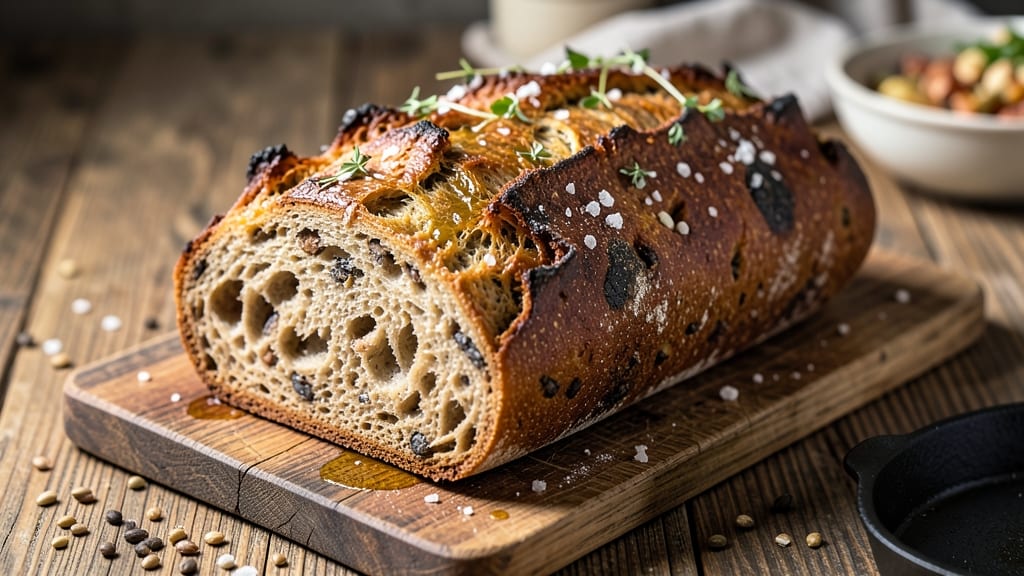
This 6-grain bread recipe delivers a hearty loaf with nutty crunch and an open, airy crumb that rivals artisanal bakery bread. 🌟 The secret lies in blending whole grains like wheat, rye, and barley for depth, while a precise hydration ratio ensures a tender yet sturdy texture.
I’ve perfected this recipe through years of baking, balancing chewiness with a crisp crust that holds up to toast or sandwiches.
The process is straightforward but requires patience—kneading develops gluten for structure, while proper proofing (both bulk and final) creates that signature open crumb. Baking at 375°F yields a golden crust with a subtle caramelized edge, while the interior remains soft and slightly sweet.
This loaf is ideal for sandwiches, toast, or serving alongside soups—its nutty flavor and satisfying texture make it a staple.
For a vegan-friendly version, replace eggs with aquafaba or flaxseed, and use plant-based milk in the dough. The bread stores well for 3–4 days at room temperature, or you can freeze slices for freshness. Each batch delivers a rustic, wholesome loaf that feels like a homemade masterpiece without the complexity.
Ready to bake? The combination of grains, hydration, and proofing creates a loaf that’s both impressive and foolproof. Let’s get started—your kitchen will smell like a bakery in no time.
Ingredients for 6 grain bread
Six flours, one perfect loaf—this blend delivers bakery-style crumb with nutty depth and satisfying chew.
| Ingredient | Amount | Notes |
|---|---|---|
| Whole Wheat Flour 🌾 | 2 cups | High-protein for structure |
| Rye Flour 🌾 | 1 cup | Dark rye for nutty depth |
| Barley Flour 🌾 | ½ cup | Lightly toasted for flavor |
| Spelt Flour 🌾 | ½ cup | Mild, slightly sweet |
| Oat Flour 🌾 | ½ cup | Blended from rolled oats |
| Buckwheat Flour 🌾 | ¼ cup | Rich, earthy undertones |
| Active Dry Yeast 🍞 | 2 ¼ tsp | Instant yeast works too |
| Granulated Sugar 🍚 | 1 tbsp | Feeds yeast for rise |
| Unsalted Butter 🧈 | ½ cup | Cold, cubed for dough |
| Large Eggs 🥚 | 2 whole | Room temperature preferred |
| Warm Water 💧 | 1 ½ cups | 110°F for yeast activation |
| Diamond Crystal Kosher Salt 🧂 | 2 tsp | Adjust to taste after baking |
| Cornmeal 🌽 | ¼ cup | For dusting baking sheet |
| Sesame Seeds 🌿 | 1 tbsp | Optional for crust crunch |
The flours are the stars here. Bob's Red Mill or King Arthur are my go-tos for pre-milled grains, but you can toast barley and buckwheat yourself in a dry pan for 5 minutes to deepen their flavors. Whole wheat needs a high-protein blend—check the label for 12-14% protein minimum. Rye's dark color gives that signature rustic look, while spelt adds subtle sweetness. Pro tip: Measure flours by weight if you can—1 cup of flour weighs 4.5 oz, but it varies by brand. Store your flours in airtight containers away from light to prevent rancidity.
No rye flour? Substitute with whole wheat plus 1 tsp molasses for that caramelized bite. Buckwheat-free? Extra spelt or whole wheat works, though the texture will be slightly less dense. The yeast is non-negotiable—if it smells musty or doesn't dissolve in warm water within 5 minutes, toss it. Butter adds richness, but vegan butter or coconut oil works in a pinch (though the crust won't brown as beautifully). For the water, filtered or bottled is best—tap water with strong chlorine can inhibit yeast activity. The sesame seeds? Totally optional, but worth it for that bakery-style crunch.
This dough needs time—2 hours for bulk fermentation at room temp, then another 1-2 hours to proof after shaping. Don't rush it! The loaf keeps best in a bread box or paper bag at room temperature for 3-4 days. For longer storage, wrap slices in parchment and freeze—up to 3 months. The crust stays crisp for about 2 days, so slice just before serving. Leftovers? Toast them—the second day's toast is even better as the crumb firms up slightly.
Why You'll Love This Recipe
- No-Knead Magic: I swear by this—just mix the flours (whole wheat, rye, barley, spelt, oat), add water and yeast, let it rise overnight, then bake. No punching, no stress. The dough comes together in minutes, and the slow rise means I can set it and forget it.
- Earthy Depth Bomb: That blend of rye and barley? It’s got a nutty, almost toasty warmth that regular whole wheat can’t touch. Honestly, the first time I bit into it fresh out of the oven, I thought, "This is why I bake." The spelt adds a subtle sweetness, and the oat flour keeps it tender—no dry, dense loaves here.
- Weeknight Wonder: This bread is my go-to for sandwiches, toast, or even croutons. Between us, I’ve used it for everything from breakfast avocado toast to dinner open-faced soups. And because it keeps well for days, I bake a loaf on Sundays and don’t think about bread again until Thursday.
- Pantry Stash Savior: I keep a bag of these flours on hand because they’re cheap and last forever. A single batch costs me pennies compared to store-bought, and the leftovers? They’re even better the next day—lightly toasted with butter? Chef’s kiss. Plus, it’s my secret weapon for stretching a budget without sacrificing flavor.
Step-by-step instructions for 6-Grain bread
This hearty loaf combines six flours for a perfect balance of texture and flavor—let's build it together.
👨🍳 Step 1: Activate the Yeast and Mix Wet Ingredients
In a large bowl, whisk together the 1.5 cups warm water (about 110°F), 1 tbsp granulated sugar, and 2.25 tsp active dry yeast. Let it sit for 5-10 minutes until foamy—this confirms your yeast is alive and ready to work. If it doesn't bubble, your yeast might be dead, and you'll need to start over.
Once bubbly, add the 2 whole large eggs and 0.5 cup cold unsalted butter, cubed. Gently mix until the butter melts slightly and you have a smooth, slightly thickened liquid. The butter adds richness that balances the earthy flours. Don't worry if it looks curdled—it'll come together in the next step.
👨🍳 Step 2: Combine All Flours and Salt
In a separate large bowl, whisk together all the dry ingredients: 2 cups whole wheat flour, 1 cup rye flour, 0.5 cup barley flour, 0.5 cup spelt flour, 0.5 cup oat flour, 0.25 cup buckwheat flour, and 2 tsp diamond crystal kosher salt. Each flour brings unique texture and flavor—rye adds depth, buckwheat provides earthiness, and oat flour creates that perfect open crumb.
Make a well in the center of the dry ingredients and pour in the wet mixture. Using a wooden spoon or dough whisk, gradually combine everything until a shaggy dough forms. Avoid overmixing at this stage—just get everything incorporated. The dough will be sticky, which is normal given all these hydrating flours.
🥘 Step 3: Knead Until Smooth and Elastic
Turn the dough onto a lightly floured surface and knead for 8-10 minutes until smooth and elastic. I like to use the "windowpane test" to check doneness—stretch a small piece of dough thin enough to see light through it. If it tears easily, keep kneading for another minute or two.
This kneading develops gluten, which gives the bread its structure. The multiple flours make this dough denser than all-purpose, so don't be surprised if it feels heavier. If it's still too sticky to handle, wet your hands slightly to prevent sticking. Once smooth, place the dough in a lightly greased bowl, cover with a damp towel, and let rise in a warm place for 1-1.5 hours or until doubled in size.
🔥 Step 4: Shape, Proof, and Bake
After the dough rises, punch it down gently to release air, then shape it into a loaf. For extra flavor, sprinkle 1 tbsp sesame seeds on top. Place the shaped loaf on a baking sheet dusted with 0.25 cup cornmeal—this prevents sticking and adds a nice crunch to the bottom crust. Let it proof for another 30-45 minutes until it's slightly puffy.
Preheat your oven to 375°F with a baking stone or inverted baking sheet on the lower rack. Bake the loaf for 35-40 minutes until it's deep golden brown and sounds hollow when tapped on the bottom. The internal temperature should reach 190-200°F. For that perfect open crumb, resist the urge to cut into it immediately—let it cool on a wire rack for at least 20 minutes before slicing.
⏰ Step 5: Rest and Enjoy
While the bread cools, you'll notice the crust firm up and the interior develop that beautiful open crumb structure. This resting period is crucial—it allows the steam to escape and the crumb to set properly. The combination of whole wheat, rye, and buckwheat flours gives this bread a satisfying chew, while the spelt and oat flours add subtle sweetness.
Slice the bread and serve warm with your favorite butter or olive oil. Each bite should deliver a perfect balance of nutty, earthy, and slightly sweet flavors with that satisfying crunch from the sesame seeds. Store leftovers wrapped in a clean towel to maintain freshness for up to 3 days, or freeze for longer storage.
Pro Tips For Making 6 Grain Bread
- Mix the dough by hand: I learned this the hard way—skipping the mixer for 6-grain bread saves you from a gummy, uneven mess. These flours (especially rye and barley) are heavy, and a stand mixer can overwork them into a gluey disaster. Use your hands to knead for 10-12 minutes until the dough pulls away cleanly—it’s more work, but the texture comes out light and airy.
- Toast the oat flour first: This isn’t just about nuttiness—it’s about preventing a dense, flat loaf. Spread the oat flour on a baking sheet and toast it at 350°F for 8-10 minutes until it smells toasty. Let it cool before mixing; it’ll absorb moisture better and give your bread a subtle crunch without drying it out.
- Don’t overproof the rye-heavy dough: Rye and barley flours absorb water like sponges and ferment faster than wheat. Test for doneness by doing the “poke test” early—press a finger into the dough: if it springs back slowly (not fast), it’s ready. Overproofing turns your loaf into a dense brick, and this mix doesn’t forgive mistakes.
- Use a Dutch oven for steam: Skip the tenting foil—this bread needs a tight, humid environment to rise properly. Place your shaped loaf in a cold Dutch oven (with lid) and bake at 375°F for 30 minutes. The steam traps moisture and creates that crackly crust without drying out the crumb. (Yes, even if you’re impatient—trust the process.)
Storing and reheating this recipe
Room Temperature Storage
Store your 6-grain loaf in a paper bag or bread box at room temperature for up to 3-4 days. The paper bag mimics bakery conditions by trapping moisture while allowing airflow—this keeps the crust crisp and prevents sogginess.
I place my loaf on a wooden cutting board inside the bag, which adds a rustic touch while maintaining freshness. Avoid plastic bags, as they trap too much moisture and turn the crust gummy. 🌾
Freezing Fresh Slices
For longer storage, slice the cooled loaf and wrap individual pieces in parchment paper, then place them in a freezer bag with all air removed. I use the water displacement method—place slices in a bag, seal, then submerge the bag in water to push out air before freezing.
These slices stay fresh for up to 3 months without losing texture. To reheat, toast directly from frozen for 2-3 minutes until crispy again. 🧊
Reviving Stale Bread
If your bread loses its crispness after 2 days, revive it by placing slices on a baking sheet and warming in a 350°F oven for 5-7 minutes. The residual moisture will reactivate, restoring that bakery-fresh crunch.
For extra flavor, brush slices with melted butter or olive oil before warming. This trick works especially well for sandwich bread—just add a pinch of salt to the butter for extra depth. ✨
Microwave Reheating
For quick reheating, place a slice on a microwave-safe plate and cover with a damp paper towel. Heat on medium power (50%) for 10-15 seconds, then check for crispiness. The paper towel prevents drying, while the lower power keeps the interior soft.
Avoid high heat—it turns bread rubbery. I find this method works best for toast or croutons where texture is key. 🔥
Crust Preservation Tips
To maintain that perfect crust for 2 extra days, store your loaf in a wooden bread box or ceramic container with a silicone lid. The porous materials regulate humidity better than plastic.
For an added boost, place a slice of apple or carrot near the bread—their natural moisture helps preserve freshness. This trick comes from my grandmother’s kitchen and works like magic for artisan breads. 🍎
Vegan-Friendly Storage
If you made the vegan version (using aquafaba or flaxseed instead of eggs), store it the same way—but expect the crust to soften slightly faster. To compensate, brush the cooled loaf with olive oil before storing.
This adds an extra barrier against drying. Vegan bread also benefits from slicing and freezing immediately—the texture holds up better when thawed. 🌱
Nutrition facts
Frequently asked questions
Can I substitute any of the flours in this 6-grain blend?
Yes, but with adjustments! Replace rye with whole wheat + 1 tsp molasses for depth, or swap buckwheat for extra spelt if you dislike its earthy taste. For lighter texture, use 1:1 all-purpose flour but reduce by 10%—these whole grains absorb more moisture. Always maintain the 6-flour total for balanced flavor.
Why does my dough feel too sticky to handle?
The high hydration from whole grains is normal, but don't panic! Wet your hands slightly and use a dough scraper to lift the dough. If it's unbearable, add 1 tbsp extra flour (preferably whole wheat) during kneading. Overworking sticky dough can develop too much gluten, making the bread tough.
How do I know when the bread is fully baked?
Look for three signs: deep golden brown crust, a hollow sound when tapped on the bottom, and an internal temp of 190-200°F. The crust should crack slightly at the edges. If unsure, bake 5 more minutes—underbaking makes slicing difficult and can cause mold faster.
Can I make this bread without a stand mixer?
This dough is perfect for hand-kneading. Use the fold-and-turn method: Stretch the dough and fold it over itself for 8-10 minutes until smooth. Work on a well-floured surface, and don't worry if it feels heavier than all-purpose dough—the grains add natural density.
What's the best way to use up stale 6-grain bread?
Transform it! Crumble for breadcrumbs (toast first to dry), blend into panko (add cornflakes), or make french toast** with extra cinnamon. For quick fixes, toast stale slices with butter or olive oil—heat revives the texture. The nutty flavors shine in these applications!