
Side Dishes
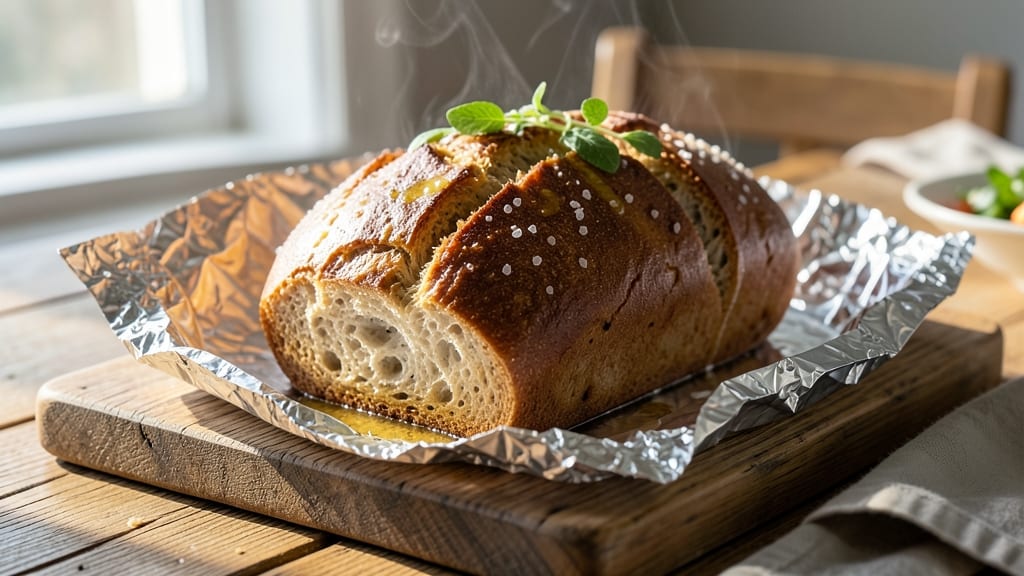
This 6-ingredient bread recipe transforms your kitchen into a bakery with minimal effort and no kneading required. The secret lies in a simple foil trick that creates a crusty exterior and airy crumb without specialized tools or experience.
After years of perfecting this method, I’ve developed a foolproof approach that delivers restaurant-quality bread using just pantry staples.
The magic happens with a no-knead dough that develops flavor overnight, while the foil technique ensures a crispy crust without a Dutch oven. This method is ideal for beginners—no yeast calculations, no complicated steps, just mix, rest, and bake.
The result? A loaf with a golden, shatteringly crisp crust and a soft, open crumb that rivals artisanal bakery bread.
What makes this recipe stand out is its simplicity: six ingredients, one bowl, and 30 minutes of active time. The dough ferments slowly, developing deep flavor, while the foil baking method guarantees a perfect rise and crust every time.
Whether you're feeding a family or treating yourself, this bread delivers professional results with minimal effort.
Store leftovers at room temperature for up to 3 days or freeze for longer storage. For variations, try adding herbs to the dough or brushing the crust with garlic butter before baking.
The possibilities are endless, but the foundation remains the same: crusty, flavorful bread with no fuss. Let’s get started!
Ingredients for 6 ingredient bread
Six pantry staples transform into restaurant-quality bread with this foolproof foil technique.
| Ingredient | Amount | Notes |
|---|---|---|
| All-Purpose Flour 🌾 | 4 cups | Unbleached preferred for better texture |
| Instant Yeast 🍞 | ½ tsp | Active dry works at same amount |
| Granulated Sugar 🍚 | ½ tsp | Feeds yeast for fermentation |
| Salt 🧂 | 1 ½ tsp | Diamond Crystal preferred |
| Water 💧 | 1 ½ cups | Lukewarm (105-110°F) |
| Aluminum Foil 📄 | 1 sheet | Heavy-duty for crisp crust |
The flour is non-negotiable here—King Arthur or Gold Medal deliver consistent results. Bulk bins at Whole Foods offer the freshest options, but any unbleached all-purpose works. Yeast potency matters: if your jar is over six months old, test it first. For the water, lukewarm is critical—too hot kills yeast, too cold slows fermentation. Measure carefully: the ratio of flour to water creates that signature open crumb. I always weigh my flour (1 cup = 4.5 oz) for precision, but volume measurements work fine for beginners.
No instant yeast? Active dry yeast at the same amount works, but dissolve it in the warm water first. Short on sugar? Honey or maple syrup at half the amount adds subtle sweetness. Salt substitutes? Kosher salt at a 1:1 ratio maintains flavor balance. The foil technique requires heavy-duty aluminum foil—regular foil tears when shaping. For variations, add 1 tbsp dried herbs to the dough or brush the baked loaf with garlic-infused olive oil for extra flavor without extra ingredients.
Dough ferments best overnight (8-12 hours) at room temperature, but 4 hours minimum works in a pinch. Store shaped dough in the fridge for up to 24 hours before baking. Baked loaves keep at room temperature for 3 days wrapped in a cotton towel, or freeze for 3 months wrapped in foil. For reheating, wrap cooled bread in foil and warm at 350°F for 10 minutes to restore crispness.
Why You'll Love This Recipe
- No-Measure Guessing: I’ve made this so many times I can eyeball the flour-to-water ratio while chatting with someone. That pinch of sugar? It’s not just for flavor—it’s the secret to that golden crust that tastes like you actually baked it.
- Crust That Stops Traffic: The sugar caramelizes just enough to give you that perfect snap, while the yeast keeps the inside soft enough to soak up soup or butter like a dream. Honestly, it’s the kind of bread that makes people pause mid-bite.
- Pantry-to-Table Speed: Mix, let rise, bake—no kneading, no waiting hours. I’ve pulled this together in 15 minutes flat, even when I’m starving and the takeout menu’s calling. The instant yeast does all the heavy lifting.
- Budget Bread Magic: Five ingredients, zero waste. That flour and yeast combo stretches further than store-bought loaves, and the salt-sugar balance means you won’t need fancy add-ins. My wallet and my taste buds win.
Step-by-step instructions for 6-Ingredient no-knead foil bread
Master this foolproof method for bread with a crisp crust and airy crumb—no kneading required.
👨🍳 Step 1: Mix the Dough with Minimal Effort
In a large mixing bowl, combine the 4 cups all-purpose flour, 0.5 teaspoon instant yeast, 0.5 teaspoon granulated sugar, and 1.5 teaspoons salt. Whisk briefly to distribute the dry ingredients evenly—this ensures uniform fermentation throughout the dough.
Next, add the 1.5 cups lukewarm water (between 105-110°F). Use a wooden spoon to stir vigorously for 2-3 minutes until a shaggy, sticky dough forms. The dough will be wetter than traditional bread dough—this is intentional for the no-knead technique. Let it rest for 10 minutes at room temperature while you prepare the foil.
🥘 Step 2: Shape and Prepare for Oven
After resting, the dough will be more cohesive but still sticky. Wet your hands with water and gently gather the dough into a loose ball. Place it on a sheet of heavy-duty aluminum foil, shaping it into a 6-inch round by pressing lightly with wet fingers. The foil prevents sticking and creates that signature crisp crust.
Fold the foil edges up to fully encase the dough, then place the foil-wrapped dough on a baking sheet. Cover the entire package loosely with a clean kitchen towel and let it rise at room temperature for 1-2 hours. You'll know it's ready when the dough has nearly doubled in size and feels slightly springy when pressed gently.
🔥 Step 3: Preheat and Bake with Foil Trick
Preheat your oven to 425°F with the rack positioned in the middle. While the oven heats, use kitchen shears to cut 4-5 small slashes (about ½-inch deep) across the top of the dough. This creates steam vents and gives the bread its rustic appearance.
When the oven reaches temperature, carefully transfer the foil-wrapped dough to the oven. Bake for 25-30 minutes until the crust is deep golden brown and the internal temperature reaches 205-210°F (use an instant-read thermometer). The foil traps steam initially, then crispens as it bakes, creating that perfect crust.
⏰ Step 4: Cool and Serve for Best Texture
Remove the bread from the oven and let it cool on a wire rack for at least 15 minutes before slicing. This resting period allows the crumb to set properly—cutting too soon results in a gummy texture. The crust should be crisp and shatterable, while the interior remains soft and airy.
For serving, slice the bread into thick pieces and enjoy fresh. The foil trick preserves moisture while creating that coveted bakery-style crust. Store leftovers wrapped in a clean towel at room temperature for up to 3 days, or freeze slices for quick toast.
Pro Tips For Making 6 Ingredient Bread
- WEIGH THE FLOUR: I learned this the hard way—measuring all-purpose flour by scooping from the bag packs in too much air. Use a kitchen scale for 450g (or spoon-and-level if you must) to guarantee consistent rise. Yeast needs exact ratios, and this isn’t a recipe where you can eyeball it.
- MIX YEAST WITH WARM WATER FIRST: Skip the "dissolve yeast in dry ingredients" step—it’s a waste of time. Sprinkle the instant yeast directly into the warm (110°F/43°C) water with sugar and stir for 30 seconds. The foam tells you it’s active, and you’ll save 2 minutes of kneading later. (Yes, even if you’re impatient like me.)
- LET THE DOUGH REST AFTER MIXING: I used to rush straight to shaping, but this dough needs 10 minutes of slack time after mixing. Cover it loosely and let the gluten relax—it’ll be easier to handle and won’t spring back when you shape it. Think of it as giving the flour a mini-timeout.
- USE A LIGHT HAND WITH SALT: This recipe’s sugar masks bitterness, but too much salt (more than 1 tsp) will flatten the yeast’s party. Taste the water-salt mix before adding it to the flour—it should be just slightly salty, like the ocean on a calm day. No need to overdo it.
Storing and reheating your leftovers
Room Temperature Storage
Your freshly baked loaf stays fresh for up to 3 days when stored properly. Wrap it in a clean cotton towel (not plastic) to maintain moisture and prevent sogginess. Place the wrapped loaf in a paper bag or airtight container, but leave it slightly open to allow airflow.
I keep mine on the kitchen counter—this method preserves that perfect crust while keeping the crumb soft. 🌾
Freezer Preservation
For longer storage, freeze your bread in 1-inch slices wrapped individually in plastic wrap and placed in a freezer bag. This prevents freezer burn and makes it easy to toast single slices.
Label the bag with the date—bread maintains quality for up to 3 months in the freezer. When ready to eat, thaw at room temperature for 1 hour or warm directly from frozen. ✨
Reheating for Crispiness
To revive stale bread, wrap it in aluminum foil and reheat at 350°F for 10 minutes. The foil traps steam, restoring moisture and crispness to the crust. For extra flavor, brush the warmed bread with garlic-infused olive oil or melted butter before serving.
I find this method works best for toast or sandwiches where texture matters most. 🔥
Microwave Quick Fix
When you're short on time, the microwave can work in a pinch. Place a slice on a plate, cover it with a damp paper towel, and heat on 50% power for 15-20 seconds.
This prevents drying while adding minimal moisture. The result won't be as crisp as oven-reheated bread, but it's perfect for quick meals or when you're in a hurry. 💡
Reviving Stale Crust
If your bread develops a soft crust after storage, don't toss it! Sprinkle a few drops of water on the crust and place it under a broiler for 2-3 minutes until golden.
This technique restores that bakery-fresh crunch without reheating the entire loaf. I use this trick for stale bread that's too good to waste. 💫
Nutrition facts
Frequently asked questions
Why does this recipe only use 6 ingredients?
This minimalist approach focuses on quality over quantity. The flour, yeast, sugar, salt, water form the perfect foundation for flavor development, while the aluminum foil creates that signature crust without extra ingredients. Fewer ingredients mean less chance for mistakes, and the no-knead method lets the dough's natural fermentation do the work.
Can I make this bread without aluminum foil?
Yes, but you'll need a Dutch oven or baking stone for similar results. If using a Dutch oven, shape the dough into a round and bake uncovered at 425°F for 25 minutes. Without either, place the shaped dough on a baking sheet and bake for 30-35 minutes, but expect a slightly less crisp crust. The foil method remains the easiest for beginners.
What if my dough doesn't rise properly?
Check your yeast first—if it's old, it may not activate. Use lukewarm water (105-110°F) and ensure your kitchen is at least 70°F. If rising takes longer than 2 hours, try placing the dough in a slightly warmer spot (like near the oven with it off). Never skip the resting time after mixing—this helps the gluten develop naturally.
How do I get a crispier crust?
For extra crispiness, try these pro tips: Use hotter water (115°F) when mixing, let the dough rise longer (up to 3 hours), and bake for 5 extra minutes if needed. After baking, place the bread on a wire rack for 10 minutes to cool completely—this helps set the crust. For a golden finish, brush the baked loaf with melted butter while still warm.
Can I add herbs or seeds to this recipe?
Stir in 1 tablespoon dried herbs (like rosemary or thyme) or 2 tablespoons seeds (sesame, poppy) with the dry ingredients. For fresh herbs, use 1 tablespoon chopped (like parsley) and add with the water. Just reduce the flour by 1 tablespoon to maintain the dough's consistency. The foil method still works perfectly with these additions.