
Side Dishes
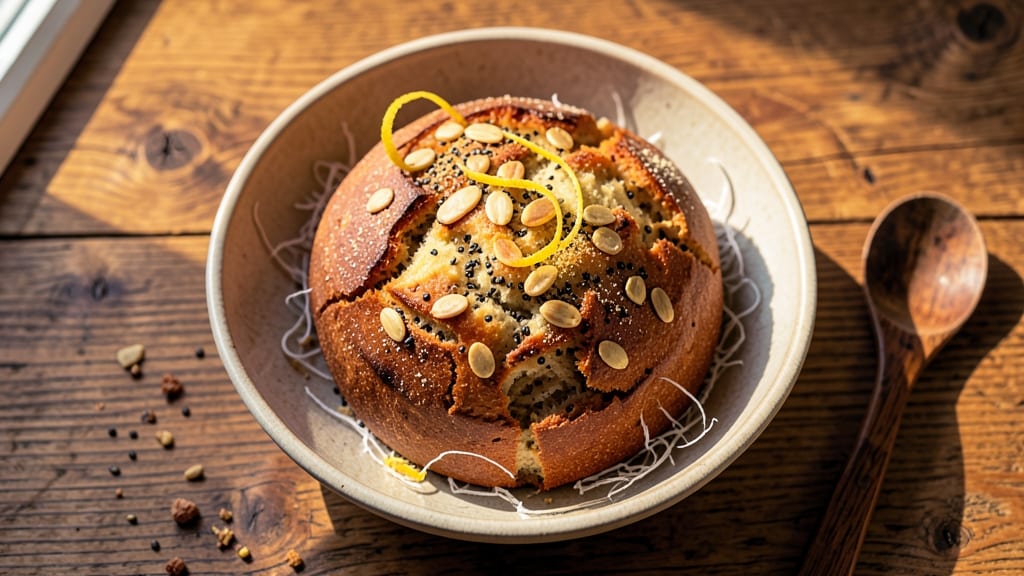
This AIP Paleo bread recipe delivers a satisfying loaf without grains, dairy, or eggs—just nutrient-dense almond flour and coconut flour bound together with a crispy seed crust. The secret lies in the egg-bound technique, where flax eggs create structure while keeping the texture light and airy.
I developed this recipe after years of struggling to find a bread that met AIP standards without tasting like cardboard. The result? A loaf with a golden, crunchy crust and a tender, slightly dense crumb that holds up perfectly for sandwiches or toast.
The foundation of this recipe is a blend of almond flour and coconut flour, which provides structure without gluten.
A mix of chia and flax seeds creates the crust's satisfying crunch while adding fiber and omega-3s. Unlike many Paleo breads, this one doesn’t rely on processed binders—just whole-food ingredients that deliver real nutrition.
The baking process is straightforward, but the key to success is not overmixing the dough and letting it rest before baking to ensure proper rise.
What you’ll end up with is a substantial, flavorful loaf that’s AIP-compliant yet satisfying enough to replace traditional bread. The crust stays crispy for hours, while the interior remains tender enough to hold up to hearty fillings.
Unlike many grain-free breads, this one doesn’t crumble or dry out quickly, making it ideal for meal prep. It’s the kind of bread that proves AIP eating doesn’t mean sacrificing texture or taste.
Perfect for sandwiches, toast, or serving alongside soups, this bread is a game-changer for anyone following the protocol. The recipe yields one 9x5-inch loaf, but you can easily double it for larger batches. Once you try this, you’ll never settle for store-bought again—it’s that good. Let’s get baking!
Ingredients for aip paleo bread
Nutrient-dense flours, seeds, and flax eggs create a loaf that rivals traditional bread without grains or dairy.
| Ingredient | Amount | Notes |
|---|---|---|
| Almond Flour 🌰 | 2 ½ cups | Finely ground, unsweetened preferred |
| Coconut Flour 🥥 | ½ cup | Sifted to prevent clumping |
| Chia Seeds 🌱 | ¼ cup | Ground into fine meal |
| Flax Seeds 🌱 | ¼ cup | Ground into fine meal |
| Ground Flaxseed 🌱 | ½ cup | For flax eggs (mix with water) |
| Sunflower Seeds 🌻 | ½ cup | Finely ground for crust |
| Pumpkin Seeds 🎃 | ¼ cup | Finely ground for crust |
| Psyllium Husk Powder 🌿 | 2 tbsp | Pure, unsweetened preferred |
| Sea Salt 🧂 | 1 ½ tsp | Fine grain preferred |
| Baking Soda 🧪 | ½ tsp | Pure, aluminum-free |
| Apple Cider Vinegar 🍎 | 1 tbsp | Raw, unfiltered preferred |
| Water 💧 | 1 ½ cups | Room temperature |
| Extra-Virgin Olive Oil 🫒 | ¼ cup | For crust brushing |
The almond flour is the backbone here—Bob's Red Mill or Anthony's Goods brands yield the best texture. Coconut flour absorbs moisture aggressively, so sift it thoroughly before measuring to avoid clumps. For the seeds, grind them fresh in a high-speed blender (like a Vitamix) for maximum crunch. Psyllium husk powder is non-negotiable—it's what gives this bread its structure without gluten. I source mine from Now Foods in bulk to ensure purity. The apple cider vinegar adds tang that balances the richness of the almond flour.
No almond flour? Sunflower seed flour at 1:1 ratio works in a pinch, though texture will differ slightly. Substituting coconut flour? Reduce to 0.25 cup max or add 2 extra tbsp water to compensate for absorption. For the seeds, walnut or pecan meal can replace up to half the chia/flax mix, but they'll darken the crust. The psyllium husk can be tricky to find—metamucil is NOT the same—look for pure powdered husk in health food stores. Freshly ground seeds lose their crunch after 24 hours, so grind them the same day you bake.
Store the baked loaf in an airtight container at room temperature for up to 3 days to maintain crispiness. For longer storage, wrap tightly in parchment paper and freeze for up to 3 months. Reheat slices in a toaster or oven at 350°F for 5 minutes to restore crispness. The crust stays crunchy for hours when served fresh, making it perfect for sandwiches. To prevent drying, slice only what you need—exposed surfaces lose moisture quickly. This bread freezes beautifully, so I always bake two loaves and freeze one for later.
Why You'll Love This Recipe
- No-Fuss Mixing: The chia and flax seeds do all the heavy lifting—just toss them in water, let them gel, and you’re done. No yeast, no waiting, no stress. Honestly, I’ve made this while scrolling through my phone.
- Nutty-Creamy Magic: That blend of almond and coconut flour gives it a texture so satisfying—light but sturdy, with just enough chew. Between us, it’s the closest thing I’ve found to real bread without the guilt.
- Weeknight Workhorse: Slice it for toast, cube it for croutons, or use it as a base for open-faced sandwiches. I keep a batch in the fridge because it’s always the backup when I forget to plan.
- Pantry Staple Power: Almond flour and coconut flour last forever, and a little goes a long way. This recipe costs me pennies per loaf, and the leftovers? They last longer than my willpower to resist them.
Step-by-step instructions for AIP Paleo bread
This method delivers a perfectly bound loaf with a crisp seed crust every time.
Prepare the Flax Eggs and Mix Dry Ingredients
In a small bowl, combine the 0.5 cup ground flaxseed with 0.5 cup water and stir vigorously for 2 minutes until fully gelatinized. Set aside—this will act as your egg binder. In a separate large bowl, whisk together the 2.5 cups almond flour, 0.5 cup coconut flour, 2 tbsp psyllium husk powder, 1.5 tsp sea salt, and 0.5 tsp baking soda. Sift the mixture once to eliminate any lumps, especially important with the coconut flour.
The psyllium husk powder is critical here—it mimics gluten's binding properties while keeping the bread light. Don't skip sifting; those tiny lumps will translate to a dense texture in your final loaf. I like to use a fine-mesh sieve for this step to ensure complete dispersion.
Create the Seed Crust Mixture
In a food processor, grind the 0.5 cup sunflower seeds and 0.25 cup pumpkin seeds together until you achieve a fine, flour-like consistency—think texture of cornmeal. Transfer this to a small bowl and set aside. In the same processor, grind the 0.25 cup chia seeds and 0.25 cup flax seeds separately until finely powdered, then combine with the sunflower-pumpkin mixture.
This crust mixture should resemble coarse sand when pressed between your fingers. If any whole seeds remain, pulse them again briefly. The finer the grind, the more even the crust will be when baked. I typically process each seed type separately to prevent the oilier seeds from interfering with the grinding process of the drier ones.
Combine Wet Ingredients and Form the Dough
To the dry ingredients, add the flax egg mixture, 1.5 cups water, 1 tbsp apple cider vinegar, and 0.25 cup extra-virgin olive oil. Mix with a silicone spatula until you achieve a thick, shaggy dough that comes together when pressed. The dough should be stiff but pliable—similar to wet sandcastle sand. If it's too dry, add 1 tablespoon water at a time until it forms a cohesive mass.
This is where patience pays off. The dough will feel dense, but resist the urge to add more liquid. The psyllium husk will activate fully during baking, creating that perfect rise. Let the dough rest for 5 minutes while you prepare your baking vessel—this brief rest helps the ingredients hydrate properly.
Assemble and Shape the Loaf
Lightly grease a 9x5-inch loaf pan with olive oil. Divide the dough in half and shape each portion into a 4-inch log. Place one log in the prepared pan and press firmly to eliminate air pockets. Sprinkle half of the seed crust mixture evenly over the dough, then place the second log on top. Press down gently to create a single unified loaf.
Here's the thing—don't worry if the crust mixture looks like too much. The dough will absorb what it needs during baking. Brush the top of the loaf with a thin layer of olive oil using a pastry brush, then sprinkle the remaining seed crust mixture evenly over the surface. Press lightly to adhere. The crust will crisp beautifully during baking, giving you that satisfying crunch.
Bake with Precision for Perfect Texture
Preheat your oven to 350°F and bake the loaf for 50-55 minutes until the top is deep golden brown and a toothpick inserted in the center comes out clean. The internal temperature should reach 205°F—this ensures complete baking without dryness. During the last 10 minutes of baking, tent the loaf with aluminum foil if the top browns too quickly.
Your oven might run hot, so start checking at the 45-minute mark. The bread is done when it springs back slowly when pressed gently in the center. Remove from the oven and let it cool in the pan for 10 minutes before transferring to a wire rack. This resting period allows the internal structure to set properly, preventing crumbly texture.
Serve with Proper Resting for Maximum Enjoyment
Slice the loaf carefully using a serrated knife—this bread is dense enough that a regular knife will tear the crumb. Serve warm or at room temperature, but never cold as it loses its crispness. The crust should shatter slightly when broken, revealing a tender crumb with just the right amount of chew. Each slice should hold its shape well without falling apart.
For best results, store any leftovers wrapped tightly in aluminum foil at room temperature for up to 3 days. The crust will soften slightly over time, but reheating in a 350°F oven for 5-7 minutes restores its crispness beautifully. This bread pairs perfectly with soups, stews, or simply with a smear of almond butter and sliced banana for a Paleo-friendly breakfast.
Pro Tips For Making Aip Paleo Bread
- Mix Chia-Flax First: Whisk the chia and flax seeds with water before adding anything else—this prevents clumping like glue in your batter. I used to toss them in dry and ended up with a dough that fought me every step of the way.
- Weigh Your Flours: Coconut flour is sneaky—1 cup packed vs. loose makes a huge difference in texture. Use a kitchen scale for almond flour too; scooping leads to dry, crumbly bread that falls apart.
- Skip the Overmixing: Once you fold in the wet ingredients, stop after 10 strokes—overworking the batter turns it gummy. The dough should look shaggy, not smooth, or you’ll end up with dense, chewy bread instead of light layers.
- Bake Low and Slow: 325°F (not 350°F) is your friend here—this recipe needs time to set properly without burning the outside before the center cooks. If you’re impatient, tent with foil after 20 minutes to avoid a crispy shell hiding raw dough.
Serving suggestions for aip paleo bread
Crispy Seed Crust
This bread’s signature crunchy seed crust transforms an ordinary loaf into something extraordinary. The sunflower and pumpkin seed mixture on top creates a satisfying texture that contrasts beautifully with the tender interior. For extra crunch, sprinkle an additional 1 tbsp ground seeds on top before baking.
I love pairing this bread with homemade bone broth soup—the crust soaks up the broth while maintaining its structure. 🌻
Paleo-Friendly Spreads
Skip the butter and opt for AIP-compliant spreads that complement this bread perfectly. A smear of almond butter with sliced banana creates a sweet breakfast option, while avocado mash with sea salt adds a savory twist.
For a herby touch, blend fresh basil, garlic, and olive oil into a pesto-like spread. These toppings keep the meal fully compliant while adding exciting flavors. ✨
Meal Pairing Ideas
This bread excels as a sandwich base for hearty fillings like grilled chicken, avocado, and cucumber. For a lighter option, layer it with sliced turkey, lettuce, and mustard for a Paleo-friendly deli sandwich.
I also love serving it alongside roasted vegetables or steamed greens—the crust adds texture to any plate. The bread’s sturdy structure holds up well to both wet and dry toppings. 🥗
Breakfast Versatility
Toast slices lightly in a toaster oven at 325°F for 3-4 minutes to restore crispness, then top with AIP-compliant jam (like mashed berries with cinnamon) or sliced apple with cinnamon.
For a protein boost, add sliced hard-boiled eggs or crumbled salmon on top. This bread’s neutral flavor makes it a perfect canvas for breakfast creativity. 🍳
Soup Companion
Use this bread to dip into soups like lentil-free vegetable broth or chicken and vegetable stew. The crust stays crispy even when submerged, making it ideal for AIP-friendly chowders.
For extra flair, brush the crust with olive oil before serving to enhance its savory notes. It’s the perfect tool for turning a simple soup into a satisfying meal. 🍲
Storage and Reheating
Store leftovers in an airtight container at room temperature for up to 3 days, or freeze for 3 months. To revive the crust, reheat slices in a 350°F oven for 5-7 minutes or under a broiler for 2 minutes.
The bread’s texture holds up well when properly stored, making it a great make-ahead option. 💫
Nutrition facts
Frequently asked questions
Can I make this AIP Paleo bread without psyllium husk?
Psyllium husk is essential for the bread's structure, but you can try a 1:1 substitution with ground chia seeds (up to 3 tbsp) if needed. However, the texture will be denser and may not rise as well. For best results, use psyllium husk powder—it's the key to that satisfying crumb. If you can't find it, check health food stores or order online from brands like Now Foods. The husk binds the ingredients without gluten, so omitting it risks a crumbly result.
Why does my AIP Paleo bread turn out gummy or dense?
Overmixing the dough or adding too much liquid are the most common culprits. The dough should be stiff and shaggy—like wet sand—when formed. If it feels sticky, reduce water by 1 tbsp increments. Also, ensure you're using freshly ground seeds (not pre-ground) and sifting the coconut flour thoroughly. The psyllium husk needs time to activate, so let the dough rest for 5 minutes before baking.
How do I make this bread nut-free for severe allergies?
Replace the almond flour with sunflower seed flour (1:1 ratio) and use pumpkin seed flour for the crust instead of sunflower/pumpkin mix. The texture will be slightly denser, but still satisfying. For binding, increase the psyllium husk to 3 tbsp and add 1 extra tbsp ground chia seeds to the crust. Always check seed brands for cross-contamination warnings if nut allergies are severe.
Can I bake this bread in a different shape (like rolls or baguette)?
For rolls, divide the dough into 6 equal portions and shape into balls. Place on a parchment-lined baking sheet, sprinkle with seed crust, and bake at 350°F for 20-25 minutes. For a baguette, press the dough into a 10x4-inch loaf pan and bake for 50-55 minutes. The key is maintaining the same dough-to-crust ratio. The crust will crisp up regardless of shape!
Is this bread safe during the elimination phase of AIP?
Yes, this recipe is fully compliant with the elimination phase of AIP. It contains no grains, legumes, dairy, eggs, or processed ingredients. The flax eggs and psyllium husk are AIP-approved binders, and all seeds used are whole-food ingredients. Always double-check your seed brands for potential additives or cross-contamination with non-compliant ingredients. This bread provides healthy fats, fiber, and minerals without triggering autoimmune responses.