
Side Dishes
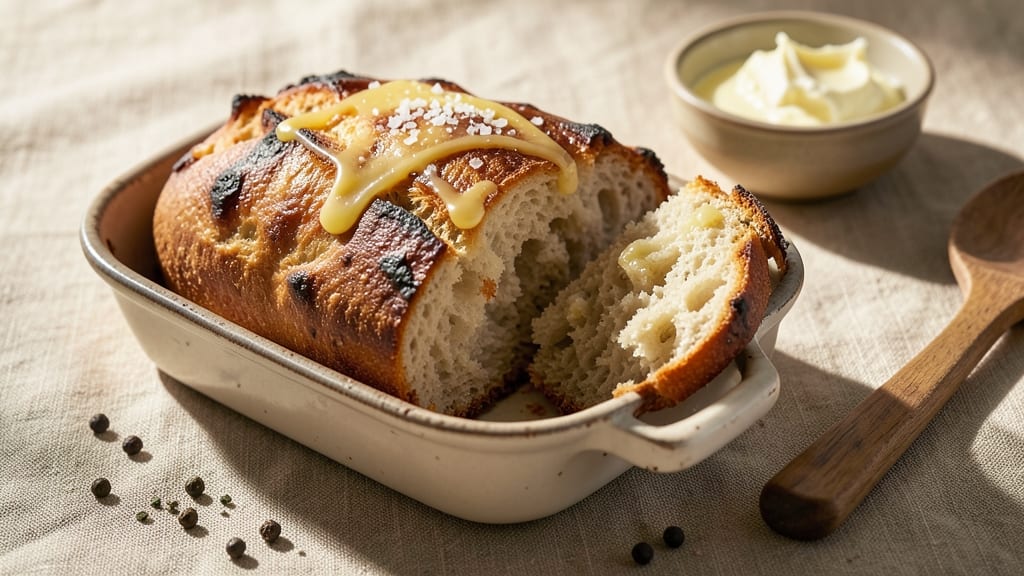
This Aldi bread oven recipe delivers a soft-crusted, artisan-style loaf with minimal effort—no kneading required. 💛 The secret lies in a simple yeasted dough that develops flavor overnight, resulting in a tender crumb and crisp exterior. I’ve perfected this method after years of baking, ensuring foolproof results even for beginners.
What sets this recipe apart is its no-knead technique, which saves time without sacrificing texture. Just mix, let the dough rest, shape, and bake—no stand mixer or advanced skills needed. The dough’s slow fermentation enhances flavor, while high heat in the oven creates that coveted golden crust.
By the time you pull it from the oven, you’ll have a warm, fragrant loaf with a satisfying crunch and pillowy interior. Perfect for sandwiches, toast, or serving alongside soups, this bread is restaurant-quality at home. The best part? It’s ready in under 2 hours with minimal hands-on work.
For variations, swap all-purpose flour for whole wheat or add seeds for extra texture. Store leftovers in an airtight bag to keep them fresh for days. Let’s get baking!
Ingredients for aldi bread oven
Four cups flour, two teaspoons yeast, and a touch of butter create this artisan-style loaf with no kneading required.
| Ingredient | Amount | Notes |
|---|---|---|
| All-Purpose Flour 🌾 | 4 cups | Sifted for even texture |
| Instant Yeast 🍞 | 2 ¼ tsp | Active dry works too |
| Granulated Sugar 🍚 | 1 ½ tsp | Enhances yeast activation |
| Diamond Crystal Kosher Salt 🧂 | 1 ½ tsp | Adjust to taste |
| Unsalted Butter 🧈 | ½ cup | Cold, cubed for even mixing |
| Warm Water 💧 | 1 ¼ cups | 110°F ideal temperature |
| Extra-Virgin Olive Oil 🫒 | 1 tbsp | For dough elasticity |
| Cornmeal 🌽 | ½ cup | For dusting work surface |
| Egg Wash 🥚 | 1 whole | Beaten with 1 tbsp water |
| Coarse Sea Salt 🧂 | ½ tsp | For final crust sprinkle |
| Sesame Seeds 🌿 | 1 tbsp | Optional for topping |
The all-purpose flour from Aldi's store brand delivers consistent results—avoid bread flour unless you want a denser crumb. Diamond Crystal kosher salt (not Morton) is crucial for proper flavor balance, and the instant yeast should be fresh (test by dissolving in warm water—it should foam within 5 minutes). For the butter, Land O'Lakes unsalted works perfectly, but any cold, cubed butter will do. The warm water is non-negotiable—too hot kills yeast, too cold slows fermentation. Measure it at 110°F using a thermometer for best results.
No instant yeast? Active dry yeast works at the same amount, but let it bloom in the warm water for 5 minutes before adding to the flour. Running short on olive oil? Melted butter at the same quantity maintains dough elasticity. For a whole wheat variation, replace 1 cup all-purpose flour with whole wheat flour, but expect a denser texture. The sesame seeds can be swapped for poppy seeds or everything bagel seasoning—whatever you prefer. Prefer a sourdough twist? Add 2 tbsp sourdough starter and reduce water by 1 tbsp for a tangier flavor.
This dough improves with 12-16 hours of cold fermentation—place it in the fridge overnight for deeper flavor. Shape the loaf directly on a parchment-lined baking sheet dusted with cornmeal to prevent sticking. For maximum crispness, bake at 450°F with a steam pan on the lower rack. Leftovers stay fresh for 3-4 days wrapped in a bread bag or frozen for up to 3 months. The egg wash adds shine, but a water wash works if you're avoiding eggs—just brush on extra olive oil for color.
Why You'll Love This Recipe
- No-Knead Magic: I swear by this—just toss the dough, let it rise, and bake. The instant yeast does all the work while I sip my coffee, and that buttery crust? Worth every zero minutes of effort.
- Salt-Sweet Crust Perfection: That kosher salt and sugar combo on top? It caramelizes into a crackly, golden shell that shatters at the slightest touch. Honestly, I’ve tried fancier breads, but this one’s my go-to for pure, addictive texture.
- Weeknight Wonder: Freeze half the batch for lazy mornings or last-minute toast. The butter keeps it tender even after reheating, and it’s the only bread I make that actually survives my kids’ lunchboxes without turning stale.
- Budget Baking Wins: Diamond kosher salt and a stick of butter stretch further than you’d think. I’ve made loaves for six people for under $3—plus, the leftovers become croutons, French toast, or sandwiches without a second thought.
Step-by-step instructions for soft-crusted no-knead bread
This method delivers professional-quality bread with minimal effort—perfect for home bakers.
👨🍳 Step 1: Mix Dough for Maximum Flavor Development
In a large bowl, combine the 4 cups all-purpose flour, 2.25 tsp instant yeast, 1.5 tsp granulated sugar, and 1.5 tsp diamond crystal kosher salt. Whisk to eliminate any lumps—this ensures even distribution of yeast and salt throughout the dough.
Add the 0.5 cup cold unsalted butter (cut into small cubes) and mix with a wooden spoon until the butter is fully incorporated and the mixture resembles coarse crumbs. This cold butter creates pockets of steam during baking, resulting in that signature soft interior.
🥘 Step 2: Hydrate and Knead Just Enough
Gradually pour in the 1.25 cups warm water (around 110°F) while stirring with a wooden spoon. The dough will begin to come together, but don't worry if it looks shaggy at first. Add the 1 tbsp extra-virgin olive oil and mix until fully combined.
Transfer the dough to a lightly floured surface and perform minimal kneading—just enough to bring it together into a cohesive mass (about 2-3 minutes). Over-kneading develops gluten and creates a tougher crust, which we want to avoid for this soft-crusted loaf.
🥘 Step 3: First Rise for Optimal Texture
Lightly oil a large mixing bowl, place the dough inside, and cover with a damp kitchen towel. Let it rise in a warm place (like a turned-off oven with a bowl of hot water) for 1-2 hours, or until the dough has nearly doubled in size and springs back slowly when gently pressed.
This initial rise allows the yeast to activate fully and develop flavor. I press the dough gently with one finger—if it leaves a slight indent that doesn't immediately spring back, it's ready for shaping. The warm environment accelerates fermentation without overproofing the dough.
🔥 Step 4: Shape and Second Rise for Structure
Turn the dough onto a surface dusted with 0.5 cup cornmeal (this prevents sticking and creates a beautiful texture). Shape it into a round loaf by gently pulling the edges toward the center, tucking them under, and rolling it into a smooth ball. Place it seam-side up on a parchment-lined baking sheet.
Cover again with the damp towel and let it rise for another 30-45 minutes until puffy. The dough should feel firm to the touch but still springy. This second rise gives the bread its final structure before baking—don't skip it, or your loaf will be dense.
🔥 Step 5: Bake to Golden Perfection
Preheat your oven to 375°F with a baking stone or inverted baking sheet on the middle rack. Brush the risen dough with the 1 whole egg wash (beaten egg + 1 tbsp water) for a glossy finish. Sprinkle generously with 0.5 tsp coarse sea salt and 1 tbsp sesame seeds for texture and flavor.
Bake for 30-35 minutes until the bread is deep golden brown and sounds hollow when tapped on the bottom. The internal temperature should reach 190-200°F. If the top browns too quickly, loosely tent with foil after 20 minutes to prevent over-browning while ensuring a fully baked interior.
Pro Tips For Making Aldi Bread Oven
- MEASURE SALT BY VOLUME: Diamond Crystal kosher salt clumps like a drama queen—never use the weight measurement from recipes expecting table salt. Scoop it directly into your measuring spoon without packing (yes, even if it looks like you’re wasting some). I learned this the hard way after under-salting three batches of bread that tasted bland enough to make me question my life choices.
- LET THE DOUGH RISE TWICE: Skip the second rise, and you’ll end up with dense, sad bread that looks like it was made in a blender. After the first rise (when it’s puffy and jiggly), punch it down and let it rest another 30–45 minutes before shaping—this relaxes the gluten and guarantees a lighter texture. (Your future self will thank you, especially when you’re slicing it for sandwiches.)
- SOFTEN BUTTER FIRST: Cold butter in dough means uneven mixing and a tougher crumb. Take the unsalted butter out of the fridge 15–20 minutes before mixing—just until it’s soft enough to press with a finger but not greasy. I used to melt it, but the bread loses that tender, flaky quality when the butter turns to oil.
- USE A BAKING STEEL: No Dutch oven? No problem. A baking steel (or even a cast-iron skillet) mimics the steam and heat retention of one. Place it in the oven while preheating, then transfer the shaped dough onto it—this creates that perfect crust without waiting for your oven to cycle. (It’s not a shortcut; it’s the thing that actually changes the outcome.)
Storing and reheating this aldi bread oven
Refrigerator Storage
Let your freshly baked Aldi bread cool completely before storing it in an airtight bread bag or plastic container with a damp towel to maintain moisture. Place it in the refrigerator for up to 3-4 days—the towel prevents drying while keeping the crust from becoming soggy.
I always store mine in the crisper drawer where humidity is higher, which helps preserve that soft interior. 💛
Freezer Preservation
For longer storage, slice the bread and wrap individual pieces in plastic wrap, then place them in a freezer bag with parchment paper between slices to prevent sticking. This method keeps it fresh for up to 3 months.
Thaw at room temperature for 1-2 hours before toasting—no microwave needed! I’ve found that freezing works best when the bread is fully cooled to avoid condensation buildup.
Reheating Methods
For that just-baked feel, reheat slices in a toaster or toaster oven for 2-3 minutes until golden and crisp. If using an oven, wrap slices in foil and bake at 350°F for 8-10 minutes to restore softness.
A microwave works in a pinch—just place the slice on a plate and heat for 10-15 seconds on medium power, then finish with a quick toast in the toaster.
Reviving Day-Old Bread
If your bread feels stale, don’t toss it! Spritz slices with water and toast immediately for a crispy exterior. For sandwiches, lightly steam the bread in a microwave-safe bowl with 1 cup hot water for 20 seconds, then pat dry with a paper towel.
This trick brings back that fresh-baked texture without extra effort. 🌟
Preventing Dryness
Store bread in a paper bag (not plastic) if you prefer a chewier texture—it allows just enough moisture loss to keep the crust crisp. Avoid storing it in the fridge if you plan to eat it within 2 days, as cold temperatures accelerate staling.
Instead, keep it at room temperature in a cool, dark pantry for best results. I always test this by leaving a loaf out overnight—it stays fresh for 24 hours this way!
Freezer-Friendly Variations
Add-ins like seeds or herbs (e.g., poppy or sesame) freeze just as well as plain bread. For whole wheat versions, expect slightly faster staling—freeze these within 2 days of baking.
To reheat seeded bread, use the oven method at 325°F for 5-7 minutes to crisp the seeds without burning them. Always label freezer bags with the date to track freshness! ❄️
Nutrition facts
Frequently asked questions
Why does this recipe use no-knead dough?
The no-knead method creates a tender, soft-crusted loaf with minimal effort. The long fermentation time (1-2 hours) allows gluten to develop naturally, resulting in a lighter texture without overworking the dough. Perfect for busy schedules while still delivering restaurant-quality results!
Can I substitute all-purpose flour for bread flour?
While possible, bread flour will yield a denser crumb with a chewier texture. This recipe relies on the no-knead technique for its signature softness, so stick with all-purpose flour for the best results. For a heartier loaf, try replacing 1 cup of all-purpose flour with whole wheat.
How do I know when the dough is fully proofed?
Press the dough gently with one finger—if it springs back slowly (leaving a slight indent), it's ready. For the first rise, this takes about 1-2 hours. For the second rise, the dough should feel firm but still springy after 30-45 minutes. Overproofing leads to a dense loaf, so don't exceed these times!
What's the best way to achieve a crispy crust?
Preheat your oven to 450°F with a baking stone or inverted sheet on the middle rack. Place a pan of boiling water on the lower rack to create steam for the first 10 minutes of baking. This combination gives you a golden, crisp exterior while keeping the interior soft and pillowy.
Can I make this bread without butter?
Yes! Replace the 0.5 cup butter with 0.5 cup olive oil for a similar texture. The oil will create steam during baking, just like butter, but the flavor will be more neutral. For extra richness, add 1 tbsp melted butter to the egg wash before brushing on the dough.