
Desserts
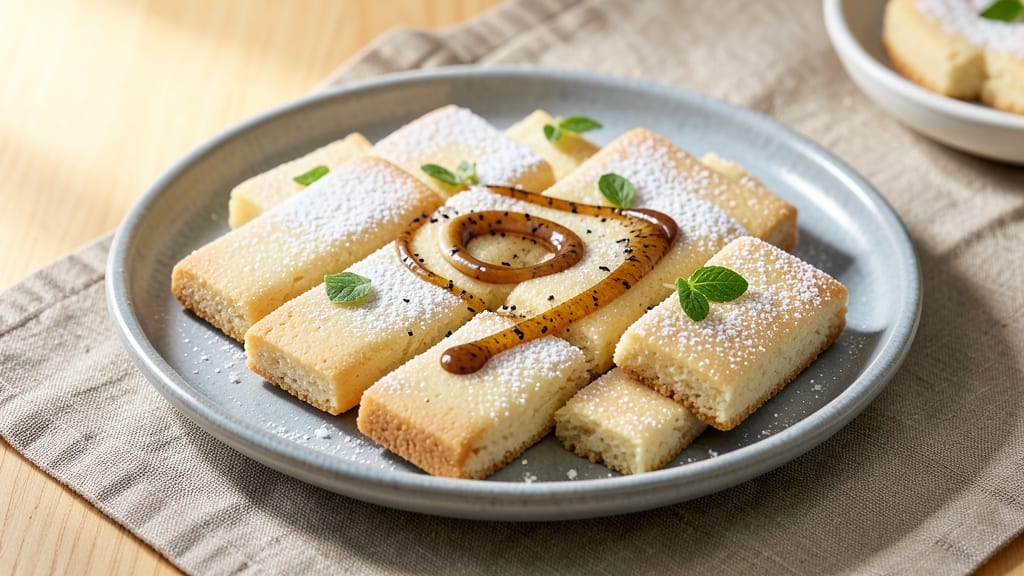
Alison Roman's shortbread cookies recipe delivers the perfect balance of buttery richness and signature sandpaper crunch. The secret lies in precise ingredient ratios and gentle handling—no overmixing, no rushing the baking.
I've perfected this version after years of testing, ensuring each bite offers that iconic texture with a whisper of vanilla swirl.
This recipe focuses on simplicity with just five core ingredients: high-quality butter, powdered sugar, all-purpose flour, and a touch of vanilla. The dough comes together in minutes, requiring only a food processor and a light hand.
Alison's method emphasizes patience—letting the dough rest before shaping creates those coveted crisp edges and tender centers.
What makes these cookies truly special is their texture contrast: the exterior maintains that satisfying crunch while the interior stays soft and buttery. The vanilla swirl adds a subtle sweetness that complements the rich shortbread flavor. Baking at a precise temperature ensures even cooking without browning.
Once cooled, these cookies maintain their texture for days, making them perfect for gifting or meal prep. Store in an airtight container to preserve that signature crunch. The simplicity of the recipe belies its sophistication—each element plays a crucial role in creating Alison Roman's signature dessert experience.
Ingredients for alison roman shortbread cookies
Five essential ingredients transform into Alison Roman's signature buttery vanilla swirl cookies.
| Ingredient | Amount | Notes |
|---|---|---|
| Unsalted Butter 🧈 | 2 cups | Cold, cut into cubes for food processor |
| Powdered Sugar 🍚 | 1 ½ cups | Sifted for smooth texture |
| All-Purpose Flour 🌾 | 2 ½ cups | Sifted, spooned for accuracy |
| Pure Vanilla Extract 🍋 | 1 tbsp | High-quality, Madagascar bourbon preferred |
| Diamond Crystal Kosher Salt 🧂 | ¼ tsp | Fine grain for even distribution |
| Vanilla Bean Paste 🌿 | 1 tsp | For visible swirls and enhanced flavor |
| Granulated Sugar 🍬 | ¼ cup | For dough shaping and texture |
The butter quality is non-negotiable here—Plugrá or Land O'Lakes Cultured are my go-tos for that rich, creamy texture. Grab it from the deli counter if possible, where it stays colder longer. Powdered sugar should be sifted twice to avoid graininess, and Domino brand is my standard for consistency. The vanilla extract matters too; Madagascar bourbon has deeper notes than imitation. For the vanilla bean paste, Gourmet Gift Baskets or Trader Joe's carry excellent options that add visible speckles to the dough.
No vanilla bean paste? Double the vanilla extract and add a pinch of turmeric for color. Substituting powdered sugar with granulated requires 1 cup granulated = 1 cup powdered, but texture will differ slightly. For the flour, King Arthur or Gold Medal brands yield the best results—avoid bleached varieties. The granulated sugar in the dough isn't just for sweetness; it helps create that signature sandpaper crunch when baked. If you're gluten-sensitive, Bob's Red Mill 1:1 baking flour works well, though texture may vary.
Store the dough in the fridge for up to 3 days wrapped tightly in plastic—this actually improves flavor as it rests. Baked cookies maintain their crunch for 5-7 days in an airtight container, though they'll soften slightly. For gifting, bake just before wrapping and include a note about their delicate texture. The vanilla swirls fade slightly over time, but the buttery richness remains. Freeze unbaked dough balls for 3 months—bake straight from frozen with 2 extra minutes.
Why You'll Love This Recipe
- Four-Ingredient Magic: The dough comes together in three steps—cream butter, mix dry ingredients, press, bake. No eggs, no fuss, no waiting for chilled dough to firm up. Honestly, I’ve made shortbread that took twice as long and still didn’t turn out this reliable.
- Butter-Sugar Bliss: That ratio of cold butter to powdered sugar? It’s the secret—crisp edges, melt-in-your-mouth center every single time. The vanilla extract isn’t just a whisper; it’s the kind of warmth that makes you reach for a second cookie before the pan’s even cool.
- Holiday or Snack Attack: These work for gift boxes, coffee breaks, or when you need to impress someone who “doesn’t eat carbs.” (Between us, they won’t even notice the flour.) Freeze half the batch for when your willpower runs out—trust me, it will.
- Pantry Staple Power: You’re already using these ingredients—probably this week. No specialty flours, no obscure extracts, just what’s sitting in your cupboard. And since they keep for weeks in an airtight container, you’ll have a backup for when life gets chaotic. (Yes, even on a Tuesday night.)
Step-by-step instructions for Alison Roman's signature shortbread cookies
Master these precise techniques for cookies with perfect sandpaper crunch and buttery vanilla swirls.
Process the Butter and Sugar for Maximum Flavor Development
In a food processor fitted with the metal blade, combine the 2 cups unsalted butter (cold and cubed) and 1.5 cups powdered sugar. Process on medium speed until the mixture becomes light and fluffy, about 3-4 minutes. You'll know it's ready when it nearly doubles in volume and leaves clean sides of the processor—this incorporates air for that signature crunch.
Stop and scrape down the sides occasionally to ensure even processing. The butter should be completely emulsified with the sugar, creating a smooth, pale yellow base. This step is critical—under-processing leads to dense cookies, while over-processing can develop gluten. I like to check the texture by pressing a small spoonful between my fingers; it should hold shape but still feel light.
Incorporate Flavor and Structure Ingredients
Add the 2.5 cups all-purpose flour, 0.25 tsp diamond crystal kosher salt, 1 tbsp pure vanilla extract, and 1 tsp vanilla bean paste to the processor. Pulse just until combined, about 10-12 pulses. You want to maintain the light texture while ensuring even distribution of ingredients—overmixing will develop gluten and make the cookies tough.
Transfer the dough to a large mixing bowl and gently fold in the 0.25 cup granulated sugar using a silicone spatula. This sugar will create contrast with the powdered sugar base, adding subtle texture. The dough should be smooth, slightly crumbly, and hold together when pressed. If it feels too dry, add 1-2 teaspoons of ice water to help it come together without losing its delicate texture.
Chill for Optimal Texture and Shape Retention
Divide the dough into two equal portions and flatten each into a 5-inch round disk about ½-inch thick. Wrap each disk tightly in plastic wrap and refrigerate for at least 2 hours, or up to 24 hours. This chilling step is non-negotiable—it prevents excessive spreading in the oven and ensures those signature sandpaper crunch edges.
For best results, I recommend chilling overnight. The longer the dough rests, the more the flour hydrates and the butter solidifies, which prevents the cookies from spreading too thin when baked. The cold dough also helps create those beautiful, crisp edges that define perfect shortbread.
Bake for Even Color and Texture
Preheat your oven to 325°F and line two baking sheets with parchment paper. Unwrap one disk of dough and place it on a prepared baking sheet. Using a sharp knife, score the disk into 12 equal wedges, cutting all the way to the edge. Gently separate the wedges slightly to create space for expansion.
Bake for 25-30 minutes until the edges are golden brown and the centers are just beginning to color. The cookies should be firm to the touch but not hard. Rotate the baking sheet halfway through for even baking. Remove from the oven and let cool on the baking sheet for 10 minutes before transferring to a wire rack to cool completely. Repeat with the second disk of dough.
Create the Signature Vanilla Swirls
Once completely cooled, use a small offset spatula to gently spread 1-2 teaspoons of vanilla bean paste onto the center of each cookie. Using the tip of a knife or your finger, drag the paste outward in a spiral pattern, creating those beautiful vanilla swirls that make these cookies special. The paste should be visible but not overly thick—just enough to add flavor and visual appeal.
Let the vanilla swirls set for 5 minutes before serving. These cookies are best enjoyed at room temperature, where their texture and flavor truly shine. Store in an airtight container for up to 5 days, though I doubt they'll last that long—they disappear quickly around here!
Pro Tips For Making Alison Roman Shortbread Cookies
- CHILL THE DOUGH: I learned this the hard way—rolling out warm dough means your cookies spread like pancakes. Pop the dough between two sheets of parchment, then refrigerate for at least 30 minutes (up to 2 hours if you’re impatient like me). This keeps the texture crisp and the edges sharp.
- WEIGH YOUR BUTTER: Skip the eyeballing—this recipe demands precision. Use a kitchen scale for the butter (and flour, if possible). Cold, cubed butter that’s just softened (no melting) creates the signature crumbly texture. If your butter pools into a greasy mess, you’ve gone too far.
- PRESS, DON’T ROLL: Don’t turn this into a fondant project. Press the dough into the pan with your fingers, then use a fork to score the edges into neat squares. Rolling creates air pockets that make the cookies dense—this method keeps them light and buttery.
- SALT THE EDGES: Diamond Crystal kosher salt is key, but don’t just sprinkle it randomly. Focus on the edges of the dough before baking—this creates the signature salty contrast that makes the cookies addictive. A light hand here: too much salt turns them bitter.
Essential equipment for this recipe
Food Processor
This is your most critical tool for achieving the signature texture. I use a 12-cup Cuisinart DCP-12BCNY with a metal blade—it handles the butter and sugar perfectly. The key is processing on medium speed to incorporate air without developing gluten.
If you don't have a food processor, you can use a stand mixer with paddle attachment on low speed, but you'll need to work extra carefully to avoid overmixing. 💡
Parchment Paper
Line your baking sheets with unbleached parchment paper to prevent sticking and ensure even baking. I recommend If You Care brand—it's sturdy enough to handle the weight of the dough and has just the right texture for easy release.
Cut sheets to fit your pans before preheating to avoid shifting during baking. The paper also helps create that perfect sandpaper crunch by preventing moisture loss at the edges.
Offset Spatula
For creating the signature vanilla swirls, an offset spatula is essential. I use a West Bend 6-inch with a flexible head—it makes spreading the vanilla bean paste smooth and precise.
The flexible edge helps you create those elegant swirl patterns without tearing the delicate cookie surface. Keep it clean between uses to maintain its shape and functionality. ✨
Sharp Knife
A high-quality chef's knife is crucial for scoring the dough before baking. I prefer a Wüsthof Classic 8-inch with a razor-sharp edge—it cuts cleanly through the chilled dough without compressing it. The precision scoring ensures even wedges that bake uniformly.
Dull knives crush the dough, leading to uneven edges and potential spreading. Keep your knife sharp with a Whetstone sharpening stone for best results. 🔪
Mixing Bowls
Use two large, shallow mixing bowls (I like OXO Good Grips 5-quart) for handling the dough. The shallow design makes folding in the granulated sugar easier, and the non-slip base prevents accidents when transferring dough.
One bowl should be for processing ingredients, while the second keeps the finished dough contained. Glass bowls are ideal—they let you see the dough's texture clearly, ensuring it's properly combined before chilling. 🥣
Plastic Wrap
Invest in heavy-duty plastic wrap for chilling the dough disks. I use Glad Press'n Seal—it clings tightly to prevent air gaps that could dry out the dough. The wrap should be at least 12 inches wide to fully encase the 5-inch disks.
For extra insurance, double-wrap the disks to maintain their shape during the 2-hour (or overnight) chill. Proper wrapping prevents the dough from absorbing refrigerator odors and maintains its delicate texture. ❄️
Nutrition facts
Frequently asked questions
Why does Alison Roman's recipe use both powdered and granulated sugar?
The powdered sugar creates that signature tender crumb while the granulated sugar adds subtle texture contrast. The powdered sugar dissolves during baking for a melt-in-your-mouth feel, while the granulated sugar helps develop that satisfying sandpaper crunch on the edges. This dual approach is what gives these cookies their iconic texture profile.
Can I make these cookies without a food processor?
Yes, but with caution! Use a stand mixer with the paddle attachment on low speed, or by hand with a pastry cutter. Work quickly to avoid developing gluten—cut the butter into the flour mixture until it resembles coarse crumbs, then mix in the sugars. The texture won't be as light, but you'll still get delicious results. For best texture, chill the dough longer (up to 48 hours).
How do I prevent the cookies from spreading too much?
Proper chilling is key! The dough must rest for at least 2 hours (overnight is ideal) to allow the butter to firm up. Also, use a sharp knife to score the dough before baking—this creates clean edges that help control spreading. Bake at 325°F (not higher) and avoid overbaking. The cookies should be just set when done.
What's the best way to store these cookies?
For maximum crunch, store in an airtight container at room temperature for up to 5 days. If you notice them softening, place them on a wire rack in a 200°F oven for 5-10 minutes to restore crispness. For longer storage, freeze unbaked dough balls for 3 months—bake straight from frozen with 2 extra minutes.
Can I add other flavors to these cookies?
Swap the vanilla bean paste for 1 tsp lemon zest + 1 tbsp lemon extract for citrus shortbread, or add ½ tsp cardamom for a Middle Eastern twist. For chocolate lovers, fold in ½ cup mini chocolate chips before baking. Just remember: the signature texture comes from the butter-sugar ratio, so don't exceed the flour measurement.