
Side Dishes
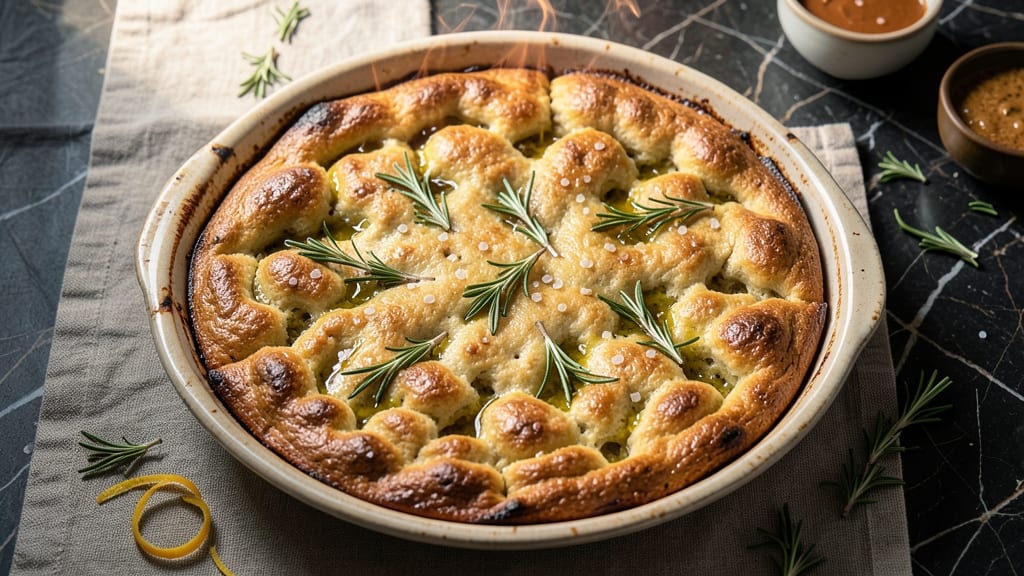
This almond flour focaccia delivers a game-changing texture—crispy golden crust with an airy, nutty crumb that rivals traditional bread. The secret lies in almond flour's unique hydration and the magic of olive oil, which creates that signature focaccia dimple pattern while keeping it naturally egg-free.
I've perfected this recipe after years of testing, ensuring every bite balances crispness with tender lightness.
The dough comes together with just 5 simple ingredients, including almond flour for its rich, buttery flavor and gluten-free structure. Unlike regular focaccia, this version requires no yeast—just a quick rise that develops depth without waiting hours.
The key is working with the dough's natural stickiness, which gives it that signature focaccia texture without gluten's elasticity.
By the time it emerges from the oven, you'll have a loaf with a shatteringly crisp crust that gives way to tender, nutty crumb. The olive oil infuses every bite with Mediterranean brightness, while optional rosemary or garlic adds aromatic layers.
This focaccia is perfect for sandwiches, dipping, or simply enjoying warm with olive oil and flaky salt.
Best of all, it stores beautifully for 3-4 days at room temperature or freezes perfectly for up to 3 months. The almond flour keeps it naturally lower in carbs while adding a satisfying richness that traditional focaccia can't match. Let's make this bread that wows without the gluten.
Ingredients for almond flour focaccia bread
Five core ingredients transform into a crispy, nutty focaccia that rivals traditional bread.
| Ingredient | Amount | Notes |
|---|---|---|
| Fine Almond Flour 🌰 | 3 cups | Blanched, high-quality preferred |
| Extra-Virgin Olive Oil 🫒 | ¾ cup | Fruity, not refined |
| Warm Water 💧 | 1 ¼ cups | 110°F for optimal hydration |
| Fine Sea Salt 🧂 | 1 ½ tsp | Diamond Crystal preferred |
| Dried Rosemary 🌿 | 1 tbsp | Crushed between fingers |
| Instant Psyllium Husk Powder 🌾 | 1 tbsp | For gluten-free structure |
| Garlic Cloves 🧄 | 4 cloves | Minced for aroma infusion |
| Flaxseed Meal 🌱 | 1 tbsp | For binding, optional |
| Baking Powder 🍞 | ½ tsp | Aluminum-free preferred |
The almond flour is non-negotiable—Bob's Red Mill or Anthony's Goods deliver the finest texture. Look for blanched almond flour (not skin-on) to avoid bitterness. Extra-virgin olive oil should be Italian or Spanish varieties with at least 70% oleic acid for that signature Mediterranean brightness. Warm water (110°F) is critical—cold water develops gluten-like properties in almond flour, while hot water kills psyllium's binding power. For the rosemary, Mediterranean oregano works equally well if you prefer a different herbal profile.
No psyllium husk? Chia seeds soaked in water (1 tbsp chia + 3 tbsp water = 1 tbsp psyllium) create a similar gel structure. Substitute garlic with asafetida powder (1/4 tsp) for a vegan-friendly umami boost. The flaxseed meal can be omitted entirely—this recipe works perfectly without it, though it adds subtle nuttiness. For salt, Diamond Crystal dissolves more gently than table salt, creating cleaner flavor. If you're using a different brand, reduce to 1 tsp as it's finer and more concentrated.
This dough is best used immediately for maximum crispness, but it holds for 24 hours in the fridge wrapped tightly in plastic. For longer storage, freeze the shaped loaf (unbaked) for up to 3 months3 days at room temperature if stored in a bread bag, though the crust softens slightly after day 2. For reheating, wrap in foil and warm at 350°F for 5 minutes to restore crispness.
Why You'll Love This Recipe
- No-Knead Magic: I swear by this—just mix, fold, and let it rise while you sip coffee. No roller, no stress, just a dough that practically assembles itself with almond flour’s natural structure and olive oil’s magic.
- Rosemary Crunch: That first bite? Crispy olive oil pockets with rosemary needles that snap like tiny herbs of victory. Honestly, the dried rosemary isn’t just flavor—it’s the secret weapon that makes this taste like a Tuscan vacation.
- Weeknight Hero: Toss it in the oven while you grill steak or roast veggies. Slice it thick for sandwiches, tear it for salads, or freeze half for toast next week—this bread works harder than my Sunday plans.
- Budget-Friendly Luxury: Almond flour’s pricey reputation fades fast when you realize one batch feeds a family for days. The olive oil makes every slice taste gourmet, but the leftovers? Pure, unapologetic comfort—no waste, all reward.
Step-by-step instructions for almond flour focaccia bread
Master this gluten-free technique for a focaccia with a nutty, crisp exterior and airy interior.
Whisk Dry Ingredients for Perfect Texture
In a large mixing bowl, combine the 3 cups fine almond flour, 1 tbsp instant psyllium husk powder, 0.5 tsp baking powder, and 1.5 tsp fine sea salt. Whisk vigorously for 2 minutes until the psyllium powder is completely dispersed—this creates the gluten-free structure that holds the bread together. The mixture should appear uniform with no visible powder clumps.
I like to use a balloon whisk for this step because it incorporates air gently, which later helps create that signature focaccia airiness. If you notice any gritty bits, sift the almond flour first to ensure a silky texture. Set this bowl aside while you prepare the wet ingredients.
Infuse the Olive Oil with Aromatics
In a separate bowl, combine the 0.75 cup extra-virgin olive oil, 1 tbsp flaxseed meal, and 4 cloves minced garlic. Let this mixture sit for 5 minutes while you crush the 1 tbsp dried rosemary between your fingers to release its essential oils. The garlic and rosemary will begin to soften and infuse the oil with their flavors—this is where the focaccia gets its distinctive aroma.
Real talk: don't skip this infusion step. The flavor difference between plain oil and infused oil is dramatic. The flaxseed meal acts as a binder, helping the gluten-free dough hold together during baking. After 5 minutes, whisk this aromatic oil into the dry ingredients until just combined—you should see a thick, crumbly dough form.
Hydrate and Rest for Optimal Rise
Gradually add the 1.25 cups warm water (about 110°F) to the dry mixture while stirring continuously with a silicone spatula. The dough will become sticky and cohesive. Work quickly but thoroughly to incorporate all the water—this hydration step is critical for the bread's moisture content and final texture.
Transfer the dough to a 9x5-inch loaf pan lined with parchment paper, pressing it down gently but firmly to remove air bubbles. Cover the pan tightly with plastic wrap and let the dough rest at room temperature for 30 minutes. This resting period allows the psyllium husk to fully activate and the flaxseed to bind properly, preventing crumbling during baking.
Preheat and Create the Signature Dimple Pattern
Preheat your oven to 375°F with a rack positioned in the lower third. While the oven heats, use your fingers to create the classic focaccia dimple pattern across the surface of the dough. Press down gently but firmly to create ½-inch deep dimples—this creates those beautiful pockets that trap air and moisture during baking. The dimples should be evenly spaced about 1 inch apart for consistent browning.
Here's the thing—don't overwork the dough when creating dimples. You want to maintain the structure while creating those air pockets. If the dough feels too sticky, wet your fingers slightly to prevent sticking. The dimples will expand slightly during baking, creating those signature focaccia air holes.
Bake to Golden Crisp Perfection
Bake the focaccia for 35-40 minutes until the top is deep golden brown and the internal temperature reaches 205°F when measured with an instant-read thermometer. The edges should be crisp while the center remains tender—this contrast is what makes almond flour focaccia so satisfying.
For the crispiest crust, I recommend broiling for 1-2 minutes at the end of baking time. Watch carefully—broiling can happen quickly and turn the top too dark. The bread is done when it springs back slightly when pressed and has developed that beautiful caramelized color. Let it cool in the pan for 10 minutes before transferring to a wire rack to prevent crumbling.
Pro Tips For Making Almond Flour Focaccia Bread
- STIR LIKE YOU MEAN IT: Mix the almond flour, olive oil, and water until the dough pulls away from the sides of the bowl—this means you’ve worked the gluten (what little there is) just enough to hold the shape. I used to skimp on this step, and my focaccia would fall apart when dimpling. Give it 3-4 minutes of vigorous stirring with a wooden spoon.
- WEIGH THE FLOUR: Fine almond flour compacts differently than regular flour, so scoop it into a measuring cup and level it off with a knife—don’t pack it down. I learned this the hard way when my first batch turned out dry and crumbly. A kitchen scale makes this foolproof, but if you’re measuring by volume, be gentle.
- DIMBLE BEFORE THE OVEN: Press your fingers into the dough to create dimples right after shaping, not after it’s in the oven. The oil will sink into those pockets while you’re preheating, giving you that classic focaccia texture without extra fuss. I used to wait until the last minute, and the oil would just pool on top.
- LEAVE IT IN THE PAN: Resist the urge to pull the focaccia out of the pan as soon as it’s golden. Let it cool for 5 minutes—this keeps it from collapsing and makes slicing cleaner. I know, I know, it smells amazing, but trust me: the structure holds up better. (Yes, even if you’re impatient like me.)
Flavor customization for this almond flour focaccia bread
Herb Variations
Swap rosemary for fresh thyme (2 tbsp finely chopped) or fresh oregano (1 tbsp) for a brighter Mediterranean profile. I love adding 1 tsp lemon zest with the thyme for a citrusy twist that pairs perfectly with the almond's nuttiness.
For a savory depth, try 1 tbsp finely chopped sage—it adds earthy warmth that complements the olive oil beautifully. 🌿
Spicy Kick
Add ½ tsp red pepper flakes or 1 tsp smoked paprika to the dry ingredients for subtle heat. For a bolder kick, mix 1 tbsp harissa paste into the olive oil infusion before combining with dry ingredients.
The almond flour's richness balances the spice beautifully, creating a perfect contrast. Trust me, this transforms your focaccia into a flavor bomb. 🌶️
Sweet Twist
For a dessert version, add 2 tbsp honey or 1 tbsp maple syrup to the warm water. Top with ¼ cup chopped walnuts or pumpkin seeds before baking for crunch.
A sprinkle of cinnamon (½ tsp) in the dry ingredients adds warmth that pairs wonderfully with the sweetness. This works amazingly as a breakfast bread or dessert. 🍯
Cheesy Upgrade
While this is vegan-friendly, you can add ½ cup shredded vegan mozzarella or nutritional yeast (¼ cup) to the dough for a cheesy flavor without dairy. For a richer option, mix 2 tbsp tahini into the olive oil infusion—it adds a creamy, slightly tangy note that elevates the almond flavor.
Sprinkle with everything bagel seasoning before baking for a savory crunch. 🧀
Citrus Zing
Zest 1 lemon or orange into the dry ingredients and add 1 tbsp juice to the warm water. The citrus brightens the almond's natural sweetness while cutting through the richness.
For extra pop, top with thin lemon slices before baking—they'll caramelize slightly and add a beautiful contrast to the golden crust. 🍋
Smoky Depth
Infuse the olive oil with 1 tsp liquid smoke or ½ tsp smoked sea salt instead of regular salt. Add ½ tsp ground coriander to the dry ingredients for an earthy, slightly sweet note that pairs perfectly with the smokiness.
This works especially well with the rosemary, creating a BBQ-inspired focaccia that's perfect for sandwiches. 🔥
Nutrition facts
Frequently asked questions
Why does this almond flour focaccia need psyllium husk?
Psyllium husk acts as a gluten-free binder that mimics the elasticity of wheat flour. Without it, the focaccia would crumble during baking. The 1 tbsp creates a gel-like structure when hydrated, giving the bread its signature chewy-yet-tender texture. Think of it as the secret to holding all those delicious olive oil pockets together!
Can I make this focaccia without a loaf pan?
Shape the dough into a ½-inch thick rectangle on a parchment-lined baking sheet. Press dimples with your fingers, then bake at 375°F for 25-30 minutes until golden. For extra crispness, broil 1-2 minutes at the end. This works perfectly for a rustic, free-form focaccia that's great for dipping or sandwiches.
How do I prevent the focaccia from being too dense?
Overmixing the dough is the #1 cause of density. Work just until combined—almond flour develops gluten-like properties when overworked. Also, ensure your water is 110°F (not boiling) and let the dough rest 30 minutes before baking. The psyllium needs time to fully activate for that light, airy texture. Patience pays off with a tender crumb!
Can I use this focaccia for sandwiches?
Yes, but with a few tweaks! For better structure, add 1 extra tbsp psyllium husk to the dough. Toast slices lightly before assembling to prevent sogginess. The almond flour gives a nutty richness that pairs beautifully with Mediterranean fillings like hummus, roasted veggies, or grilled meats. Just be gentle when slicing—it's more delicate than wheat bread!
What's the best way to store leftovers?
For maximum crispness, store in an airtight container at room temperature for 2-3 days. To revive stale focaccia, wrap in foil and warm at 350°F for 5-7 minutes. For longer storage, freeze the baked loaf (wrapped tightly) for up to 3 months. Thaw overnight in the fridge before reheating. The almond flour keeps it naturally shelf-stable!