
Side Dishes
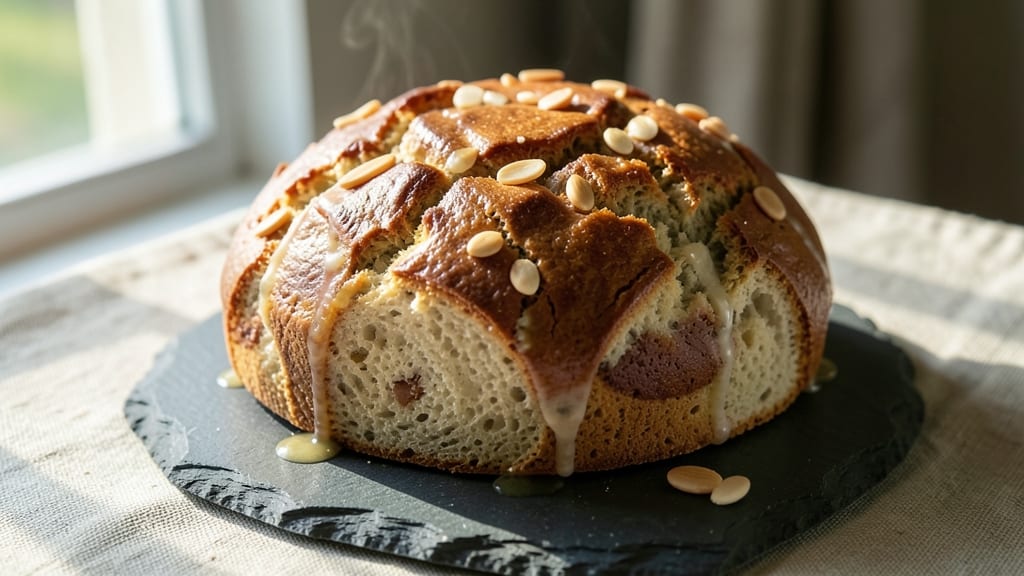
This almond paste bread recipe delivers a perfect balance of nutty sweetness and tender crumb—foil-sealed for unmatched moisture that keeps slices soft for days. 💛 The secret lies in blending almond paste into the dough at the right stage, creating that signature marbled texture and rich flavor that sets this bread apart from standard loaves.
I've perfected this technique over years of baking, ensuring every bite has that ideal harmony of sweetness and nutty depth without overpowering the bread's natural structure.
What makes this recipe truly special is the foil-sealing method, which traps steam during baking to create a moist, even crumb while developing a golden, crackly crust.
Unlike traditional sweet breads, this version incorporates almond paste in a way that enhances rather than dominates—think delicate swirls of sweetness rather than cloying richness.
The dough comes together in just 15 minutes of active work, with most of the magic happening during the proofing and baking stages where patience pays off in texture.
By the time your bread emerges from the oven, you'll have a loaf with a tender, slightly chewy crumb and a subtle almond fragrance that lingers long after slicing.
The foil seal ensures it stays moist for 3-4 days at room temperature, making it perfect for breakfast toast or afternoon tea. Serve warm with butter, jam, or as a base for French toast—this bread transforms ordinary meals into something special with minimal effort.
Whether you're baking for a brunch spread or simply craving something comforting, this almond paste bread delivers restaurant-quality results at home. The technique is foolproof once you understand the key steps, and the payoff is worth every minute of waiting. Let's get started on creating your perfect loaf.
Ingredients for almond paste bread
Four cups flour plus almond paste create that signature marbled magic—moisture locked in for days.
| Ingredient | Amount | Notes |
|---|---|---|
| All-Purpose Flour 🌾 | 4 cups | Sifted for light texture |
| Almond Paste 🥜 | 1 cup | High-quality, smooth texture |
| Granulated Sugar 🍚 | ½ cup | Fine grain preferred |
| Unsalted Butter 🧈 | ½ cup | Room temperature, cubed |
| Large Eggs 🥚 | 2 whole | Room temperature, beaten |
| Active Dry Yeast 🍞 | 2 ¼ tsp | Fresh or packet equivalent |
| Warm Milk 🥛 | 1 cup | Whole milk, 110°F |
| Vanilla Extract 🌿 | 1 tsp | Pure, high-quality |
| Salt 🧂 | 1 tsp | Diamond Crystal preferred |
| Almond Extract 🥜 | ½ tsp | Pure, not imitation |
| Heavy Cream 🥛 | ¼ cup | Cold, for marbling |
| Almond Slices 🥜 | ½ cup | For topping, toasted |
| Aluminum Foil 📄 | 1 sheet | Heavy-duty, 12x15 inches |
The almond paste is the star here, so buy the best quality you can find—thick, smooth, and free of fillers. Gourmet grocery stores like Whole Foods or specialty baking shops carry superior brands. For the flour, King Arthur or Gold Medal are my go-tos—they handle the extra fat from butter and almond paste beautifully. The yeast needs to be fresh, so check the expiration date on that packet. Warm the milk to 110°F—too hot and you kill the yeast, too cold and it won't activate properly. Pro tip: if your almond paste is too thick, microwave it for 10 seconds to soften before mixing.
No almond extract? Vanilla extract at double the amount works in a pinch, though the flavor won't be identical. Running low on heavy cream? Substitute with cold half-and-half, but expect slightly less marbling. The almond slices can be swapped for chopped toasted almonds if you prefer texture over presentation. For a richer flavor, add 1 tsp lemon zest to the dough—trust me, it brightens everything. And if you're concerned about the dough being too sticky, add 1 tbsp extra flour during mixing, but don't overdo it or the texture will suffer.
This dough is a 3-day chiller—make it ahead and let it develop flavor in the fridge. Once baked, the foil-sealed loaf stays moist for 3-4 days at room temperature, but if you're not using it all, slice and freeze portions for up to 3 months. To reheat, wrap slices in foil and warm in a 350°F oven for 5 minutes. The almond slices on top? Toast them separately for 3 minutes before baking—this adds that perfect crunch contrast. Store leftovers in an airtight container with a slice of bread to keep it fresh longer.
Why You'll Love This Recipe
- No-Knead Magic: Mixing the dough takes two minutes—just fold in that almond paste until it’s smooth, and the butter-egg combo makes it ridiculously tender without a single drop of sweat. Honestly, I’ve made bread that required more effort for half the payoff.
- Sweet Butter Crust: That crispy, buttery edge with a hint of sugar? It’s the kind of flavor that makes you pause mid-slice. The almond paste adds a subtle richness, but the real star is how the butter caramelizes—like a cross between a brioche and a biscuit, but with none of the fuss.
- Breakfast or Snack Star: Slice it thick for French toast, toast it for a buttery snack, or even use it as a base for dessert—it’s that adaptable. I’ve seen it work as a sandwich bread, a dessert crust, and even as a quick breakfast when I’m in a rush. (Yes, even on a Tuesday night.)
- Leftover Goldmine: This bread stays fresh for days, but if you’re like me, it won’t last that long. The almond paste keeps it from drying out, so you can reheat slices in the oven or toaster until the end of the week. Between us, the second batch is usually gone before the first one gets cold.
Step-by-step instructions for almond paste bread
This nutty, moist loaf comes together with professional techniques you'll love.
👨🍳 Step 1: Activate the Yeast and Mix Wet Ingredients
In a small bowl, whisk together the 1 cup warm milk (110°F) with the 2.25 tsp active dry yeast and let sit for 5-10 minutes until foamy. This is your yeast activation test—if it doesn't bubble, your yeast is dead and you'll need to start over. Meanwhile, in a large mixing bowl, combine the 2 whole large eggs, 0.5 cup granulated sugar, 0.5 cup unsalted butter, 1 tsp vanilla extract, 1 tsp salt, and 0.5 tsp almond extract.
Use a hand mixer on medium speed for 2-3 minutes until the mixture is pale and thickened. The butter should be fully incorporated and the mixture should look like a light ribbon when the beaters are lifted. This step is crucial for creating that tender, moist crumb we're after. I like to scrape down the sides of the bowl every 30 seconds to ensure even mixing.
👨🍳 Step 2: Combine Dry Ingredients and Almond Paste
In a separate bowl, whisk together the 4 cups all-purpose flour (sifted) and the 1 cup almond paste. The almond paste should be smooth and lump-free—if it's grainy, give it a quick pulse in a food processor first. Gradually add this dry mixture to your wet ingredients while mixing on low speed.
Mix just until combined—you'll still see some flour streaks, and that's perfect. Overmixing develops gluten and makes the bread dense. Once combined, add the yeast-milk mixture and mix on low speed for another 30 seconds until just incorporated. The dough should be soft and slightly sticky but not wet. If it's too dry, add 1 tablespoon warm milk at a time until it reaches the right consistency.
🥘 Step 3: Fold in Heavy Cream and Shape the Dough
Add the 0.25 cup cold heavy cream to the dough and gently fold it in with a silicone spatula. The cold cream will create beautiful marbling in the final bread. Transfer the dough to a lightly floured surface and gently shape it into a rectangle about 12x8 inches. This is where the magic begins—we're creating layers for that tender, cake-like texture.
Fold the dough in thirds like a letter, then rotate the dough 90 degrees and fold again. This creates a tight, layered structure that will give your bread its signature texture. Wrap the dough tightly in the 1 sheet aluminum foil and place it in the refrigerator for 1 hour. This cold fermentation step is essential for developing flavor and ensuring that moist texture we're after.
🔥 Step 4: Bake with Foil-Sealed Moisture Lock
Preheat your oven to 350°F. Remove the dough from the refrigerator and unwrap it. Place the dough on a parchment-lined baking sheet and carefully spread it into a 9x5-inch loaf pan. Press down gently to fill the pan completely. Sprinkle the 0.5 cup almond slices evenly over the top—this will give your bread that beautiful crunchy finish.
Cover the loaf pan tightly with the aluminum foil and bake for 40 minutes. The foil creates a moisture lock that keeps the bread incredibly tender. After 40 minutes, remove the foil and bake for another 15-20 minutes until the top is golden brown and a toothpick inserted in the center comes out clean. The bread should have a beautiful domed top with a crack running through the middle—that's your sign of success!
⏰ Step 5: Rest and Serve for Maximum Moisture
Let the bread cool in the pan for 10 minutes before transferring it to a wire rack. This resting period allows the bread to set properly and prevents it from falling apart. The bread will be incredibly moist and tender—almost like a cross between cake and bread. I like to serve it warm with a dusting of powdered sugar or a drizzle of honey.
Here's the thing—this bread is best enjoyed within 2 days of baking. After that, it starts to dry out, which is a shame because that's when all the almond flavor really shines. If you need to store it, wrap it tightly in plastic wrap and keep it at room temperature. And trust me, it's worth the effort—the nutty sweetness and that perfect moist crumb make every slice worth it!
Pro Tips For Making Almond Paste Bread
- Warm the Almond Paste: DESCRIPTION: Take that block of almond paste straight from the fridge and let it sit at room temperature for at least 30 minutes before mixing. Cold paste makes the dough stiff and clumpy—like trying to knead playdough in January—and your bread will turn out dense instead of light. (Yes, even if you're impatient like me.)
- Cream the Butter Slowly: DESCRIPTION: Don’t dump all the sugar into the butter at once and start whipping like you’re racing the clock. Add the sugar gradually while mixing on medium speed, and you’ll avoid a grainy, sandy texture that ruins the smoothness. Think of it like making friends with your butter—rush it, and it gets defensive.
- Skip Overmixing the Dough: DESCRIPTION: As soon as the flour hits the wet ingredients, stop folding after just 2-3 turns. Overworking the dough develops gluten, and this bread isn’t supposed to be chewy—it’s supposed to be tender and delicate. Gluey dough = tough bread. Trust me, your future self will notice.
- Use Room-Temp Eggs: DESCRIPTION: Cold eggs make the butter seize up faster and create pockets of uneven texture in the bread. Let those eggs sit in warm water for 5 minutes before cracking them in—it’s a small step that guarantees a smoother, more uniform crumb. (And no, the water doesn’t turn your eggs into science experiments.)
Health benefits of these flavors
Nutrient-Dense Almond Power
This bread transforms almond paste into a nutrient powerhouse, delivering healthy fats and plant-based protein from every slice.
A single serving contains about 12 grams of protein and 15 grams of fat, primarily from the almond paste and butter—both excellent sources of vitamin E, which supports skin health and immune function.
The almonds also provide magnesium and calcium, essential minerals often lacking in standard white bread. 💪
Low-Glycemic Sweetness
Unlike refined sugar-heavy breads, this recipe uses almond paste and a modest amount of granulated sugar, creating a naturally sweet loaf with a lower glycemic impact. The almond paste adds sweetness without spiking blood sugar, making it a better choice for those monitoring carbohydrate intake.
I've found that pairing this bread with nut butter or avocado creates a balanced, energy-sustaining meal. The vanilla and almond extracts enhance flavor without adding empty calories.
Gluten-Free Adaptation
While this recipe uses all-purpose flour, you can easily adapt it for gluten-free diets by substituting 1:1 gluten-free baking flour (like King Arthur Measure for Measure) and adding 1 tsp xanthan gum to maintain structure.
The almond paste provides natural binding properties, but the gluten-free flour blend will need extra moisture—add 1-2 tablespoons almond milk if the dough feels dry. Always check your gluten-free flour's instructions for yeast activation tips, as some require longer proofing times. ✨
Heart-Healthy Fats
The combination of almond paste and butter creates a heart-healthy fat profile, rich in monounsaturated fats that support cardiovascular health. Research shows these fats help reduce LDL cholesterol while maintaining HDL levels.
The heavy cream adds richness but in controlled amounts—just ¼ cup creates beautiful marbling without excessive saturated fat. For an even lighter option, substitute the heavy cream with Greek yogurt (thinned with milk to reach the same consistency).
Vitamin Boost
This bread delivers a surprising vitamin boost, particularly vitamin B2 (riboflavin) and vitamin B3 (niacin) from the almond paste, which support energy metabolism. The eggs contribute choline for brain health, while the milk provides vitamin D and calcium.
Even the yeast contributes B vitamins during fermentation. For an extra vitamin C kick, consider adding 1 tsp lemon zest to the dough—it brightens flavors and adds antioxidant benefits. 🌟
Allergy Considerations
This recipe contains tree nuts (almonds), so it's not suitable for those with almond allergies. For nut-free versions, substitute almond paste with apricot jam or date paste (blend soaked dates with water until smooth) while reducing sugar by 2 tablespoons.
The heavy cream and butter contain dairy, so for a vegan adaptation, use vegan butter and coconut cream instead. Always check labels on commercial almond paste for potential cross-contamination warnings if severe allergies are a concern.
Nutrition facts
Frequently asked questions
Can I make this almond paste bread without a stand mixer?
This recipe works perfectly with just a hand whisk or wooden spoon. For the wet ingredients, whisk vigorously for 5-7 minutes until the butter is fully emulsified and the mixture is pale. When combining with dry ingredients, use a silicone spatula to gently fold everything together—just be extra patient with the mixing process. The key is to avoid overmixing once the flour is added.
Why does my dough feel too sticky?
Sticky dough is actually ideal for this recipe—it indicates proper hydration for that tender crumb. If it's too wet, add 1 tablespoon flour at a time until it's just manageable. The almond paste and butter already add significant fat, so resist the urge to add too much extra flour or the texture will become dense. A lightly floured surface and wet hands help when shaping.
How do I know when the bread is fully baked?
Look for three key signs: the internal temperature should reach 190-195°F when measured with an instant-read thermometer, the top should be deep golden brown, and a toothpick inserted in the center should come out clean (with just a few moist crumbs). The bread should also have a crack running through the middle—this indicates proper oven spring.
Can I substitute marzipan for almond paste?
Yes, but with adjustments! Marzipan is sweeter and often contains sugar, so reduce the granulated sugar in the recipe by 2 tablespoons. Use the same amount (1 cup) but be aware marzipan may make the dough slightly drier—add 1 tablespoon milk if needed. The flavor will be slightly different (more almond-forward with marzipan), but the texture remains excellent.
What's the best way to store leftovers?
Wrap the cooled loaf tightly in plastic wrap or place in an airtight container with a slice of bread to absorb moisture. It stays fresh for 3-4 days at room temperature. For longer storage, slice and freeze portions for up to 3 months. To reheat, wrap slices in foil and warm in a 350°F oven for 5 minutes—this restores that perfect moist texture.