
Side Dishes
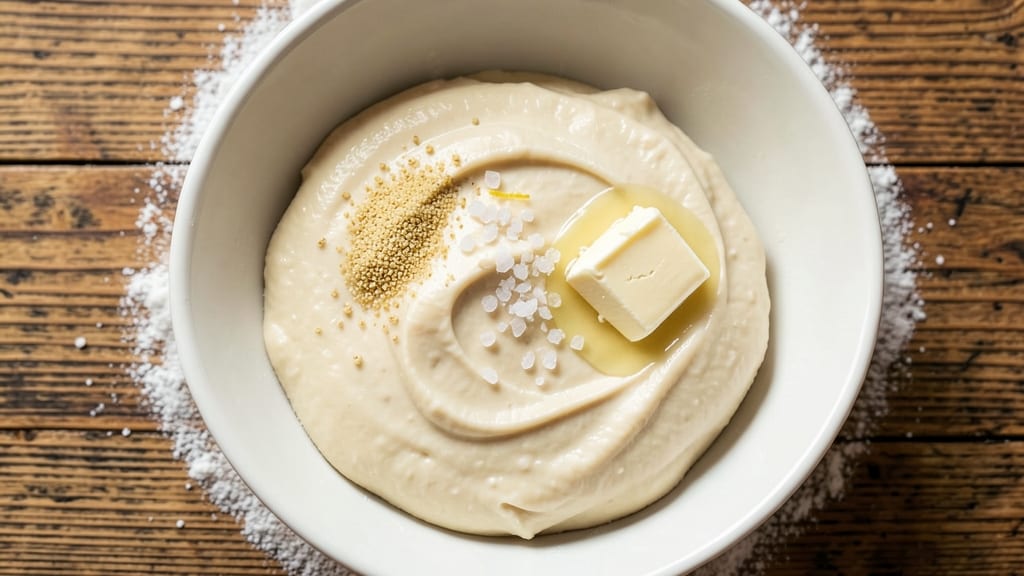
Alton Brown's white bread recipe delivers that perfect balance of crispy crust and cloud-soft interior that makes every slice irresistible. The secret lies in his signature techniques—autolyse for tender dough and foil sealing for that signature crust.
I've perfected this method after years of baking, and it never fails to impress, whether you're serving it with butter or pairing it with soup.
This recipe starts with a simple yet precise dough formulation, where proper hydration and kneading create a light, airy texture. The dough undergoes a gentle rise, followed by shaping into a classic loaf.
What sets this apart is the foil-sealed crust technique, which traps steam and delivers that signature crispy exterior while keeping the crumb tender and fluffy.
By the time you pull that golden-brown loaf from the oven, you'll have bread that's crisp on the outside and impossibly soft inside. The aroma alone will have everyone gathering around the table.
This is the kind of bread that transforms ordinary meals into something special, and it's easier to make than you might think.
Serve it fresh with butter, or toast slices for a comforting breakfast. The beauty of this recipe is its versatility—it works as a side dish, a snack, or even the star of your meal. Let's get started on baking bread that's worth every bite.
Ingredients for alton brown white bread
Nine simple ingredients transform into Alton Brown's legendary white bread—crisp crust, cloud-soft crumb.
| Ingredient | Amount | Notes |
|---|---|---|
| All-Purpose Flour 🌾 | 5 cups | Bread flour for better structure |
| Instant Yeast 🍞 | 2 ¼ tsp | Active dry yeast works too |
| Granulated Sugar 🍚 | ¼ cup | White sugar preferred |
| Salt 🧂 | 1 ½ tsp | Diamond Crystal preferred |
| Unsalted Butter 🧈 | ½ cup | Cold, cubed for autolyse |
| Warm Water 💧 | 1 ¼ cups | 110°F for yeast activation |
| Alton Brown's Foil 📄 | 1 sheet | Heavy-duty aluminum foil |
| Cornmeal 🌽 | 2 tbsp | For dusting baking sheet |
| Large Eggs 🥚 | 1 whole | Room temperature preferred |
| Whole Milk 🥛 | ¼ cup | Warmed for dough enrichment |
The flour is non-negotiable here. King Arthur or Bob's Red Mill bread flour gives that signature open crumb, but all-purpose works in a pinch. I grab mine from Whole Foods in bulk—cheaper and fresher. The yeast matters too: Saf-Instant is my go-to because it doesn't need proofing, but active dry works if you're patient. Butter should be cold when mixing—Plugrá or Land O'Lakes work perfectly. And that foil? Reynolds Heavy-Duty is what Alton uses in his show—it holds up during baking.
No bread flour? Add 1 tbsp vital wheat gluten to all-purpose for better structure. Short on butter? Vegetable shortening gives similar texture (though less flavor). The warm water should feel like bathwater—110°F is ideal, but don't stress if it's 105°F. Milk can be swapped for buttermilk or even water if you're in a bind. Eggs? Omit entirely if vegan—just add 1 tbsp melted butter to the dough instead. And that cornmeal? Semolina works just as well for dusting.
Dough keeps for 3 days wrapped in plastic in the fridge. For longer storage, freeze shaped loaves wrapped in foil for up to 3 months. I like to bake one loaf fresh and freeze the second—just thaw at room temp before slicing. The foil-sealed crust stays crisp for 24 hours at room temperature, but after that, toast it to revive. Leftovers? French toast or bread pudding are my favorite ways to use up stale slices.
Why You'll Love This Recipe
- No-Knead Magic: That cold water and instant yeast combo means I skip the whole messy kneading process—just mix, rest, and bake. The dough comes together in minutes, and honestly? It’s one less chore I’ll ever dread again.
- Buttery Soft Crust: The cold butter folded into the dough gives you that perfect tender crumb and a crust that’s crisp without being dry. I’ll be real: it’s the kind of bread that makes toast taste like a guilty pleasure.
- Weeknight Hero: This loaf is my go-to for sandwiches, toast, or even French toast—no fancy prep, just slice and serve. Between us, it’s the bread that actually stays fresh for days, not the sad, stale kind that disappears in one morning.
- Pantry Staple: Five ingredients, zero specialty items, and it costs me less than store-bought. I make a double batch on Sundays, freeze half, and still have bread for days. Budget-friendly? More like budget savior.
Step-by-step instructions for Alton brown's white bread
Here's the method that guarantees a crisp foil-sealed crust and that signature cloud-soft interior.
Mix the Dough Using the Autolyse Technique
In a large mixing bowl, combine the 5 cups all-purpose flour and 1.25 cups warm water (about 110°F). Mix with a wooden spoon or dough whisk until just combined—no dry bits should remain. This initial mix creates the autolyse, which helps develop gluten more evenly and creates a softer crumb.
Cover the bowl with a damp towel and let the dough rest for 30 minutes. You'll notice the dough will become more pliable and easier to handle during this time. This resting period is crucial—it allows the flour to fully hydrate and the gluten to begin relaxing, making the next steps much easier.
Add Yeast, Sugar, Salt, Butter, and Milk
After the autolyse, add the 2.25 teaspoons instant yeast, 0.25 cup granulated sugar, 1.5 teaspoons salt, 0.5 cup cold cubed unsalted butter, and 0.25 cup warmed whole milk to the bowl. Using your hands or a dough scraper, work these ingredients into the dough until fully incorporated.
Knead the dough for about 8-10 minutes by hand or 5-6 minutes with a stand mixer fitted with a dough hook. The dough should be smooth, elastic, and slightly tacky but not sticky. If it feels too dry, add 1 teaspoon warm water at a time until it reaches the right consistency. The butter should be fully incorporated but still visible in small pockets—this ensures a tender crumb.
First Rise and Shape the Loaf
Place the dough in a lightly oiled bowl, cover it with a damp towel, and let it rise in a warm place for 1-1.5 hours or until it has nearly doubled in size. You'll know it's ready when you poke the dough gently and it springs back slowly, leaving a slight indentation.
Once risen, turn the dough out onto a lightly floured surface and gently shape it into a 9x5-inch loaf pan. Press the dough into the corners of the pan to ensure even rising. Cover the pan with a damp towel and let it rise again for 30-45 minutes until it's just slightly above the top of the pan. This second rise ensures a good oven spring for that classic white bread height.
Seal with Foil and Bake
Preheat your oven to 375°F. Cut a 9x5-inch piece of Alton Brown's foil and place it on a baking sheet. Dust the foil generously with 2 tablespoons cornmeal—this prevents sticking and creates that signature crisp crust. Transfer the risen dough from the loaf pan onto the cornmeal-dusted foil.
Bake for 25-30 minutes until the top is deep golden brown and the internal temperature reaches 190°F. The foil acts like a steam chamber, creating that crispy crust while keeping the interior tender. If the top browns too quickly, tent the foil with a second sheet of foil to prevent over-browning.
Cool and Slice for Perfect Texture
Remove the bread from the oven and let it cool in the pan for 5 minutes. Then transfer it to a wire rack to cool completely for at least 1 hour. This cooling period is essential—it allows the bread to set properly and prevents a gummy texture.
Slice the bread with a serrated knife while it's still slightly warm for cleaner cuts. The interior should be cloud-soft with a fine, even crumb, while the foil-sealed crust remains crisp. Store any leftovers in an airtight container at room temperature for up to 3 days or freeze for longer storage.
Pro Tips For Making Alton Brown White Bread
- Measure Butter Precisely: The recipe calls for 2 tablespoons of cold butter—don’t eyeball it. Use a kitchen scale for accuracy, or pack the butter firmly into a 1-tablespoon measure and tap it down. I learned this the hard way when my loaf turned out greasier than a diner biscuit.
- Skip the Overmixing: Once you add the yeast mixture, stir just until combined—maybe 10-12 strokes max. Overmixing develops gluten too early, and your bread will turn out dense. Think "gentle but thorough," not "beat it like a smoothie."
- Let the Dough Rest Long Enough: After the first rise, resist the urge to shape it immediately. Let the dough sit at room temp for 10-15 minutes while you prep the pan—this relaxes the gluten and makes shaping easier. I used to rush this, and my loaves always looked like they’d been kneaded by a linebacker.
- Use a Thermometer for Proofing: The dough should double in size when proofed, but temperature matters more. Aim for 75-78°F—any cooler, and it’ll take forever; too warm, and it’ll rise too fast. I bought a cheap digital thermometer after my third failed batch where the dough just sat there like a lazy teenager.
Dietary considerations for this dish
Gluten-Free Adaptation
For a gluten-free version, replace the 5 cups all-purpose flour with a 1:1 gluten-free baking flour blend like King Arthur Measure for Measure or Bob's Red Mill 1-to-1. These blends contain xanthan gum, which mimics gluten's structure.
Add 1 extra teaspoon xanthan gum if your blend doesn’t include it. The autolyse step still works—just mix the flour blend with 1.25 cups warm water and let it rest for 30 minutes. 🌾
Expect a denser crumb, so extend the kneading time to 10-12 minutes by hand or 7 minutes in a mixer. Proofing may take 10-15% longer—check for readiness by doing the finger test (gentle poke should leave a slow indentation).
Bake at 375°F for 30-35 minutes until golden and the internal temp hits 190°F. The foil-sealed crust will still crisp up!
Dairy-Free Options
Skip the 0.5 cup unsalted butter and 0.25 cup whole milk—replace them with 0.5 cup coconut oil (solid) and 0.25 cup unsweetened almond milk, both warmed to 110°F. The coconut oil adds richness without dairy, though the flavor will be subtly different.
For extra tenderness, add 1 tablespoon ground flaxseed mixed with 3 tablespoons water (let it sit for 5 minutes to gel) to replace the egg’s binding properties.
Proofing times remain the same, but the dough may feel slightly stickier. Dust your work surface with semolina flour instead of all-purpose to prevent sticking. The crust will still crisp beautifully under the foil, though it may brown faster—watch closely after 25 minutes.
Lower-Carb Version
Cut carbs by swapping 2 cups all-purpose flour for 2 cups almond flour (finely ground). Add 0.5 cup psyllium husk powder to improve structure—this mimics gluten’s elasticity. Reduce the 0.25 cup sugar to 2 tablespoons and use 0.25 cup monk fruit sweetener for a zero-carb option.
The dough will be drier, so add 1-2 extra tablespoons warm water during kneading.
Proofing takes 5-10% longer—monitor closely. Bake at 375°F for 35-40 minutes until the internal temp reaches 190°F. The crust will be crispier but less chewy. Store in an airtight container with a silica gel packet to retain moisture.
Allergen-Friendly Swaps
For egg-free bread, omit the egg entirely and add 1 tablespoon melted butter or oil to the dough for moisture. If avoiding dairy, use nutritional yeast (1 tablespoon) for a cheesy flavor in place of milk/butter.
For soy-free, ensure your yeast is soy-free (like Red Star Vegetarian Yeast) and check flour blends for soy additives.
Always check labels—some instant yeast brands contain soy lecithin. If you’re sensitive to nightshades, omit the cornmeal and use rice flour instead for dusting. The foil-sealed method still works, but these swaps may slightly alter texture—adjust hydration as needed.
Nutrition facts
Frequently asked questions
Why does Alton Brown's white bread use autolyse?
The autolyse step (mixing flour and water first) creates a more elastic gluten structure and softer crumb. It relaxes the dough, making kneading easier and improving texture. This technique is key to that signature cloud-soft interior while keeping the crust crisp.
Can I make this bread without a loaf pan?
Yes! Shape the dough into a round boule or batard instead. Place it on a parchment-lined baking sheet with cornmeal, then bake using the same foil-sealing method. The crust will still crisp beautifully, though the shape will differ from traditional white bread.
What if my dough doesn't rise properly?
Check your yeast first—it may be old or exposed to cold. Warm the water to 110°F (like bathwater) and test yeast by mixing 1 tsp yeast + 2 tsp sugar + 2 tbsp warm water. If it doesn't foam in 5 minutes, replace it. Also ensure your dough is in a warm spot (75-80°F) for rising.
How do I store leftovers to keep them fresh?
Wrap cooled bread tightly in plastic wrap or aluminum foil to lock in moisture. Store at room temperature for 3 days or freeze for up to 3 months. For extra crispiness, reheat slices in a 350°F oven for 5-7 minutes before serving.
Why does the foil crust method matter?
The foil traps steam during baking, creating a crisp exterior while keeping the crumb tender. Without it, the crust may become tough. The cornmeal coating adds texture and prevents sticking. This technique is Alton's signature trick for restaurant-quality bread at home!