
Side Dishes
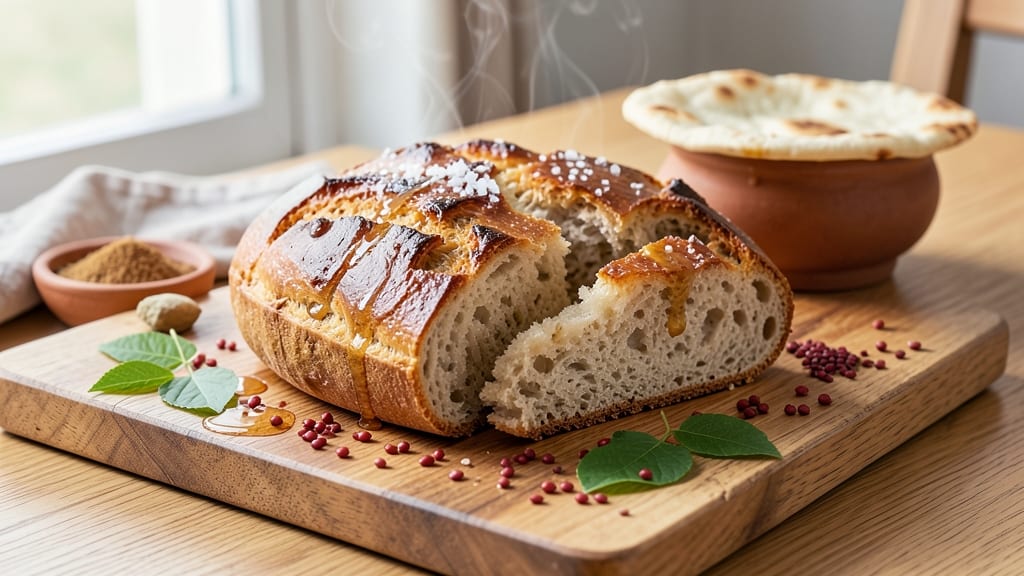
This Ambasha bread recipe brings the soul of Ethiopian cuisine to your kitchen with its signature spiced, spongy texture and aromatic flavors. 🌟 Born from the tradition of injera-style fermentation, this flatbread is designed to soak up rich stews like berbere-spiced wat or tender doro wat, transforming every bite into a flavorful experience.
Unlike its sourdough cousin, Ambasha uses a quick-rise method that still delivers that signature tangy depth.
The secret lies in the dough—where teff flour (or a blend with all-purpose) creates a subtle earthiness, while spices like cardamom, coriander, and fenugreek infuse warmth without overpowering. The dough rests just long enough to develop flavor without requiring overnight patience, making it accessible yet authentic.
Perfect for pairing with hearty Ethiopian dishes or serving as a standalone snack with honey and spiced butter.
What sets Ambasha apart is its versatile texture: crisp at the edges, soft and slightly chewy in the center, with a faintly spiced aroma that lingers. Unlike injera, it doesn’t tear easily, making it ideal for scooping up stews or wrapping around meats.
The baking technique—high heat, quick cook—locks in those spices while keeping the interior tender, just like you’d find in Ethiopian restaurants.
Whether you're serving a full gomen feast or simply craving a flavorful side, this recipe delivers restaurant-quality results with minimal effort. The dough comes together in under 30 minutes, and the baking process is hands-off, leaving you free to focus on the main dish.
Ready to elevate your meal with a taste of Ethiopia?
Ingredients for ambasha bread
Spiced flours, warm water, and a touch of honey create this Ethiopian flatbread magic.
| Ingredient | Amount | Notes |
|---|---|---|
| Teff Flour 🌾 | 1 ½ cups | Light brown preferred for authentic flavor |
| All-Purpose Flour 🌾 | 1 ½ cups | For lighter texture, blend with teff |
| Active Dry Yeast 🍞 | 1 tbsp | Ensure yeast is fresh for proper rise |
| Warm Water 💧 | 1 ¼ cups | 110°F for optimal yeast activation |
| Granulated Sugar 🍬 | 1 tbsp | Feeds yeast for better fermentation |
| Salt 🧂 | 1 tsp | Diamond Crystal preferred for balance |
| Ground Cardamom 🌿 | 1 tsp | Freshly ground for maximum aroma |
| Ground Coriander 🌿 | 1 tsp | Toasted for deeper flavor profile |
| Ground Fenugreek 🌿 | ½ tsp | Key for authentic Ethiopian taste |
| Vegetable Oil 🫒 | 1 tbsp | For dough elasticity |
| Honey 🍯 | 1 tbsp | Adds subtle sweetness and tenderness |
| Olive Oil 🫒 | 1 tbsp | For brushing and rich flavor |
Teff flour is the heart of Ambasha, giving it that signature earthy depth. Bob's Red Mill or Ethiopian markets carry the best quality—look for light brown teff, which is milder than the darker variety. If you can't find teff, a 50/50 blend with all-purpose flour works in a pinch, though the flavor won't be quite as authentic. The spices are non-negotiable: cardamom, coriander, and fenugreek are the holy trinity of Ethiopian baking. Penzeys sells pre-ground blends, but toasting whole spices first makes all the difference. For the yeast, always check the expiration date—old yeast won't activate properly, and you'll end up with flat, flavorless bread.
No teff flour? Substitute with 100% all-purpose flour, but expect a less authentic texture. Running out of cardamom? Cinnamon at half the amount gives a similar warmth, though not the same complexity. The honey can be swapped for maple syrup if you prefer, but it won't caramelize the same way. For a quicker rise, instant yeast at double the amount works, though the flavor won't be as developed. If your dough feels too sticky, add a splash more flour—Ambasha should be soft but manageable. And trust me, don't skip the olive oil brush—it's what gives those crisp edges their signature snap.
This dough is best used fresh, but you can prep it up to 24 hours ahead and let it rest in the fridge. Cover it tightly with plastic wrap to prevent drying. For baking, preheat your oven to 425°F—a pizza stone or baking sheet works best. These keep well for 3 days at room temperature, wrapped in a clean kitchen towel to maintain softness. Freeze any extras for up to 3 months—just thaw at room temperature before serving. Pro tip: Reheat in a dry skillet for 30 seconds per side to restore that crispy texture.
Why You'll Love This Recipe
- No-Knead Magic: Honestly, I love that this bread requires zero kneading—just mix, let it rise, and bake. The teff flour gives it a subtle earthiness that pairs perfectly with the lightness of all-purpose flour, and the yeast does all the heavy lifting while I sip my coffee.
- Earthy Sweet Crunch: That hint of sugar in the dough caramelizes just enough to give the crust a delicate sweetness, while the teff flour adds a nutty depth you won’t find in regular bread. It’s like a warm hug in every bite—simple, but ridiculously satisfying.
- Weeknight Workhorse: Between us, this bread is my go-to for breakfast toast, lunch wraps, or even a quick snack. The dough keeps well in the fridge for days, so I can prep it once and use it all week—no last-minute baking stress.
- Budget-Friendly Staple: Teff flour might sound fancy, but a little goes a long way, and the rest of the ingredients are pantry basics. I stretch one batch into three meals: toast for breakfast, sandwiches for lunch, and dinner rolls. Plus, leftovers freeze like a dream.
Step-by-step instructions for Ethiopian spice-infused flatbread
Here's how to craft this fragrant, slightly sweet bread with perfect texture every time.
👨🍳 Step 1: Activate the Yeast and Mix the Wet Ingredients
In a small bowl, combine the 1 tbsp granulated sugar, 1.25 cups warm water (110°F—test with your finger, it should feel warm but not hot), and 1 tbsp active dry yeast. Let it sit for 5-10 minutes until foamy. This is your yeast activation test—if nothing happens, your yeast might be dead, and you'll need to start over.
In a separate large bowl, whisk together the 1 tbsp honey, 1 tbsp vegetable oil, 1 tbsp olive oil, 1 tsp salt, 1 tsp ground cardamom, 1 tsp ground coriander, and 0.5 tsp ground fenugreek. The spices should bloom immediately, filling your kitchen with that warm, earthy Ethiopian aroma. This is where the magic starts—those spices are the soul of ambasha.
👨🍳 Step 2: Combine and Knead the Dough
Pour the activated yeast mixture into the spice-oil mixture and stir until fully combined. Gradually add the 1.5 cups teff flour and 1.5 cups all-purpose flour, mixing with a wooden spoon until a shaggy dough forms. Here's the thing—teff flour is dense, so don't be surprised if it looks like too much, but trust me, it'll come together.
Turn the dough onto a lightly floured surface and knead for 8-10 minutes until smooth and elastic. You're looking for a dough that springs back when poked but doesn't feel sticky. If it's too dry, add 1 tsp warm water at a time; if too sticky, add 1 tbsp flour. The kneading develops gluten, which gives ambasha its signature chewy yet tender texture.
⏰ Step 3: First Rise and Punch Down
Lightly oil a large bowl, place the dough inside, and cover with a damp kitchen towel. Let it rise in a warm place for 1-1.5 hours until it doubles in size. The dough should feel light and airy when pressed gently with one finger—it should leave a slight indentation but not collapse completely.
Once doubled, punch down the dough to release any large air bubbles, then divide it into 8 equal portions (about 3.5 ounces each). Roll each portion into a ball, cover, and let rest for 15 minutes. This resting period relaxes the gluten, making the dough easier to roll out without tearing. Real talk: skipping this step often leads to uneven thickness in your flatbreads.
🍳 Step 4: Roll and Cook the Flatbreads
Heat a clean skillet or griddle over medium-high heat until very hot. Working with one dough ball at a time, roll it out on a floured surface to about ⅛-inch thickness—ambasha should be thin but not translucent. You'll know the pan is ready when a drop of water sizzles and dances across the surface.
Carefully place the rolled-out dough in the pan and cook for 1-2 minutes per side until golden brown spots appear and the edges lift easily. Here's where it gets fun—you'll see those characteristic bubbles forming on the surface, and the aroma will make your mouth water. Transfer to a clean towel to keep warm while you cook the rest. Don't stack them or they'll steam instead of staying crisp.
🍽️ Step 5: Serve Warm with Your Favorite Ethiopian Dish
Ambasha is best served immediately while still warm and slightly crisp at the edges. The combination of teff flour and those warm spices gives it a unique, slightly sweet flavor that pairs perfectly with spicy stews or as a wrap for injera-style dishes. If you're making a batch for a meal, keep them covered with a clean kitchen towel to maintain warmth and texture.
Pro tip: Brush the cooked flatbreads with a little more olive oil while they're still warm—it adds extra richness and makes them even more irresistible. Each bite should deliver that perfect balance of chewy texture, subtle sweetness from the honey, and that unmistakable Ethiopian spice blend that makes ambasha so special.
Pro Tips For Making Ambasha Bread
- Mix the Teff First: I learned this the hard way—skip this and your dough will clump like a brick. Wet the teff flour with warm water before adding all-purpose flour, then let it sit for 5 minutes. This breaks down the tiny teff particles so they blend smoothly into the dough (no more gritty surprises later).
- Proof at Room Temp: That 90-second microwave "warm water" trick? Not here. Use a thermometer—yeast thrives at 105–110°F (40–43°C). If your water’s lukewarm to the touch, your yeast will wake up sluggish, and your bread will rise like it’s holding back. No thermometer? Stick your pinky in—if it’s comfortable, it’s too cool.
- Skip the Over-Kneading: Ambasha dough is stubborn. After the first 5 minutes of kneading, it’ll feel gummy and fight you. That’s normal—teff flour absorbs water like a sponge. Stop when the dough pulls cleanly away from the bowl (about 8–10 minutes total). Overwork it, and you’ll end up with a dense, chewy brick instead of that signature soft crumb.
- Use a Damp Towel: This isn’t just for show—it’s the thing that matters most when shaping. Teff dough dries out fast, and a dry surface makes it crack like a dried riverbed. Wet your hands and keep the dough on a floured surface covered with a damp kitchen towel while you shape it. Your future self will thank you when the crust stays intact.
Flavor customization for ambasha bread
Spice Level Boost
For a bolder flavor profile, increase the berbere spice blend by ½ tsp and add ¼ tsp cayenne pepper to the dough. This creates a subtle heat that complements rich stews like doro wat.
I’ve found that Ethiopian markets often carry pre-mixed berbere—just check the label for heat intensity. For an extra kick, sprinkle crushed red pepper flakes on the cooked flatbreads before serving. 🌶️
Sweet & Savory Twist
Swap the honey for 1 tbsp maple syrup and add ½ tsp cinnamon to the dough for a sweeter, caramelized flavor. This works beautifully with breakfast dishes or as a snack with spiced Ethiopian butter (niter kibbeh).
For a dessert version, reduce the salt to ½ tsp and add 1 tsp vanilla extract—these become delicious with Ethiopian coffee or tea. 🍯
Herb-Infused Variations
Add 1 tbsp finely chopped fresh mint or cilantro to the dough for a refreshing twist. This pairs wonderfully with vegetable-based stews or as a wrap for grilled meats. For a smoky note, mix ½ tsp smoked paprika into the spice blend—it deepens the flavor without overpowering.
Fresh herbs should be added just before the final rise to preserve their brightness. 🌿
Nutty Crunch Option
For texture contrast, sprinkle toasted sesame seeds or crushed pistachios over the rolled-out dough before cooking. These add a nutty crunch that balances the soft, chewy interior. I like using **Ethiopian shiro powder (a chickpea flour blend) in place of ½ tsp fenugreek for an extra layer of nuttiness.
Toast the seeds in a dry pan for 1-2 minutes until fragrant. 🌰
Gluten-Free Adaptation
Replace all-purpose flour with 1:1 gluten-free flour blend (like Bob’s Red Mill) and reduce the teff flour to 1 cup. Add 1 tbsp xanthan gum to improve elasticity.
The dough will be stickier, so use parchment paper for rolling. For extra binding, add 1 tbsp ground flaxseed mixed with 3 tbsp water to the wet ingredients. 🌾
Storage-Friendly Flavors
To enhance freezer storage, brush the cooked flatbreads with melted butter before freezing. This prevents drying and adds richness when reheated. For a garlic-infused version, mix 1 minced garlic clove into the olive oil before brushing. These reheat beautifully in a toaster oven for 3-5 minutes** until crisp again. 🧈
Nutrition facts
Frequently asked questions
What makes Ambasha bread different from injera?
Ambasha is a yeast-leavened flatbread while injera is fermented with natural bacteria, giving it a sour taste. The dough also contains spices like cardamom and fenugreek, and it's baked rather than steamed. Ambasha has a softer, slightly sweet texture perfect for scooping stews, whereas injera is spongy and used as both food and utensil.
Can I make Ambasha bread without teff flour?
Yes! Use a 50/50 blend of all-purpose flour and teff, or substitute with 100% all-purpose if needed. The flavor won't be identical, but the texture will remain similar. For best results, add ½ tsp extra salt to compensate for teff's natural mineral content.
How do I know when the dough is ready to roll?
The dough should double in size during the 1-1.5 hour rise and feel light when pressed. After punching down, divide into balls and let rest for 15 minutes—this relaxes the gluten for easier rolling. The dough should be soft but not sticky (add flour if needed).
Why did my Ambasha bread turn out dense?
Over-kneading or under-rising are common culprits. Use a kitchen scale for accurate dough portions and check yeast freshness—old yeast won't activate properly. Also ensure your oven is fully preheated to 425°F and use a heavy skillet for even heat distribution.
Can I make Ambasha ahead of time?
Store cooked flatbreads in an airtight container for 3 days at room temperature. For longer storage, freeze for up to 3 months. Reheat in a dry skillet for 30 seconds per side to restore crispness. The spices actually develop more flavor over time!