
Side Dishes
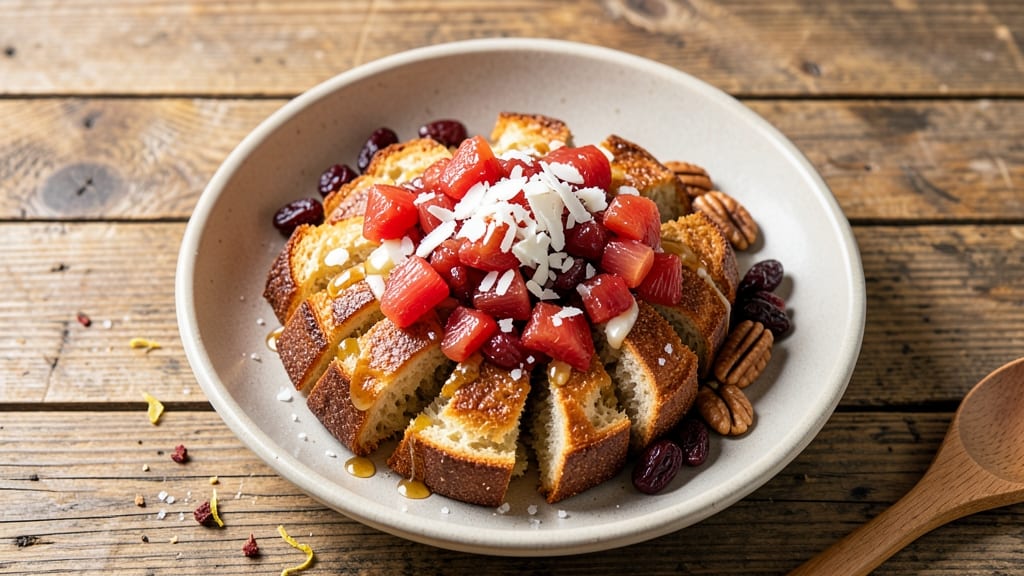
This ambrosia bread recipe transforms a simple loaf into a showstopping dessert with layers of pineapple, orange, and creamy custard swirled into golden, flaky bread.
The secret lies in balancing the sweetness of canned pineapple and orange marmalade with a velvety vanilla custard that keeps the texture tender yet sturdy enough to slice.
I developed this recipe after years of baking, refining the custard consistency and fruit distribution to ensure every bite delivers that perfect harmony of textures—crisp crust, soft bread, and bursts of juicy fruit.
The process starts with baking a classic white sandwich bread loaf, then making a rich vanilla custard that sets just enough to hold its shape when layered. The fruit filling, a mix of crushed pineapple and orange marmalade, adds moisture and that signature tropical tang.
What makes this recipe foolproof is the assembly technique: spreading the custard and fruit in thin, even layers before swirling them together with a knife. This ensures each slice has balanced flavors and no dry spots.
By the time you pull it from the oven, you'll have a loaf with a golden crust and a marbled interior of creamy custard and bright fruit. The aroma alone—warm vanilla, citrus zest, and caramelized sugar—will have everyone gathering around.
This isn't just dessert; it's a centerpiece that turns ordinary gatherings into memorable moments. The best part? It keeps well for days, so you can enjoy slices for breakfast or as an after-dinner treat.
Serve it warm with a dusting of powdered sugar or chilled with a scoop of vanilla ice cream for the full ambrosia experience. Here's how to bake it perfectly every time—no shortcuts, just proven techniques that deliver restaurant-quality results at home.
Ingredients for ambrosia bread
Golden layers of custard, pineapple, and marmalade swirled into a tender loaf—this is your showstopper dessert.
| Ingredient | Amount | Notes |
|---|---|---|
| All-Purpose Flour 🌾 | 5 cups | Sifted for even texture |
| Granulated Sugar 🍬 | ½ cup | White or light brown |
| Instant Yeast 🍞 | 2 ½ tsp | Active dry works too |
| Salt 🧂 | 1 ½ tsp | Diamond Crystal preferred |
| Unsalted Butter 🧈 | ½ cup | Cold, cubed for dough |
| Milk 🥛 | 1 ¼ cups | Warm for yeast activation |
| Large Eggs 🥚 | 2 whole | Room temperature |
| Vanilla Extract 🍃 | 1 tbsp | Pure, high-quality |
| Crushed Pineapple 🍍 | 2 cups | Drained, unsweetened |
| Orange Marmalade 🍊 | 1 cup | Smooth, seedless preferred |
| Granulated Sugar 🍬 | ¼ cup | Extra for fruit mix |
| Powdered Sugar 🍬 | ¼ cup | For dusting |
| Heavy Cream 🥛 | ½ cup | Cold for custard |
| Cornstarch 🌾 | 2 tbsp | For custard thickening |
| Orange Zest 🍊 | 1 tbsp | Freshly grated |
The flour is your foundation—King Arthur or Gold Medal brands bake up best with that perfect balance of protein and texture. Diamond Crystal kosher salt enhances flavor without overpowering, and if you're in a pinch, regular table salt works (use half the amount). The butter should be cold when you cut it into the flour—European-style butter like Plugrá has higher fat content for extra richness. For the pineapple, Dole Crushed Pineapple (unsweetened) is my go-to because it drains perfectly and keeps its texture. The marmalade? Bon Appétit or Smucker's smooth varieties work best—they blend seamlessly without grainy bits.
No crushed pineapple? Fresh pineapple works—core, dice, and crush it yourself (about 2 cups packed). Substituting marmalade? Orange jam or apricot preserves add a different depth, but reduce to 3/4 cup since they're less tangy. The custard is non-negotiable for texture—cornstarch is key for that silky set. If you're out, arrowroot powder works at the same ratio. For the orange zest, navel oranges give the brightest flavor, but blood oranges add a deeper ruby hue to the bread. The custard needs to be thick but pourable—if it's too thin, simmer longer; if too thick, whisk in a splash of milk.
The dough keeps 24 hours in the fridge wrapped tightly—perfect for making ahead. The custard mixture can be prepped a day in advance and stored in the fridge, covered with plastic wrap pressed directly on the surface. Room temperature custard spreads more evenly when layering. Once baked, the bread stays fresh 3 days at room temperature wrapped in a clean kitchen towel, or 5 days in the fridge. For longer storage, freeze slices between parchment paper for up to 3 months—thaw at room temperature before serving.
Why You'll Love This Recipe
- No-Knead Magic: I swear by this dough—just mix, let it rise, and you’re golden. The instant yeast does all the work while you’re busy with the kids (or scrolling, no judgment).
- Sweet Butter Bliss: That melted butter folded into the dough? It’s what makes this bread dangerously addictive. The sugar caramelizes just enough to give every bite a subtle, golden sweetness without being cloying.
- Weeknight Wonder: Between us, this is my go-to when I need something fresh but don’t have time to fuss. Toss it together in the morning, let it proof overnight, and bake it straight from the fridge—minimal effort, maximum reward.
- Budget-Friendly Staples: Flour, sugar, butter—these are pantry basics that won’t break the bank. Plus, a single loaf lasts my family three days, so I’m always covered without overspending. (Yes, even on a Tuesday night.)
Step-by-step instructions for pineapple-orange swirl bread
This tropical bread combines a soft, buttery dough with sweet pineapple-orange filling for a perfect balance of texture and flavor.
Prepare the Dough Base
In a large mixing bowl, combine the 5 cups All-Purpose Flour, 0.5 cup Granulated Sugar, 2.5 tsp Instant Yeast, and 1.5 tsp Salt. Whisk gently to distribute the yeast evenly through the flour. This creates a uniform foundation for the dough.
In a separate bowl, melt the 0.5 cup Unsalted Butter until fully liquid but not hot. Add the 1.25 cups Milk (warmed to 110°F to activate the yeast) and mix until smooth. Gradually pour this liquid mixture into the dry ingredients while stirring with a wooden spoon. The dough will begin to come together as the liquid absorbs.
Add the 2 whole Large Eggs and 1 tbsp Vanilla Extract, mixing until fully incorporated. The dough should be soft but manageable—if it's too sticky, add 1-2 tablespoons of additional flour. Cover the bowl with a damp towel and let it rest for 10 minutes at room temperature. This brief rest helps the gluten relax, making the dough easier to handle later.
Create the Pineapple-Orange Filling
In a medium bowl, combine the 2 cups Crushed Pineapple (well-drained), 1 cup Orange Marmalade, and 0.25 cup Granulated Sugar. Stir until the mixture is smooth and evenly distributed. The marmalade adds a tangy depth that complements the sweet pineapple perfectly.
In a separate small saucepan, whisk together the 0.5 cup Heavy Cream, 2 tbsp Cornstarch, and 1 tbsp Orange Zest. Cook over medium heat, stirring constantly, until the mixture thickens to a smooth, custard-like consistency (about 5-7 minutes). Remove from heat and let it cool slightly—this will be the creamy layer that ties the filling together.
Once cooled, fold the custard mixture into the pineapple-marmalade combination. The filling should be thick but still spoonable. Cover and refrigerate while you prepare the dough for shaping—this keeps the filling firm and easy to work with.
Shape and Swirl the Dough
On a lightly floured surface, turn out the rested dough and knead it gently for 2-3 minutes until smooth. Divide the dough into two equal portions—each should weigh roughly 16 ounces. Roll one portion into a 12-inch circle and the other into a 10-inch circle. The size difference creates the classic swirl effect.
Spread the pineapple-orange filling evenly over the 10-inch dough circle, leaving a ½-inch border uncovered. Roll up the dough tightly from one side, then gently press the seam to seal. Place this rolled dough on a parchment-lined baking sheet.
Unroll the 12-inch dough circle and drape it over the filled roll, tucking the ends underneath. Gently press the edges to seal, creating a sealed swirl shape. Cover with a damp towel and let it rise in a warm place for 45-60 minutes, or until nearly doubled in size. The dough should feel springy when pressed lightly.
Bake to Golden Perfection
Preheat your oven to 350°F. Brush the risen dough with a light coating of milk (from the remaining 1.25 cups) mixed with 1 tbsp Vanilla Extract for extra shine and flavor. Bake for 30-35 minutes, until the bread is golden brown and sounds hollow when tapped on the bottom.
While baking, sprinkle the top with 0.25 cup Powdered Sugar for a sweet, snowy finish. The sugar should melt slightly from the oven's heat, creating a delicate glaze. Remove from the oven and let the bread cool on a wire rack for 10 minutes before slicing—this prevents the filling from oozing out.
Slice into 8 equal portions for serving. The warm bread will have a soft, pillowy crust with a moist, flavorful interior where the pineapple and orange custard create pockets of sweetness in every bite.
Pro Tips For Making Ambrosia Bread
- MEASURE BUTTER COLD: Take that unsalted butter straight from the fridge—no softening needed. Cut it into small cubes and let them sit in the flour for a minute before mixing. I learned this the hard way when my dough turned greasy and sticky; cold butter creates pockets that make the bread flaky, not dense.
- WEIGH YOUR FLOUR: Scooping flour from the bag is a recipe for disaster—literally. Use a kitchen scale for the all-purpose flour; 1 cup packed vs. 1 cup scooped can throw off your dough’s texture. I was skeptical until I tried it—now my ambrosia bread rises evenly every time.
- LET THE DOUGH RISE TWICE: Skip the second rise at your peril. After shaping the dough, let it proof in a warm spot until it’s doubled, then punch it down and give it another 30-minute rise before baking. This isn’t the prettiest method, but it’s the tastiest—it develops that signature tender crumb and rich flavor.
- SALT THE WATER FIRST: When making the yeast mixture, dissolve the yeast and sugar in warm water first, then add the salt. Sounds weird, but it works: salt upfront prevents the yeast from dying before it even gets a chance to activate. My grandmother swore by this, and she was right—no more flat, sad loaves.
Make-ahead tips for leftovers
Dough Prep Ahead
Mix your dough ingredients the night before and refrigerate it overnight. The cold slows yeast activity, giving you more control during shaping. I like to cover the bowl with plastic wrap pressed directly on the surface to prevent a skin from forming.
When ready to shape, let it sit at room temperature for 30 minutes—this ensures the dough is pliable but not sticky. 🌙
Filling Prep Timeline
Make the custard and fruit filling 24 hours ahead—it actually tastes better after resting. Store the custard in an airtight container in the fridge, and keep the pineapple-marmalade mix in a separate container.
Refrigerating prevents the filling from getting too warm when you're ready to assemble, making it easier to spread evenly. The flavors meld beautifully overnight.
Assembly Shortcut
For a foolproof assembly, use a piping bag with a large round tip to spread the custard mixture. This creates even layers without messy fingers. Spread the custard on the 10-inch dough circle, then top with pineapple-marmalade mix, leaving a ½-inch border.
Roll tightly before sealing with the larger dough circle—this keeps the filling contained during baking. 💡
Rising Hack
Skip the warm oven for proofing—place your shaped loaf in a large plastic bag with a ½ cup of hot water in the bottom. Seal the bag and let it rise on your countertop.
The steam creates a humid environment that helps the dough rise evenly and prevents a dry crust. I use this method when I'm short on time or don't want to heat my kitchen further.
Baking Flexibility
Bake your bread 2 hours before serving if you're hosting—it reheats beautifully. Wrap the cooled loaf tightly in aluminum foil and reheat at 325°F for 15-20 minutes. For a crispier crust, broil for the last 2 minutes of reheating.
The custard stays creamy, and the pineapple keeps its juiciness. Perfect for breakfast crowds or dessert tables!
Storage Secrets
Slice the bread and store it in an airtight container with parchment paper between layers. Refrigerated slices stay fresh for 5 days, while frozen slices (wrapped individually) last 3 months.
To reheat, microwave 1 slice at a time for 20-30 seconds—this prevents sogginess. For a restaurant-style finish, dust with powdered sugar right before serving. ✨
Nutrition facts
Frequently asked questions
Can I make ambrosia bread without pineapple?
Swap the crushed pineapple for 2 cups diced fresh peaches or 2 cups mixed berries (like strawberries and blueberries). For tropical flavors, try 2 cups diced mango or 1.5 cups mandarin orange segments. Just reduce any extra liquid by draining well if using canned fruit. The custard ratio stays the same, but fruit with higher moisture (like peaches) may need 1 extra tbsp cornstarch in the custard to balance texture.
Why did my custard filling turn grainy?
Grainy custard usually means it wasn't cooked long enough or stirred consistently. Always whisk constantly over medium heat until it reaches a smooth, thick consistency (about 5-7 minutes). For extra insurance, strain the cooled custard through a fine-mesh sieve before folding into the fruit. If it's already grainy, blend briefly with an immersion blender to smooth it out before assembling.
How do I prevent the filling from leaking during baking?
Use these two tricks: First, chill the assembled loaf for 30 minutes before baking—this firms up the custard. Second, seal the edges tightly when draping the top dough layer. For extra security, brush the top dough with a thin layer of milk mixed with 1 tbsp melted butter before baking. The butter creates a barrier that helps contain the filling while adding richness.
Can I bake this in a smaller loaf pan?
Yes, but adjust your dough quantities. For an 8x4-inch loaf pan, reduce the dough to 3 cups flour (keeping all other ratios the same) and halve the filling. The baking time stays similar (30-35 minutes at 350°F), but check for doneness at 25 minutes since smaller pans bake faster. The swirl effect will be tighter but still beautiful!
What's the best way to serve ambrosia bread?
For a classic presentation, slice into 8 thick pieces and dust generously with powdered sugar. Serve warm with a dollop of whipped cream or a scoop of vanilla ice cream for contrast. Chilled slices work perfectly for breakfast with coffee, while warm slices make an elegant dessert. Pro tip: Arrange slices on a platter with fresh orange slices on the side for a vibrant garnish.