
Side Dishes
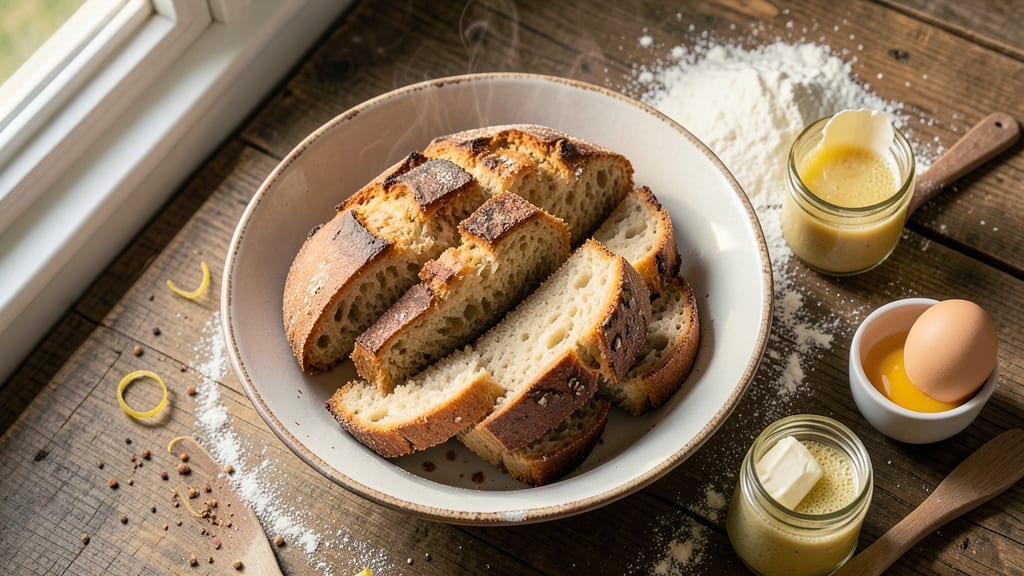
This Amish country bread recipe brings the warmth of a Pennsylvania farmhouse to your kitchen table, where every slice delivers a golden, crisp crust and a buttery-sweet interior that melts in your mouth.
The secret lies in its simple ingredients—flour, yeast, and a touch of sugar—and the patience required for slow fermentation, which builds deep flavor. Unlike commercial loaves, this bread develops a rustic charm through traditional methods that have been passed down for generations.
The process is straightforward but requires attention to detail: mixing, kneading, shaping into a round loaf, and baking until the crust turns a rich amber. The result is a loaf with a crunchy exterior and a tender, slightly dense crumb that soaks up butter like a dream.
This bread isn’t just for sandwiches—it’s perfect with jam for breakfast, alongside soups for lunch, or as a side for holiday meals.
What makes this recipe special is its authentic Amish roots, where simplicity and hard work create something extraordinary. There’s no fancy equipment needed—just time, a little elbow grease, and a well-seasoned Dutch oven if you’re aiming for that perfect crust.
The aroma alone will fill your home with nostalgia, transporting you to a slower, simpler time.
Once baked, let the loaf cool completely before slicing to preserve its texture. Store it in a bread bag or wrapped in a towel to keep it fresh for days.
Whether you’re serving it warm with honey or saving slices for toast, this bread is a homestyle treasure that belongs in every kitchen. Let’s get started on making yours.
Ingredients for amish country bread
Simple pantry staples transform into rustic Amish bread with a golden crust and buttery sweetness inside.
| Ingredient | Amount | Notes |
|---|---|---|
| All-Purpose Flour 🌾 | 5 cups | White or whole wheat blend |
| Active Dry Yeast 🍞 | ¼ oz | Or 2 packets (1/4 oz each) |
| Granulated Sugar 🍚 | ¼ cup | Light brown sugar for deeper flavor |
| Unsalted Butter 🧈 | ½ cup | Cold, cubed for mixing |
| Large Eggs 🥚 | 1 whole | Room temperature |
| Warm Water 💧 | 1 ¼ cups | 110°F for yeast activation |
| Salt 🧂 | 1 ½ tsp | Diamond Crystal preferred |
| Milk 🥛 | ¼ cup | Whole milk for richness |
| Cornmeal 🌽 | ½ cup | For dusting work surface |
The flour is the foundation—King Arthur or Gold Medal brands work beautifully for that tender crumb. Yeast matters here: check the expiration date—old yeast won’t activate properly. For the butter, use European-style if possible (higher fat content, 82% butterfat)—it makes the bread richer. If you’re feeling fancy, substitute half the flour with whole wheat for a rustic twist, but keep it under 50% or the texture gets dense. The milk adds softness, but any milk works—even powdered if that’s what’s in your pantry.
No cornmeal? Semolina or all-purpose flour works in a pinch for dusting. Short on butter? Use vegetable shortening (same amount) or melted coconut oil (though the flavor will differ slightly). The sugar can be swapped for honey or maple syrup (reduce by 1 tbsp), but keep it to 1/4 cup max or the bread turns gummy. Room temperature egg is key—cold eggs won’t mix well. If your yeast packet is old, test it first by dissolving in warm water with a pinch of sugar—it should foam in 5-10 minutes.
This dough keeps for up to 24 hours in the fridge if wrapped tightly in plastic. For longer storage, freeze shaped loaves (unbaked) for up to 3 months—thaw overnight before baking. Once baked, cool completely on a wire rack to prevent sogginess. Store wrapped at room temp for 3-4 days or freeze sliced bread for up to 6 months. The crust stays crispy when reheated—wrap a slice in foil and warm in a 350°F oven for 5 minutes.
Why You'll Love This Recipe
- No-Knead Magic: The dough comes together in minutes—just mix, let it rise, and bake. Honestly, I’ve made bread that required more effort for half the flavor, and this recipe beats them all.
- Buttery Golden Crust: That crispy, caramelized edge from the butter and sugar? It’s the kind of crust you’ll want to break off with your hands. The inside stays soft—perfect for soaking up gravy or jam.
- Weeknight Workhorse: Toss in a loaf for breakfast or dinner—it’s great toasted, sliced for sandwiches, or even as a side for soup. I’ve used it for everything from corned beef hash to grilled cheese, and it never lets me down.
- Budget-Friendly Staple: A few pantry basics stretch into a whole loaf, and leftovers stay fresh for days. Between us, this is the bread that actually makes me happy when I open the fridge to find stale ends from last week.
Step-by-step instructions for Amish country bread
Here's how to bake that classic homestyle loaf with a crisp crust and tender interior.
Activate the Yeast for Perfect Rise
In a small bowl, combine the 1.25 cups warm water (about 110°F) with the 0.25 cup granulated sugar and 0.25 oz active dry yeast. Let it sit for 5-10 minutes until frothy—this tells you the yeast is alive and ready to work. If it doesn't bubble, your yeast might be dead, and you'll need to start over.
While waiting, lightly grease a 9x5-inch loaf pan with butter. This prevents sticking and makes removal easier later. I like to use a pastry brush for even coverage. The pan should be warm but not hot—just enough to hold the grease without melting it immediately.
Mix the Dough Until Smooth
In a large mixing bowl, whisk together the 5 cups all-purpose flour and 1.5 tsp salt. Create a well in the center and add the yeast mixture, 1 whole large egg, 0.25 cup milk, and 0.5 cup cold cubed butter. The butter should be cold to prevent overmixing and to keep the dough from becoming too sticky.
Mix with a wooden spoon or dough whisk until the ingredients come together. Then, switch to your hands and knead for 8-10 minutes on a lightly floured surface until the dough is smooth and elastic. You'll know it's ready when it springs back slowly when poked. If it feels too sticky, add 1 tablespoon of flour at a time until it's manageable.
Let the Dough Rise Until Doubled
Place the dough back in the bowl, cover it with a damp kitchen towel, and let it rise in a warm spot for 1-1.5 hours or until it has doubled in size. I like to turn my oven light on for a few minutes to create a warm environment—this helps speed up the process without overworking the yeast.
After the first rise, punch down the dough to release air bubbles. Shape it into a loaf by rolling it tightly from one end to the other, then place it seam-side down in the prepared loaf pan. Cover it again and let it rise for another 30-45 minutes until it's just about ready to overflow the pan.
Bake for a Golden, Crisp Crust
Preheat your oven to 375°F. Once the oven is hot, brush the top of the dough with a little milk and sprinkle 0.5 cup cornmeal evenly over the surface. This gives the bread its signature crisp crust and adds a subtle nutty flavor. Bake for 35-40 minutes until the top is golden brown and the internal temperature reaches 190°F when checked with an instant-read thermometer.
If the top browns too quickly, tent the loaf with aluminum foil to prevent overbrowning while it finishes baking. The bread should sound hollow when tapped on the bottom. Let it cool in the pan for 10 minutes, then transfer to a wire rack to cool completely before slicing. This resting time ensures clean slices and prevents a gummy texture.
Pro Tips For Making Amish Country Bread
- Bloom the Yeast First: Skip mixing yeast into dry flour—dissolve it in warm water (110°F) with a pinch of sugar first, then let it foam for 5 minutes. I learned this the hard way after dead yeast ruined a batch; this guarantees your dough rises properly.
- Soften Butter Properly: Use cold butter cut into small cubes, not melted—it should hold shape when pressed but yield slightly. My grandmother swore by this, and it keeps the crumb tender while still delivering that rich flavor.
- Knead Until Silky: Keep kneading by hand until the dough springs back slowly when poked and feels smooth like satin—not sticky, not rough. I was skeptical until I tried it; this prevents dense bread and ensures even baking.
- Preheat Pan with Butter: Coat your baking pan with softened butter before shaping the dough, then bake as directed. The butter creates a nonstick barrier and adds that signature golden crust—no extra effort, just better results.
Wine and beer pairings for these flavors
Classic American Beer Pairings
This bread’s buttery sweetness and rustic crust pair beautifully with amber ales like Fat Tire from New Belgium. The caramel and malt notes complement the bread’s subtle sweetness without overpowering it. I always keep a cold one nearby when baking—it’s the perfect balance of crisp and smooth. 🍺
For a lighter option, try a wheat beer such as Blue Moon. The citrusy hops cut through the richness of the butter, creating a refreshing contrast. The effervescence also helps cleanse your palate between bites of the warm, crusty bread.
Wine Pairings for Elegance
A dry Riesling from Germany or Washington State elevates this bread to a more sophisticated level. The wine’s bright acidity and stone fruit flavors mirror the bread’s buttery sweetness while adding complexity. I recommend chilling it slightly—around 50°F—to enhance its crispness against the warm bread. 🍷
If you prefer red, a Pinot Noir with its lighter body and red fruit notes works wonderfully. Look for one from Oregon’s Willamette Valley—it won’t overpower the bread’s delicate flavors. The tannins are gentle enough to let the bread’s crusty exterior shine.
Unexpected but Delicious Liquor Pairings
For a cozy evening, serve this bread with a bourbon like Buffalo Trace. The caramel and vanilla notes in the whiskey enhance the bread’s buttery sweetness, creating a comforting pairing. I like to take a small sip between bites to savor both flavors. 🥃
A honey-infused gin such as Hendrick’s Garden also works surprisingly well. The floral and citrus notes in the gin complement the bread’s cornmeal crust, while the honey adds a subtle sweetness that mirrors the bread’s interior. It’s a refreshing twist that’s perfect for afternoon tea.
Non-Alcoholic Options
For those avoiding alcohol, a sparkling apple cider like Martinelli’s is a fantastic choice. The effervescence and tartness cut through the bread’s richness, making each bite feel lighter. It’s especially refreshing when served chilled. 🍏
Or try a chilled hibiscus tea with a touch of honey. The tartness of the tea balances the bread’s sweetness, while the honey adds a complementary depth. Brew it strong and serve it ice-cold for the best experience.
Nutrition facts
Frequently asked questions
Why does Amish country bread have a crisp crust but soft interior?
The secret lies in the cornmeal topping and proper baking technique. The cornmeal creates a sturdy barrier that promotes even browning and crispness, while the butter and milk in the dough keep the interior tender. Baking at 375°F with steam from the milk creates that perfect contrast—just like traditional hearth-baked breads.
Can I make this bread without a loaf pan?
Shape the dough into a round loaf and bake it on a parchment-lined baking sheet> at 375°F for 30-35 minutes. Brush with milk and sprinkle cornmeal before baking. For extra crustiness, bake in a Dutch oven> with the lid on for the first 20 minutes>, then remove the lid and finish baking. This mimics old-fashioned oven-baked bread.
How do I know when the dough has risen enough?
Your dough is ready when it has doubled in size> and leaves a noticeable indentation when gently pressed with one finger. For the first rise, this should take 1-1.5 hours>. After shaping, it needs just 30-45 minutes> to rise again—it should puff slightly above the pan's rim. If it rises too quickly, your kitchen might be too warm (ideal temp is 75-80°F>).
What's the best way to store leftover Amish bread?
Wrap the cooled loaf tightly in plastic wrap> or place it in a bread bag> to maintain freshness. Store at room temperature for 3-4 days>. For longer storage, slice the bread and freeze in airtight containers for up to 6 months>. To revive stale slices, wrap them in foil and warm at 350°F for 5-10 minutes>—they'll taste almost fresh-baked!
Can I add herbs or seeds to this recipe?
Yes! Try adding 1 tablespoon of dried herbs> (like rosemary or thyme) or 2 tablespoons of poppy/flaxseeds> during the final kneading. For a savory twist, reduce the sugar to 2 tablespoons> and add 1 teaspoon of garlic powder**>. Just remember—herbs should be finely chopped to distribute evenly. The traditional recipe keeps it simple, but these variations work beautifully!