
Side Dishes
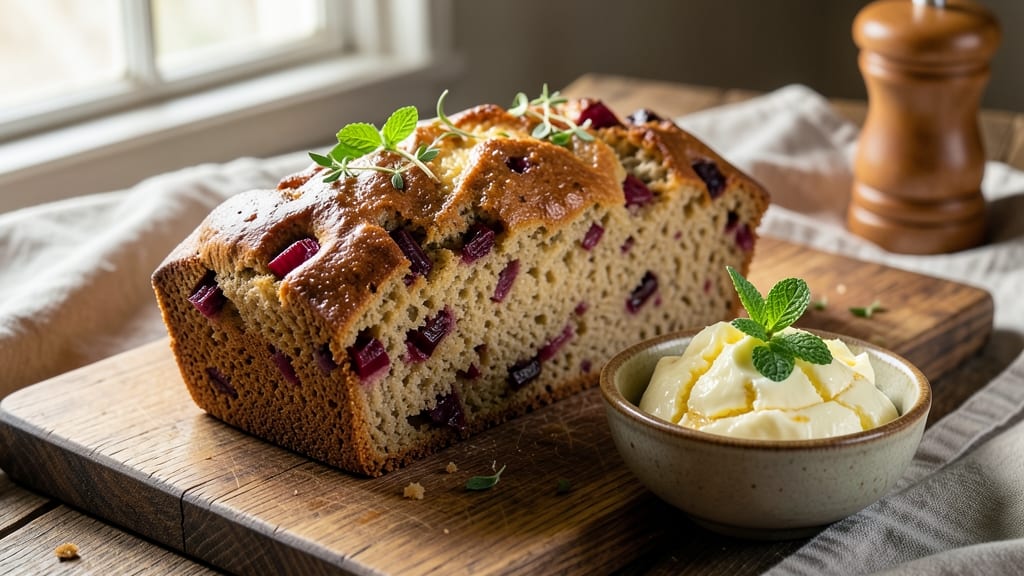
This Amish rhubarb bread recipe brings the heart of Pennsylvania farm kitchens to your oven with its signature tart-sweet swirls and foolproof foil-sealed technique. 💛 Born from Amish communities' resourcefulness, this bread transforms humble rhubarb into a golden-crusted loaf with juicy, caramelized fruit pockets that lock in moisture during baking.
The secret lies in the dough's tender crumb and the rhubarb's perfect balance of sharpness and natural sweetness—no added sugar needed.
The beauty of this recipe is its simplicity: just a few pantry staples and fresh rhubarb create a loaf that's both rustic and impressive.
Unlike traditional fruit breads, the Amish method uses a simple yeast dough that wraps around the fruit, creating those iconic swirls while the foil seal ensures every bite stays moist. It's the kind of bread that disappears faster than you can slice it—perfect for breakfast, gifts, or holiday tables.
What makes this recipe truly special is how the rhubarb transforms during baking. The foil seal traps steam, allowing the fruit to caramelize while keeping the bread's crust perfectly crisp.
Each slice reveals tender, flaky layers with pockets of jammy rhubarb that burst with every bite. The aroma alone will have your kitchen smelling like a Pennsylvania farmhouse in spring.
Best served warm with butter or as a side to ham, this bread captures the essence of Amish baking traditions while being approachable for any home cook. The recipe yields two loaves—one for today, one for tomorrow. Let's get started on this classic that's as comforting as it is delicious.
Ingredients for amish rhubarb bread
Fresh rhubarb and pantry staples create two golden loaves with jammy fruit pockets—no sugar added needed!
| Ingredient | Amount | Notes |
|---|---|---|
| All-Purpose Flour 🌾 | 5 cups | Unbleached for best texture |
| Rhubarb 🍓 | 2 ½ cups | Freshly chopped, stems removed |
| Granulated Sugar 🍚 | ½ cup | Light brown preferred |
| Active Dry Yeast 🍞 | 2 ¼ tsp | Freshly measured, not expired |
| Unsalted Butter 🧈 | ½ cup | Cold, cubed for dough |
| Milk 🥛 | ¼ cup | Warm, not hot |
| Egg 🥚 | 1 whole | Room temperature |
| Salt 🧂 | ½ tsp | Diamond Crystal preferred |
| Vanilla Extract 🌸 | 1 tsp | Pure extract, not imitation |
| Aluminum Foil 📄 | 1 sheet | Heavy-duty for sealing |
| Coarse Sugar 🍚 | ¼ cup | For topping, optional |
Rhubarb is the star here, so grab the brightest, firmest stalks you can find—farmers markets usually have the best selection. Look for vibrant pink or red stalks with no sliminess. If you can't find fresh, frozen rhubarb works too, but thaw and drain it well. For the flour, King Arthur Unbleached is my go-to—it gives that tender crumb you can't get with bleached. The yeast? Always check the expiration date—old yeast won't rise properly, and you'll end up with dense bread. Keep it in the fridge and let it warm up before measuring.
No rhubarb? Strawberries or raspberries work in a pinch, but you'll need to add about 2 tbsp extra sugar to balance the tartness. Out of vanilla extract? Almond extract at half the amount gives a similar depth. The butter should be cold—if it melts, chill the dough for 30 minutes before shaping. For the sugar, light brown adds subtle molasses notes, but white works fine. And if you're feeling fancy, swap the coarse sugar topping for crushed Amish-style pretzels for a sweet-salty crunch.
This dough needs time to rise, so plan ahead—1-2 hours at room temp or overnight in the fridge. The foil seal is key: wrap the loaves tightly to trap steam and create those jammy pockets. Once baked, let them cool completely before slicing—at least 1 hour. Store wrapped at room temp for 3 days or freeze for 3 months. The flavor actually improves the next day as the rhubarb softens. Perfect for gifting—just wrap in parchment and twine!
Why You'll Love This Recipe
- No Chopping Chaos: I’ll be real—this bread only needs one prep step for the rhubarb: chop it into rough chunks. No dicing, no peeling, just a quick knife through the stalks while you mix the dough. That butter-and-sugar dough? It’s so forgiving I’ve made it with cold hands and still gotten a golden loaf.
- Sweet-Tart Magic: The rhubarb doesn’t just add flavor—it transforms the bread. That bright tang cuts through the buttery richness, and the caramelized sugar crust? Honestly, it’s the kind of bread I’ll hand to guests and hear “What’s in this?” before they even take a bite. (Spoiler: It’s the rhubarb.)
- Breakfast or Snack Star: Here’s what sold me—this bread is equally at home with jam at 8 AM or toasted with butter at 3 PM. Slice it thick for French toast, tear it for picnic sandwiches, or freeze the leftovers for quick toast later. My kids grab it straight from the pan—no judgment here.
- Pantry-Proof Perfection: Between us, this recipe uses ingredients you already own (flour, sugar, butter) plus whatever rhubarb you can find cheap at farmers’ markets in spring. The yeast does all the work while you’re doing other things, and a single batch feeds my family for days. Not the prettiest loaf, but the taste makes up for it—and the leftovers? They disappear faster than I can say “second helping.”
Step-by-step instructions for Amish rhubarb bread
Here's how to create that perfect balance of tender crumb and tangy-sweet rhubarb swirls.
👨🍳 Step 1: Activate the Yeast and Mix the Dough
In a small bowl, combine the 2.5 cups Rhubarb with 0.5 cup Granulated Sugar and let it sit for 10 minutes while you prepare the rest. This lets the rhubarb release its juices and soften slightly.
In a stand mixer fitted with the dough hook attachment, combine 5 cups All-Purpose Flour, 2.25 tsp Active Dry Yeast, 0.5 tsp Salt, and 1 tsp Vanilla Extract. Mix on low speed for 30 seconds to blend the dry ingredients.
Add the 0.5 cup Unsalted Butter (cold, cubed), 0.25 cup Milk (warm), and 1 whole Egg (room temperature). Mix on medium speed for 3-4 minutes until the dough comes together and pulls away from the sides of the bowl. The dough should be soft but not sticky—if it's too sticky, add 1 tablespoon more of the flour.
🥘 Step 2: Knead and Incorporate the Rhubarb Mixture
Switch to the dough hook attachment and knead the dough for 5-7 minutes until it becomes smooth and elastic. You'll know it's ready when it forms a windowpane—press your fingers into the dough and gently pull; if it stretches without tearing, it's perfect.
Remove the dough from the mixer and transfer it to a lightly floured surface. Gently fold in the rhubarb mixture (with its juices) by pressing it into the dough and folding it over itself. This creates those beautiful swirls while keeping the rhubarb evenly distributed. Shape the dough into a rectangle about 12x8 inches.
🔪 Step 3: Roll, Fold, and Seal for Maximum Juice Lock
Roll the dough out to about 12x16 inches on a floured surface. Starting from the long side, roll it up tightly like a jelly roll. Pinch the seam to seal, then fold the dough in half to create a log shape. This folding technique traps the rhubarb juices inside, ensuring they stay moist during baking.
Place the sealed dough log seam-side down on a parchment-lined baking sheet. Cover it loosely with the 1 sheet Aluminum Foil and let it rise in a warm place for 1-1.5 hours or until it has nearly doubled in size. The dough should feel light and springy when pressed gently with a fingertip.
🔥 Step 4: Bake to Golden Perfection
Preheat your oven to 375°F. Remove the foil and brush the top of the dough with a bit of milk or beaten egg for a golden finish. Sprinkle the 0.25 cup Coarse Sugar evenly over the top if desired—this creates a beautiful caramelized crust.
Bake for 40-45 minutes until the bread is deep golden brown and sounds hollow when tapped on the bottom. The internal temperature should reach 190-200°F when measured with an instant-read thermometer. If the top browns too quickly, tent with foil to prevent over-browning.
⏰ Step 5: Cool and Slice for Maximum Flavor
Let the bread cool on a wire rack for at least 20 minutes before slicing. This resting time allows the juices to redistribute, ensuring each slice is moist and flavorful. The rhubarb swirls should be tender and slightly sticky, with a perfect balance of tart and sweet.
Slice the bread into ½-inch thick pieces and serve warm. The crust should be crisp and golden, while the interior remains soft and pillowy. Store any leftovers in an airtight container at room temperature for up to 3 days, or freeze for longer storage.
Pro Tips For Making Amish Rhubarb Bread
- STEAM THE RHUBARB FIRST: Chop the rhubarb into ½-inch chunks and cook it in a pot with ¼ cup water and 2 tablespoons sugar for 8–10 minutes until it breaks down—this keeps the bread moist and sweetens it naturally. I used to skip this step, thinking it was extra work, but the bread turns out dense and gummy without it.
- USE COLD BUTTER FOR DOUGH: Cut the unsalted butter into small cubes and mix it into the flour before adding the yeast or warm liquids—this prevents the yeast from activating too early and keeps the crumb tender. I learned this after a batch turned out flat because the butter melted into a sticky mess mid-knead.
- WEIGH YOUR FLOUR (NOT SCOOP): The recipe likely calls for "2 cups flour," but scooping from the bag packs it differently—use a kitchen scale for 250 grams instead. Trust me, this makes the difference between a light, airy loaf and one that’s heavy as a brick.
- LET THE DOUGH RISE TWICE: After the first rise, punch it down and let it rise a second time—this develops gluten properly and gives you that classic Amish bread texture. I was in a hurry once and skipped it; the bread was dense and didn’t slice cleanly. Patience here pays off.
Best sauces and condiments for this amish rhubarb bread
Classic Butter Spread
Nothing complements Amish rhubarb bread like a simple salted butter spread—just soften 2 tablespoons unsalted butter and mix with ½ teaspoon flaky sea salt and a pinch of cinnamon.
The butter's richness balances the rhubarb's tartness while the salt enhances the bread's natural sweetness. For extra decadence, add 1 teaspoon honey or maple syrup to create a sweet-savory glaze. 🧈
Honey-Lemon Glaze
This bright, citrusy glaze elevates every slice. Warm ¼ cup honey with 1 tablespoon fresh lemon juice and a pinch of salt in a small saucepan over low heat for 2-3 minutes.
Brush generously on warm bread slices—it cuts through the richness while highlighting the rhubarb's natural tang. Store leftovers in the fridge for up to 1 week.
Spiced Whipped Cream
For a festive touch, whip ½ cup heavy cream with 1 tablespoon powdered sugar, ½ teaspoon vanilla extract, and ¼ teaspoon ground cardamom (or cinnamon). The cardamom adds warmth that pairs beautifully with the rhubarb's acidity. Serve alongside slices for a dessert-like experience. 🌸
Caramelized Rhubarb Compote
Use leftover rhubarb to make a quick compote: Simmer 1 cup chopped rhubarb with 2 tablespoons brown sugar and 1 tablespoon water for 10-12 minutes until soft. Mash slightly and drizzle over slices—this doubles as a sauce and a delicious way to use any extra fruit.
Store in the fridge for up to 5 days.
Maple-Brown Sugar Butter
Mix ¼ cup softened butter with 2 tablespoons maple syrup, 1 tablespoon brown sugar, and ¼ teaspoon cinnamon for a maple-brown sugar butter that adds depth.
Spread on warm bread or use as a filling for sandwiches. This combo enhances the bread's rustic charm while adding a touch of sweetness. 🍁
Vanilla Cream Cheese Frosting
For a richer option, beat 4 ounces cream cheese with 2 tablespoons softened butter, 1 tablespoon powdered sugar, and ½ teaspoon vanilla extract until smooth.
Spread between two slices for a rhubarb bread sandwich—perfect for breakfast or dessert. The cream cheese adds a velvety contrast to the bread's texture. ✨
Nutrition facts
Frequently asked questions
Why does this recipe use foil sealing?
The foil seal is the secret to that signature Amish rhubarb bread texture! It traps steam during baking, creating tender, jammy pockets of caramelized rhubarb while keeping the crust perfectly crisp. Without it, the fruit would dry out or leak too much juice. The technique also helps the loaves rise evenly for that classic golden dome shape.
Can I substitute rhubarb with other fruits?
Yes, but you'll need to adjust sweetness. Strawberries or raspberries work best—add 2 tablespoons extra sugar to balance their tartness. For a different flavor, try blueberries or peaches, but reduce baking time by 5-10 minutes since softer fruits cook faster. The foil sealing method still applies!
How do I know when the dough is properly kneaded?
Perform the windowpane test: Press your fingers into the dough and gently pull. If it stretches thin without tearing, it's ready! The dough should be smooth, elastic, and slightly tacky to the touch. For visual confirmation, it should form a 12x8-inch rectangle when rolled out—this ensures proper swirl distribution when folded.
Why did my bread turn out dense?
Most likely, your yeast was expired or the dough didn't rise long enough. Always check yeast expiration dates and let it warm before using. For the rise, the dough should nearly double in size (1-1.5 hours at room temperature). If your kitchen is cold, try placing the dough near a warm oven with the light on for faster rising.
Can I make this bread ahead of time?
This bread actually tastes better the next day as the rhubarb softens and flavors meld. Bake as directed, then cool completely. Wrap in plastic wrap and store at room temperature for 3 days or freeze for 3 months. For serving, reheat slices in a 350°F oven for 5 minutes to restore crispness.