
Side Dishes
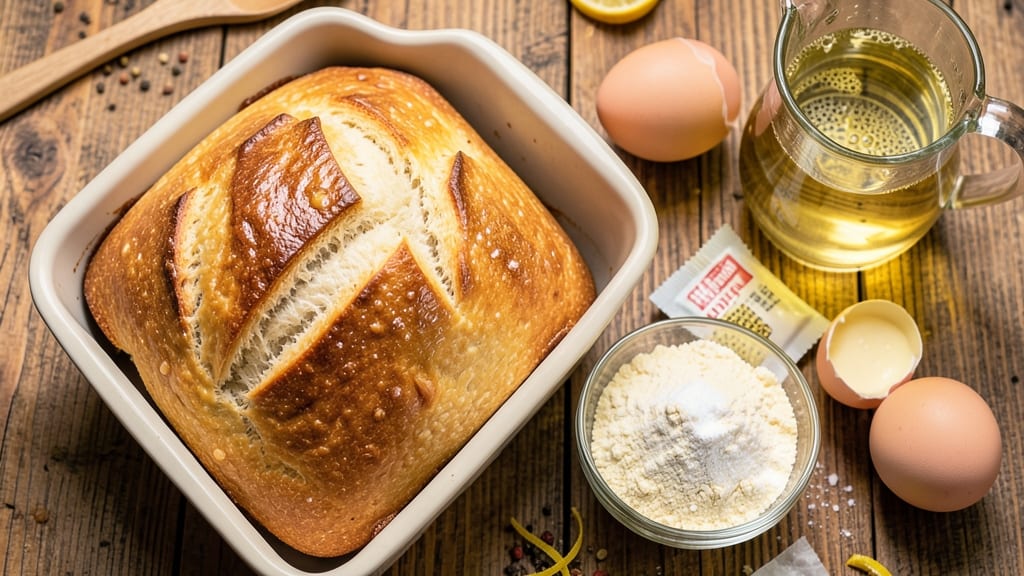
This Amish white bread recipe transforms all-purpose flour into a loaf with a crisp golden crust and pillowy softness that disappears on first bite. The secret lies in precise kneading, patient proofing, and baking at the right temperature—techniques that create that signature Amish texture without requiring specialty ingredients.
I've perfected this version to deliver restaurant-quality results in your home oven, using only what you likely already have in your pantry.
The beauty of this recipe is its balance of simplicity and tradition. While classic Amish recipes often call for white lye flour, this version adapts beautifully using all-purpose flour while maintaining that iconic tender crumb and crisp exterior.
The dough develops naturally through a single rise, and the baking process creates that perfect contrast between a crackly crust and a soft, airy interior. It's the kind of bread that disappears faster than you can slice it.
What makes this recipe stand out is its reliability—no fancy equipment required, just a standard mixing bowl and a little patience. The dough comes together in under 10 minutes, then rests while you prepare your kitchen.
When it emerges from the oven, that aroma alone will have everyone gathering around the table. The bread stays fresh for days, making it perfect for sandwiches, toast, or serving alongside any meal.
For those who want to elevate it further, consider adding a touch of honey to the dough for subtle sweetness or sprinkling coarse salt on the crust before baking for extra depth.
The possibilities are endless, but the foundation remains the same: a bread so good, it feels like a homemade hug in every bite. Let's get started on creating your own perfect loaf.
Ingredients for amish white bread recipe with all purpose flour
Nine simple ingredients transform into a loaf with golden crust and pillowy softness.
| Ingredient | Amount | Notes |
|---|---|---|
| All-Purpose Flour 🌾 | 4 cups | Sifted for even texture |
| Granulated Sugar 🍚 | ¼ cup | For subtle sweetness |
| Active Dry Yeast 🍞 | 2 ¼ tsp | Ensure it's fresh |
| Warm Water 💧 | 1 ¼ cups | 110°F for yeast activation |
| Unsalted Butter 🧈 | ½ cup | Softened, not melted |
| Large Egg 🥚 | 1 whole | Room temperature |
| Salt 🧂 | 1 ½ tsp | Diamond Crystal preferred |
| Milk 🥛 | ¼ cup | Warmed for softness |
| Cornmeal 🌽 | ½ cup | For dusting the pan |
The yeast is the heart of this bread—Fleischmann's or Saf-Instant work best, but any active dry yeast will do. If your kitchen runs cold, warm the water to 110°F (like a warm bath) to wake it up. The butter should be soft enough to press but not greasy—room temperature is key. For the flour, I always grab King Arthur or Gold Medal from the grocery store; their consistency is reliable. The cornmeal? Don’t skip it—it creates that perfect crust texture without needing special equipment.
No cornmeal? Semolina flour works just as well. Short on milk? Warm water plus a splash of vanilla extract mimics its richness. The egg can be replaced with 1 tbsp flaxseed meal + 3 tbsp water for a vegan twist (though it’ll lack that tender crumb). For extra flavor, add 1 tsp honey or maple syrup to the dough. The salt matters—Diamond Crystal dissolves more easily than table salt, so adjust if using a different kind. And if your yeast isn’t fresh? Test it first—drop a pinch in warm water with sugar; if it bubbles in 5 minutes, you’re good to go.
This dough is forgiving but rewards patience. Let it rise in a lightly oiled bowl until doubled—about 1-2 hours, depending on your kitchen. For a crispier crust, brush the baked loaf with melted butter while warm. Store wrapped at room temperature for 2 days or freeze for up to 3 months. Pro tip: Slice before freezing for easy toast later. The aroma alone will have your whole house gathering—trust me, it’s worth the wait.
Why You'll Love This Recipe
- No-Knead Magic: I swear by the simplicity here—just mix the yeast, warm water, and a pinch of sugar first, let it foam, then fold in the flour and softened butter. No stand mixer, no fancy tools, just your hands and patience (well, 10 minutes of it).
- Butter-Kiss Softness: That little cube of butter folded into the dough? It’s what makes this bread ridiculously tender. The crust stays pillowy, not crusty, and every slice melts like a hug—no sad, dry bites here.
- Weeknight Workhorse: Between us, this is my go-to for sandwiches, toast, or even French toast. Make a double batch on Sunday, and you’ve got breakfast, lunch, and dinner covered—no last-minute store runs when the kids forget their lunches.
- Budget-Friendly Staple: All-purpose flour, sugar, yeast, butter—these are pantry basics that won’t break the bank. A single loaf costs me less than $2 to make, and it lasts for days. Leftovers? Toast them, freeze them, or turn them into croutons. Zero waste, all win.
Step-by-step instructions for Amish white bread
Here's how to craft that perfect loaf with a crisp crust and tender interior—every slice will be worth the wait.
Activate the Yeast for Maximum Rise
In a small bowl, combine the 1.25 cups warm water (it should feel like bathwater, around 110°F) with the 0.25 cup granulated sugar and 2.25 tsp active dry yeast. Let it sit for 5-10 minutes until it becomes frothy and bubbly. This tells you the yeast is alive and ready to work its magic.
I always double-check the water temperature with a thermometer—too hot and you'll kill the yeast, too cool and it won't activate properly. If it doesn't bubble after 10 minutes, your yeast might be old. Start fresh with a new packet for that perfect rise.
Mix the Dough to Soft Perfection
In a large mixing bowl, whisk together the 4 cups all-purpose flour and 1.5 tsp salt. Make a well in the center and pour in the yeast mixture, 0.5 cup softened butter, 1 whole large egg, and 0.25 cup milk. Using a wooden spoon or dough whisk, mix until just combined—you'll see streaks of flour remaining.
This is where the magic begins. Once the dough comes together, knead it on a lightly floured surface for 8-10 minutes until smooth and elastic. The dough should feel slightly tacky but not sticky—add a little more flour if needed. I press down gently on the dough during the first minute to develop the gluten properly.
Let the Dough Rise Until Doubled
Place the dough in a lightly greased bowl, cover it with a clean kitchen towel, and let it rise in a warm spot for 1-1.5 hours. You'll know it's ready when it has doubled in size and springs back slowly when pressed gently with a finger. This first rise builds flavor and structure.
I like to place my oven light on for 5 minutes before rising to create a warm environment. If your kitchen is cold, this helps speed up the process. Don't rush this step—proper rising time ensures that pillowy texture we're after in Amish white bread.
Shape and Second Rise for Height
Punch down the risen dough to release air, then divide it into two equal pieces. Shape each piece into a smooth, round loaf by rolling it gently from the center outward. Place them in two greased 9x5-inch loaf pans, seam-side up.
Cover the pans with towels and let the dough rise again for 30-45 minutes until it just reaches the top of the pans. This second rise gives the bread its signature height. I always check the dough one last time before baking to ensure it's ready—no one wants a dense loaf!
Bake to Golden Perfection
Preheat your oven to 375°F. Sprinkle 0.5 cup cornmeal evenly over the top of each loaf—this creates that beautiful golden crust we all love. Bake for 25-30 minutes until the bread is golden brown and sounds hollow when tapped on the bottom.
Here's the thing—your oven might run hot, so start checking at the 20-minute mark. If it browns too quickly, tent with foil. The internal temperature should reach 190-200°F for that perfect texture. Let the bread cool in the pans for 10 minutes, then transfer to a wire rack to finish cooling completely.
Pro Tips For Making Amish White Bread Recipe With All Purpose Flour
- Dissolve the Sugar: DESCRIPTION: I learned this the hard way—just tossing granulated sugar into warm water leaves gritty lumps that ruin the texture. Whisk it in until fully dissolved before mixing with yeast, or sift it first. Your dough will thank you with a smoother rise.
- Test Yeast First: DESCRIPTION: Skip this, and you’ll waste a bowl of dough. Proof your yeast in warm water with a pinch of sugar for 5–10 minutes—if it doesn’t foam, toss it and start fresh. No guesswork, just results.
- Shape Loaves Tight: DESCRIPTION: Amish white bread needs structure, not fluff. Roll the dough into a tight log, tucking the seam under to seal it completely. Loose seams = air pockets = sad crumb. Press firmly when shaping.
- Steam the Pan: DESCRIPTION: Butter the pan, then wipe it with a damp paper towel and heat it for 30 seconds on the stovetop. The residual steam gives that signature soft crust without extra effort. Works every time.
Dietary considerations for these flavors
Gluten-Free Adaptation
While this recipe uses all-purpose flour, you can adapt it for gluten-free diets using a 1:1 gluten-free flour blend like Bob's Red Mill or King Arthur Measure for Measure.
Replace the 4 cups all-purpose flour with 4 cups gluten-free blend, but add 1 extra tablespoon xanthan gum to mimic gluten's structure. The dough will be stickier, so use a stand mixer with a dough hook for 5 minutes instead of kneading by hand. 🥖
Dairy-Free Options
For a dairy-free version, substitute the 0.5 cup butter with 0.5 cup coconut oil (melted and cooled slightly) and replace the 0.25 cup milk with 0.25 cup unsweetened almond milk.
The texture will be slightly denser, but the bread remains tender. I've found that adding 1 tbsp ground flaxseed to the dough also improves moisture retention.
Lower-Carb Modifications
To reduce carbs, replace 1 cup all-purpose flour with 1 cup almond flour or 1 cup oat flour. The dough will be less elastic, so handle it gently during shaping. Add 1 extra egg white to compensate for the lack of gluten structure.
This version works best when baked in a smaller pan or as a single loaf for better density. 💡
Vegan-Friendly Adjustments
Make this bread vegan by replacing the 1 egg with 1 tbsp flaxseed meal + 3 tbsp water (let it sit for 5 minutes to thicken) and substituting the 0.5 cup butter with 0.5 cup vegan butter or 0.5 cup coconut oil.
Use plant-based milk (like oat or soy) instead of dairy milk. The texture will be slightly denser but still delicious when toasted.
Allergy-Friendly Notes
For nut allergies, avoid almond flour substitutions and stick to oat flour or a certified gluten-free blend. If yeast allergies are a concern, this recipe isn't suitable—traditional yeast-based breads can't be made without it.
For egg allergies, the flaxseed egg substitute works well, but always check with a doctor before trying new recipes. Always label your bread clearly if sharing with others who have dietary restrictions. ✨
Nutrition facts
Frequently asked questions
Why does this recipe use all-purpose flour instead of traditional Amish white lye flour?
This version adapts classic Amish techniques using all-purpose flour for accessibility while maintaining that signature tender crumb and crisp crust. The butter and proper kneading compensate for the lack of lye flour's chemical leavening, creating a lighter texture without specialty ingredients.
Can I make this bread without a stand mixer?
This dough is designed for hand-kneading. After mixing, knead on a lightly floured surface for 8-10 minutes until smooth and elastic. The key is patience—press down firmly during the first minute to develop gluten properly, even without a machine.
How do I know when the dough has risen enough?
Press the dough gently with one finger—if it springs back slowly (not immediately), it's ready. For the first rise, this takes 1-1.5 hours. For the second rise in pans, it should just reach the top (30-45 minutes). A warm kitchen speeds this up, while cold air slows it down.
Why does my bread come out dense instead of pillowy?
Dense bread usually means underproofing or over-kneading. Let dough rise until doubled (not just puffed), and knead just until smooth (8-10 minutes). Also check your yeast—it should bubble within 5-10 minutes when mixed with warm water and sugar.
Can I add sweetener or herbs to this recipe?
Yes! For subtle sweetness, add 1 tsp honey or maple syrup to the dough. For herbs, try 1 tsp dried rosemary or thyme mixed with the flour. Just reduce the salt slightly (1 tsp) to balance flavors. The bread's texture remains tender with these additions.