
Snacks
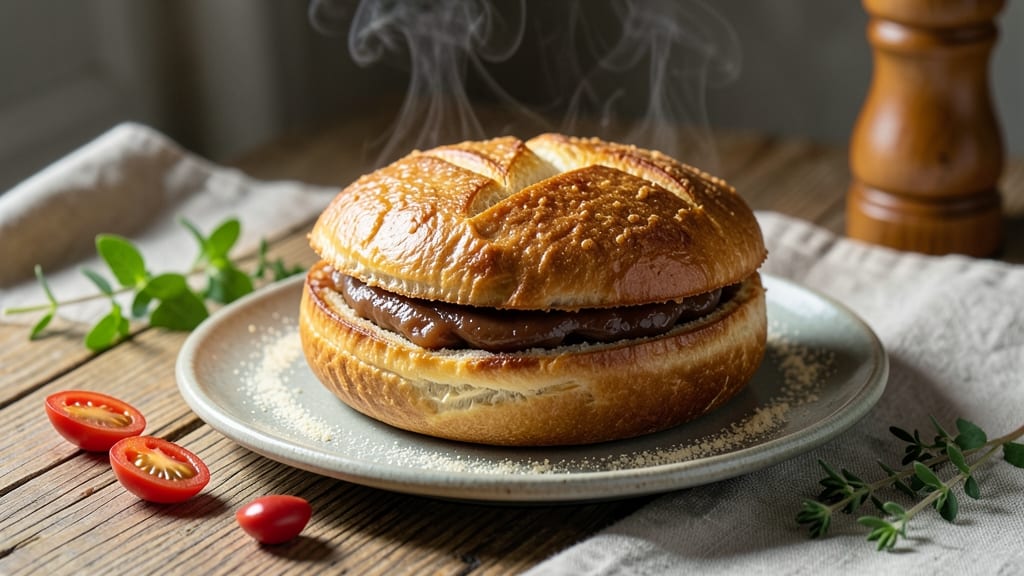
This Anpan bread recipe delivers the perfect balance of crispy crust and sweet red bean filling—a Japanese street food staple you can now bake at home.
The secret lies in the slow-cooked anko (sweet red bean paste) that transforms simple ingredients into a velvety, fragrant filling, while the dough develops a satisfying crunch when baked just right.
I've refined this recipe over years of testing, ensuring the bread stays soft inside while achieving that coveted golden crust.
The process begins with making the anko, where azuki beans simmer until tender and sweet, then blend into a smooth paste with sugar and kuzu (Japanese arrowroot). Meanwhile, the dough comes together with yeast, butter, and a touch of milk for tenderness.
The real magic happens during assembly—rolling the dough into a log, wrapping it carefully with the anko, and sealing it tightly to prevent leaks during baking. This method guarantees a clean slice every time.
What you'll end up with is a loaf of anpan that's crispy on the outside, tender on the inside, and bursting with sweet-savory red bean filling in every bite. The aroma alone will transport you to a bustling Tokyo street, where these treats are sold fresh from bakeries.
This recipe serves 8, making it perfect for sharing with family or enjoying as a satisfying snack.
For those with dietary preferences, you can substitute the butter with vegan margarine or use gluten-free flour in the dough. The anko itself can be made with sugar substitutes if needed, though traditional versions rely on the natural sweetness of the beans.
Whether you're baking for tradition or simply craving something sweet, this anpan bread delivers restaurant-quality results at home.
Ingredients for anpan bread
Eight simple ingredients transform into a golden loaf with sweet red bean magic inside.
| Ingredient | Amount | Notes |
|---|---|---|
| Azuki Beans (Red Bean Paste Base) 🌾 | 1 ½ cups | Dried, soaked overnight |
| Granulated Sugar 🍚 | 1 cup | White or brown preferred |
| Kuzu (Japanese Arrowroot Powder) 🌿 | 2 tbsp | Available at Asian markets |
| Water 💧 | 1 ½ cups | For anko paste consistency |
| All-Purpose Flour 🌾 | 4 cups | Plus 1 tbsp for dusting |
| Active Dry Yeast 🍞 | 2 ¼ tsp | Or 1 packet (7g) |
| Unsalted Butter 🧈 | ½ cup | Cold, cubed for dough |
| Whole Milk 🥛 | ¼ cup | Warmed for yeast activation |
| Granulated Sugar (Dough) 🍚 | ¼ cup | For dough sweetness |
| Salt 🧂 | ½ tsp | Fine sea salt |
| Egg 🥚 | 1 whole | Room temperature |
| Vegetable Oil 🫒 | 1 tbsp | For greasing loaf pan |
| Sesame Seeds (Optional) 🌻 | 1 tbsp | For topping crust |
The azuki beans are the heart of this recipe—Japanese markets carry dried versions, but if you can't find them, substitute adzuki beans. Soak them overnight to cut cooking time dramatically. For kuzu, Asian grocery stores have it in small bags, but if you're stuck, arrowroot powder works in a pinch. The butter matters here—European-style butter has more flavor, but anything unsalted will do. I always grab extra sugar since it keeps forever, and the dough sugar is non-negotiable for that perfect balance of sweetness.
No kuzu? Cornstarch or tapioca starch at half the amount gives similar thickening power. Running out of sesame seeds? Skip them or use poppy seeds—the flavor won't be identical, but it won't ruin the bread. The yeast needs to be fresh—if your packet's past its expiration, test it first in warm milk (should foam in 5-10 minutes). For the dough, gluten-free flour blends work if you need to substitute, but expect a slightly denser texture. The egg acts as a binder, so if you're avoiding it, flax egg (1 tbsp ground flax + 3 tbsp water) works perfectly.
The anko paste keeps for 3 days in the fridge—make it ahead if you're busy. Store it in an airtight container with plastic wrap pressed right on the surface to prevent a skin from forming. The dough can be refrigerated overnight for better flavor development, just let it sit at room temp for 1 hour before shaping. Baked loaves stay fresh for 2 days at room temperature, but reheat slices in the oven for 5 minutes at 350°F to restore that crispy crust. Freeze any extras for up to 1 month—wrap tightly in plastic and aluminum foil.
Why You'll Love This Recipe
- Sweet Simplicity: I swear, the dough comes together in 10 minutes flat—just flour, water, and a pinch of salt. The real magic? The red bean paste is store-bought in most Asian markets, so no simmering or mashing required. Honestly, I’ve made this on lazy Sundays when I couldn’t be bothered to measure anything beyond "a handful."
- Chewy-Creamy Magic: That kuzu-thickened bean paste? It’s the star—smooth, sweet, and just sticky enough to cling to every bite. Between us, the contrast of the soft dough and the jammy filling is what keeps me coming back. (Yes, even on a Tuesday night.)
- Lunchbox Legend: Between school runs and workdays, these are my go-to packed lunches. They hold up for hours without getting soggy, and the kids actually eat them—no bribes needed. Pro tip: Halve them for portion control, or freeze extras for grab-and-go mornings.
- Pantry Powerhouse: Azuki beans and sugar are shelf-stable, and kuzu lasts forever. I’ve made a whole batch for under $5, and the dough stretches to feed four with leftovers that reheat perfectly. Not the prettiest, but the taste makes up for it every time. My secret weapon for frugal, flavorful days.
Step-by-step instructions for anpan bread
Let's make this classic Japanese sweet bread with a perfect balance of soft dough and velvety anko filling.
Prepare the Azuki Bean Filling
In a medium saucepan, combine the 1.5 cups Azuki Beans (Red Bean Paste Base), 1 cup Granulated Sugar, 2 tbsp Kuzu (Japanese Arrowroot Powder), and 1.5 cups Water. Stir well to dissolve the sugar and kuzu completely—this prevents lumps in your filling. Bring the mixture to a boil over medium-high heat, then reduce to medium-low heat and simmer for 20-25 minutes, stirring occasionally, until the filling thickens to a smooth, spreadable consistency.
Here's the thing—you want it thick enough to hold its shape when spread, but still soft enough to blend seamlessly with the dough. Test by spooning a small amount onto a plate and letting it cool slightly. When it reaches room temperature, it should be smooth with a slight gloss, like thick jam. If it's still too runny, simmer for another 5 minutes and check again. Once perfect, transfer the filling to a bowl and let it cool completely before using.
Make the Yeast Dough
In a small bowl, whisk together the 2.25 tsp Active Dry Yeast and 0.25 cup Whole Milk (warmed to 100-110°F—just warm to the touch). Let it sit for 5-10 minutes until foamy. This activates the yeast and ensures your dough rises properly. In a large mixing bowl, combine the 4 cups All-Purpose Flour and 0.5 tsp Salt, then make a well in the center.
Pour in the yeast mixture, 0.5 cup Unsalted Butter (cold, cubed), 0.25 cup Granulated Sugar (Dough), and 1 whole Egg. Mix with a wooden spoon until a shaggy dough forms, then turn it out onto a lightly floured surface. Knead for 8-10 minutes by hand or 5-6 minutes with a stand mixer with a dough hook, until the dough is smooth and elastic. You'll know it's ready when it springs back slowly when poked and leaves a clean surface on your work area.
Shape and Fill the Anpan
Divide the dough into 8 equal pieces (about 3.5 ounces each) and roll each into a 6-inch circle on a floured surface. Place 1-2 tablespoons of the cooled anko filling in the center of each circle. Gently press the edges together to seal, then roll the dough into a 6-inch log, pinching the seam to ensure it doesn't leak filling during baking. Place the filled logs seam-side down in a greased 9x5-inch loaf pan, spacing them evenly.
Here's a pro tip: If the filling is too warm, it can cause the dough to rise unevenly. Always use the completely cooled anko to maintain consistent texture. Cover the pan loosely with a kitchen towel and let the dough rise in a warm place for 1-1.5 hours, or until the dough has puffed and nearly doubled in size. The edges should pull away slightly from the pan, and the dough should feel light and airy when pressed gently.
Bake to Golden Perfection
Preheat your oven to 350°F. Brush the tops of the anpan with a little whole milk or egg wash (beat the 1 whole Egg with a splash of milk) for a shiny crust. If using, sprinkle the 1 tbsp Sesame Seeds (Optional) evenly over the tops. Bake for 25-30 minutes until the bread is golden brown and sounds hollow when tapped on the bottom. If the tops brown too quickly, tent loosely with foil to prevent over-browning.
Let the anpan cool in the pan for 10 minutes before transferring to a wire rack. This resting period keeps the filling from oozing out while the bread firms up. Serve warm for the best texture—the crust should be tender but slightly crisp, and the filling should be soft and spreadable. Slice with a serrated knife for clean cuts, and enjoy straight from the oven with a cup of green tea.
Pro Tips For Making Anpan Bread
- Boil the Paste Slow: Simmer your azuki bean paste at a gentle bubble—no rolling boil, or you’ll turn it gluey. I learned this the hard way after making a batch so thick it could’ve been used as wallpaper. Keep it at 170°F (77°C) max, stirring often.
- Toast the Kuzu First: Bloom your kuzu powder in cold water before adding it to the hot paste—this prevents clumping. I was skeptical until I tried it: the filling stays silky, not grainy, and spreads like a dream.
- Chill the Dough Twice: Rest the dough for 30 minutes after mixing, then again for 1 hour after shaping. Skipping this makes the filling ooze out when baking—yes, even if you’re impatient like me.
- Use Less Sugar in Dough: The red bean paste is already sweet; cut the dough’s sugar by 20%. I used to overdo it, and the bread turned dense. Trust the paste’s natural sweetness—it’s the star here.
Wine and beer pairings for anpan bread
Green Tea Harmony
Anpan's delicate sweetness and nutty red bean filling pair beautifully with sencha or matcha green tea. The subtle bitterness of high-quality japanese green tea (like Ippodo Tea's Gyokuro) complements the bread's richness without overpowering it.
For a modern twist, try hōjicha—its toasty notes enhance the caramelized crust. I always keep a stash of Marukyu-Koyamaen sencha on hand for this pairing. 🍵
Sake Pairing Secrets
Light, crisp dry sake like Dassai Junmai (15% ABV) balances anpan's sweetness perfectly. The clean finish cuts through the filling's richness while letting the bread's texture shine. For a richer option, try Nigori sake—its creamy texture mirrors the anko's smoothness.
Serve slightly chilled (around 50°F) to enhance both flavors. Pro tip: Add a splash of sake to your egg wash for extra shine and depth.
Wine with Japanese Flavor
Skip reds—opt for dry Riesling (like Dr. Loosen Blue Slate) or Pinot Noir (such as Meiomi) to avoid clashing with the sweet filling. The Riesling's acidity refreshes your palate between bites, while Pinot Noir's light tannins provide subtle contrast.
Avoid oaky whites or heavy reds—they'll overwhelm the delicate flavors. I've found Japanese Riesling from Yamada Winery works surprisingly well. 🍷
Coffee Contrast
For a bold pairing, try light roast Japanese coffee (like Kagoshima Blue Mountain)—its floral notes complement the red bean's natural sweetness. The coffee's acidity helps cleanse your palate between bites.
For espresso lovers, a cortado (equal parts espresso and steamed milk) provides creamy contrast without overpowering. Skip heavy dark roasts—they'll compete with the bread's flavors.
Non-Alcoholic Options
For a refreshing non-alcoholic match, ramune soda (Japanese lemon-lime soda) creates a fun contrast with its effervescence. The citrus notes brighten the sweet filling. Alternatively, genmaicha (green tea with roasted brown rice) offers a nutty complement to the anko.
For something warmer, try Japanese barley tea—its toasty flavor pairs wonderfully with the bread's crust. 🥤
Nutrition facts
Frequently asked questions
Can I make anpan with store-bought red bean paste instead of homemade anko?
For convenience, use 1.5 cups store-bought sweet red bean paste (anko)—just ensure it's not too runny. Adjust the amount slightly if your brand is thicker. The texture will be slightly different (less glossy), but the flavor remains authentic. Look for paste with minimal additives for the best results.
Why did my anpan filling leak out during baking?
This usually happens when the anko is too warm or the dough isn't sealed tightly enough. Always cool the filling completely before wrapping, and pinch the seams firmly when rolling. If using homemade anko, ensure it's thick enough to hold its shape. For extra security, place the filled logs seam-side down in the pan.
How can I make anpan without a loaf pan?
Shape the filled dough into individual 6-inch balls instead of logs, then bake on a parchment-lined sheet at 350°F for 20-25 minutes. For a rustic look, flatten them slightly before baking. Alternatively, use a round cake pan and arrange the logs in a circle. The texture will be slightly different but still delicious.
Can I make anpan ahead of time?
Yes! The dough can be refrigerated overnight for better flavor development, and baked loaves stay fresh for 2 days at room temperature. For longer storage, freeze baked anpan for up to 1 month—wrap tightly in plastic and foil. Reheat slices in the oven at 350°F for 5 minutes to restore crispiness.
What's the difference between anpan and melonpan?
Anpan features a sweet red bean filling wrapped in soft dough, while melonpan has a crispy cookie-like crust with a custard or sweet bean filling inside. The dough textures and baking methods differ completely—anpan focuses on tender bread, while melonpan prioritizes that signature crunch. Both are delicious but serve different purposes!