
Side Dishes
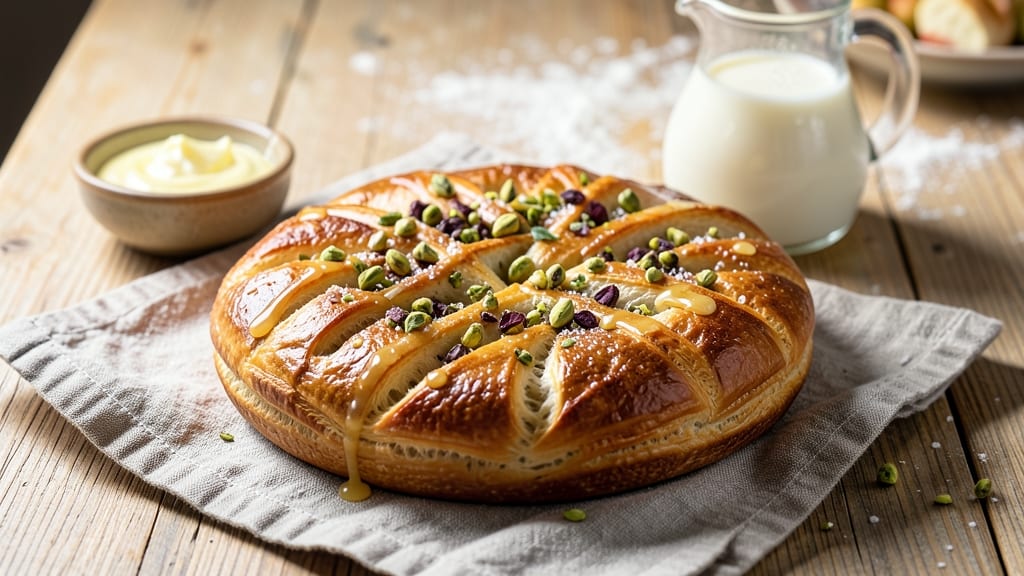
This Armenian gata bread recipe delivers the perfect balance of crispy za'atar-spiced crust and pillowy sweet interior—a staple in Armenian households that pairs beautifully with tea or jam. 🌟 The secret lies in the dough's unique texture, where a slightly sweet, egg-rich filling creates that signature tender crumb while the outer layer develops a fragrant, golden crust from the aromatic za'atar blend.
What makes this recipe special is its foolproof method for achieving that signature texture without requiring advanced baking skills. The dough rests overnight for maximum flavor development, while the shaping technique ensures even baking.
Traditional Armenian gata bread often includes cardamom or citrus zest, but this classic version stays true to its roots while being approachable for home bakers.
By the time you pull it from the oven, you'll have a loaf with a shatteringly crisp exterior that gives way to a soft, slightly sweet interior—each bite revealing layers of flavor from the za'atar and warm spices.
The aroma alone will transport you to a cozy Armenian kitchen, where this bread is served warm with black tea or sweetened with honey.
Perfect for holiday gatherings or as a special treat, this recipe serves 8-10 and requires just active prep time of 30 minutes followed by overnight resting. The result is a bread that's both impressive and comforting, with a texture that's impossible to resist. Let's get started!
Ingredients for armenian gata bread
These 14 ingredients create a traditional Armenian gata bread with signature crisp-spongy contrast.
| Ingredient | Amount | Notes |
|---|---|---|
| All-Purpose Flour 🌾 | 5 cups | Unbleached, high protein preferred |
| Granulated Sugar 🍚 | ¼ cup | For sweet filling |
| Unsalted Butter 🧈 | ½ cup | Cold, cubed for dough |
| Large Eggs 🥚 | 2 whole | Room temperature |
| Milk 🥛 | ¼ cup | Whole milk preferred |
| Active Dry Yeast 🍞 | ¼ oz | 1 packet (2¼ tsp) |
| Za'atar Seasoning 🌿 | 2 tbsp | For crust spice blend |
| Ground Cardamom 🌶️ | ½ tsp | Freshly ground preferred |
| Salt 🧂 | 1 ½ tsp | Diamond Crystal preferred |
| Semolina Flour 🌾 | ¼ cup | For dusting |
| Honey 🍯 | 2 tbsp | For filling |
| Toasted Sesame Seeds 🌰 | 2 tbsp | For garnish |
| Sesame Oil 🫒 | 1 tbsp | For brushing |
| Orange Zest 🍊 | 1 tbsp | Optional, for brightness |
Za'atar is the heart of this recipe—look for blends containing sumac, sesame, and oregano at specialty stores like Whole Foods or Middle Eastern markets. The sesame seeds should be toasted to deep golden color for maximum flavor. For the cardamom, Penzeys Spices offers freshly ground pods that deliver superior aroma. Semolina flour is crucial for the crust; Bob's Red Mill brand is widely available and ideal for its fine texture. The honey should be liquid at room temperature to blend smoothly into the filling.
No za'atar? Create your own blend with 2 tbsp sesame seeds, 1 tbsp sumac, 1 tsp dried oregano, and ½ tsp salt. Substitute orange zest with lemon zest at equal measure for a different citrus note. For a dairy-free option, replace milk with unsweetened almond milk (though texture may vary slightly). The sesame oil can be swapped for light olive oil if unavailable. For a sweeter interior, add 1 tbsp apricot jam to the filling mixture. Always use cold butter for the dough to prevent overdevelopment.
Store the dough in an airtight container in the refrigerator for up to 24 hours before shaping. The baked loaf keeps well at room temperature for 3 days wrapped in a clean kitchen towel to maintain crispness. For longer storage, freeze the shaped but unbaked loaf for up to 3 months. Reheat slices in a 350°F oven for 5 minutes to restore that shatteringly crisp exterior. The filling remains tender when reheated briefly—never overheat.
Why You'll Love This Recipe
- Sweet-Simple Stretch: I swear by this dough—it’s ridiculously forgiving. You’ll mix, knead (okay, mostly knead—no need to go full pastry chef), let it rest, and boom. No fancy techniques, just flour, sugar, butter, and eggs doing their magic while you sip your coffee.
- Buttery-Sweet Payoff: That crispy, caramelized top with a tender crumb? Dangerously good. The sugar and butter create this perfect balance—like a cross between a brioche and a biscuit, but with none of the fuss. Honestly, the first time I made it, I ate half the batch straight from the pan.
- Breakfast to Dessert: This bread isn’t just for Sunday mornings. Toast it for breakfast with jam, slice it for lunch with cheese, or serve it warm with honey for a dessert that feels special. Between us, I’ve even used it as a base for French toast—yes, even on a Tuesday night—and it never lets me down.
- Pantry Staple Goldmine: You’re already stocked for this. Flour, sugar, butter, eggs, milk—no weird imports or specialty items. And the best part? It keeps well for days, so you can bake once and enjoy it all week. I’ll be real: I’ve had this bread last me through work lunches, school snacks, and midnight cravings—no waste, all win.
Step-by-step instructions for Armenian gata bread
Master the layered technique that creates Gata's signature contrast—crispy za'atar crust with a melt-in-your-mouth honey filling.
👨🍳 Step 1: Activate the Yeast and Prepare the Dough
In a small bowl, combine the 0.25 cup milk with 0.25 oz active dry yeast and 1 tbsp honey. Let sit in a warm place for 5-10 minutes until foamy—this confirms your yeast is active. If it doesn't bubble, start over with fresh yeast.
In a stand mixer fitted with the dough hook, combine 5 cups all-purpose flour, 0.5 cup unsalted butter (cold, cubed), 1.5 tsp salt, 0.5 tsp ground cardamom, and 2 tbsp za'atar seasoning. Mix on low speed until the butter is fully incorporated and the mixture resembles coarse crumbs.
Add the yeast-milk mixture and 2 whole large eggs (room temperature). Mix on medium speed for 5-7 minutes until the dough pulls away from the bowl and is slightly tacky but not sticky. The dough should be soft but not wet—if it's too sticky, add 1-2 tbsp flour.
🥘 Step 2: Create the Honey Filling and Shape the Layers
In a small saucepan, gently warm 2 tbsp honey and 1 tbsp orange zest over low heat for 1-2 minutes until just combined. Remove from heat and let cool completely—this will be your filling. The mixture should be thick enough to hold its shape when piped.
Divide the dough into 10 equal portions (about 2 oz each) and roll each into a 6-inch circle on a lightly floured surface. Place a ½-inch diameter dollop of honey filling in the center of each circle, then gather the dough edges and pinch them together to seal tightly, forming a pouch. Roll each sealed pouch into a 3-inch diameter ball.
Place the dough balls on a parchment-lined baking sheet, cover with a clean kitchen towel, and let rise in a warm place for 1-1.5 hours until nearly doubled in size. The dough should feel light and springy when pressed gently—this indicates proper fermentation for that signature pillowy texture.
🔥 Step 3: Bake to Golden Perfection with Za'atar Crust
Preheat your oven to 375°F. Line two baking sheets with parchment paper and dust lightly with 0.25 cup semolina flour. Arrange the risen dough balls 2 inches apart on the prepared sheets, leaving room for expansion.
Brush the tops of each dough ball generously with 1 tbsp sesame oil, then sprinkle evenly with 2 tbsp toasted sesame seeds. Bake for 20-25 minutes until the crust is deep golden brown and the internal temperature reaches 190°F (use an instant-read thermometer). The bread should sound hollow when tapped on the bottom.
Remove from the oven and let cool on a wire rack for 10 minutes before serving. The contrast is what makes Gata special: the crispy za'atar-sesame crust gives way to the warm, gooey honey filling with every bite. Serve warm with a dusting of powdered sugar or a drizzle of melted butter for the full Armenian experience.
Pro Tips For Making Armenian Gata Bread
- Melt Butter Slowly: If you dump cold butter into the milk mixture, you’ll end up with lumps that never dissolve—no matter how much you stir. Warm the milk in a saucepan just until it steams (not boil), then whisk in the butter a few tablespoons at a time. The dough will be smoother, and the texture won’t turn greasy later.
- Whisk Eggs Until Ribbon-Thin: Overbeaten eggs make gata dense and rubbery. Beat them just until the yolks and whites form a pale, slightly thick ribbon when the whisk is lifted—about 2-3 minutes. Stop before you’re tempted to add more air; this bread needs tender, not fluffy, structure.
- Skip Overmixing the Dough: I used to punch and fold the dough like I was making bread, but gata’s delicate layers suffer from overwork. Mix the wet and dry ingredients until just combined—lumps are fine—then fold in the butter in 3-4 additions, pressing gently. Rough edges? That’s normal. Smooth dough means tough bread.
- Bake in Two Batches: One sheet pan is a recipe for uneven baking—edges burn while the center stays doughy. Divide the dough into two pans (or bake one, then swap pans halfway). The oven’s heat will distribute better, and you’ll avoid the sad, half-cooked middle that ruins the whole batch. (Yes, it’s an extra 10 minutes of effort, but worth it.)
Best sauces and condiments for these flavors
Za'atar-Honey Drizzle
Elevate your gata bread with a za'atar-honey drizzle—simply mix 1 tbsp za'atar seasoning with 2 tbsp melted butter and 1 tbsp honey. Brush this fragrant blend over the freshly baked loaf while still warm.
The za'atar's earthy notes complement the bread's sweetness, while the butter adds richness. I love finishing with a sprinkle of toasted sesame seeds for extra crunch. 🌿
Spiced Yogurt Dip
Serve your gata bread with a spiced yogurt dip that cuts through the sweetness beautifully. Whisk together 1 cup plain Greek yogurt, 1 tsp ground cardamom, 1 tsp honey, and a pinch of salt.
For extra depth, add 1 tbsp finely chopped fresh mint. This cooling, tangy dip balances the warm, spiced bread perfectly. Store leftovers in an airtight container for up to 3 days in the fridge. ✨
Warm Spiced Tea
Traditionally, gata bread is enjoyed with warm Armenian tea—a fragrant black tea infused with cardamom and cloves. Steep 2 tbsp loose-leaf black tea in 4 cups boiling water for 5 minutes, then add 1 tsp ground cardamom and 2 whole cloves.
Serve in small glasses alongside the bread for an authentic experience. The tea’s warmth enhances the bread’s flavors and creates a cozy atmosphere. 🍵
Citrus Glaze
Brighten your gata bread with a citrus glaze made from 2 tbsp honey, 1 tbsp fresh lemon juice, and 1 tsp orange zest. Simmer over low heat for 3 minutes until slightly thickened, then brush over the bread while still warm.
The citrus notes elevate the honey filling and add a refreshing contrast. This glaze works especially well if you skipped the orange zest in the original recipe. 🍊
Nutella Swirl
For a modern twist, create a Nutella swirl by mixing 2 tbsp Nutella with 1 tbsp honey and piping it into the center of each dough ball before sealing. The rich chocolate-hazelnut flavor pairs surprisingly well with the za'atar crust.
Bake as directed, and the Nutella will create a gooey, decadent center. This variation is a hit with kids and chocolate lovers alike. 🍫
Smoked Paprika Butter
Add a smoky depth to your gata bread with smoked paprika butter. Melt ½ cup unsalted butter, then stir in 1 tsp smoked paprika, ½ tsp garlic powder, and a pinch of salt.
Brush this over the baked bread and serve warm. The smoky, savory notes contrast beautifully with the sweet honey filling. Store any leftover butter in an airtight container in the fridge for up to 1 week. 🔥
Nutrition facts
Frequently asked questions
Why does Armenian gata bread have a crispy crust and soft center?
The magic lies in the dough's unique construction! The outer layer gets its crispy texture from the za'atar seasoning and semolina flour coating, while the honey filling creates steam during baking that keeps the interior soft and pillowy. The dough's overnight rest also helps develop gluten for that perfect contrast.
Can I make gata bread without eggs?
Yes, but the texture will differ slightly. Replace the 2 eggs with 2 tbsp melted butter plus 2 tbsp warm water mixed with 1 tsp sugar to mimic the eggs' binding properties. The bread may be less tender but will still hold together. For best results, use a flax egg (1 tbsp ground flaxseed + 3 tbsp water) as a 1:1 substitute.
How do I prevent my gata bread from burning before the center cooks?
Use the oven thermometer method—your oven may run hotter than the set temperature. Place a baking sheet on the middle rack while preheating, then check with an oven thermometer. If it reads 400°F+, reduce your baking temperature to 350°F. Also, rotate pans halfway through baking for even heat distribution.
What's the best way to store leftover gata bread?
For short-term storage (3 days), wrap the cooled loaf in a clean kitchen towel and place in an airtight container. To revive crispness, reheat slices in a 350°F oven for 5 minutes before serving. For longer storage, freeze the unbaked shaped dough balls for up to 3 months—bake straight from frozen, adding 5-7 minutes to the baking time.
Can I make gata bread without za'atar?
Create your own blend with 2 tbsp sesame seeds, 1 tbsp sumac, 1 tsp dried oregano, and ½ tsp salt. For a simpler option, use 1 tbsp garlic powder + 1 tsp onion powder instead. The flavor will differ but still create a delicious crust. Toast the sesame seeds separately for extra aroma.