
Side Dishes
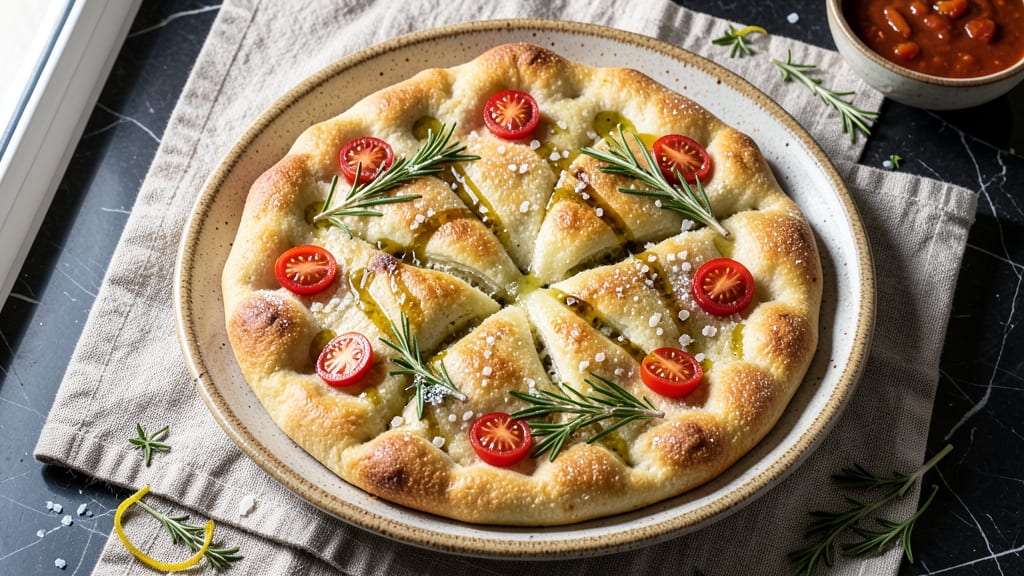
This artisan focaccia bread recipe transforms simple pantry staples into a golden, olive oil-infused masterpiece with crispy edges and pillowy layers. The secret lies in a high-hydration dough that develops rich flavor during slow fermentation, while a cast-iron pan creates that signature crunch.
I've perfected this technique over years of baking, and the results are worth every minute of hands-on time.
The process begins with a simple mix of flour, water, yeast, and olive oil—no fancy ingredients required. What matters most is technique: proper kneading develops gluten for structure, while controlled proofing ensures that airy texture.
The dough rests twice, allowing flavors to meld and gluten to relax, which prevents a dense final product. This isn't just bread; it's a canvas for customization with rosemary, cherry tomatoes, or flaky sea salt.
What you'll achieve is focaccia with a caramelized crust that shatters when broken and a tender crumb that melts in your mouth. The aroma of fresh olive oil and warm yeast fills your kitchen long before the timer goes off.
Each bite delivers layers of flavor—savory, slightly sweet, with just the right amount of chew. This is the kind of bread that makes you want to bake it every week.
Perfect for serving alongside soups, dipping in olive oil, or pairing with charcuterie boards. The recipe includes troubleshooting tips to ensure success, whether you're a seasoned baker or trying this for the first time. Let's get started on creating your perfect loaf.
Ingredients for artisan focaccia bread
Simple pantry staples meet Italian tradition for this golden, olive oil-infused focaccia.
| Ingredient | Amount | Notes |
|---|---|---|
| All-Purpose Flour 🌾 | 4 cups | Spooned and leveled (not scooped) |
| Active Dry Yeast 🍞 | ¼ oz | Or 2.5g (1 packet) |
| Extra-Virgin Olive Oil 🫒 | ¾ cup | High-quality, fruity variety |
| Granulated Sugar 🍚 | 1 tbsp | Helps activate yeast |
| Warm Water 💧 | 1 ½ cups | 110°F (43°C) for yeast |
| Kosher Salt 🧂 | 1 ½ tsp | Diamond Crystal preferred |
| Fresh Rosemary 🌿 | ¼ cup | Chopped, stems removed |
| Flaky Sea Salt 🧂 | ½ tsp | For topping (Maldon preferred) |
| Cherry Tomatoes 🍅 | 8 whole | Halved, optional topping |
The flour is your foundation—King Arthur or Caputo Tipo 00 if you want to splurge, but all-purpose works fine. Yeast is the magic: check the expiration date—old yeast won't activate. Warm water is key: too hot kills it, too cold won't wake it up. I always use California Olive Ranch olive oil for that fruity punch, but any good extra-virgin will do. The rosemary? Buy fresh from the grocery store's produce section—it's cheaper than the fancy bottles of dried stuff, and the flavor is next-level. If you can't find fresh, dried works at half the amount, but trust me on the fresh version.
No rosemary? Fresh thyme or basil works in a pinch. Olive oil shortage? Avocado oil is a neutral swap. The tomatoes can be swapped for sliced zucchini or olives if you're feeling fancy. For the salt, Diamond Crystal kosher salt—it's coarser and dissolves better. Prefer your focaccia sweeter? Add 1 tsp honey or maple syrup to the dough. Want extra crisp? Brush the dough with more olive oil before baking—don't be shy.
Store leftovers wrapped in a clean kitchen towel for 2-3 days—it keeps it soft. For longer storage, slice and freeze portions. Reheat in a 350°F oven for 5 minutes to restore that crispy texture. Pro tip: Bake extra—this bread freezes beautifully and makes the best toast or croutons later. The dough can be made ahead too: refrigerate overnight for even better flavor development.
Why You'll Love This Recipe
- No-Knead Magic: I swear by the simplicity of this dough—just flour, yeast, water, and olive oil. No stand mixer, no fancy tools, just a bowl and your hands. The yeast does all the work while you sip coffee.
- Olive Oil Luxury: That first golden crust? Pure satisfaction. The extra-virgin olive oil infuses the dough with rich, fruity depth, and the sugar just takes it to another level—sweet, crispy, and impossible to resist.
- Weeknight Workhorse: Slice it fresh for sandwiches, toast it for breakfast, or freeze slices for quick meals later. Honestly, I make a double batch every Sunday because it disappears faster than I can say "garlic knots."
- Budget-Friendly Staple: Flour, yeast, and olive oil are pantry basics that stretch into multiple meals. One loaf feeds my family for days—dipped in soup, paired with charcuterie, or just eaten straight from the pan.
Step-by-step instructions for artisan focaccia bread
Here's how to make restaurant-quality focaccia with that signature crispy crust and airy interior.
👨🍳 Step 1: Activate the Yeast and Mix the Dough
In a large bowl, combine the 1.5 cups warm water (about 110°F), 1 tablespoon granulated sugar, and 0.25 oz active dry yeast. Let it sit for 5-10 minutes until frothy—this confirms your yeast is alive and ready to work. If it doesn't bubble, start over with fresh yeast.
Add the 4 cups all-purpose flour and 1.5 teaspoons kosher salt to the bowl. Pour in the 0.75 cup extra-virgin olive oil and mix with a wooden spoon until a shaggy dough forms. The dough will be sticky, but that's perfect for focaccia. Wet your hands slightly to prevent sticking as you knead.
👨🍳 Step 2: Knead and Let the Dough Rise
Turn the dough onto a lightly floured surface and knead gently for 5-7 minutes until smooth and elastic. It doesn't need to be perfectly round—just cohesive. Place the dough back in the bowl, cover it loosely with a damp towel, and let it rise in a warm place for 1-2 hours or until doubled in size.
I like to do this first rise in my oven with the light on—it creates a warm, moist environment that speeds up fermentation. The dough should look puffy and feel light when pressed gently. If it doesn't rise much, it's okay—focaccia is forgiving, but warm conditions help the most.
🥘 Step 3: Shape and Second Rise in the Pan
Lightly grease a 9x13-inch baking pan with olive oil. Transfer the risen dough to the pan and press it out gently with oiled hands until it fills the pan evenly. The dough should be about 1-inch thick—don't worry if it's not perfect, as focaccia has a rustic charm.
Cover the pan with a damp towel and let the dough rise again for 30-60 minutes until it's puffy and nearly fills the pan. This second rise is crucial for that signature airy texture. While it rises, preheat your oven to 425°F—this high heat will create that beautiful crispy crust.
🔥 Step 4: Dimple, Drizzle, and Bake
Once the dough has risen, use your fingers to dimple the surface all over, creating little wells. This isn't just for looks—it helps the oil pool in those dimples, creating pockets of flavor and crispiness. Drizzle the 0.25 cup chopped fresh rosemary and remaining 0.25 cup olive oil evenly over the top.
Bake for 20-25 minutes until the edges are deep golden brown and the top looks crispy. The center should still feel slightly soft—focaccia should be tender inside with a crispy exterior. If the rosemary leaves are browning too quickly, tent the pan with foil for the last 5 minutes to prevent burning.
🍽️ Step 5: Finish and Serve
Remove the focaccia from the oven and immediately sprinkle with 0.5 teaspoon flaky sea salt. For extra flair, press the 8 halved cherry tomatoes lightly into the dough. Let it cool for 10 minutes—this helps the crust set and makes slicing easier.
Slice into squares or rectangles and serve warm. The crust should be crispy enough to hold up to your fork, while the interior remains soft and pillowy. Pair it with a simple balsamic glaze or a bowl of rich tomato soup for the ultimate Italian experience.
Pro Tips For Making Artisan Focaccia Bread
- STRETCH AND WAIT: The dough feels like it’s done too soon—it’s not. After mixing, let it rise in a greased bowl for at least 90 minutes (or until it’s doubled and jiggly when shaken). I used to rush this, and my focaccia always turned out dense. Patience here guarantees that airy, pillowy texture.
- USE COLD OIL: Pour that extra-virgin olive oil straight from the fridge—cold, not room temp. It’ll take longer to absorb into the dough, but the result is a richer flavor and better texture. I learned this after my first batch turned out greasy and uneven. Trust me, the fridge is your friend here.
- DIMENSIONS MATTER: Skip the random baking dish. Use a 9x13-inch pan (or similar) for even baking. A smaller pan? The focaccia will bake unevenly. A larger one? The edges burn before the center sets. Measure twice, bake once.
- SALT THE WATER: Dissolve the granulated sugar and salt in the warm water before mixing with yeast. This keeps the yeast happy while ensuring even distribution in the dough. I used to add salt later, and my focaccia always tasted bland in spots. Do it upfront—no regrets.
Perfect pairings for this dish
Olive Oil Drizzles
Finish your focaccia with a drizzle of extra-virgin olive oil right after baking for that authentic Italian touch. I recommend using California Olive Ranch or Colavita for their rich, fruity profiles. Brush 1-2 tablespoons over the warm bread, allowing it to soak in slightly for an extra layer of flavor.
For a gourmet twist, mix 1 teaspoon honey into the oil before drizzling—this adds a subtle sweetness that balances the savory notes. 🫒
Herb Infusions
Fresh herbs elevate focaccia from simple to extraordinary. Beyond rosemary, try thyme, basil, or oregano for different flavor profiles. For a Mediterranean twist, sprinkle 1 tablespoon chopped fresh parsley after baking. If you love garlic, rub a garlic clove over the dough before the final rise—it infuses beautifully without overpowering.
I also love adding 1 teaspoon lemon zest to the dough for a bright, citrusy kick.
Cheese Toppings
Add shredded Parmigiano-Reggiano or pecorino Romano during the final 10 minutes of baking for a salty, umami-rich finish. Sprinkle ½ cup evenly over the dimpled dough—it melts slightly but keeps its texture.
For a creamy option, dollop ¼ cup ricotta cheese into the dimples before baking. The ricotta softens beautifully and adds a luxurious mouthfeel. 🧀
Sweet Variations
Transform focaccia into a dessert by adding 1 tablespoon cinnamon and ½ cup raisins to the dough. After baking, drizzle with 2 tablespoons maple syrup and sprinkle with 1 tablespoon chopped walnuts.
For a fruity twist, top with sliced figs or pear during the final rise—these caramelize beautifully. This sweet version pairs perfectly with vanilla ice cream or a glass of prosecco.
Protein Pairings
Turn focaccia into a meal by serving it alongside prosciutto di Parma or salami. The salty, fatty cured meats contrast beautifully with the bread’s crispy edges. For a heartier option, pair with grilled chicken or shaved fennel salad.
I often serve focaccia with whipped ricotta and cured anchovies for a classic Italian antipasto. The bread soaks up flavors like a sponge, making it the perfect canvas for bold toppings. 🍖
Drink Pairings
A glass of Italian white wine like Pinot Grigio or Vermentino complements focaccia’s olive oil richness. For beer lovers, a crisp Italian lager such as Peroni or Birra del Borgo cleanses the palate.
Sparkling options like Prosecco or Cava add a celebratory touch. If you prefer non-alcoholic drinks, sparkling water with lemon or iced hibiscus tea refreshes between bites. 🍷
Nutrition facts
Frequently asked questions about artisan focaccia
Why does my focaccia turn out dense instead of airy?
Dense focaccia usually means the dough didn't get enough rise time or the gluten didn't develop properly. Try kneading for 5-7 minutes to strengthen the gluten, and let it rise in a warm spot (like an oven with the light on) for 1-2 hours until doubled. Also, make sure your yeast is fresh—old yeast won't activate properly.
Can I make focaccia without a baking pan?
Use a cast-iron skillet or even a well-oiled baking sheet for a rustic look. The key is to create dimples and brush with olive oil before baking. For extra crispiness, preheat your pan in the oven for 10 minutes before adding the dough. Just watch the edges—they'll brown faster on metal.
How do I prevent the focaccia from sticking to the pan?
Generously grease your pan with olive oil before adding the dough, then use oiled hands to press it out. For extra insurance, sprinkle a light dusting of flour over the pan before transferring the dough. After baking, let it cool in the pan for 5 minutes before removing—this helps the crust set and makes it easier to lift.
What's the best way to store focaccia?
Wrap cooled focaccia in a clean kitchen towel or plastic wrap to keep it soft. Store at room temperature for 2-3 days—the towel helps maintain moisture. For longer storage, slice and freeze portions. Reheat slices in a 350°F oven for 5 minutes to restore crispiness. The crust will soften slightly when reheated, but it's still delicious!
Can I make focaccia with whole wheat flour?
Yes, but replace only 50% of the all-purpose flour with whole wheat to avoid a dense texture. Whole wheat absorbs more liquid, so you may need to add 1-2 tablespoons extra water to the dough. Also, let it rise slightly longer since whole wheat ferments more slowly. The flavor will be nuttier and heartier, but the texture will be denser than traditional focaccia.