
Side Dishes
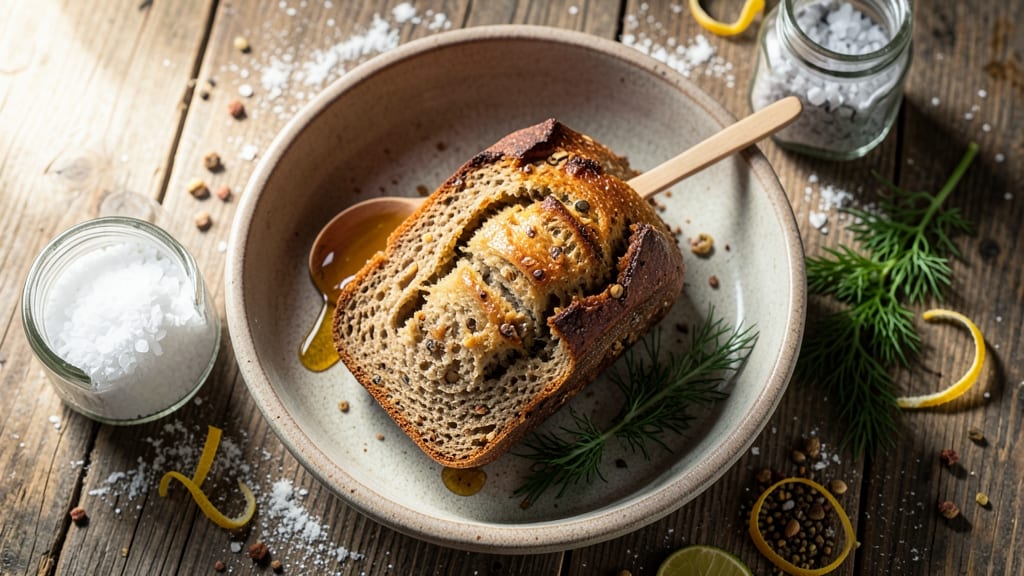
This authentic rye bread recipe unlocks the deep, tangy flavor of traditional Scandinavian baking—no shortcuts, just time-honored techniques. The secret lies in a robust rye starter, fermented slowly to develop that signature sourness and dense, hearty texture.
I’ve perfected this method over years of baking, ensuring every slice delivers the perfect balance of earthy rye and subtle sweetness.
The process begins with a sourdough starter made from rye flour, which builds complex flavors over days of feeding. After mixing the dough with high hydration and a touch of honey, we let it ferment for hours—this step transforms tough rye flour into a tender, open crumb.
The shaping and proofing stages are critical; a gentle fold and final proof ensure a structure that holds up to slicing without crumbling.
When baked, the crust develops a deep mahogany color while the interior remains dense yet tender, with pockets of air from proper fermentation. The aroma alone—warm, caramelized, with hints of molasses—will have your kitchen smelling like a Nordic bakery.
This bread pairs beautifully with butter, smoked salmon, or sharp cheeses, but its flavor stands strong on its own.
For those new to rye baking, don’t be intimidated—the key is patience. The long fermentation pays off in flavor, and the dough’s stickiness is manageable with the right techniques. Let’s get started on a loaf that tastes like tradition, baked fresh in your own kitchen.
Ingredients for authentic rye bread
Pantry staples meet Nordic tradition—just a few ingredients for bread with soul.
| Ingredient | Amount | Notes |
|---|---|---|
| Rye Flour 🌾 | 3 ½ cups | Dark rye flour preferred |
| All-Purpose Flour 🌾 | 1 cup | For structure and lift |
| Active Sourdough Starter 🍞 | 1 cup | Fed and bubbly |
| Honey 🍯 | 1 tbsp | Light or dark variety |
| Water 💧 | 2 ½ cups | Room temperature |
| Salt 🧂 | 1 ½ tsp | Fine sea salt preferred |
| Molasses 🍯 | 1 tbsp | Blackstrap for depth |
| Instant Yeast 🍞 | ¼ tsp | Optional for boost |
| Whole Milk 🥛 | ¼ cup | For richness (optional) |
| Cornmeal 🌽 | ¼ cup | For dusting loaf pan |
| Sesame Seeds 🌿 | 1 tbsp | For topping (optional) |
| Coarse Sea Salt 🧂 | 1 tsp | For crust sprinkle |
The rye flour is non-negotiable here. King Arthur or Bob’s Red Mill dark rye are my go-tos—they’ve got that deep, earthy flavor you can’t get with lighter flours. If you’re new to rye baking, King Arthur’s website has great guides on working with its stickiness. The sourdough starter? Feed it daily for at least 5-7 days before using—it should smell tangy and have plenty of bubbles. For the honey, any variety works, but local raw honey adds subtle floral notes that complement the rye’s earthiness. Skip the instant yeast if you’re confident in your starter’s strength—it’s all about that wild fermentation.
No dark rye flour? Substitute with pumpernickel or whole wheat, but expect a slightly different texture. Running short on molasses? Maple syrup at half the amount works in a pinch, though it won’t give that same deep, caramelized bite. The milk is optional but makes a noticeable difference—whole milk adds richness, while buttermilk or yogurt can add tang. For the yeast, if you’re using it, make sure it’s fresh—old yeast won’t wake up. And if sesame seeds aren’t your thing, poppy seeds or everything bagel seasoning make great alternatives for that crunchy top.
This dough is a beast—give it time. After mixing, let it rest 1 hour before shaping to relax the gluten. The final proof is where the magic happens: 4-6 hours at room temp or overnight in the fridge for even more flavor. Once baked, let it cool 2 hours before slicing—trust me, it’s worth the wait. Store wrapped in a clean kitchen towel for 3-4 days on the counter, or freeze slices for up to 3 months. The flavor only gets better as it sits, so bake extra if you can—this bread disappears fast.
Why You'll Love This Recipe
- No-Knead Magic: I swear by this method—just mix, wait, and bake. The sourdough starter does all the heavy lifting while you sip coffee or scroll through your phone. Honestly, the only "work" is shaping the dough, and even that’s forgiving.
- Honey-Rich Depth: That spoonful of honey isn’t just for sweetness—it caramelizes during baking, giving the crust a subtle, buttery crunch while keeping the crumb tender. The rye flour adds a nutty bite, but the honey smooths it out into something dangerously addictive.
- Weeknight Wonder: Slice it for toast in the morning, pack it for lunch, or serve it warm with butter at dinner. Between us, this bread is the ultimate lazy-person’s staple—it keeps for days, so you’re never scrambling for something to eat.
- Budget-Friendly Staple: Rye flour is cheaper than most specialty flours, and a sourdough starter lasts forever. I’ve made this loaf twice a week for months, and it’s always the first thing to disappear. Plus, the leftovers? Perfect for croutons or breadcrumbs.
Step-by-step instructions for authentic rye bread
Here's how to craft that perfect tangy, hearty loaf using your sourdough starter.
Mix the Starter and Hydrate the Flours
In a large mixing bowl, combine the 1 cup active sourdough starter with the 2.5 cups room temperature water. Stir until fully incorporated, then add the 3.5 cups rye flour and 1 cup all-purpose flour. Mix with a wooden spoon or dough whisk until you have a shaggy, sticky dough.
This high-moisture dough is key for authentic rye's dense, moist crumb. The rye flour's natural acidity will develop that signature tang as it ferments. Let the dough rest for 10 minutes while you prepare the next ingredients—this helps the flour absorb moisture.
Add Sweetness and Fermentation Boosters
To the rested dough, add the 1 tbsp honey, 1 tbsp molasses, 1.5 tsp salt, and 0.25 tsp instant yeast. Mix thoroughly until the salt and sweetener dissolve completely. The molasses adds depth while the honey helps feed fermentation.
If using, stir in the 0.25 cup whole milk now. This optional addition adds richness that pairs beautifully with the rye's earthy notes. The dough will be extremely sticky—this is normal! Cover the bowl with a damp towel and let it rest for 30 minutes at room temperature.
Develop the Dough Through Bulk Fermentation
After the rest, do a series of stretch-and-folds every 30 minutes for 2 hours total. To stretch-and-fold: wet your hands, grab one side of the dough, stretch it upward, and fold it over itself. Rotate the bowl and repeat on all sides. This builds gluten and strengthens the dough's structure.
You'll know it's ready when the dough has increased by about 50% in volume and springs back slowly when poked. The rye's natural acidity will make the dough smell tangy and slightly sour—this is exactly what you want. Let it ferment another 1-2 hours until it passes the float test (drop a spoonful in water—if it floats, it's ready).
Shape and Proof the Loaf
Lightly dust a work surface with 0.25 cup cornmeal. Turn out the dough and gently shape it into a round boule. The rye's stickiness makes shaping tricky—don't overwork it. Place the dough seam-side up in a greased loaf pan or on a parchment-lined baking sheet.
Cover loosely with plastic wrap and let it proof for 1-2 hours until it's risen about 50% again. The dough should feel springy and jiggly when gently pressed. Preheat your oven to 375°F with a Dutch oven inside for 30 minutes—this creates perfect steam for that crisp crust.
Bake to Crisp Perfection
Carefully transfer the dough (and pan if using) to the hot Dutch oven. Sprinkle the top with 1 tbsp sesame seeds and 1 tsp coarse sea salt. Bake covered for 30 minutes, then remove the lid and bake another 15-20 minutes until the crust is deep brown and sounds hollow when tapped.
Let the bread cool in the pan for 10 minutes before transferring to a wire rack. The internal temperature should read 190-200°F when done. Slice while still warm for that perfect balance of chewy crumb and crisp crust—each bite should deliver that authentic rye tang you crave.
Pro Tips For Making Authentic Rye Bread
- Use Cold Water for Mixing: Rye dough behaves like a stubborn mule—it resists gluten formation. Cold water (around 60°F/15°C) slows fermentation just enough to give your hands time to develop structure without overworking the dense rye. I learned this after kneading three batches into a sticky, sad lump; now my dough holds shape like it should.
- Autolyse Before Adding Starter: Mix the rye flour, all-purpose flour, and water first—let it rest for 30 minutes. This hydrates the rye’s tough proteins, making the dough easier to handle later. I was skeptical until I tried it; the dough became less gummy and far more cooperative when the starter joined the party.
- Don’t Overproof the Dough: Rye dough rises slower than regular bread, but that doesn’t mean you should let it sit forever. Press your finger into the dough—if it springs back slowly (not fast), it’s ready. Overproofing turns your loaf into a dense brick. I’ve ruined batches by ignoring this; now I set a timer and check every 20 minutes.
- Score Deeply Before Baking: Use a sharp lame or razor to slash the dough at least ½ inch deep—rye’s dense crust needs room to expand. Shallow cuts won’t do the trick. I used a butter knife once and ended up with a sad, uneven loaf. The difference between a pretty rise and a collapsed mess is in the depth of those cuts.
Serving suggestions for authentic rye bread
Classic Butter Pairing
Nothing beats fresh authentic rye bread with a generous slab of cultured butter straight from the fridge. I love Plugrá European-Style Butter—its high fat content (86%) melts beautifully into the bread's dense crumb.
For extra flavor, mix in 1 tsp honey or 1 crushed cardamom pod before spreading. The butter's richness contrasts perfectly with rye's earthy tang, creating a simple yet satisfying bite. 🧈
Smoked Salmon Spread
Scandinavian tradition calls for pairing rye with smoked salmon and herbed cream cheese. Mix 4 oz cream cheese with 1 tbsp fresh dill, 1 tsp lemon zest, and a pinch of black pepper.
Layer this on thick slices of warm rye, then top with 3 oz smoked salmon (I prefer Wild Planet or Lunds). The bread's crusty exterior and chewy interior hold up beautifully to the creamy, smoky filling. Add a few cucumber slices for freshness.
Sharp Cheese Combinations
For a cheesy twist, try aged Gouda or blue cheese with the rye's tang. I recommend Beemster Gouda (Dutch, 48-month aged) for its caramelized sweetness or Maytag Blue for a bold, creamy contrast.
Pair with 1 tbsp whole grain mustard and a sprinkle of freshly cracked black pepper. The cheese's sharpness cuts through the rye's density, while the mustard adds a bright, acidic pop. 🧀
Sweet Toppings for Breakfast
Start your day with rye toast topped with mashed banana, 1 tbsp almond butter, and a drizzle of dark chocolate sauce (melt 1 oz 70% dark chocolate with 1 tsp coconut oil). The bread's hearty texture balances the sweetness, while the chocolate adds a sophisticated finish.
For a savory-sweet option, spread with ricotta cheese, then top with sliced figs and a sprinkle of flaky sea salt. This combo feels indulgent yet balanced.
Open-Faced Sandwiches
Create an open-faced sandwich by spreading 2 tbsp herbed goat cheese on thick rye slices, then topping with sliced roasted red peppers, thinly sliced prosciutto, and arugula.
The bread's crust acts as a vessel for the flavors, while its dense crumb soaks up the juices from the toppings. For a vegetarian version, layer with caramelized onions, mushrooms, and balsamic glaze. Serve with a side of pickled vegetables to cut through the richness. 🥗
Bread Pudding or French Toast
Use stale rye slices for bread pudding or French toast—the dense texture absorbs custard beautifully. For bread pudding, cube 4 slices and layer in a baking dish with 1 cup milk, 2 eggs, 1 tbsp vanilla, and 2 tbsp brown sugar.
Bake at 350°F for 40 minutes. For French toast, dip slices in an egg wash with 1 tsp cinnamon and 1 tbsp maple syrup, then pan-fry in butter** until golden. The rye's tang adds depth to both dishes, making them feel uniquely comforting. 🍞
Nutrition facts
Frequently asked questions
Why does my rye bread turn out dense instead of light?
Authentic rye bread is designed to be dense and hearty—that's its charm! The high rye flour content (especially dark rye) creates a heavier crumb compared to white bread. For extra tenderness, ensure your sourdough starter is active and tangy (it should float in water). Also, don't over-knead the dough—rye's natural stickiness means you want to handle it minimally during shaping. The key is proper fermentation: let it rise until it's 50% larger and jiggly when pressed.
Can I make this recipe without a sourdough starter?
Yes, but the flavor won't be as authentic. For a quick substitute, use 1 tsp instant yeast plus 1 tbsp apple cider vinegar (to mimic sourness) instead of the starter. The dough will rise faster but lack the complex depth from wild fermentation. If you're new to starters, try feeding 1 cup rye flour + 1 cup water daily for 5 days before using it—this builds the necessary bacteria and yeast.
How do I fix a dough that's too sticky to handle?
Rye dough is naturally sticky, but a few tricks help. First, wet your hands and work surface with water—this prevents the dough from sticking to itself. For stubborn dough, dust your hands with rice flour (it's less likely to make the bread taste off than regular flour). If it's still unmanageable, let it rest 20-30 minutes covered with a damp towel. The gluten will relax, making shaping easier. A bench scraper is your best friend for turning out sticky dough!
What's the best way to store leftover rye bread?
Wrap cooled slices in a clean kitchen towel or beeswax wrap to keep them fresh for 3-4 days at room temperature. For longer storage, freeze slices (unwrapped) on a tray, then transfer to a bag—this prevents freezer burn. Toast frozen slices directly from the freezer for 2-3 minutes until crispy. The flavor actually improves over time as the starches break down, so this bread gets better with age!
Can I substitute whole wheat flour for rye?
While whole wheat adds fiber, it won't give you the same deep, tangy flavor or dense texture. For a closer substitute, use a 50/50 mix of whole wheat and pumpernickel flour. If you're avoiding gluten, certified gluten-free rye blends (like those with sorghum or millet) work, but expect a slightly different crumb. The molasses and honey in this recipe help compensate for any flavor differences—just remember, traditional rye relies on its unique grain characteristics for that authentic taste.