
Side Dishes
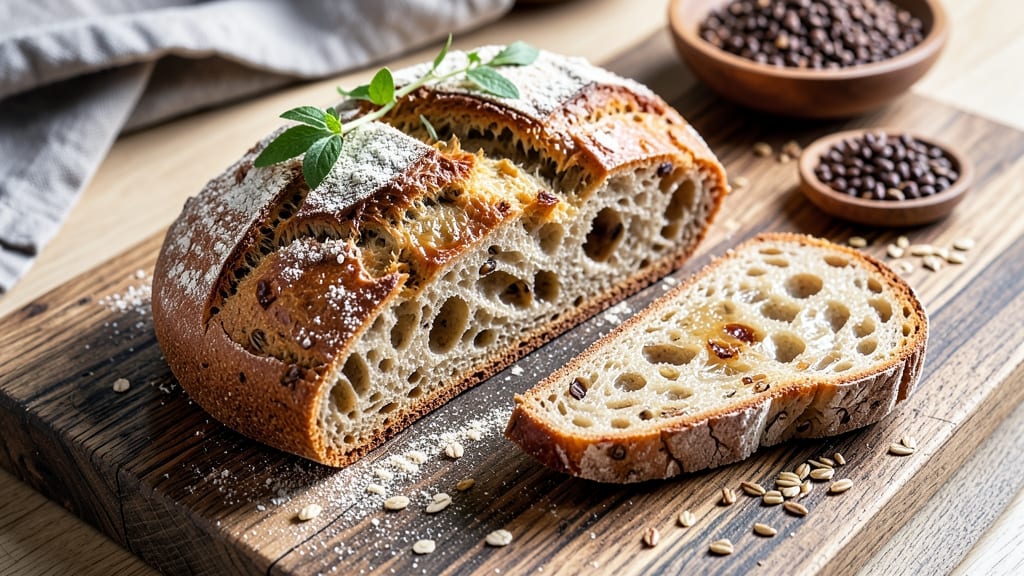
This 7-grain flour bread recipe delivers a rustic, wholesome loaf with a crispy crust and an airy, open crumb—perfect for sandwiches or toast. 🌾 The secret lies in blending whole grains for depth while maintaining a light texture, a technique I’ve refined after years of baking.
Unlike dense whole-wheat bread, this version stays tender yet substantial, thanks to a precise fermentation process.
The dough requires patience but rewards with a golden-brown crust and a crumb studded with visible grain flecks. You’ll mix, knead, and let it rise twice—once at room temperature, then overnight in the fridge—for maximum flavor development.
High heat in the oven (425°F) ensures a crisp exterior while keeping the interior moist, a balance that’s key to avoiding a heavy loaf.
What sets this bread apart is its versatility: serve it fresh with butter, toasted with jam, or sliced for sandwiches. The recipe accounts for common pitfalls—like over-kneading or uneven browning—with clear troubleshooting steps.
Whether you’re a seasoned baker or new to whole-grain bread, this method delivers professional results at home.
Ready in about 3 hours (including proofing), this bread is ideal for meal prep or gifting. The recipe scales easily, so you can bake one loaf for the family or two for sharing. Here’s how to achieve that perfect open crumb and crust every time.
Ingredients for 7 grain flour bread
Seven distinct flours blend to create a rustic, wholesome loaf with an open crumb and crisp crust.
| Ingredient | Amount | Notes |
|---|---|---|
| Whole Wheat Flour 🌾 | 2 cups | For structural foundation |
| Spelt Flour 🌾 | 1 cup | Adds nutty depth |
| Rye Flour 🌾 | ½ cup | Enhances chewiness |
| Barley Flour 🌾 | ½ cup | Boosts fiber content |
| Oat Flour 🌾 | ½ cup | Creates light texture |
| Buckwheat Flour 🌾 | ¼ cup | Adds earthy flavor |
| Millet Flour 🌾 | ¼ cup | Balances grain blend |
| Active Dry Yeast 🍞 | 2 ¼ tsp | Ensures proper rise |
| Granulated Sugar 🍚 | 1 tbsp | Feeds yeast activation |
| Unsalted Butter 🧈 | ½ cup | Softened, full-fat preferred |
| Warm Water 💧 | 1 ½ cups | 105-110°F for yeast |
| Sea Salt 🧂 | 1 ½ tsp | Diamond Crystal preferred |
| Honey 🍯 | 1 tbsp | Enhances browning |
| Cornmeal 🌽 | ¼ cup | Prevents sticking |
| Coarse Cornmeal 🌽 | ¼ cup | For oven sprinkle |
The grain blend is where this bread shines. King Arthur or Bob's Red Mill flours are ideal for their consistent quality—look for stone-ground varieties when possible. Spelt and rye bring depth, while buckwheat adds subtle earthiness. Pre-measure all flours using the spoon-and-level method for accuracy. If substituting any single grain, maintain the 1:1 ratio with whole wheat to preserve texture. For the yeast, Saf-Instant works best as it doesn't require activation in water first, saving time during mixing.
No spelt flour? Substitute with whole wheat at the same amount, though texture will be slightly denser. Running short on rye? Barley flour at half the quantity mimics its chewiness. The honey can be swapped for maple syrup, but reduce by 1 tsp to account for moisture differences. For a lighter crumb, add 1 tbsp vital wheat gluten to the dry ingredients. The butter should be softened but not melted—press a finger into it; it should leave a slight indent. If your kitchen runs warm, chill the dough 15 minutes before shaping to prevent overproofing.
Store the loaf wrapped in a clean kitchen towel at room temperature for 2 days to maintain freshness. For longer storage, slice and freeze portions between parchment paper for up to 3 months. The crust stays crisp for 12 hours if kept airtight. To revive stale bread, wrap in foil and warm at 350°F for 10 minutes. The overnight cold proof in the fridge enhances flavor—don't skip it. For gifting, bake two loaves and package in parchment-lined boxes with a sprig of fresh rosemary for presentation.
Why You'll Love This Recipe
- No-Fuss Mixing: I swear by the 10-minute stir—just combine the whole wheat, spelt, rye, barley, and oat flours with water, a pinch of salt, and yeast. No fancy kneading, no overthinking. Honestly, my hands are usually still clean by the time it’s ready for the oven.
- Earthy Depth: That blend of rye and barley? It’s like a warm hug for your sandwiches—chewy, nutty, and just slightly sweet. I’ll be real: my kids still ask why we don’t eat this every day, even though it’s not the prettiest loaf.
- Weeknight Workhorse: Toss it in a Dutch oven for dinner rolls, slice it for toast, or pack it for lunches. Between us, I’ve used it for everything from grilled cheese to French toast, and it never lets me down. (Yes, even on a Tuesday night.)
- Pantry Stretch: This recipe turns cheap flours into something impressive—no specialty ingredients, just what’s already in your bin. A single batch lasts my family five days, and the leftovers? Perfect for croutons or breadcrumbs. My wallet and my fridge thank me.
Step-by-step instructions for 7-Grain flour bread
Mastering this blend of flours creates a bread with exceptional texture and flavor.
👨🍳 Step 1: Activate the Yeast and Prepare the Dough
In a large mixing bowl, combine the 1.5 cups warm water (between 105-110°F), 1 tbsp granulated sugar, and 2.25 tsp active dry yeast. Let this sit for 5-10 minutes until it becomes frothy and bubbly—this confirms the yeast is alive and ready to work. If it doesn't bubble, your yeast may be inactive, and you'll need to start over.
To the yeast mixture, add the 1 tbsp honey, 1.5 tsp sea salt, and 0.5 cup softened unsalted butter. Mix these ingredients together until the butter is fully incorporated and the mixture is smooth. This step creates the foundation for your dough, balancing sweetness, saltiness, and fat content that will contribute to both flavor and texture.
👨🍳 Step 2: Combine the Flour Blend and Form the Dough
In a separate large bowl, whisk together the 2 cups whole wheat flour, 1 cup spelt flour, 0.5 cup rye flour, 0.5 cup barley flour, 0.5 cup oat flour, 0.25 cup buckwheat flour, and 0.25 cup millet flour. This diverse blend of flours creates a complex flavor profile and a light, airy crumb. Gradually pour the flour mixture into the yeast mixture, stirring with a wooden spoon or dough whisk.
Once combined, use your hands to knead the dough on a lightly floured surface for 8-10 minutes until it becomes smooth and elastic. The dough should be slightly tacky but not sticky—if it's too sticky, add a little more of the whole wheat flour as needed. This kneading process develops gluten, which will give your bread its structure and chewiness. Real talk: don't skip this step, even if the dough feels resistant at first.
⏰ Step 3: First Rise and Prepare for Shaping
Place the dough in a lightly oiled bowl, cover it with a damp kitchen towel, and let it rise in a warm place for 1-2 hours or until it has doubled in size. The dough should feel light and springy when pressed gently with a finger. If your kitchen isn't warm enough, place the bowl near a turned-off oven with the light on or use a proofing box to maintain a consistent temperature.
Once the dough has risen, punch it down gently to release any air bubbles. Divide the dough into 4 equal portions (about 8 ounces each) and shape each portion into a round loaf. To shape, cup your hands around the dough and gently roll it between your palms, keeping the edges slightly thicker than the center. This creates the classic round shape with a slightly thicker crust.
🍳 Step 4: Second Rise and Prepare for Baking
Place the shaped dough rounds onto a baking sheet lined with parchment paper, spacing them about 2 inches apart. Cover the baking sheet with a damp towel and let the dough rise again for 30-45 minutes until it has puffed up noticeably. The dough should look slightly domed and feel firm to the touch. This second rise ensures a light, airy texture in the final bread.
Preheat your oven to 375°F and sprinkle the risen dough rounds generously with 0.25 cup coarse cornmeal. This step creates a beautiful, rustic crust and prevents sticking. Bake for 25-30 minutes until the bread is deep golden brown and sounds hollow when tapped on the bottom. The internal temperature should reach 190-200°F.
🔥 Step 5: Cool and Serve for Maximum Enjoyment
Remove the bread from the oven and transfer it to a wire rack to cool completely. This cooling process is crucial—it allows the bread to set and prevents a gummy texture. While it's tempting to slice into the warm bread immediately, resisting this urge ensures the best texture. The bread should cool for at least 30 minutes, though it's even better if you can wait 1 hour.
Once cooled, slice the bread into thick rounds and serve. The crust should be crisp and slightly chewy, while the interior should be light and airy with an open crumb structure. Each bite should deliver a harmonious blend of nutty, earthy, and slightly sweet flavors from the diverse grain blend. Store any leftovers in an airtight container at room temperature for up to 3 days or freeze for longer storage.
Pro Tips For Making 7 Grain Flour Bread
- Mix Flours First, Then Hydrate: Mix all your dry flours—whole wheat, spelt, rye, barley, and oat—together in a bowl before adding water. This prevents clumping (especially with oat flour) and ensures even hydration, which is critical when blending so many dense grains.
- Let the Dough Rest Longer: This isn’t your standard white bread dough—it’s heavy with rye and barley, which need extra time to develop flavor and texture. Skip the rush and let it proof for at least 2 hours (or overnight in the fridge) for a crumb that’s open and tender, not dense.
- Prevent Over-Kneading the Rye: Rye flour behaves differently than wheat—it breaks down fast. Once your dough feels cohesive (around 8-10 minutes by hand), stop kneading. Overworking it turns it gummy, and your bread will taste flat. Test readiness by stretching a piece: it should resist but not snap back hard.
- Upgrade with Warm Water: Cold water makes these flours sluggish. Use warm (not hot) water (around 85°F/30°C) to activate the gluten and help the dough come together faster. It also improves rise—trust me, your bread will thank you for the lift.
Perfect pairings for 7 grain flour bread
Butter Spreads
This hearty bread pairs beautifully with cultured butter—try Plugrá or Kerrygold for their rich, slightly tangy profiles that complement the nutty grains. For extra flavor, mix softened butter with honey and a pinch of sea salt (like the recipe calls for) to enhance the bread’s natural sweetness.
A dollop of garlic-herb butter (mash 2 tbsp softened butter with 1 minced garlic clove and 1 tsp chopped parsley) adds a savory twist. 🧈
Jam Pairings
Sweet and tangy jams elevate this bread’s earthy notes. Raspberry or blackberry jam (like Bon Appétit or Smucker’s) balances the grain’s nuttiness, while fig jam adds a luxurious depth.
For something unique, try spiced apple butter—simmer 1 cup apple butter with ½ tsp cinnamon and 1 tsp orange zest for warmth. Spread thickly on a toasted slice for the ultimate breakfast or snack. 🍓
Cheese Boards
Create a rustic cheese board with this bread as the base. Pair it with aged cheddar (like Cabot Clothbound), goat cheese (such as Crofton Farm), and blue cheese (e.g., Gorgonzola Dolce) for a mix of creamy, tangy, and bold flavors.
Add walnuts, dried apricots, and honeycomb for texture and sweetness. The bread’s open crumb soaks up cheese flavors beautifully. 🧀
Savory Toppings
For a savory twist, top slices with prosciutto or salami, then add arugula, sliced tomatoes, and a drizzle of balsamic glaze. The bread’s crust holds up to these toppings without getting soggy.
Another idea: avocado mash (blend 1 ripe avocado with 1 tsp lime juice, salt, and pepper) adds creaminess. The grain blend’s texture contrasts perfectly with rich, soft toppings. 🥑
Beverage Matches
Pair this bread with sparkling water with lemon for a refreshing contrast to its richness. For coffee lovers, a light roast (like Peet’s Major Dickason’s Blend) highlights the bread’s nutty notes without overpowering.
A dry Riesling or Pinot Noir complements the grains’ earthiness, while chai tea (steep 1 chai tea bag in 1 cup hot milk) adds warmth. 🍷
Meal Prep Uses
Slice the cooled bread and pack it in airtight containers with hummus or olive tapenade for grab-and-go lunches. The bread’s sturdy crust prevents sogginess, making it ideal for meal prep. For sandwiches, use it with grilled chicken, avocado, and sprouts—the grain blend adds a satisfying chew.
Store slices in the freezer for up to 3 months and toast directly from frozen. 🥪
Nutrition facts
Frequently asked questions
Why does this 7-grain bread need two rises?
The first rise activates the yeast and develops gluten, while the second (especially the overnight cold proof) deepens flavor and creates that signature open crumb. The cold proof slows fermentation, allowing flavors to meld without overproofing—key for whole-grain breads that can become dense otherwise.
Can I substitute any of the flours?
Yes, but maintain the 1:1 ratio with whole wheat to preserve texture. For example, swap spelt for whole wheat (texture will be slightly denser) or barley for rye (½ quantity). Avoid replacing more than 1 grain at a time—each contributes unique flavor and texture. The buckwheat and millet add depth, so omit them only if you have allergies.
How do I fix a dense loaf?
Dense bread usually means underproofed dough or over-kneading. Next time, let the dough rise until it springs back slowly when pressed (not quickly). Also, ensure your yeast is fresh—test it by mixing with warm water and sugar first. For a second attempt, add 1 tbsp vital wheat gluten to the dry mix to strengthen structure.
Should I bake this in a Dutch oven?
Not necessary—this recipe bakes on a sheet pan with cornmeal for crust development. A Dutch oven would steam the bread too much, making the crust soggy. The high oven temp (375°F) and cornmeal create the perfect crispy crust without extra equipment.
How long will the bread stay fresh?
Wrap the cooled loaf in a kitchen towel and store at room temperature for 2-3 days. For longer storage, slice and freeze portions between parchment paper for up to 3 months. Toast from frozen to revive texture. The crust stays crisp for 12 hours if kept airtight.