
Side Dishes
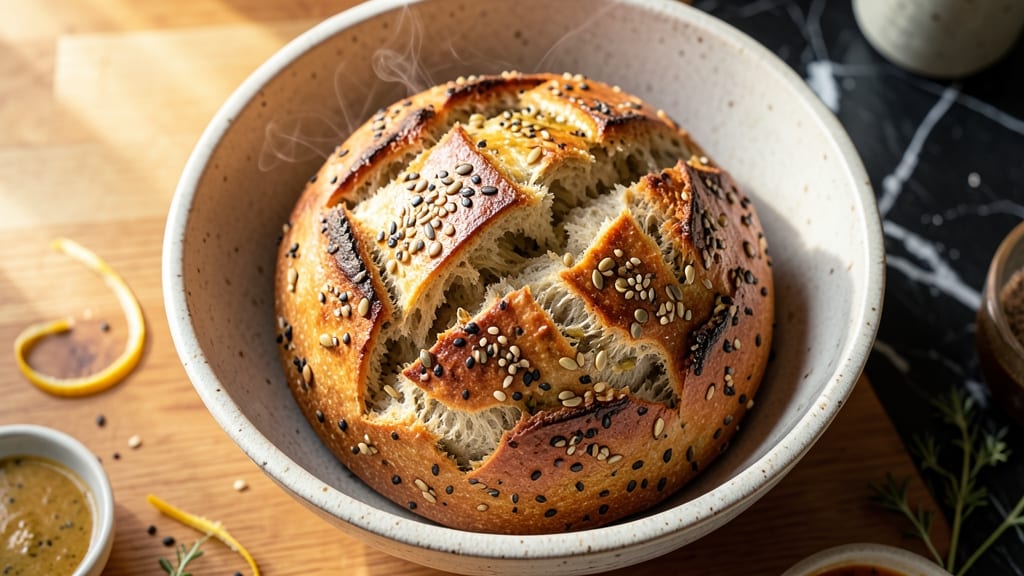
This 7 seed bread recipe transforms simple ingredients into a nutty, crunchy loaf that rivals artisanal bakery bread. The secret lies in a balanced mix of seeds—sunflower, pumpkin, sesame, and more—that add texture and depth, while a proper kneading technique ensures a crisp crust and airy crumb.
I’ve perfected this recipe over years of baking, and it’s now a staple in my kitchen for toast, sandwiches, or serving alongside soups.
The dough comes together with just five key ingredients—flour, seeds, yeast, water, and a touch of honey for sweetness—making it beginner-friendly without sacrificing flavor.
Proofing the dough overnight in the fridge enhances the flavor and creates a lighter texture, while baking at high heat ensures that crusty, golden-brown exterior everyone loves. The seeds toast slightly during baking, releasing their nutty aroma and adding a satisfying crunch to every bite.
What makes this bread special is its versatility. Toast it with butter for a simple breakfast, use it for sandwiches with minimal sogginess, or serve it alongside hearty stews. The seeds provide fiber and nutrients, while the crusty exterior and soft interior make it a crowd-pleaser.
With just 30 minutes of active time and a few hours of resting, you’ll have a loaf that tastes like it came from a bakery.
For those looking for dietary flexibility, this recipe can easily be adapted—swap honey for maple syrup, use flaxseed for eggs if needed, or add extra seeds for more crunch. The result is a bread that’s as nutritious as it is delicious, perfect for any meal. Let’s get baking!
Ingredients for 7 seed bread
Five core ingredients plus seven seeds create a bread that's nutritious, crunchy, and full of flavor.
| Ingredient | Amount | Notes |
|---|---|---|
| All-Purpose Flour 🌾 | 4 ½ cups | Unbleached preferred for texture |
| Sunflower Seeds 🥜 | ½ cup | Raw, unsalted for best flavor |
| Pumpkin Seeds 🌰 | ½ cup | Raw, unsalted, shelled |
| Sesame Seeds 🌿 | ¼ cup | Toasted for enhanced aroma |
| Flaxseeds 🌾 | ¼ cup | Ground for binding and nutrition |
| Sesame Seeds 🌿 | ¼ cup | Raw, for crust texture |
| Active Dry Yeast 🍞 | 1 tbsp | Or 2.25g for precision |
| Honey 🍯 | 1 tbsp | Or maple syrup for vegan option |
| Warm Water 💧 | 1 ¼ cups | 110°F-115°F ideal temperature |
| Salt 🧂 | 1 ½ tsp | Fine sea salt preferred |
| Olive Oil 🫒 | 2 tbsp | Extra-virgin for richness |
The seeds are the heart of this bread, so buy them raw and unsalted—pre-toasted seeds lose their crunch during baking. Bob's Red Mill or bulk bins at natural markets offer the best quality. For the flaxseeds, grind them fresh right before mixing to preserve their omega-3s. The sunflower and pumpkin seeds should be roughly chopped—no need to go tiny, just break up any large clusters. If you're short on time, toast the sesame seeds in a dry pan for 2 minutes before adding them to the dough for extra aroma.
No honey? Maple syrup or agave works perfectly—just use the same amount. Short on one seed type? Swap with hemp seeds or chia seeds at the same quantity. The yeast is non-negotiable though—expired yeast means no rise. Test it by dropping a bit in warm water with a pinch of sugar; if it bubbles within 5 minutes, it's good. For the water, lukewarm is key—too hot kills the yeast, too cold slows activation. If your kitchen runs cold, microwave the water for 30 seconds then let it sit for 2 minutes before using.
This dough keeps beautifully in the fridge for 3 days if wrapped tightly in plastic. For longer storage, shape the loaf, wrap it in foil, and freeze it—bake straight from frozen with 10 extra minutes. The seeds stay crisp for about 5 days if you slice the loaf and store it in an airtight container. I always bake two loaves—one for immediate use and one to freeze. The second loaf is perfect for toast or sandwiches later in the week, and the seeds keep their crunch even after reheating.
Why You'll Love This Recipe
- No-Knead Magic: The dough comes together in five minutes—just mix, let it rise overnight, and bake. Honestly, I’ve made this bread while scrolling through my phone. The seeds do all the heavy lifting while you do nothing.
- Nutty Crunch Perfection: Sunflower and pumpkin seeds add a satisfying bite that disappears too fast—like the last slice of cake at a party. Toasting them first? That’s the secret. (Yes, even on a Tuesday night.)
- Meal Prep MVP: This bread stays fresh for days, making it my go-to for sandwiches, toast, or croutons. I’ve used the last slice as a base for avocado toast at midnight—no judgment.
- Budget-Friendly Staple: Flour and seeds are cheap, and a single loaf feeds my family for days. Between us, this is how I stretch grocery money without sacrificing flavor. (My wallet thanks me.)
Step-by-step instructions for 7 seed bread
Transform simple ingredients into a nutty, crusty loaf with this foolproof method.
Activate the Yeast with Honey and Warm Water
In a large mixing bowl, combine the 1.25 cups warm water (between 110°F-115°F) with the 1 tbsp honey and 1 tbsp active dry yeast. Let this mixture sit for 5-10 minutes until it becomes frothy and bubbly. This indicates the yeast is active and ready to work.
I always check the water temperature first—too hot kills the yeast, too cold prevents activation. The honey not only feeds the yeast but also adds subtle sweetness that balances the seeds' earthiness. If no bubbles form after 10 minutes, your yeast may be expired, and you'll need to start over.
Mix the Dough with Seeds and Olive Oil
To the yeast mixture, add the 4.5 cups all-purpose flour, 1.5 tsp salt, and the 2 tbsp olive oil. Mix with a wooden spoon or dough whisk until a shaggy dough forms. Then add the 0.5 cup sunflower seeds, 0.5 cup pumpkin seeds, 0.25 cup toasted sesame seeds, and 0.25 cup ground flaxseeds.
Use your hands to knead the dough directly in the bowl for 8-10 minutes until it becomes smooth and elastic. The seeds will feel like little resistance, but keep kneading—they'll distribute evenly. If the dough feels too dry, add 1-2 tbsp warm water at a time until it comes together. The texture should be slightly tacky but not sticky.
First Rise for Flavor Development
Lightly coat a large bowl with olive oil and place the dough inside. Cover with a clean kitchen towel or plastic wrap and let rise in a warm place for 1-1.5 hours, or until doubled in size. The dough should feel springy when pressed gently—this confirms it's ready for shaping.
I place my dough bowl on top of my oven with the light on (creates a warm, humid environment) for consistent rising. Avoid direct sunlight or drafts, which can cause uneven expansion. The seeds will release their oils during this rise, deepening the bread's nutty flavor and aroma.
Shape and Second Rise for Crusty Texture
Turn the dough onto a lightly floured surface and shape it into a 12-inch loaf by folding the edges toward the center. Sprinkle the remaining 0.25 cup raw sesame seeds evenly over the top for texture. Place the loaf seam-side down in a greased 9x5-inch loaf pan.
Cover again and let rise for another 30-45 minutes until the dough domes slightly above the pan. The sesame seeds will stick to the dough's surface, creating that signature crunchy crust. Press your finger gently into the dough—if it springs back slowly, it's ready. If not, give it another 10 minutes.
Bake to Golden Perfection
Preheat your oven to 375°F. Bake the loaf for 35-40 minutes until the top is deep golden brown and sounds hollow when tapped. The internal temperature should reach 190°F-200°F.
For the best crust, I recommend baking on the middle rack. Rotate the pan halfway through if your oven has hot spots. The bread is done when the crust is crackly and the seeds are toasted. Let it cool in the pan for 10 minutes before transferring to a wire rack—this prevents a gummy crumb.
Pro Tips For Making 7 Seed Bread
- TOAST SEEDS FIRST: Sunflower, pumpkin, and sesame seeds lose their crunch and flavor if added raw—toss them in a dry skillet over medium heat for 3-4 minutes until golden and fragrant. Flaxseeds don’t need this, but the others? Game-changer for texture and taste. (I used to skip this and wondered why my bread tasted flat.)
- WEIGH YOUR FLOUR: Dumping flour by volume leads to inconsistent bread—this recipe relies on precise ratios. Use a kitchen scale for the all-purpose flour (1 cup = ~125g, but it varies). Packing seeds into measuring cups? Nope. Spoon them in, then level off. (Yes, it’s a pain, but your bread’s rise depends on it.)
- SKIP THE OVERKNEAD: This dough doesn’t need a long knead—overworking it develops gluten too much, making the bread dense. Mix until just combined, then do 3-4 sets of 30-second stretches. Stop when the surface springs back slowly, not bounces like a trampoline. (I ruined two batches before learning this.)
- USE COLD WATER: Mixing the dough with cold water (around 60°F/15°C) slows yeast activity just enough to give you time to shape without overproofing. Warm hands? Dip them in cold water between kneads. (Hot water = instant overproofed disaster—trust me.)
Make-ahead tips for this 7 seed bread
Overnight Proofing
For deeper flavor and easier morning baking, shape your dough into a loaf and refrigerate it overnight. After the first rise, place the shaped dough in a greased loaf pan, cover with plastic wrap, and refrigerate for 8-12 hours. The cold slows fermentation, developing complex flavors.
When ready to bake, remove it from the fridge and let it sit at room temperature for 1 hour before baking at 375°F. This method is perfect for busy mornings—just pop it in the oven when you wake up! 🌙
Double Batch Freezing
Make two loaves at once and freeze one for later. After baking, let the second loaf cool completely, then wrap it tightly in plastic wrap followed by aluminum foil. Store in an airtight container or freezer bag for up to 3 months.
To use, thaw overnight in the fridge or bake straight from frozen with 10 extra minutes at 375°F. The seeds stay crispy even after freezing, making this ideal for meal prep.
Seed Toasting Shortcut
Save time by toasting your seeds before mixing. Spread 1 cup of seeds (sunflower, pumpkin, sesame) on a baking sheet and toast at 350°F for 8-10 minutes, stirring halfway.
This enhances their nutty aroma and ensures they stay crispy longer. Store toasted seeds in an airtight container for up to 2 weeks—perfect for future baking or snacking. 🌰
Storage for Freshness
Slice the loaf and store it in an airtight container at room temperature for 3-4 days to maintain crunch. For longer storage, freeze individual slices wrapped in parchment paper. Toast frozen slices directly in the toaster or oven at 350°F for 3-5 minutes to restore crispiness.
The seeds lose crunch faster in humid climates, so keep it in a cool, dry place.
Make-Ahead Dough
Prepare the dough up to 24 hours ahead and store it in the fridge. After the first rise, shape the dough into a loaf, cover tightly, and refrigerate. When ready to bake, let it sit at room temperature for 30 minutes before the second rise and baking.
This flexibility lets you bake anytime without last-minute prep. The dough keeps its texture and flavor perfectly overnight. ⏰
Crust Preservation
To keep the crust crispy for days, store the loaf in a paper bag at room temperature. The paper bag prevents moisture buildup, which softens the crust. If you prefer refrigeration, wrap the loaf in foil first, then place it in a bag.
Reheat slices in a 375°F oven for 5 minutes to revive the crust before serving. This trick works especially well for sandwich bread! 🥖
Nutrition facts
Frequently asked questions about 7 seed bread
Why do you need to knead the dough for so long with seeds?
The seeds add texture and nutrition, but they also make the dough thicker and denser. Kneading for 8-10 minutes ensures the seeds distribute evenly and the gluten develops properly for a light, airy crumb. The extra effort prevents pockets of seeds and creates that perfect balance between chewiness and crunch.
Can I substitute seeds if I don’t like one of them?
Swap any seed for an equal amount of another—chia, hemp, or even poppy seeds work well. For example, replace 0.25 cup flaxseeds with 0.25 cup chia seeds (ground first) or use 0.25 cup poppy seeds for a milder flavor. Just ensure the total seed quantity stays at 2 cups for the right texture.
How do I know when the bread is fully baked?
Look for three signs: the crust should be deep golden brown, the bread should sound hollow when tapped on the bottom, and the internal temperature should reach 190°F-200°F. If unsure, check after 35 minutes—overbaking dries out the seeds and crust.
Why did my bread turn out dense instead of crusty?
Dense bread usually means the dough didn’t rise enough or was over-kneaded. Check your yeast (it must bubble in warm water), ensure the oven is at 375°F, and let the dough rise until doubled. For extra crustiness, bake on the middle rack and consider steaming the loaf for the first 5 minutes (place a tray of boiling water in the oven).
Can I make this bread without a loaf pan?
Yes! Shape the dough into a round or oval and bake it on a parchment-lined baking sheet. For a rustic look, score the top with a sharp knife before baking. The crust will be thicker, and the seeds will toast beautifully. Bake for 30-35 minutes until golden, then cool completely before slicing.