
Side Dishes
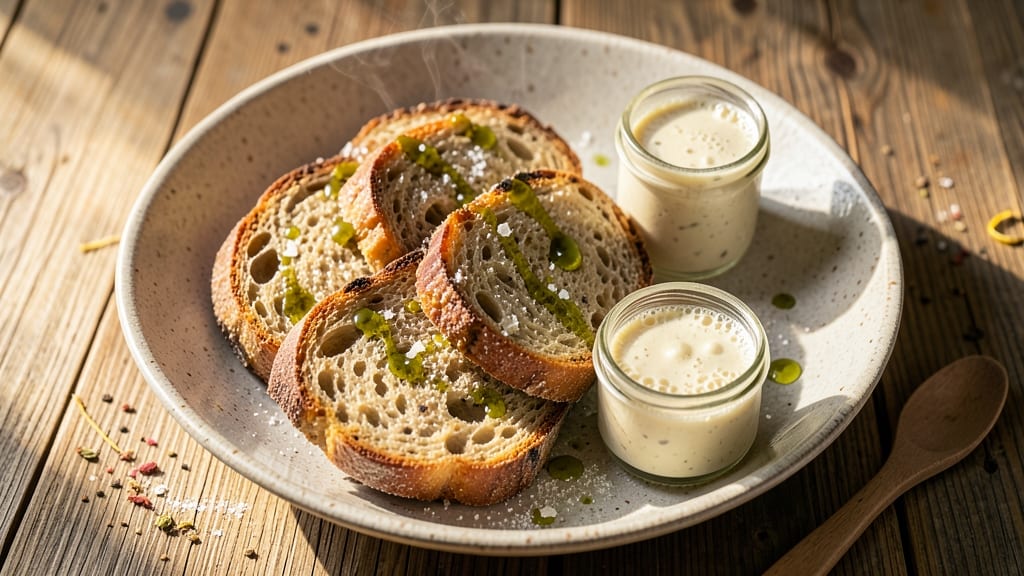
Adding sourdough discard to bread transforms waste into a crusty, tangy loaf with restaurant-quality depth—no special skills required. This recipe balances discard's moisture with precise hydration adjustments, ensuring a light, airy crumb and crispy crust every time. I developed it after years of baking with discard, refining the ratio to eliminate dense results while keeping the signature sourdough flavor.
The key lies in hydration control and proper fermentation. We'll use a 100% hydration dough with a 1:1 discard-to-flour ratio by weight, plus a 24-hour cold proof for maximum flavor development.
This method preserves the discard's tang while creating a structure that holds up to slicing. No kneading, no guesswork—just science-backed technique for foolproof results.
What you'll end up with is a sandwich loaf or artisan boule with a golden, crackling crust and an open crumb studded with air pockets. The tangy depth from the discard elevates simple bread into something special—perfect for toast, sandwiches, or serving alongside soups.
The recipe yields two 9x5-inch loaves or one large boule, with minimal effort and zero waste.
This approach works equally well for sandwich bread or dinner rolls. The same principles apply whether you're using active discard or slightly older starter—just adjust fermentation times accordingly. Let's bake this no-waste loaf that tastes like it came from a bakery, not your kitchen.
Ingredients for add sourdough discard to bread
These pantry staples and zero-waste discard create a loaf with bakery-style crust and tangy depth.
| Ingredient | Amount | Notes |
|---|---|---|
| Unbleached All-Purpose Flour 🌾 | 3 cups | Spooning and leveling for accuracy |
| Sourdough Discard 🍞 | 3 cups | Active or slightly older starter |
| Extra-Virgin Olive Oil 🫒 | ½ cup | For dough elasticity and crust |
| Granulated Sugar 🍚 | ¼ cup | Feeds yeast for fermentation |
| Instant Yeast 🍞 | ½ tsp | Ensures reliable fermentation |
| Diamond Crystal Kosher Salt 🧂 | 1 ½ tsp | Enhances flavor development |
| Whole Milk 🥛 | ½ cup | Adds tenderness and richness |
| Cornmeal 🌽 | ¼ cup | For dusting baking surface |
| Water 💧 | ½ cup | Adjusts hydration as needed |
| Honey 🍯 | 1 tbsp | Optional for added sweetness |
The flour is your foundation—King Arthur or Caputo Tipo 00 elevate texture, but all-purpose works fine. Sourdough discard should smell tangy but not rotten—use it within 24 hours of discard day for best results. For the yeast, Red Star Active Dry is my go-to, but instant yeast works too if you're in a hurry. The milk adds richness, but whole milk or buttermilk both work well. If you're using older discard, add an extra 0.25 tsp yeast to compensate for weaker starter activity.
No milk? Water plus 1 tbsp melted butter mimics the fat content. Short on flour? Whole wheat or rye flour at 10% replacement adds depth but may require slightly more water. The honey is optional but enhances crust color and flavor—maple syrup works too. If your discard is particularly wet, reduce water by 0.25 cup to maintain proper dough consistency. For a lighter crumb, let the dough ferment 30 minutes longer at room temperature before cold proofing.
Store flour in an airtight container for up to 6 months and discard in the fridge for 5-7 days if not using immediately. The dough can be shaped and refrigerated for 24 hours before baking, or frozen for up to 3 months—thaw overnight in the fridge. For best results, bake within 8 hours of shaping. The loaf keeps well at room temperature for 3 days, wrapped in a cloth to maintain freshness.
Why You'll Love This Recipe
- No-Waste Magic: I swear by this trick—every time I’d toss out sourdough discard, now I mix it into flour, a splash of olive oil, and a pinch of sugar, and boom—fluffy, tangy bread with zero guilt. That discard isn’t trash; it’s the secret to a lighter crumb and deeper flavor without extra effort.
- Olive Oil Richness: The moment that dough hits the oven, the olive oil infuses every bite with a buttery, almost Mediterranean warmth. No fancy ingredients—just a drizzle of good EVOO—transforms this into something that tastes like a bakery loaf, not a quick mix.
- Weeknight Workhorse: I make two loaves on Sunday, freeze one, and toast slices all week. The discard keeps the bread moist longer than plain flour bread, and the sugar just enough to balance the tang—perfect for sandwiches, toast, or even French toast later.
- Budget-Friendly Baking: Honestly, this cuts my grocery bill in half. Discard is free (if you bake sourdough), and the rest of the ingredients are pantry staples. A loaf costs me about $1.50 to make—same as store-bought, but way better and zero preservatives.
Step-by-step instructions for a tangy sourdough-infused loaf
This method transforms discard into a flavorful, crusty loaf with minimal effort.
Activate the Sourdough Discard
In a medium bowl, combine the 3 cups sourdough discard with the 0.5 cup whole milk, 0.5 cup water, and 1 tbsp honey. Stir gently until fully integrated—the discard should be smooth but slightly bubbly. Let this mixture sit at room temperature for 1-2 hours until it doubles in volume and develops a few small bubbles along the surface.
This activation step is crucial because it jumpstarts fermentation, ensuring your dough rises properly. If your kitchen is cold, place the bowl in a slightly warm spot like near the oven with the light on. You'll know it's ready when the mixture looks puffy and has a slightly tangy aroma—don't let it overproof or it'll taste overly sour.
Mix the Dough with Wet and Dry Ingredients
In a large mixing bowl, whisk together the 3 cups unbleached all-purpose flour, 0.5 tsp instant yeast, and 1.5 tsp diamond crystal kosher salt. Create a well in the center and pour in the activated sourdough mixture along with the 0.5 cup extra-virgin olive oil and 0.25 cup granulated sugar. Using a wooden spoon or dough whisk, gently combine everything until a shaggy dough forms.
Once the dough starts coming together, switch to your hands and knead on a lightly floured surface for 8-10 minutes until smooth and elastic. The dough should be slightly sticky but not wet—if it's too dry, add 1 tablespoon of water at a time until it reaches the right consistency. This kneading develops gluten, which gives your bread its structure and chewiness.
Bulk Ferment for Maximum Flavor
Place the dough back in the mixing bowl, cover it loosely with plastic wrap or a damp kitchen towel, and let it rise at room temperature for 2-3 hours. You're looking for the dough to increase by about 50% in volume—it should look puffy and jiggly when gently pressed. During this time, the sourdough discard will continue fermenting, adding that signature tangy depth.
I like to do this bulk fermentation on the countertop where it's warmest. If your kitchen is cool, extend the time to 4 hours to allow for proper fermentation. The dough should smell slightly sweet and tangy—this is your cue that the flavors are developing beautifully. Poke the dough gently; if it springs back slowly, it's ready for shaping.
Shape and Final Proof
Lightly dust your work surface with 0.25 cup cornmeal and turn out the dough. Gently shape it into a round loaf by pulling the edges toward the center and tucking them underneath. Place the loaf seam-side up in a lightly greased loaf pan or on a parchment-lined baking sheet. Cover again and let it proof for 1-2 hours until it has nearly doubled in size.
For an even better rise, place the dough in a warm spot during the final proof. The dough should be puffy and slightly domed—press your finger gently into the dough; if it leaves a slow, deliberate indent, it's ready for baking. If you're baking immediately, preheat your oven to 375°F while the dough proofs so it's ready when you are.
Bake to Crusty Perfection
Bake the loaf for 35-40 minutes until it's deep golden brown and sounds hollow when tapped on the bottom. The internal temperature should reach 190-200°F when checked with an instant-read thermometer. For extra crustiness, you can also brush the top with water before baking and sprinkle with a little more diamond crystal kosher salt for flavor.
Once baked, transfer the loaf to a wire rack and let it cool for at least 30 minutes before slicing. This resting period allows the bread to set properly, preventing a gummy texture. The finished loaf should have a crisp crust with a soft, airy crumb and that unmistakable sourdough tang—perfect for toast, sandwiches, or enjoying on its own with butter.
Pro Tips For Making Add Sourdough Discard To Bread
- WEIGH YOUR DISCARD: Sourdough discard is deceptive—what looks like a cup in your jar is often closer to ½ cup by weight. Use a kitchen scale for accuracy, especially if your discard is thick or watery. I’ve ruined batches by eyeballing it, and the dough either collapsed or overproofed.
- STIR IN OIL LAST: Add the extra-virgin olive oil after mixing the flour, discard, and yeast. This keeps the oil from gumming up the instant yeast too early, which can weaken gluten development. Trust me, your bread’s texture will thank you—it’ll be lighter, not dense.
- AVOID OVERMIXING THE DISCOUNT: Once you add the discard, mix just until combined—about 20 seconds. Overworking it turns the dough gummy and exhausts the gluten. I learned this after kneading like I was punching a bag; the result was a sad, dense loaf. Let the dough rest after mixing.
- HYDRATE YOUR FLOUR FIRST: Toss the unbleached all-purpose flour with the sugar and yeast in the bowl, then pour in the discard last. This prevents clumping and ensures even distribution of yeast. I used to dump everything in at once, and my dough always felt uneven—this fix changed that.
Serving suggestions for add sourdough discard to bread
Toast Perfection
This tangy loaf excels as toast—its crusty exterior and open crumb hold up beautifully to buttery toasts. I like to slice it ¼-inch thick and toast in a 375°F oven for 3-4 minutes until golden and crisp.
For extra richness, spread with herb-infused olive oil or top with whipped ricotta and flaky salt before serving. The sourdough tang adds depth to avocado toast or classic peanut butter combos. 🥖
Sandwich Bread Base
Use this loaf for hearty sandwiches where the tangy flavor shines. The 100% hydration dough creates a soft interior that holds up to fillings like prosciutto and mozzarella or grilled chicken and pesto.
Cut into ½-inch slices for sturdy sandwiches or ¼-inch slices for lighter wraps. The open crumb prevents sogginess even with wet ingredients like tomato sauce or hummus.
Soup Companion
Serve warm slices alongside soups to soak up every last drop of broth. The crusty exterior adds satisfying texture contrast to creamy soups like butternut squash or tomato basil. I like to toast slices briefly to enhance their crispness before serving.
For extra flair, sprinkle with freshly cracked black pepper and a drizzle of aged balsamic glaze—the tangy bread and sweet glaze create a perfect flavor balance.
Breakfast Loaf
Transform this bread into a breakfast star by slicing it into ½-inch thick pieces and toasting until golden. Serve with scrambled eggs, crispy bacon, and a dollop of sour cream for a hearty morning meal.
The sourdough tang cuts through rich breakfast flavors beautifully. For a sweet twist, spread toasted slices with almond butter and sliced bananas—this combo feels indulgent but stays light.
Garnish for Salads
Add visual interest to salads by topping with crispy bread cubes. Toast 1-inch cubes in the oven until golden, then sprinkle with flaky sea salt and fresh thyme. Toss into Caprese salads or winter greens with roasted vegetables.
The bread adds satisfying texture contrast while the tangy flavor complements fresh ingredients. For extra flavor, brush cubes with garlic-infused olive oil before toasting.
Make-Ahead Serving
This loaf keeps well for 3-4 days at room temperature when wrapped in a clean kitchen towel. For longer storage, slice and freeze individual portions—thaw at room temperature for 1-2 hours before serving.
The bread reheats beautifully in a 350°F oven for 5-7 minutes to restore freshness. I often prepare a batch on weekends to use throughout the week for quick meals and snacks.
Nutrition facts
Frequently asked questions
What's the best ratio of sourdough discard to flour when baking bread?
A 1:1 ratio by weight (equal parts discard and flour) works perfectly for this recipe. For 3 cups discard, use 3 cups flour—this balance prevents a gummy texture while maximizing tangy flavor. If your discard is particularly wet, reduce flour by 1-2 tablespoons to maintain proper dough consistency.
Can I use old sourdough discard that's been in the fridge for a week?
Older discard (3-7 days) will work, but it may have weaker fermentation power. Extend the bulk fermentation time to 4-6 hours or add an extra 0.25 tsp yeast to compensate. If the discard smells strongly alcoholic or has mold, discard it—safety first! For best flavor, use discard within 24-48 hours of feeding.
Why did my bread turn out dense instead of light and airy?
Density usually means under-fermentation or over-kneading. Check these fixes:
- Ferment longer (try 4 hours bulk rise),
- Reduce kneading time to 5-7 minutes, or
- Increase yeast by 0.25 tsp. Also ensure your kitchen is warm enough—cool temps slow fermentation. For extra lift, try a 24-hour cold proof before baking.
Can I substitute milk with something else in this recipe?
Use whole milk substitutes like buttermilk, Greek yogurt thinned with water (1:1 ratio), or water + 1 tbsp melted butter. For dairy-free options, try unsweetened almond milk + 1 tbsp olive oil to mimic fat content. The milk adds richness—without it, your crust may be less tender.
How do I know when my sourdough discard is ready to use?
Fresh discard should smell tangy but not rotten, with visible bubbles and a slightly thick consistency. Press it—if it springs back slowly (not instantly), it's ready. Avoid discard with grayish liquid or strong alcohol smell. For maximum flavor, use discard that's 12-24 hours old after feeding your starter.