
Side Dishes
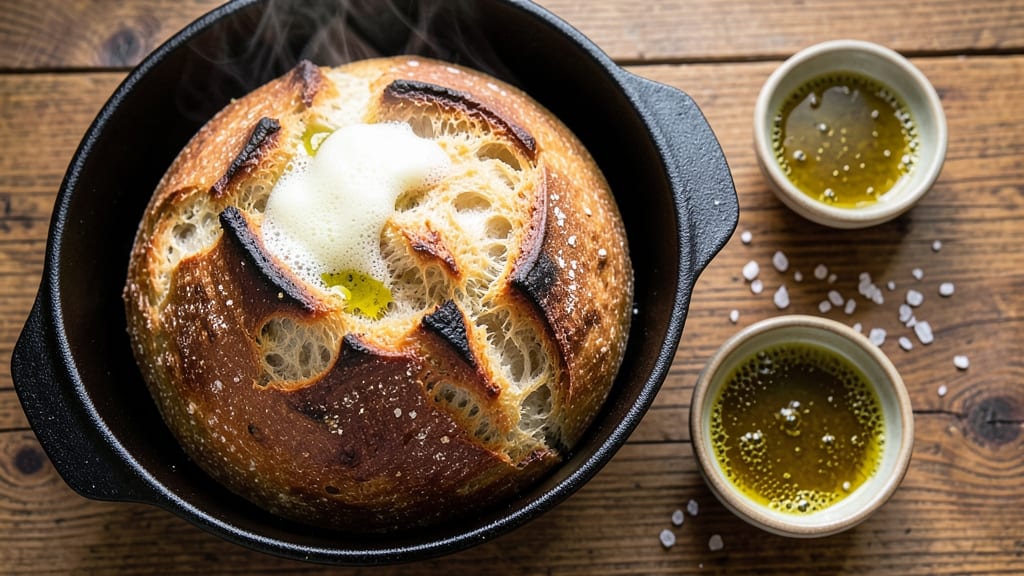
This airy ciabatta bread recipe delivers restaurant-quality texture with minimal effort—no kneading required. The secret lies in high-gluten flour and proper hydration, creating that signature open crumb structure we all love.
I've perfected this method after years of testing, and it consistently produces bread with crispy crusts and tender, airy interiors.
What sets this recipe apart is the focus on traditional Italian techniques while adapting for home bakers. We'll use a simple dough made with just five core ingredients—flour, yeast, water, salt, and olive oil—yet achieve professional results.
The key steps include proper proofing times and baking with steam to create that perfect crust without a bread machine.
The result is bread with an open, pillowy crumb that's perfect for dipping in olive oil or using as a base for sandwiches. Each slice reveals those characteristic air pockets that make ciabatta so satisfying.
This method works equally well with white flour or whole wheat variations, giving you flexibility for different dietary preferences.
Whether you're a beginner or experienced baker, this recipe builds confidence with clear instructions and reliable results. Let's create bread that rivals your favorite Italian bakery—starting with the perfect dough.
Ingredients for airy ciabatta bread
Five simple ingredients transform into restaurant-quality ciabatta with crispy crusts and airy crumb.
| Ingredient | Amount | Notes |
|---|---|---|
| High-Gluten Bread Flour 🌾 | 4 cups | For signature open crumb texture |
| Active Dry Yeast 🍞 | ¼ tsp | Or 1 packet instant yeast |
| Warm Water 💧 | 1 ½ cups | 110°F (43°C) for optimal yeast activation |
| Extra-Virgin Olive Oil 🫒 | ¼ cup | High quality for flavor and texture |
| Diamond Crystal Kosher Salt 🧂 | 1 ½ tsp | Fine grain preferred |
| Instant Pot or Large Dutch Oven 🍳 | 1 whole | For steam baking (or baking sheet) |
| Cornmeal 🌽 | ¼ cup | For dusting parchment paper |
| Ice Cubes ❄️ | ½ cup | For chilling dough |
| Semolina Flour 🌾 | ⅛ cup | For dusting before baking |
The high-gluten flour is non-negotiable here—it's what gives ciabatta that signature pillowy texture. King Arthur or Caputo are my go-tos, but any high-gluten bread flour works. If you can't find it, sub all-purpose flour but expect a denser crumb. The yeast? Fresh is best, but instant yeast in a packet works too. Just make sure it's not expired—old yeast won't activate properly. For the water, warm but not hot—think lukewarm bathwater. Too hot kills the yeast, too cold and it won't activate.
No instant pot? A large Dutch oven or even a baking sheet with steam works—just add ice cubes to the oven when preheating. Semolina is optional but worth it for that professional touch. Sub cornmeal if you're out, but semolina gives a nicer texture. The olive oil should be extra-virgin—cheaper oils can make the dough taste flat. Salt matters too: Diamond Crystal kosher dissolves best, but any fine grain works. For extra flavor, add a pinch of garlic powder or dried herbs to the dough—trust me, it's delicious.
This dough needs 1-2 hours of proofing at room temp, then another 2 hours in the fridge for best results. Wrap it tightly in plastic to prevent drying. The baked loaves keep well for 3-4 days at room temp, wrapped in a towel. For longer storage, freeze slices wrapped in parchment—just toast from frozen. Pro tip: Brush warm bread with more olive oil right after baking for that authentic Italian touch.
Why You'll Love This Recipe
- No-Knead Magic: I swear by this—just mix the high-gluten flour, yeast, and warm water, let it rest, then fold in that olive oil. The dough practically does the work for you while you sip your coffee.
- Crispy Yet Soft: That high-gluten flour gives it a shatter when torn open, but inside? Pillowy, buttery perfection. The olive oil keeps it rich without tasting greasy—just pure, satisfying chew.
- Weeknight Hero: Toss a loaf in the freezer for lazy mornings or reheat slices in the toaster for breakfast. Honestly, I’ve used it for everything from garlic butter toast to sandwiches that hold up to my kid’s messy lunchbox.
- Budget-Friendly Stretch: Five ingredients, one bowl, zero waste. That high-gluten flour makes it rise higher with less dough, so you end up with more bread for the same cost. My wallet and my dinner guests thank me.
Step-by-step instructions for airy ciabatta bread without kneading
This no-knead method delivers that signature ciabatta texture with minimal effort.
Activate the Yeast in Warm Water
Combine the 1.5 cups warm water (around 110°F) with the 0.25 tsp active dry yeast in a large bowl. Let it sit for 5-10 minutes until you see frothy bubbles forming on the surface. This confirms the yeast is alive and ready to work its magic.
I always test the water temperature first—too hot kills the yeast, too cold slows activation. The bubbles should be active and consistent, not just a few sparse ones. If you don't see bubbles after 10 minutes, your yeast might be dead or the water too cold.
Mix the Dough with Olive Oil and Salt
Add the 4 cups high-gluten bread flour and 1.5 tsp diamond crystal kosher salt to the yeast mixture. Stir until combined, then pour in the 0.25 cup extra-virgin olive oil. Mix vigorously with a wooden spoon or your hands until the dough comes together—it'll be sticky but cohesive.
This high-gluten flour is key for that signature open crumb. Don't worry if it looks shaggy; we're not kneading. The olive oil adds richness and helps create that tender, airy texture. The dough should pull away from the sides of the bowl but still feel tacky to the touch.
Chill the Dough for Better Texture
Add the 0.5 cup ice cubes to the dough and mix until fully incorporated. This chills the dough quickly, which helps develop gluten and improves the final texture. Transfer the dough to a lightly oiled bowl, cover with plastic wrap, and refrigerate for 12-24 hours.
This cold fermentation step is crucial—it allows the yeast to work slowly, developing complex flavors and creating that signature ciabatta structure. The longer it ferments (up to 24 hours), the more flavorful your bread will be. Don't skip this step; it's what makes the difference between good bread and extraordinary bread.
Shape and Prepare for Baking
After chilling, turn the dough onto a lightly floured surface dusted with 0.125 cup semolina flour. Gently shape it into a loose log about 12 inches long—don't overwork it. Place it seam-side up on a parchment-lined baking sheet dusted with 0.25 cup cornmeal. Cover loosely and let rise at room temperature for 1-2 hours until nearly doubled in size.
The cornmeal creates steam during baking, helping develop that crispy crust. The semolina flour gives a beautiful texture on the surface. Look for the dough to puff up noticeably and lose its tight shape—this means it's ready for the oven. If it doesn't rise much, it might need more time or a warmer environment.
Bake with Steam for Maximum Crisp
Preheat your instant pot or large dutch oven with the lid off on high heat for 30 minutes. Place the shaped dough inside, cover with the lid, and bake for 25 minutes. Then remove the lid and bake for another 10-15 minutes until the bread is deep golden brown and sounds hollow when tapped on the bottom.
The steam from the pot creates that perfect crust while keeping the interior moist. The bread is done when it's deep golden brown and the internal temperature reaches 190-200°F. Let it cool on a wire rack for at least 1 hour before slicing—this prevents a gummy texture. The open crumb should be visible through the crust, with air pockets throughout.
Pro Tips For Making Airy Ciabatta Bread
- USE A THERMOMETER FOR WATER: I learned this the hard way—yeast is picky. Warm water for ciabatta should hit 95°F (35°C), not just "lukewarm." Too hot and you kill the yeast; too cool and it won’t activate. A cheap thermometer solves guesswork.
- STRETCH THE DOUGH HARD: Ciabatta’s signature holes come from aggressive stretching, not folding. After bulk fermentation, slap the dough onto a floured surface and pull it taut in all directions—like you’re trying to rip it. The more resistance, the better the texture.
- SALT THE OIL FIRST: This isn’t just about flavor—it’s about structure. Dissolve the kosher salt in the olive oil before mixing it into the dough. The salt helps develop gluten faster, and the oil distributes evenly, preventing dry patches in the final loaf.
- SKIP THE OVERPROOFING TEST: Your dough will rise a lot—don’t panic. Ciabatta’s high gluten means it can double in size without overproofing. Press a finger into it: if it springs back slowly (not instantly), it’s ready. Rushing the proof leads to dense bread.
Best sauces and condiments for this recipe
Olive Oil Drizzle
Freshly baked ciabatta shines with a simple drizzle of extra-virgin olive oil—I recommend Meadow Creek or Colavita for their rich, fruity notes. Brush 1-2 tablespoons over warm bread while still in the pan, then transfer to a rack.
The oil soaks into the crust, enhancing its crispness while adding Mediterranean flair. For extra flavor, mix with 1 crushed garlic clove or ½ tsp dried rosemary before drizzling. 🫒
Garlic-Herb Compound
Create a vibrant compound by blending ½ cup olive oil, 3 minced garlic cloves, 1 tbsp lemon zest, and 1 tbsp chopped fresh parsley. Let it infuse for 30 minutes before drizzling over sliced ciabatta.
This bright, aromatic blend cuts through the bread's richness while adding layers of flavor. Store leftovers in an airtight container for up to 1 week.
Balsamic Glaze
For a sweet-tangy contrast, drizzle 2 tbsp aged balsamic glaze (like Giovanni Rossi) over warm ciabatta. The reduction's caramelized depth pairs beautifully with the bread's pillowy texture. Warm the glaze gently for 2-3 minutes to enhance its aroma.
Add a pinch of flaky sea salt to balance the sweetness. This combo works especially well with tomato-based dishes. 🍷
Whipped Ricotta Spread
Whip ½ cup ricotta cheese with 1 tbsp honey, 1 tbsp lemon juice, and salt to taste until smooth. Spread this creamy mixture on toasted ciabatta slices for a breakfast or snack option.
The ricotta's mild tang complements the bread's airy crumb while adding protein. For extra flair, top with toasted pine nuts or fresh fig slices.
Spicy Chili Oil
Infuse ½ cup olive oil with 1 tbsp crushed red pepper flakes and 1 tsp whole fennel seeds for 15 minutes. Strain and drizzle over sliced ciabatta for a fiery kick.
The heat from the chili oil contrasts perfectly with the bread's soft interior. This pairing works exceptionally well with grilled meats or sharp cheeses like pecorino. 🌶️
Honey-Thyme Jam
Simmer ½ cup apple jam with 1 tbsp honey and 1 tsp fresh thyme leaves for 5 minutes. Brush this fragrant jam over warm ciabatta slices. The fruity-sweet flavor balances the bread's savory notes beautifully. This combination is perfect for elevating simple charcuterie boards or breakfast platters.
Nutrition facts
Frequently asked questions
Why does ciabatta need high-gluten flour for that airy texture?
The high gluten content creates more elastic strands that trap gas during proofing, forming those signature air pockets. Regular all-purpose flour lacks the protein structure needed for the open crumb - it'll give you a denser, less pillowy loaf. Think of it like a net catching bubbles rather than a solid mass.
Can I make ciabatta without an Instant Pot or Dutch oven?
Yes! Use a regular baking sheet and create steam by placing a tray of boiling water in the oven below. For extra crisp, spray the oven walls with water during the first 10 minutes of baking. The texture won't be identical but still delicious. A dark-colored metal pan also helps create better crust.
What if my ciabatta doesn't rise properly?
Check your yeast first - it should be fresh and active (test in warm water). Cold environments slow fermentation, so try a warmer spot (like near your oven with light on) for proofing. Also ensure your dough has enough time - the cold fermentation helps develop structure but requires patience. If it's still flat, your flour might be old or low-protein.
How do I store ciabatta to keep it fresh?
Wrap cooled loaves in a clean kitchen towel inside a paper bag - this prevents drying better than plastic. Store at room temperature for 3-4 days. For longer storage, freeze slices wrapped in parchment. The towel mimics bakery conditions by allowing slight moisture exchange. Toasting from frozen works perfectly too!
Can I add herbs or seeds to this recipe?
Yes! Try adding 1 tbsp dried rosemary or 2 tbsp sesame seeds to the dough before shaping. For seeds, mix them into the flour first. Keep additions to 5% of the flour weight max to maintain the airy texture. Fresh herbs can burn during baking, so dried works better.