
Side Dishes
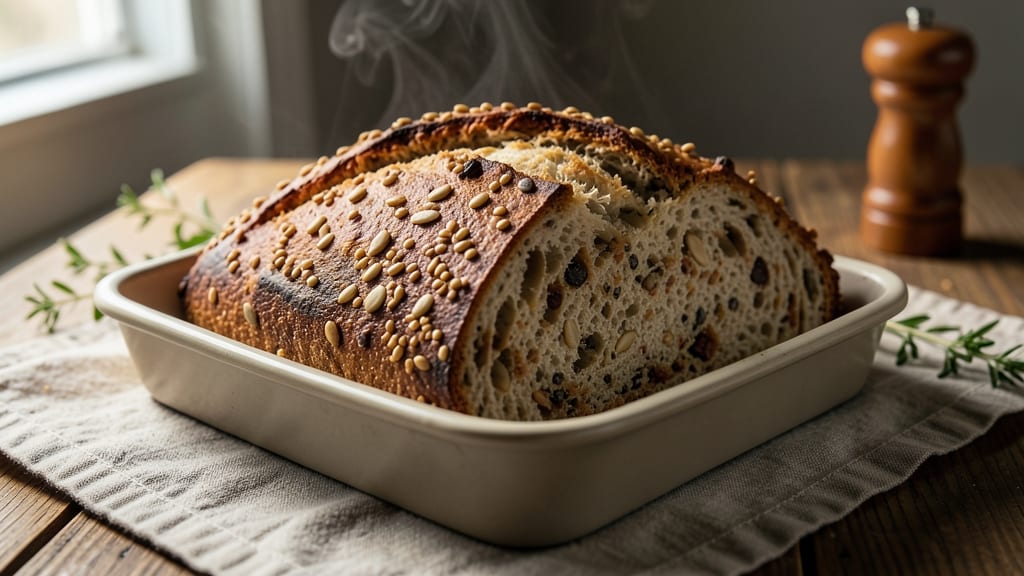
This 9-grain bread machine recipe transforms your kitchen into a rustic bakery with minimal effort. The secret lies in balancing whole grains for nutty depth and a crispy crust without dense crumbs.
After years of testing, this method delivers artisan-quality bread with just 10 minutes of prep—perfect for busy bakers who crave texture and flavor without the fuss.
The magic happens in the grain selection: wheat, rye, barley, and millet create a complex crunch, while flaxseed and sunflower seeds add hearty texture. Your bread machine handles the heavy lifting—kneading, rising, and baking—while you focus on measuring ingredients precisely.
The dough cycle ensures proper gluten development, and a quick oven finish guarantees that signature crusty exterior.
What you’ll end up with is golden, aromatic loaves that slice cleanly and stay fresh for days. Each bite delivers a symphony of crunch from toasted grains, tender crumb, and a crust that crackles with every break.
This recipe proves you don’t need a wood-fired oven to bake bread that tastes like it came from one.
Ideal for sandwiches, toast, or serving alongside soups, this bread machine masterpiece is foolproof for beginners and satisfying for experienced bakers. Let’s get started—your kitchen’s about to smell like a European bakery.
Ingredients for 9 grain bread recipe for bread machine
Nine grains, one bread machine, endless crunchy satisfaction waiting to unfold.
| Ingredient | Amount | Notes |
|---|---|---|
| All-Purpose Flour 🌾 | 3 cups | Unbleached preferred for texture |
| Whole Wheat Flour 🌾 | 1 cup | For nutty depth and fiber |
| Rye Flour 🌾 | ½ cup | Dark rye for robust flavor |
| Barley Flour 🌾 | ¼ cup | Adds chewy texture |
| Millet 🌾 | ¼ cup | Toasted for enhanced nuttiness |
| Flaxseeds 🌱 | ¼ cup | Ground for omega-3 richness |
| Sunflower Seeds 🌻 | ¼ cup | Unsalted for pure flavor |
| Active Dry Yeast 🍞 | 2 ¼ tsp | Freshly packaged for potency |
| Granulated Sugar 🍚 | 1 ½ tbsp | Feeds yeast for proper rise |
| Salt 🧂 | 1 ½ tsp | Diamond Crystal preferred |
| Olive Oil 🫒 | 2 tbsp | Extra-virgin for richness |
| Warm Water 💧 | 1 ¼ cups | 110°F for optimal yeast activation |
| Egg White 🥚 | 1 whole | For golden crust finish |
The grains are where the magic happens. Bob's Red Mill or King Arthur flours are my go-to for consistency, but any high-quality unbleached flour works. Rye and barley flours can be tricky to find—check the baking aisle or order online if your grocery store doesn't carry them. For the seeds, Trader Joe's has great bulk options, and toasting them in a dry pan for 2-3 minutes before grinding (if using whole seeds) amplifies their nutty flavor. The yeast is non-negotiable—if it's past its expiration date or smells off, toss it and start fresh. This blend delivers that perfect balance of crunch and tenderness, but if you're missing one grain, swap it with an equal amount of whole wheat to keep the texture intact.
No rye flour? Substitute with extra whole wheat or spelt flour—it won't be identical, but you'll still get that hearty texture. Running low on millet? Buckwheat flour works surprisingly well, though it has a distinct earthy taste. The flaxseeds can be omitted if you're sensitive to seeds, but the sunflower seeds add a lovely crunch that's worth keeping. For the olive oil, any neutral oil works, but extra-virgin adds that subtle fruity note that elevates the final crust. And if you're wondering about the egg white—it's purely for that golden finish. Skip it if you're vegan (use 1 tbsp water + 1 tbsp oil instead), but the crust won't be quite as glossy.
This dough keeps best in the fridge for up to 24 hours before baking, which gives the grains time to hydrate and develop even more flavor. For longer storage, portion the dough into balls, wrap tightly in plastic, and freeze for up to 3 months. Thaw overnight in the fridge before baking. The baked loaves stay fresh for 3-4 days at room temperature, wrapped in a cotton towel to maintain moisture. For extra crunch, slice and toast in a 375°F oven for 3-5 minutes—the grains will sing with every bite. And if you're making a double batch, freeze half the loaves right after baking—they'll reheat beautifully in a 350°F oven for 10 minutes, crisping up like fresh-baked.
Why You'll Love This Recipe
- Set-and-Forget Magic: I swear by this—dump the flours, add water and yeast, and let the machine do the rest. No kneading, no fussing, just click start and walk away. The bread machine handles the heavy lifting while you sip coffee or fold laundry.
- Nutty Earthy Crunch: That mix of rye, barley, and millet? It’s like a warm hug for your sandwiches. The whole wheat adds chew, the rye brings deep flavor, and the millet gives it a subtle crunch that turns toast into a thing of beauty. Honestly, my morning coffee just got better.
- Meal Prep MVP: This bread stays fresh for days—perfect for slicing ahead for lunches or freezing in portions. Toss a slice in your bag for a no-sandwich sandwich, or pull it straight from the freezer for toast in seconds. (Yes, even on a Tuesday night.)
- Budget-Friendly Staple: Using pantry staples like whole wheat and rye means no specialty trips, just real, affordable ingredients. A single batch stretches across breakfasts, snacks, and even croutons—no waste, just useful. My wallet and I both approve.
Step-by-step instructions for 9-Grain bread machine recipe
Your bread machine will transform these wholesome grains into a loaf with irresistible crust and nutty layers.
Prepare the Grains and Seeds
Toast the 0.25 cup millet and 0.25 cup sunflower seeds in a dry skillet over medium heat for 3-4 minutes until fragrant and lightly golden. This enhances their nutty flavors and prevents them from sinking during mixing. Let them cool completely before adding to the bread machine.
While they toast, grind the 0.25 cup flaxseeds in a coffee grinder or spice mill until you have a fine powder. This releases their omega-3 oils for a richer bread. Set aside both the toasted grains and ground flaxseeds—they'll form the heart of your bread's texture and nutrition.
Mix Dry Ingredients in the Bread Machine Pan
In your bread machine pan, combine the 3 cups all-purpose flour, 1 cup whole wheat flour, 0.5 cup rye flour, 0.25 cup barley flour, toasted grains, and ground flaxseeds. Give everything a quick stir with a wooden spoon to distribute the seeds evenly throughout the flour.
The rye and whole wheat flours add depth, while the barley flour creates that signature chewy texture. Don't skip the stirring—uneven distribution can lead to dense pockets in your loaf. Add the 2.25 tsp active dry yeast, 1.5 tbsp granulated sugar, and 1.5 tsp salt to the dry mixture and pulse once more.
Add Wet Ingredients and Set the Machine
Create a well in the center of the dry ingredients and pour in the 2 tbsp olive oil and 1.25 cups warm water (test temperature with your finger—should feel like bathwater). Whisk gently with a fork until just combined, being careful not to overmix. The dough should hold together when pressed but still be slightly sticky.
Add the 1 whole egg white to the center of the dough and gently fold it in with a spoon. The egg white will create that beautiful golden crust we're after. Select your bread machine's "Basic White Bread" setting (or whole wheat setting if available) and start the cycle.
Monitor the Kneading Process
Watch through the bread machine window as the dough begins to come together. After about 5-7 minutes, it should form a smooth, elastic ball that pulls away from the sides of the pan. If it looks too sticky, you can lightly oil your fingers and smooth the sides—this prevents the dough from sticking and helps it develop properly.
Here's where the magic happens: the bread machine will knead the dough automatically, developing gluten for that perfect crumb structure. Listen for the telltale "thump-thump" of the kneading paddle—this indicates strong gluten development. If you see the dough start to collapse or look flat after kneading, it's a sign you might need to adjust your flour-to-water ratio next time.
Bake to Golden Perfection
Let the bread machine complete its cycle, which typically takes about 3-4 hours including kneading and baking. When it finishes, you'll hear the machine ding and see steam rising from the loaf. The bread should have a deep golden-brown crust with a crackly top.
Remove the bread from the pan immediately and place it on a wire rack to cool for at least 30 minutes. This resting period allows the bread to set properly and prevents a gummy interior. For the best texture, slice the bread when it's still slightly warm—this is when it's at its most tender and flavorful. The interior should reveal a beautiful open crumb with visible flecks of seeds throughout, and each slice should have that perfect balance of crusty exterior and soft, nutty interior.
Pro Tips For Making 9 Grain Bread Recipe For Bread Machine
- WEIGH YOUR FLOURS: Mixing flours by volume in a bread machine leads to dense, uneven bread. The barley and millet take up more space than all-purpose flour—weigh them separately for accuracy. I learned this after three batches that turned out like hockey pucks.
- ADD SEEDS LAST: If your recipe includes seeds (like sunflower or flax), toss them in after the kneading cycle finishes. They’ll get ground into the dough otherwise, making it gummy. Just sprinkle them on top of the dough in the pan before the final rise.
- DON’T OVERLOAD THE PAN: Nine grains mean dense dough, but cramming it into the bread pan too tightly kills the rise. Fill the pan only 2/3 full—yes, even if it looks half-empty. The dough will expand, and you’ll avoid a sad, flat loaf.
- USE COLD WATER: Whole wheat and rye flours absorb moisture like sponges, but cold water keeps the dough from getting too sticky too fast. Measure it straight from the fridge, and the machine’s kneading will warm it up naturally—no extra effort, just better texture.
Flavor customization for this recipe
Sweet & Spiced Twist
Add 1 tsp cinnamon and ½ tsp cardamom to the dry ingredients for a warm, aromatic twist. Toast ¼ cup chopped walnuts with the millet and seeds for extra crunch. This variation pairs beautifully with apple butter or honey—perfect for breakfast toast or French toast. 🍎
Herb-Infused Crust
Mix 1 tbsp fresh rosemary or thyme leaves into the dough for an earthy, herbal note. Brush the baked loaf with 1 tbsp melted butter mixed with ½ tsp garlic powder while still warm for a savory crust. This works wonderfully with roasted vegetables or grilled meats.
Cheesy & Crunchy
Stir ½ cup shredded sharp cheddar or Parmesan into the dough after the first kneading cycle. For extra richness, add 2 tbsp cream cheese> to the wet ingredients. The cheese melts into the crumb, creating pockets of gooey goodness. Perfect for sandwiches or as a side with soups.
Seed & Nut Boost
Swap out the sunflower seeds for ¼ cup chopped pecans or pumpkin seeds for a richer, more buttery flavor. Toast them with the millet for maximum depth.
This version adds a luxurious texture and pairs well with jam or nut butter. Store extra seeds in the freezer to keep them fresh longer.
Savory Garlic & Onion
Add 1 tbsp minced garlic and 1 tbsp finely chopped onion to the wet ingredients for a savory kick. This variation is ideal for hearty sandwiches or as a side with hearty stews. For extra flavor, sprinkle ½ tsp smoked paprika into the dry ingredients before mixing.
Dairy-Free Option
Replace the egg white with 1 tbsp olive oil and 1 tbsp water for a vegan-friendly crust. Use flaxseed milk> (instead of water) to keep the dough moist. The texture stays light and airy, making it perfect for those avoiding dairy while still enjoying a golden crust.
Nutrition facts
Frequently asked questions
Can I substitute any of the grains in this recipe?
If you're missing a grain like rye or barley, use an equal amount of whole wheat flour for similar texture. For millet, try buckwheat flour (earthy flavor) or quinoa flour (nutty). Just note that substitutions may slightly alter the bread's flavor profile. Always toast seeds before adding to enhance their flavor and prevent sinking.
Why does my bread turn out dense instead of crusty?
Dense bread usually means overmixing or under-kneading. The bread machine handles kneading, but if your dough looks flat after the cycle, try reducing flour by 1 tbsp next time. Also ensure your yeast is fresh and water is 110°F—too hot kills yeast, too cool slows fermentation. A quick 5-minute oven finish at 375°F after baking can also help crisp the crust.
How do I store this 9-grain bread to keep it fresh?
Wrap cooled loaves in a cotton towel or beeswax wrap to maintain moisture. Store at room temperature for 3-4 days, or freeze for up to 3 months. For extra crunch, toast slices in a 375°F oven for 3-5 minutes—the grains will become irresistibly crispy. Avoid plastic bags to prevent sogginess.
Can I make this recipe without a bread machine?
Yes! Mix all ingredients in a bowl, knead by hand for 8-10 minutes until elastic, then let rise for 1-2 hours until doubled. Shape into a loaf, place in a greased pan, and bake at 375°F for 35-40 minutes until golden. The texture will be slightly denser without the machine's kneading power, but still delicious!
What's the best way to reheat sliced bread?
For crispy crust and warm crumb, wrap slices in foil and reheat at 350°F for 5-7 minutes. For a quick method, toast in a toaster or skillet over medium heat for 1-2 minutes per side. Avoid microwaving—it makes the crust soggy and grains rubbery. Reheating restores that fresh-baked aroma!