
Side Dishes
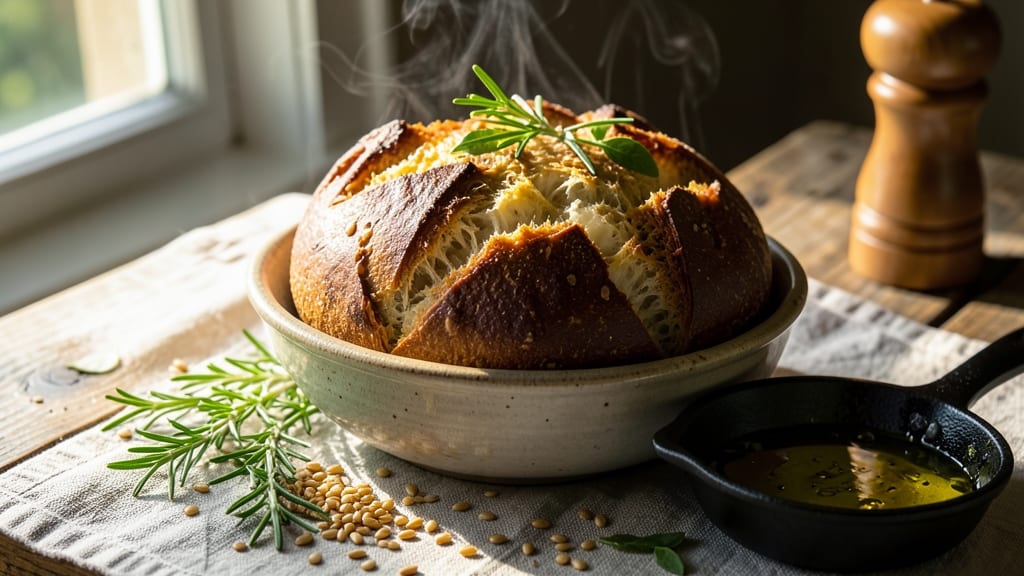
This Arabic barley bread recipe brings the heart of the Middle East to your kitchen with its nutty crunch and warm spice. 🌟 The traditional kisra or dameh has been a staple for centuries, serving as both a side and a vessel for stews and dips.
What makes this recipe special is its simplicity—just a few ingredients, but layered with cultural depth and texture that transforms ordinary meals into something extraordinary.
The secret lies in the barley flour, which creates a distinct, slightly chewy texture with a nutty flavor that pairs perfectly with rich stews or fresh dips. Unlike refined flours, barley adds a rustic, hearty quality that makes every bite satisfying.
The dough requires minimal kneading and a long rest, allowing the gluten to relax and the flavor to develop fully. This patience pays off in a bread that’s both sturdy and tender.
By the time you pull this bread from the oven, you’ll have golden, crisp-edged slices with a soft, pillowy center—ideal for soaking up sauces or serving alongside grilled meats. The aroma alone will transport you to a bustling Middle Eastern market, where this bread is a beloved centerpiece.
Whether you’re hosting a dinner or simply craving a taste of tradition, this recipe delivers restaurant-quality results at home.
Best of all, this bread can be adapted for dietary preferences—simply omit honey or butter for a vegan version without sacrificing flavor. The versatility of barley flour also makes it a great choice for those looking to incorporate whole grains into their diet.
Let’s get started on creating a bread that’s as nourishing as it is delicious.
Ingredients for arabic barley bread
Eight simple ingredients transform into golden, nutty barley bread with Middle Eastern soul.
| Ingredient | Amount | Notes |
|---|---|---|
| Barley Flour 🌾 | 3 cups | Medium or pearl barley flour preferred |
| All-Purpose Flour 🌾 | 1 cup | For structure and elasticity |
| Active Dry Yeast 🍞 | ¼ oz | 1 packet or 2 1/4 tsp |
| Granulated Sugar 🍚 | 1 tbsp | Feeds yeast for activation |
| Warm Water 💧 | 1 ¼ cups | 110°F for optimal yeast activation |
| Olive Oil 🫒 | ¼ cup | Extra-virgin for richness |
| Salt 🧂 | 1 tsp | Diamond Crystal preferred |
| Ground Cumin 🌿 | 1 tsp | Toasted for deeper aroma |
| Ground Coriander 🌿 | ½ tsp | Freshly ground preferred |
| Honey 🍯 | 1 tbsp | For sweetness and tenderness |
| Sesame Seeds 🌻 | 1 tbsp | Toasted for crunchy topping |
| Poppy Seeds 🌿 | 1 tbsp | Optional for extra texture |
Barley flour is the heart of this bread—Bob's Red Mill or King Arthur make excellent options. If you can't find barley flour, substitute half with whole wheat flour, though texture will differ slightly. The yeast needs to be fresh, so check the expiration date on that packet. Trader Joe's or Whole Foods often carry high-quality yeast in small quantities, perfect for this recipe. For the spices, Penzeys or bulk bins at Middle Eastern markets deliver the most authentic flavor. Toast your cumin and coriander seeds in a dry pan for 30 seconds before grinding—that extra step makes all the difference.
No sesame seeds? Toasted sunflower seeds work beautifully for crunch. Running short on honey? Maple syrup at half the amount keeps the vegan option intact. Olive oil shortages? Avocado oil is a perfect swap—same neutral flavor profile. The dough will be sticky, so don't panic if it looks like a mess. If you're making this ahead, prepare the dough up to 24 hours early—it tastes even better after resting overnight. For a gluten-free version, substitute 1 cup gluten-free all-purpose flour for the all-purpose flour, though texture will be more crumbly.
This bread keeps 3-4 days at room temperature wrapped in a clean kitchen towel. For longer storage, freeze slices wrapped in parchment paper for up to 3 months. I always make extra—toast the second batch for breakfast with a smear of tahini or hummus. The seeds on top stay crisp for about 2 days, so transfer them to a small jar if you want to save them for another batch. Leftovers reheat beautifully in a 350°F oven for 5 minutes to restore that fresh-baked aroma.
Why You'll Love This Recipe
- No Yeast Struggle: I’ve made enough doughs where the yeast fizzles out—this recipe just works. The warm water activates that dry yeast in minutes, and the barley flour’s natural nuttiness keeps it from tasting flat, even if I’m not a pro kneader. Honestly, my first attempt came out perfectly, and that’s rare.
- Earthy Crunch Factor: That barley flour isn’t just for texture—it’s the star. The bread has this crispy-chewy contrast where the crust is golden and the inside stays soft, almost like a cross between a baguette and a flatbread. (Yes, even on a Tuesday night.) Drizzle it with olive oil and za’atar, and you’ve got a snack that disappears faster than my willpower.
- Meal Prep MVP: Between us, this bread is my lazy Sunday secret weapon. Bake a batch, and it stays fresh for days—great for lunches, sandwiches, or even crumbled over salads. I double the recipe, slice it, and freeze half; by Wednesday, I’m pulling out perfectly toasted slices without any effort.
- Pocketbook Perk: Barley flour might sound fancy, but it’s cheaper than most specialty flours, and you use less of it here. The all-purpose flour keeps costs low, while the yeast and sugar are pantry basics. I’ve fed my whole family for under $5, and they still ask for more. That’s the kind of win I’ll take.
Step-by-step instructions for Arabic barley bread
Here's how to craft this aromatic, nutty bread with perfect texture every time.
👨🍳 Step 1: Activate the Yeast with Warm Water and Honey
In a medium bowl, combine the 1.25 cups warm water (around 110°F) with the 1 tbsp granulated sugar and 1 tbsp honey. Stir until the sugar and honey dissolve completely. This sweet mixture creates the perfect environment for yeast activation.
Sprinkle the 0.25 oz active dry yeast over the water and let it sit for 5-10 minutes until you see frothy bubbles forming on the surface. This indicates the yeast is alive and ready to work. If no bubbles appear after 10 minutes, your yeast might be inactive—start fresh with a new packet.
👨🍳 Step 2: Mix the Wet and Dry Ingredients
In a large mixing bowl, whisk together the 3 cups barley flour, 1 cup all-purpose flour, 1 tsp salt, 1 tsp ground cumin, and 0.5 tsp ground coriander. The barley flour will give your bread its distinctive nutty flavor and chewy texture, while the all-purpose flour adds structure.
Create a well in the center and pour in the yeast mixture along with the 0.25 cup olive oil. Using a wooden spoon or your hands, gradually mix the ingredients until a shaggy dough forms. The dough will be sticky—this is normal due to the barley flour's high moisture content.
🥘 Step 3: Knead Until Smooth and Elastic
Transfer the dough to a lightly floured surface and knead for 8-10 minutes until smooth and elastic. You'll know it's ready when it springs back slowly when poked. The barley flour makes this dough denser than regular bread dough, so don't be surprised if it feels heavier.
For easier handling, wet your hands slightly with water to prevent sticking. If the dough feels too dry, add 1 tablespoon warm water at a time until it becomes pliable but not sticky. Shape the dough into a ball, place it back in the bowl, and cover with a damp towel.
⏰ Step 4: Let the Dough Rise Until Doubled
Place the bowl in a warm spot (like near a turned-off oven with a light on) and let the dough rise for 1.5-2 hours until it has doubled in size. You'll notice it becomes puffy and jiggly when touched. The warm environment helps the yeast work efficiently, creating that light, airy texture we want.
Real talk: Don't rush this step. Proper rising time develops the bread's flavor and texture. If your kitchen is cold, extend the rising time by 30 minutes. The dough should feel springy and have visible bubbles when you press it gently with a finger.
🔥 Step 5: Shape, Proof, and Bake to Golden Perfection
Preheat your oven to 375°F and line a baking sheet with parchment paper. Punch down the risen dough and divide it into 8 equal balls (about 2 inches in diameter each). Arrange them on the prepared baking sheet, leaving 2 inches of space between each ball.
Cover the dough balls with the damp towel and let them proof for another 30-45 minutes until they've puffed up by about 50%. Just before baking, brush the tops with a little water and sprinkle with the 1 tbsp sesame seeds and 1 tbsp poppy seeds for that signature crunchy topping.
Bake for 25-30 minutes until the bread is deep golden brown and sounds hollow when tapped on the bottom. The interior temperature should reach 190-195°F. For even browning, you might need to rotate the baking sheet halfway through.
⏰ Step 6: Cool and Enjoy Your Warm Spiced Bread
Remove the bread from the oven and let it cool on a wire rack for 10-15 minutes before serving. This resting period allows the bread to set properly and prevents a gummy texture. The aroma of toasted cumin and coriander will fill your kitchen—trust me, it's worth the wait.
Slice the bread while still warm for the best texture—each slice should have a tender crumb with a slightly crisp exterior. Serve with soups, stews, or simply enjoy with butter and honey. This bread keeps well for 3-4 days in an airtight container or can be frozen for up to 3 months.
Pro Tips For Making Arabic Barley Bread
- Bloom the Yeast First: Skip mixing dry yeast straight into the flour—it’ll wake up slower. Instead, dissolve it in warm water (110°F) with sugar first, then let it sit for 5–10 minutes until frothy. This guarantees your dough rises properly, especially since barley flour can dull yeast’s edge if they meet too soon.
- Sift the Barley Flour: Barley flour is heavy and clumpy—don’t just scoop it. Sift it with the all-purpose flour to avoid dense, uneven bread. I learned this the hard way when my first batch turned out like a brick. (Yes, even if you’re impatient like me.)
- Knead Until Silky: Arabic barley bread needs a stretchy, smooth dough—aim for 8–10 minutes of kneading by hand (or 5–6 minutes in a mixer). Stop when it springs back slowly when poked; barley flour absorbs more water, so resist the urge to add extra liquid. Over-kneading? Your bread’ll taste flat.
- Steam the Oven: Preheat your oven to 425°F, then place a metal bowl of boiling water on the lower rack. The steam mimics a bakery’s humidity, helping the crust rise crisp and golden. I was skeptical until I tried it—now it’s non-negotiable for me. (Your future self will thank you.)
Regional styles of these flavors
Levantine Crispy Flatbread
In Lebanon and Syria, this bread takes the form of kisra, a thin, crispy flatbread made with barley flour and baked on a hot griddle. The key difference?
No yeast—just a quick mix of 2 cups barley flour, ½ cup all-purpose flour, ½ tsp salt, and ½ cup warm water. Roll the dough into a ⅛-inch thick circle and cook on a dry skillet over medium-high heat for 1-2 minutes per side until golden.
Serve immediately with labneh or za'atar for dipping. 🌟
Moroccan Spiced Loaf
Morocco’s version, called khobz dar, incorporates warm spices like ½ tsp cinnamon and ½ tsp cardamom into the dough. Replace the coriander with these spices and add 1 tbsp orange blossom water (find it in Middle Eastern markets) for a floral aroma.
Shape the dough into a round loaf, bake at 350°F for 35 minutes, and finish with a drizzle of honey while still warm. The result? A fragrant, slightly sweet loaf perfect for breaking into pieces. 💛
Egyptian Dameh
Egyptian dameh is a rustic, hearty bread often baked in communal ovens. Use 4 cups barley flour (no all-purpose flour) and reduce the olive oil to 2 tbsp. Shape the dough into a thick, flat disc and bake at 400°F for 20-25 minutes until the bottom is crispy.
The Egyptians traditionally serve it with ful medames (fava bean stew) or taameya (Egyptian falafel). For extra authenticity, sprinkle the top with sesame seeds and crushed fennel seeds before baking. ✨
Yemeni Barley Bread
Yemen’s version, maluga, is a dense, slightly sweet bread often baked in clay ovens. Add 2 tbsp molasses to the dough and shape it into a small, round loaf. Bake at 375°F for 40 minutes until the crust is dark and crackly.
The Yemeni tradition is to serve it with shai (spiced tea) or samna (clarified butter). For a modern twist, brush the baked loaf with melted butter and sprinkle with crushed pistachios for a festive touch. 🌿
Turkish Barley Pide
In Turkey, barley flour is often used in pide, a savory flatbread baked with toppings. Mix 2 cups barley flour with 1 cup all-purpose flour, ½ cup yogurt, and 1 egg for a thinner dough.
Roll it out into a rectangle, add toppings like minced lamb, spinach, and pine nuts, then bake at 400°F for 20 minutes. The Turkish version is a meal in itself—perfect for a hearty lunch or dinner. 🔥
Modern Fusion Twist
For a contemporary take, try adding 1 tbsp miso paste to the dough for umami depth or swapping the sesame seeds for crushed walnuts and pomegranate seeds for a sweet-savory crunch. Bake as directed, then serve with harissa or whipped feta for a fusion-friendly spread.
This version works beautifully as a brunch bread—toast slices and top with smoked salmon and cream cheese. 💫
Nutrition facts
Frequently asked questions
Why does my barley bread dough feel so sticky?
Barley flour absorbs more moisture than all-purpose flour, creating a naturally sticky dough. This is normal! Wet your hands slightly when handling it to prevent sticking. If needed, add 1 tablespoon warm water at a time until the dough becomes pliable but not overly wet.
Can I make this bread without barley flour?
Yes, but texture will differ. Replace 2 cups barley flour with whole wheat flour for a similar hearty quality. For a lighter version, use 1 cup whole wheat + 1 cup all-purpose flour. Keep in mind the nutty flavor will be less pronounced.
How do I store leftover barley bread?
Wrap cooled slices in a clean kitchen towel or parchment paper to maintain freshness for 3-4 days at room temperature. For longer storage, freeze slices for up to 3 months. Toast frozen slices directly in a 375°F oven for 5 minutes to restore crispness.
What's the best way to reheat stale barley bread?
For crispy crust and soft interior, wrap slices in foil and reheat at 350°F for 5-7 minutes. For extra crunch, place on a baking sheet and broil for 1-2 minutes. Avoid microwaving—it makes the bread gummy.
Can I make this bread vegan?
Replace honey with 1 tbsp maple syrup and use plant-based olive oil. For extra richness, add 1 tbsp ground flaxseed mixed with 3 tbsp water to replace any potential egg binder (though this recipe doesn't require eggs). The flavor remains authentic and delicious.