
Side Dishes
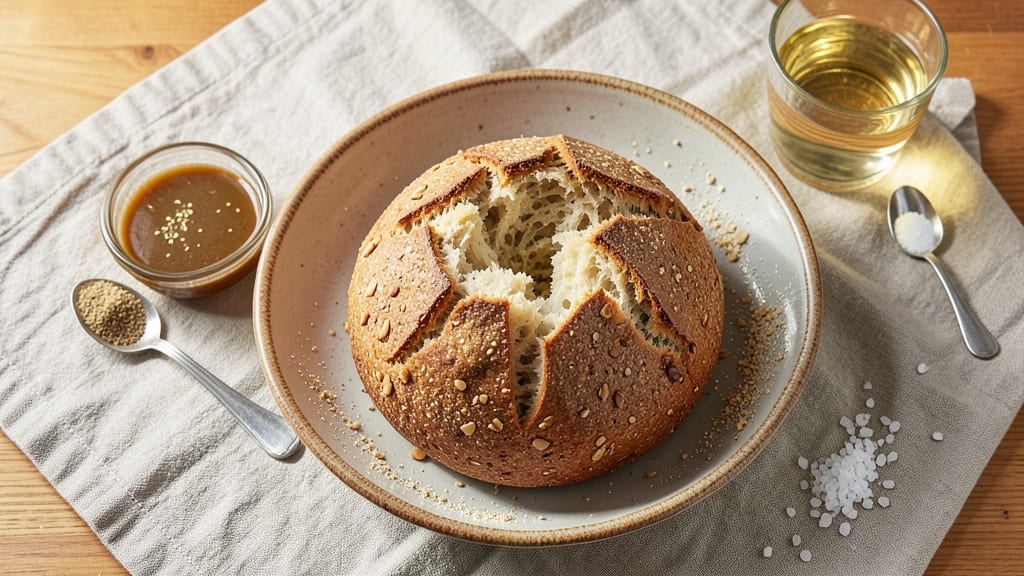
Almond flour artisan bread delivers the perfect gluten-free alternative with a crispy crust and airy, pillowy interior—no compromise on texture or flavor. This recipe replaces traditional flour with finely ground almonds, creating a nutty depth that pairs beautifully with soups, sandwiches, or simply toasted with butter. The secret lies in hydration balance and proper mixing to mimic gluten’s structure without relying on it.
What sets this bread apart is its ability to rise and hold shape, thanks to flaxseed meal as a binder and a precise ratio of almond flour to moisture. Unlike dense gluten-free loaves, this version achieves an open crumb with a satisfying chew, all while being naturally egg-free and dairy-free.
The key steps—hydrating the flour, kneading gently, and proofing carefully—ensure a light, airy result that rivals traditional artisan bread.
By the time it emerges from the oven, you’ll have a loaf with a golden, crackly crust and a soft, elastic crumb that’s surprisingly sturdy for slicing. The nutty aroma fills your kitchen, and each bite delivers a satisfying contrast between the crisp exterior and tender interior.
This bread proves gluten-free doesn’t mean sacrificing texture or flavor—just technique.
Perfect for those avoiding gluten or simply craving a nutty twist on classic bread, this recipe scales easily for sandwiches, toast, or even French toast. The instructions walk through every step, from mixing to baking, with tips to troubleshoot common gluten-free challenges like sticking or uneven rise.
Let’s bake this artisan loaf!
Ingredients for almond flour artisan bread
Finely ground almonds and precise hydration create a gluten-free loaf with crispy crust and airy crumb.
| Ingredient | Amount | Notes |
|---|---|---|
| Almond Flour 🌰 | 3 ½ cups | Finely ground, unsweetened |
| Flaxseed Meal 🌾 | ½ cup | Ground flaxseeds for binding |
| Warm Water 💧 | 1 ¼ cups | 110°F for hydration |
| Active Dry Yeast 🍞 | 1 tsp | Instant yeast preferred |
| Sugar 🍚 | 1 tbsp | White granulated |
| Salt 🧂 | 1 ½ tsp | Fine sea salt |
| Olive Oil 🫒 | ¼ cup | Extra-virgin for richness |
| Apple Cider Vinegar 🍏 | 1 tbsp | For acidity balance |
| Psyllium Husk Powder 🌿 | 1 ½ tbsp | Key for structure |
| Baking Soda 🍞 | ½ tsp | For lift and crisp |
| Sesame Seeds 🌻 | 1 tbsp | Optional for topping |
| Coarse Sea Salt 🧂 | 1 tsp | For crust finishing |
The almond flour is non-negotiable here—Bob’s Red Mill or Anthony’s Goods are my go-tos for consistent texture. Pre-ground flour works, but if you’re ambitious, grind your own almonds for maximum freshness. The flaxseed meal should be freshly ground—pre-ground loses potency quickly. For the yeast, Saf-Instant or Red Star are reliable brands that dissolve directly into liquid. Psyllium husk powder is the secret weapon for achieving that artisan bread structure without gluten—Frontier Co-op sells it in bulk if you’re making multiple batches.
No almond flour? Cashew flour at 1:1 ratio works in a pinch, though texture will differ slightly. Swap the apple cider vinegar for white vinegar or lemon juice if needed. The psyllium husk powder is tricky—if you can’t find it, xanthan gum at half the amount mimics some of its binding properties, though not perfectly. For the olive oil, avocado oil is a neutral alternative if you prefer. The sesame seeds are optional but add a lovely crunch—toasted for 2 minutes before sprinkling enhances flavor. If you’re baking in a dry climate, increase the water by 1 tablespoon for better hydration.
This dough is sensitive to temperature—keep everything between 70-75°F for proper rise. The dough itself doesn’t need refrigeration but can be shaped and proofed up to 24 hours ahead in the fridge for deeper flavor. Once baked, let it cool completely on a wire rack to prevent sogginess. Store wrapped at room temperature for 3 days or freeze the whole loaf for up to 3 months. For reheating, wrap in foil and warm at 300°F for 10 minutes to restore crispness.
Why You'll Love This Recipe
- No-Knead Magic: Honestly, I mix the dough in a bowl—no stand mixer, no fancy tools—just almond flour, flaxseed meal, and warm water. The yeast does all the work while I sip my coffee, and by the time I pull it from the oven, it’s golden and ready.
- Nutty, Buttery Crust: Between us, this bread tastes like it belongs in a bakery. The almond flour gives it a rich, toasty depth, while the sugar caramelizes into a crispy crust that’s dangerously easy to eat straight from the pan.
- Weeknight & Weekend Star: I bake a loaf on Sundays for sandwiches, but it’s also my go-to for charcuterie boards or toast with jam. The flaxseed meal adds a subtle earthiness that pairs with everything—savory, sweet, you name it.
- Leftover Goldmine: This bread stays fresh for days, and if I’m feeling lazy, I slice it thin and freeze it for quick toast later. Plus, the almond flour means no stale crumbs—just pure, buttery flavor whenever I want it.
Step-by-step instructions for almond flour artisan bread
This gluten-free bread delivers a crisp artisan crust and tender interior using precise techniques.
Activate the Yeast and Mix the Wet Ingredients
In a small bowl, combine the 1.25 cups warm water (around 110°F), 1 tbsp sugar, and 1 tsp active dry yeast. Let this sit for 5-10 minutes until frothy—this confirms the yeast is active. If it doesn't bubble, your bread won't rise properly.
In a separate large bowl, whisk together the 0.5 cup flaxseed meal, 0.25 cup olive oil, 1 tbsp apple cider vinegar, and 1.5 tbsp psyllium husk powder. The psyllium husk powder is crucial here—it mimics gluten's structure to give your bread its signature chew. Mix until smooth, then stir in the yeast mixture. Let this hydrate for 5 minutes while you prepare the dry ingredients.
Combine Wet and Dry Ingredients
Sift the 3.5 cups almond flour into the wet mixture, then add 1.5 tsp salt and 0.5 tsp baking soda. Using a wooden spoon or silicone spatula, gently fold everything together until just combined—overmixing develops gluten-like strands in gluten-free baking, which can make the bread dense.
Here's the thing—almond flour absorbs moisture differently than wheat flour. The dough will be thick and sticky, almost like a wet batter. This is normal. If it seems too dry, add 1-2 tablespoons of warm water to help bind everything. Let the batter rest for 10 minutes while you preheat your oven.
Prepare the Loaf Pan and Shape the Bread
Preheat your oven to 350°F. Lightly grease a 9x5-inch loaf pan with olive oil or line it with parchment paper for easy removal. Pour the batter into the prepared pan and smooth the top with a wet spatula—this prevents cracks and ensures even baking.
Sprinkle 1 tbsp sesame seeds evenly over the top for texture and flavor. The seeds will toast beautifully during baking. Tap the pan gently on the counter a few times to release any air bubbles trapped in the batter. This step is often overlooked but helps create a smoother crumb.
Bake for a Crisp Crust and Pillowy Interior
Bake for 45-50 minutes until the top is golden brown and a toothpick inserted in the center comes out clean. The bread will look dense at first—this is normal for almond flour—but it will rise slightly as it cools. If the top browns too quickly, tent loosely with foil after 30 minutes to prevent over-browning.
For that perfect artisan crust, I recommend broiling for 1-2 minutes at the very end. Watch closely—this step creates the crispy exterior while keeping the interior tender. Let the bread cool in the pan for 10 minutes, then transfer to a wire rack to cool completely before slicing. Patience here is key—the bread will firm up as it cools, making it easier to slice cleanly.
Finish with Coarse Sea Salt (Optional but Recommended)
Once completely cooled, sprinkle the top with 1 tsp coarse sea salt for a sophisticated finish. This step enhances the bread's flavor and adds that professional artisan touch. The salt should cling to the crust but not dissolve into the crumb.
Slice with a sharp serrated knife for clean cuts. Each slice should reveal a tender, pillowy crumb with a crisp exterior—proof that gluten-free bread can be just as impressive as traditional wheat-based loaves. Store wrapped at room temperature for up to 3 days or freeze for longer storage.
Pro Tips For Making Almond Flour Artisan Bread
- Soften the Yeast First: Almond flour bread needs a happy, active yeast—don’t just toss dry yeast into cold water and hope. Mix the yeast with warm water (about 110°F) and a pinch of sugar first, then let it sit for 5-10 minutes until it’s bubbly and frothy. Cold water kills yeast; this step guarantees it wakes up and works.
- Sift the Almond Flour: Almond flour is dense and clumpy, and clumps mean uneven texture in your bread. Sift it twice—once before mixing and again after adding the flaxseed meal—so the yeast and water distribute evenly. I learned this the hard way when my first loaf turned out dense and gummy.
- Don’t Overmix the Dough: This isn’t wheat flour—almond flour dough gets tough fast. Mix just until the ingredients come together, about 2-3 minutes by hand or until the dough pulls away from the bowl. Overmixing develops gluten-like structures that make the bread dense instead of light and airy.
- Use a Banneton or Bowl Trick: No banneton? No problem. Shape your dough into a log and place it in a well-floured bowl, seam-side up. Cover and let it proof—this mimics the shape and support of a banneton. Just flip it onto parchment before baking to avoid sticking. (Yes, even if you’re impatient like me.)
Best sauces and condiments for this almond flour artisan bread
Herb-Infused Olive Oil
Drizzle this bread with herb-infused olive oil to elevate its natural nuttiness. Combine ½ cup extra-virgin olive oil with 1 tbsp dried rosemary, 1 tbsp dried thyme, and 2 garlic cloves (minced).
Warm the mixture gently for 5 minutes to infuse the flavors, then strain and drizzle over slices. The aromatic herbs complement the almond flour’s richness beautifully. 🌿
Spiced Almond Butter
Spread a thin layer of spiced almond butter on toasted slices for a decadent twist. Mix ¼ cup almond butter with ½ tsp cinnamon, ¼ tsp cayenne pepper, and a pinch of salt.
Warm the mixture slightly to blend flavors, then spread on freshly sliced bread. The warmth of the spices balances the bread’s natural sweetness. 🌶️
Garlic-Herb Compound Butter
For a savory option, whip up garlic-herb compound butter to melt on warm bread. Combine ½ cup softened vegan butter with 2 minced garlic cloves, 1 tbsp chopped parsley, ½ tsp lemon zest, and ½ tsp salt.
Roll into a log, chill until firm, and slice to top toasted bread. The garlic and herbs add a vibrant contrast to the nutty base. 🧄
Sweet Maple-Glaze Drizzle
Add a touch of sweetness with a maple-glaze drizzle. Heat 2 tbsp pure maple syrup with 1 tbsp water and ½ tsp vanilla extract in a small saucepan until slightly thickened. Drizzle over warm slices for a subtle caramelized finish. This works perfectly for breakfast or dessert-style sandwiches. 🍯
Smoky Chipotle Aioli
For a bold kick, prepare a smoky chipotle aioli using ½ cup vegan mayo, 1 tbsp chipotle peppers in adobo, 1 tsp lime juice, and ½ tsp cumin.
Blend until smooth and spread on toasted bread. The smoky heat pairs exceptionally well with the bread’s crisp crust and tender crumb. 🔥
Fresh Fruit Compote
Brighten up slices with a fresh fruit compote. Simmer 1 cup mixed berries (like raspberries or strawberries) with 1 tbsp maple syrup and ½ tsp lemon juice until the fruit breaks down slightly.
Spoon over warm bread for a refreshing, slightly tart contrast. This is ideal for brunch or light lunches. 🍓
Nutrition facts
Frequently asked questions
Why does my almond flour bread turn out dense instead of pillowy?
Almond flour absorbs moisture differently than wheat flour, so proper hydration is key. If your bread feels dense, you may need to add 1-2 extra tablespoons of warm water to the batter. Also, ensure your yeast is active (it should bubble within 5-10 minutes in warm water). Overmixing or skipping the 10-minute rest before baking can also lead to a heavier texture.
Can I substitute almond flour with another nut flour?
Yes, but results will vary. Cashew flour works best at a 1:1 ratio for a slightly sweeter, softer texture. Hazelnut or walnut flour can be used, but they add stronger flavors and may make the bread denser. For a neutral alternative, blend oat flour with 10% psyllium husk powder to mimic the structure.
How do I prevent the bread from sticking to the pan?
Line your 9x5-inch loaf pan with parchment paper or use a nonstick spray. For extra insurance, lightly grease the paper with olive oil. Tap the pan gently on the counter after pouring the batter to release air bubbles, which helps create a smoother surface. Avoid overgreasing, as this can make the crust soggy.
Is this bread safe for nut allergies?
No, this recipe contains almond flour and is not safe for those with nut allergies. For an allergy-friendly version, use a seed-based flour blend (like sunflower and pumpkin seed flour) combined with 1.5 tbsp psyllium husk powder and 0.5 cup ground flaxseed as a binder. Always check labels for cross-contamination warnings.
Can I make this bread without psyllium husk powder?
Psyllium husk powder is essential for structure, but you can try xanthan gum as a partial substitute. Use ½ tsp xanthan gum for every 1.5 tbsp psyllium husk powder, but expect a slightly less elastic texture. Without either, the bread may crumble or lack rise. For best results, stick to the recipe as written or use gluten-free oat flour with 1 tbsp extra flaxseed meal.