
Side Dishes
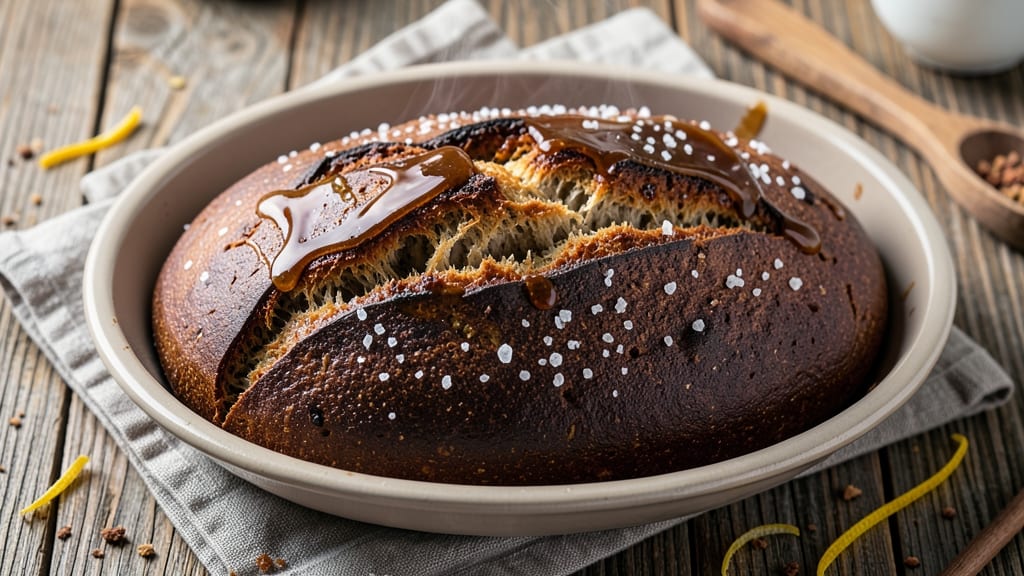
This American pumpernickel bread recipe delivers the perfect balance of dark molasses crust and chewy, nutty heart—just like your favorite bakery loaf. The secret lies in combining rye flour with molasses and a touch of honey, creating rich depth that lingers with every bite.
I've baked this version countless times, and it never disappoints, whether served with butter or used for sandwiches.
The process starts with a simple dough that transforms through careful proofing and baking. You'll mix rye flour, yeast, and molasses for that signature dark crust, while the interior develops a satisfying chewiness.
Baking at 350°F for 45-50 minutes ensures a golden-brown exterior and perfectly tender crumb inside. The aroma alone will have everyone gathering around your kitchen.
What makes this recipe special is its versatility—slice it fresh for sandwiches or toast it for breakfast. The molasses adds a subtle sweetness that pairs beautifully with savory toppings, while the rye flour contributes a nutty complexity.
Each slice delivers that satisfying texture contrast, from crispy edges to soft, flavorful centers.
Ready in just 3 hours (including proofing time), this bread is perfect for meal prep or a weekend baking project. The dough is forgiving, and the results are consistently impressive. Let's get started on creating your own loaf of homemade pumpernickel bread!
Ingredients for american pumpernickel bread
Here's what transforms simple pantry staples into bakery-quality pumpernickel with that signature dark crust and nutty heart.
| Ingredient | Amount | Notes |
|---|---|---|
| Dark Rye Flour 🌾 | 3 ½ cups | Medium or light rye for best texture |
| All-Purpose Flour 🌾 | ½ cup | For lighter texture balance |
| Active Dry Yeast 🍞 | ¼ oz | Or 2 1/4 tsp, ensure fresh |
| Unsalted Butter 🧈 | ¼ cup | Cold, cubed for dough enrichment |
| Molasses 🍯 | ½ cup | Unsulphured for authentic flavor |
| Honey 🍯 | ¼ cup | Wildflower preferred for depth |
| Granulated Sugar 🍚 | ¼ cup | Light brown sugar works too |
| Large Eggs 🥚 | 1 whole | Room temperature for even mixing |
| Warm Water 💧 | 1 cup | 110°F for optimal yeast activation |
| Salt 🧂 | 1 ½ tsp | Diamond Crystal preferred |
| Sesame Seeds 🌰 | 1 tbsp | Optional for decorative crust |
| Poppy Seeds 🌱 | 1 tbsp | Optional for decorative crust |
The rye flour is non-negotiable—Bob's Red Mill dark rye or King Arthur deliver the best texture. If you can't find dark rye, light rye plus 1 tbsp molasses extra works in a pinch. The molasses should be unsulphured (check the label)—sulphured molasses tastes bitter and overpowers. For the yeast, FreshPaks are worth the splurge if you bake often, but the packet stuff works fine. Store your flours in airtight containers with bay leaves to keep pests away. The honey? Wildflower if you can find it—Manuka adds an extra floral note that pairs perfectly with the molasses.
No rye flour? Substitute with whole wheat plus 1 tbsp caraway seeds for a similar depth, though texture will differ. Running short on molasses? Maple syrup at half the amount gives sweetness but lacks the rich complexity. The butter can be swapped for vegetable shortening if you're avoiding dairy, though texture will be slightly denser. For the seeds, everything bagel seasoning makes a great all-in-one topping. The egg can be replaced with 1 tbsp flaxseed meal + 3 tbsp water for a vegan version, but texture will be slightly heavier. Always measure your yeast by weight if possible—1 packet = 0.25 oz—for consistency.
This dough is best made fresh, but you can prep it up to 12 hours ahead in the fridge. Shape the loaf and let it rest on a floured towel covered with a damp kitchen towel—this prevents drying. Baked bread keeps for 5 days wrapped tightly at room temperature, or 2 weeks frozen. For reheating, wrap slices in foil and warm in a 350°F oven for 5 minutes. The crust gets crispier the longer it sits—toast it for maximum crunch. Leftovers make great croutons or breadcrumbs for future recipes.
Why You'll Love This Recipe
- No-Knead Nightmare Solved: I swear by this recipe because it actually works—no punishing dough sessions, no guesswork. The dark rye flour handles all the heavy lifting while you mix, rest, and shape in under 10 minutes. (Yes, even on a Tuesday night.)
- Molasses Magic: That first bite? Rich, deep, and just sweet enough to make you pause. The molasses caramelizes into the crust, giving it a sticky, almost toffee-like edge that’s ridiculously satisfying—like dessert in bread form.
- Weeknight Superstar: Slice it for toast, cube it for French toast, or serve it with breakfast meats. It’s the one loaf that works for brunch, sandwiches, or even charcuterie boards. Honestly, I’ve used it for everything from grilled cheese to a quick open-faced sandwich with smoked salmon.
- Budget Loaf Wins: A single batch costs me pennies but lasts forever—freeze half for when you’re too tired to bake. The dark rye flour might seem fancy, but it stretches further than regular bread, and the butter keeps it moist for days. My wallet and my taste buds thank me.
Step-by-step instructions for American pumpernickel bread
Transform simple ingredients into rich, molasses-kissed loaves with this precise baking method.
Activate the Yeast and Combine Wet Ingredients
In a small bowl, sprinkle the 0.25 oz active dry yeast over the 1 cup warm water (about 110°F) and let sit for 5-10 minutes until foamy. This confirms your yeast is active—if nothing happens after 10 minutes, start fresh with new yeast. In a large mixing bowl, whisk together the 0.5 cup molasses, 0.25 cup honey, 0.25 cup granulated sugar, and 1 whole large egg until smooth. The mixture should be thick but pourable.
Real talk: The molasses and honey will seem like too much, but trust me—they dissolve completely during mixing. If your mixture looks curdled, don't worry; the yeast activation will smooth everything out. The warm water helps dissolve the molasses completely, preventing lumps in the final dough.
Mix the Dough and Knead Until Elastic
Add the 3.5 cups dark rye flour, 0.5 cup all-purpose flour, 1.5 tsp salt, and the yeast mixture to your stand mixer fitted with the dough hook. Mix on low speed for 2 minutes until combined, then increase to medium speed. Gradually add the 0.25 cup cold cubed unsalted butter one piece at a time, allowing it to incorporate completely before adding the next. The butter should melt into the dough, creating a rich, slightly sticky texture.
Knead for 8-10 minutes on medium speed until the dough pulls away from the sides of the bowl and forms a smooth, elastic ball. You'll know it's ready when it springs back slowly when poked. If the dough feels too sticky, add 1 tablespoon more all-purpose flour; if too dry, add 1 teaspoon warm water. The dark rye flour absorbs moisture differently than white flour, so don't be surprised if your dough feels heavier than typical bread dough.
First Rise and Shape the Loaf
Lightly grease a large bowl with butter and place the dough inside. Cover with a damp towel and let rise in a warm place (like your oven with the light on) for 1.5-2 hours, or until doubled in size. The dough should be puffy and jiggly when gently pressed—this indicates proper fermentation. If your kitchen is cold, place the bowl on top of your refrigerator (not inside) to create a warm environment without overheating.
Once risen, punch down the dough to release air and shape it into a log on a parchment-lined baking sheet. For a classic pumpernickel shape, roll the dough into a 9x5-inch loaf or shape it into a round boule. The molasses gives this bread its signature dark crust, so don't worry about the sticky exterior—it's part of the character. Brush the top with a little water to help the seeds adhere better.
Second Rise and Prepare for Baking
Cover the shaped loaf again and let it rise for another 45-60 minutes until puffy. Preheat your oven to 375°F while the dough rises. This second rise develops the bread's open crumb structure. For extra flavor, sprinkle the 1 tablespoon sesame seeds and 1 tablespoon poppy seeds evenly over the top just before baking—these seeds add a delightful crunch and visual appeal.
Bake for 45-50 minutes until the internal temperature reaches 190°F and the crust is deep brown with crackly edges. The bread should sound hollow when tapped on the bottom. If the top browns too quickly, tent loosely with foil after 20 minutes to prevent burning while the interior finishes baking. The molasses and honey create a beautiful caramelized crust that's irresistible.
Cool and Slice for Maximum Flavor
Remove the bread from the oven and transfer it to a wire rack to cool completely for at least 1 hour. This resting period allows the internal structure to set and prevents a gummy texture. The bread will continue to develop its rich, molasses aroma as it cools. For the best slices, use a sharp serrated knife and cut against the grain for clean, even pieces.
Serve the bread warm or at room temperature with butter or your favorite jam. The interior should be dense with a slightly chewy texture, while the crust offers a perfect balance of sweetness and smokiness. Store leftovers wrapped in plastic at room temperature for up to 3 days or freeze for longer storage. The flavor actually improves over time as the molasses mellows.
Pro Tips For Making American Pumpernickel Bread
- Bloom Yeast Slowly: DESCRIPTION: Dark rye flour is heavy and can choke yeast if you rush it. Mix the yeast with warm water (105°F) and a pinch of sugar first, then let it sit for 5 minutes—you’ll see bubbles before adding the flour. I learned this the hard way after kneading a dense, flavorless brick instead of bread.
- Soften Butter Properly: DESCRIPTION: Unsalted butter straight from the fridge will make your dough fight you. Cut it into small cubes and let it sit at room temp for 30 minutes—it should be soft but not melted. My grandmother swore by this, and she was right: the texture is actually better when the butter incorporates smoothly.
- Skip the Overmixing: DESCRIPTION: The second you see gluten strands forming, stop. Pumpernickel dough is delicate—overworking it turns the crumb tough. Use a dough scraper to fold and turn instead of punching or kneading like sourdough. I was skeptical until I tried it: the bread stays tender and chewy, not gummy.
- Proof Until Fingers Press: DESCRIPTION: Don’t rely on the recipe’s time—rye dough rises slower. Press two fingers into the dough: if it springs back slowly (not fast), it’s ready. Cover it loosely with a towel (not plastic) to prevent a soggy top. I skip this when I’m lazy, but the difference in rise is noticeable.
Best sauces and condiments for this dish
Classic Butter Spread
Nothing beats the simplicity of unsalted European-style butter, like Plugrá or Kerrygold, melted slightly and brushed onto warm slices. The rich, creamy texture pairs perfectly with pumpernickel's deep molasses notes.
For extra depth, mix in 1 tsp honey and a pinch of cinnamon before spreading. This combo enhances the bread's natural sweetness while adding warmth. 🍯
Spicy Mustard Sauce
Craft a tangy-sweet contrast with Dijon mustard and honey—whisk ¼ cup Dijon, 2 tbsp honey, 1 tbsp apple cider vinegar, and ½ tsp smoked paprika until smooth. Drizzle over sliced bread or use as a sandwich spread.
The mustard cuts through the molasses richness, while the honey ties everything together. Store in an airtight container for up to 1 week.
Smoked Salmon Cream Cheese
Elevate your sandwiches with a smoked salmon cream cheese spread: blend 8 oz cream cheese, 4 oz smoked salmon, 1 tbsp fresh dill, 1 tsp lemon zest, and a pinch of black pepper.
The smoky, briny flavors complement the bread's nutty depth. Serve on toasted slices or as a dip for cucumber rounds. This combo is a game-changer for breakfast or lunch. 🍽️
Apple Butter Glaze
For a sweet-and-tart twist, simmer 1 cup apple butter with 1 tsp cinnamon and ½ tsp vanilla extract until smooth. Drizzle over warm bread or use as a filling for sandwiches.
The caramelized apples balance the molasses perfectly, creating a dessert-like experience. Store in the fridge for up to 2 weeks.
Garlic-Herb Compote
Sauté 3 minced garlic cloves, ¼ cup chopped fresh herbs (parsley, thyme, or rosemary), and 2 tbsp olive oil until fragrant. Stir in 2 tbsp balsamic vinegar and 1 tbsp honey, then simmer for 5 minutes.
Spoon over toasted bread or use as a dip. The herby, garlicky notes add a savory contrast to the sweet crust. 🌿
Sweet and Savory Jam Pairings
Experiment with jam pairings: blackberry or fig jams highlight the bread's molasses sweetness, while spicy apricot adds a kick. For a savory option, try roasted red pepper or sun-dried tomato spreads.
Always use high-quality, chunky jams—they add texture and depth that store-bought preserves can't match. Store opened jars in the fridge for up to 3 months.
Nutrition facts
Frequently asked questions
Why does American pumpernickel bread have a sweeter taste than traditional German versions?
American recipes often use more molasses and honey than German-style pumpernickel, which traditionally relies on rye's natural malt sweetness. The extra sweetness in this version creates that signature caramelized crust while keeping the interior chewy. German pumpernickel tends to be denser and less sweet, focusing more on rye flavor.
Can I make this bread without rye flour? What's the best substitute?
Yes, but the texture will change. Replace rye with a mix of whole wheat flour and 1 tbsp caraway seeds for similar depth, or use dark whole grain flour for a closer match. The molasses will still give sweetness, but you'll lose the authentic nutty complexity. For a lighter loaf, try 50% whole wheat + 50% all-purpose flour with an extra 1 tbsp molasses.
How do I know when the dough is fully proofed?
When doubled in size and leaves a slight indentation when gently pressed with a finger. The dough should also feel springy—if it springs back immediately, it needs more time. In cold kitchens, place the bowl on top of your fridge (not inside) to create consistent warmth. Overproofing makes the bread dense, while underproofing gives a flat loaf.
Why did my pumpernickel turn out too dense?
Common causes include over-kneading, underproofing, or using too much rye flour. Check your yeast first—if it didn't foam in 5-10 minutes, it's dead. Also ensure you baked at 375°F (not too high) and let the bread cool completely before slicing. For a lighter texture, reduce rye by ½ cup and increase all-purpose flour slightly.
Can I bake this bread in a Dutch oven for a crisper crust?
Preheat your Dutch oven with the lid on for 30 minutes, then transfer the shaped loaf inside (with lid off) for the first 20 minutes of baking. The steam creates a crispier, more even crust. After 20 minutes, remove the lid and bake as directed. This method works especially well for round boules—just shape your dough accordingly.