
Side Dishes
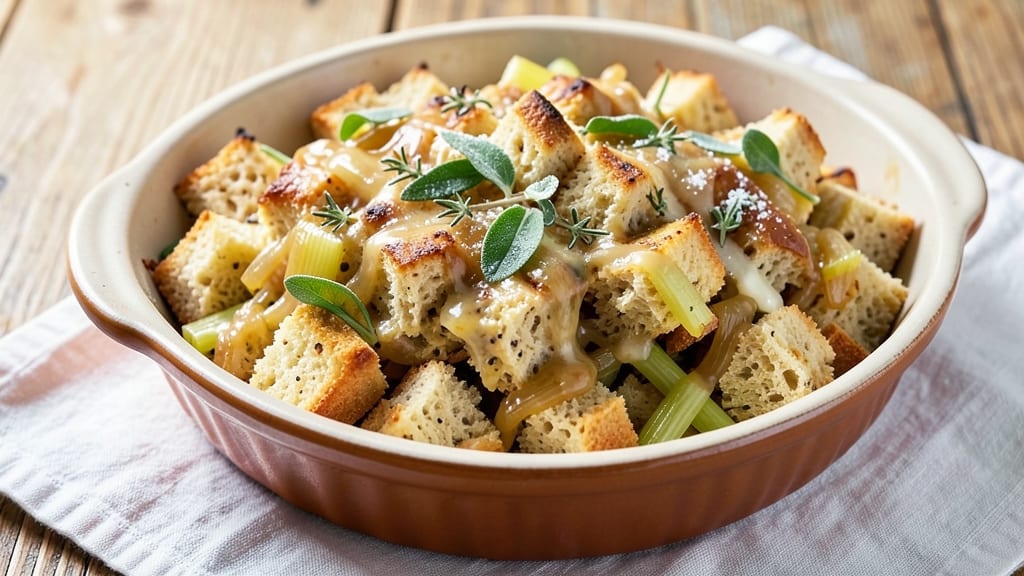
This Amish bread stuffing recipe transforms simple pantry staples into golden, crispy cornbread bites with tender, savory centers—just like Grandma used to make. 💛 The secret lies in layering textures: dry cornbread cubes soak up flavor while roasting, creating that perfect balance between crunchy edges and soft, herby stuffing.
What sets this recipe apart is the traditional Amish approach—no fancy ingredients, just good bread, fresh herbs, and a touch of butter that makes everything taste homemade.
The cornbread adds a subtle sweetness that contrasts beautifully with the savory sage and thyme, while celery and onions build depth of flavor that stands up to even the richest holiday meals.
By the time it emerges from the oven, you'll have stuffing with crispy cornbread edges that shatter between your teeth and a moist, aromatic center that's packed with herbs and savory notes.
It's the kind of dish that makes your kitchen smell like Thanksgiving, even when you're just whipping up a weeknight dinner.
The beauty of this recipe is its versatility—serve it alongside roasted turkey for a classic holiday meal, or pair it with ham and gravy for a comforting Sunday dinner. The leftovers reheat beautifully, making it perfect for meal prep too. Let's get started!
Ingredients for amish bread stuffing
Golden cornbread cubes and aromatic herbs create the perfect Amish-style stuffing—crispy edges, tender centers.
| Ingredient | Amount | Notes |
|---|---|---|
| Cornbread 🍞 | 4 cups | Day-old, cubed (1-inch pieces) |
| Yellow Onion 🧅 | 1 whole | Diced small, about 1 cup |
| Celery Stalks 🥬 | 4 whole | Diced small, about 1 cup |
| Fresh Sage Leaves 🌿 | ½ cup | Chopped finely, stems removed |
| Fresh Thyme Leaves 🌿 | 1 tbsp | Chopped, or 1 tsp dried |
| Unsalted Butter 🧈 | ½ cup | Cold, cubed (full-fat preferred) |
| Chicken Broth 💧 | 1 ½ cups | Low-sodium, room temperature |
| Eggs 🥚 | 1 whole | Large, lightly beaten |
| Salt 🧂 | 1 ½ tsp | Kosher or sea salt |
| Black Pepper 🌶️ | 1 tsp | Freshly ground preferred |
| Garlic Cloves 🧄 | 3 cloves | Minced finely |
| Fresh Parsley 🌿 | ¼ cup | Chopped, for garnish |
The cornbread is non-negotiable here. Day-old works best—it stays crispy without drying out. Look for a loaf with a slightly sweet, dense crumb (think Jiffy or Krusteaz brands). If you're making your own, bake a batch the day before. For the onions and celery, chop them uniformly small—this ensures even cooking and maximum flavor absorption. Fresh herbs are a must, but if you're short on time, dried thyme at one-third the amount works in a pinch. Just remember: fresh herbs deliver that authentic Amish kitchen aroma.
No fresh sage? Dried sage at half the amount gets you close, though it won't have the same depth. Short on cornbread? Sourdough or crusty bread cubes add a nice chewiness, but they won't have that signature sweetness. The butter needs to be cold—cut it into small cubes and let it sit at room temp for 10 minutes before mixing. For the broth, low-sodium is key—you'll be adding salt separately. If you're making this ahead, prepare everything up to the baking step, then refrigerate the mixture overnight for even deeper flavor development.
This stuffing reheats beautifully—just add a splash of broth and bake at 350°F for 15-20 minutes. For meal prep, portion into greased ramekins and freeze for up to 3 months. Thaw overnight in the fridge before reheating. The cornbread cubes will crisp up perfectly when reheated, so don't worry about them getting soggy. Garnish with fresh parsley right before serving—it adds that final pop of color and freshness that makes everything feel special.
Why You'll Love This Recipe
- No-Chop Shortcuts: I swear by the celery and onion combo here—just rough chop, no dicing. The cornbread crumbs do half the work for you, so you’re really just mixing and baking.
- Herb-Packed Punch: That sage and thyme? Fresh, not dried. The aroma alone makes the kitchen smell like Thanksgiving morning, and the taste? Rich, earthy, and just sweet enough from the cornbread.
- Leftovers Reinvented: Stuffing turns into breakfast hash the next day—crispy edges, creamy center, and zero waste. Honestly, I make double batches just for this.
- Budget-Friendly Crowd-Pleaser: Cornbread’s cheap, celery’s versatile, and you’re not buying fancy bread. It feeds six for under $10, and everyone at the table will ask for seconds. (Yes, even on a Tuesday night.)
Step-by-step instructions for Amish bread stuffing
Here's how to create that perfect balance of crispy cornbread edges and tender, herb-infused filling.
👨🍳 Step 1: Prep and Sauté the Vegetables
In a large skillet, melt 0.5 cup unsalted butter over medium heat. Add the 1 whole yellow onion and 4 whole celery stalks, both diced small. Cook for 8-10 minutes until the vegetables soften and become translucent.
Stir in the 3 cloves garlic cloves and cook for another 30 seconds until fragrant. Here's the thing—don't let the garlic burn. It should smell amazing but not bitter. Remove the skillet from heat and let it cool for 2 minutes before adding the fresh herbs.
👨🍳 Step 2: Mix the Herb Butter and Egg
In a large mixing bowl, combine the cooked onion and celery mixture with the 0.5 cup fresh sage leaves and 1 tbsp fresh thyme leaves. Add the 1 whole egg and mix well to distribute the herbs evenly. The egg will help bind everything together later.
In a separate small bowl, whisk together the remaining 0.5 cup unsalted butter (cold and cubed) with the 1.5 tsp salt and 1 tsp black pepper. Fold this herb butter mixture into the vegetable and egg combination. This step creates those flavor pockets that make traditional stuffing so delicious.
🥘 Step 3: Combine with Cornbread and Broth
Add the 4 cups cornbread (cubed and day-old) to the mixing bowl and gently stir until the cornbread pieces are evenly coated with the herb butter mixture. The cornbread should look moist but not soggy—this is crucial for that perfect texture.
Pour in the 1.5 cups chicken broth and mix thoroughly. The cornbread should begin to absorb the liquid, but don't worry if it looks dry. As it bakes, the cornbread will soften and the edges will crisp up beautifully. Taste the mixture and adjust seasoning if needed—this is where you'll notice if the herbs need more salt or pepper.
🔥 Step 4: Bake for Golden Perfection
Transfer the stuffing mixture to a greased baking dish (about 9x13 inches works well). Spread it evenly and press down gently to create a compact surface. This helps the bottom crisp while keeping the interior moist.
Bake at 375°F for 30-35 minutes until the top is golden brown and the edges are crispy. You'll know it's done when you see those beautiful brown spots on top and the internal temperature reaches 165°F. For extra crispiness, broil for 2-3 minutes at the end, watching closely to prevent burning.
🍽️ Step 5: Rest and Garnish
Remove the stuffing from the oven and let it rest for 5-10 minutes before serving. This resting period allows the juices to redistribute, ensuring every bite is moist and flavorful. The cornbread edges will firm up slightly, creating that perfect contrast with the tender interior.
Garnish with the 0.25 cup fresh parsley just before serving. The parsley adds a fresh pop of color and a subtle herbal note that complements all the other flavors. Serve immediately while the stuffing is warm and crispy—this dish tastes best fresh from the oven.
Pro Tips For Making Amish Bread Stuffing
- SAUTÉ ONIONS LOW AND SLOW: I learned this the hard way—blasting onions on high heat turns them bitter and mushy. For Amish bread stuffing, cook them over medium-low for 8-10 minutes until soft and translucent, not browned. This keeps their sweetness intact and prevents the stuffing from tasting harsh.
- CUBE CORNBREAD DRY: Fresh cornbread crumbles when mixed, but dry cubes hold shape and soak up broth better. Spread cornbread slices on a baking sheet and let them sit uncovered for 1-2 hours (or overnight). This isn’t the prettiest method, but it’s the tastiest—no soggy bottoms here.
- CHOP CELEERY FINE: Skip the thick chunks—this stuffing needs texture, not chew. Dice celery into ¼-inch pieces so it blends evenly with the cornbread and herbs. I was skeptical until I tried it: the flavor distributes better, and you won’t get random crunchy bits.
- STIR IN HERBS LAST: Sage and thyme lose their brightness when cooked too long. Toss them in with the broth just before baking, or sprinkle fresh leaves on top at the end. This keeps their aroma sharp, not dull—your stuffing will smell like a proper Amish kitchen, not a sad casserole.
Perfect pairings for these flavors
Classic Holiday Pairings
This Amish bread stuffing shines alongside roasted turkey—the crispy cornbread edges cut through the richness of dark meat beautifully. I like to serve it in a ceramic baking dish right on the table so guests can scoop directly from the pan.
For a complete meal, pair with homemade gravy made from the turkey drippings and a splash of chicken broth. 💛
Comfort Food Combinations
Transform this into a hearty Sunday dinner by serving with smoked ham and mashed potatoes. The sweetness of the cornbread balances the smoky ham perfectly. For extra indulgence, add a side of sautéed green beans with crispy bacon—this trio feels like a cozy hug in dish form.
Trust me, your kitchen will smell amazing.
Modern Twists
Want to elevate this for a weeknight dinner? Swap the turkey for herb-roasted chicken thighs and serve with roasted Brussels sprouts. The caramelized edges of the sprouts contrast wonderfully with the stuffing's crispy texture.
For a vegetarian option, pair with stuffed bell peppers or a mushroom risotto—the herby notes in the stuffing complement earthy flavors beautifully. ✨
Beverage Pairings
A bold red wine like Cabernet Sauvignon stands up to the rich, herby flavors of this stuffing. For a lighter option, Chardonnay with its buttery notes complements the butter and cornbread perfectly.
If you prefer beer, a hoppy IPA cuts through the richness, while a wheat beer like Blue Moon adds a refreshing contrast. 🍷
Make-Ahead Serving
This stuffing reheats beautifully, making it perfect for holiday meal prep. Assemble the dish up to 24 hours ahead and refrigerate. Before baking, add a splash of broth to moisten the cornbread.
For freezer-friendly serving, portion into individual ramekins and freeze for up to 3 months. Thaw overnight in the fridge, then bake as directed—it crisps up perfectly when reheated. 🔥
Nutrition facts
Frequently asked questions
Can I use regular bread instead of cornbread?
You can substitute, but the flavor and texture will change. For a similar sweetness, try sourdough or challah cubes. If you want to keep it traditional, use a 1:1 ratio of cornbread to regular bread—but expect less crispy edges. The cornbread's natural sweetness is key to that authentic Amish taste.
How do I keep my stuffing from getting soggy?
Two secrets: day-old cornbread (soaks up less moisture) and pressing it gently before baking. Also, bake it uncovered for the first 20 minutes to let excess moisture evaporate, then cover loosely with foil for the rest of the time. Avoid overmixing—the egg just needs to lightly coat the bread.
What's the best way to reheat leftovers?
Preheat oven to 350°F and place stuffing in a baking dish. Add 2-3 tablespoons of broth to moisten, then cover with foil. Bake for 15-20 minutes until heated through. For microwave reheating, cover with a damp paper towel and heat in 30-second intervals—this keeps the cornbread from getting rubbery.
Can I make this stuffing ahead of time?
Assemble everything up to the baking step, then refrigerate for up to 24 hours before baking. For even better flavor, refrigerate overnight. If freezing, portion into greased ramekins and freeze for up to 3 months. Thaw in the fridge overnight before reheating—this prevents soggy bread.
Why does my stuffing taste bland?
Most likely, you need more herbs or salt. Double-check your fresh herbs—sometimes they're not as potent as expected. Try adding 1 extra teaspoon of salt or 1/4 teaspoon of smoked paprika for depth. Also, let the stuffing rest for 5-10 minutes after baking—flavors meld better when slightly cooled.