
Side Dishes
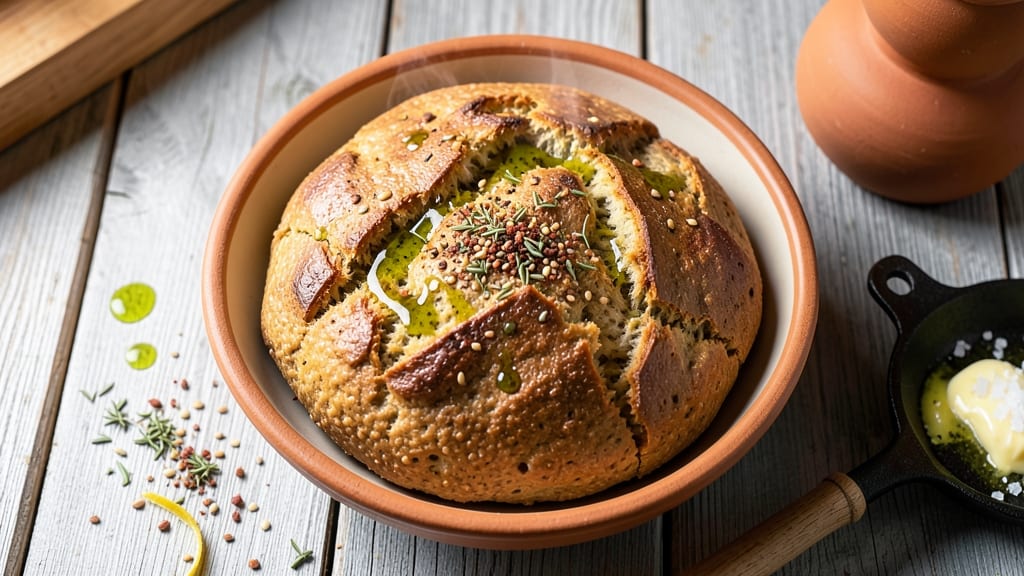
This ancient Greek barley bread recipe transports you to the bustling markets of Athens, where rustic loaves were baked daily for the gods and mortals alike. The secret lies in its dual texture—crusty za'atar-spiced exterior that crackles with every bite, hiding a pillowy, tender interior that melts like cloud.
Unlike modern breads, this version relies on traditional methods: barley flour, olive oil, and a touch of sourdough for authenticity, just as ancient bakers would have used.
The beauty of this recipe is its simplicity—five core ingredients and no commercial yeast required. Barley flour provides a nutty depth, while za'atar adds that signature Mediterranean earthiness.
The dough develops naturally over 12 hours, allowing flavors to meld and the gluten to relax, resulting in a bread that’s both hearty and delicate. This was the bread of warriors and philosophers, designed to sustain through long days and pair perfectly with olive oil, cheese, or fresh figs.
What you’ll achieve is a loaf that’s crisp enough to stand alone yet soft enough to soak up every drop of your favorite dipping oil. The aroma alone—warm barley, toasted za'atar, and a hint of olive oil—will fill your kitchen with the scent of ancient Greece.
Each slice tells a story, carrying the history of a civilization that valued simplicity, flavor, and craftsmanship.
Perfect for pairing with grilled meats, hummus, or simply slathered with olive oil and sea salt, this bread is a testament to how timeless techniques can create something extraordinary. Let’s bring a piece of history to your table.
Ingredients for ancient greek barley bread
Five ingredients, ancient technique—this bread brings Greek history to your kitchen.
| Ingredient | Amount | Notes |
|---|---|---|
| Barley Flour 🌾 | 3 cups | Fine-ground for best texture |
| Extra-Virgin Olive Oil 🫒 | ½ cup | Cold-pressed, fruity variety |
| Active Dry Yeast 🍞 | ½ tsp | Or 1 tsp sourdough starter |
| Za'atar Spice Blend 🌿 | 2 tbsp | Traditional Mediterranean blend |
| Sea Salt 🧂 | 1 ½ tsp | Fine grain preferred |
| Warm Water 💧 | 1 ¼ cups | 105°F for optimal activation |
| Semolina Flour 🌾 | ¼ cup | For dusting and crust |
| Coarse Sea Salt 🧂 | 1 tbsp | For final crust sprinkle |
Barley flour is the heart of this recipe, so look for 100% whole grain barley flour at specialty stores or online—Bob's Red Mill has a great option. The za'atar blend is non-negotiable; authentic Middle Eastern markets carry the best, but a quality jar from Trader Joe's works in a pinch. For the yeast, I prefer Saf-Instant because it activates instantly in warm water. The olive oil should be extra-virgin and fruity—none of that cheap cooking oil. If you're using sourdough starter instead of yeast, make sure it's active and bubbly, or your bread might not rise properly.
No za'atar? Mix equal parts sumac, sesame seeds, and dried thyme for a DIY version. Running short on barley flour? Substitute half with whole wheat flour, but the texture will be slightly denser. For the yeast, if you can't find active dry, baker's yeast works too—just proof it in warm water first. The water temperature matters—too hot kills the yeast, too cold slows activation. 105°F is perfect, but room temperature water (around 75°F) with a pinch of sugar works if you don't have a thermometer. The semolina flour adds that signature crunch; if you can't find it, all-purpose flour will do, though the texture won't be as crisp.
This dough needs 12 hours to develop, so set a timer and let it rest at room temperature. Once shaped, the loaf keeps 3 days wrapped in a clean kitchen towel at room temperature or 1 week refrigerated. For longer storage, freeze the baked loaf for up to 3 months. To reheat, wrap in foil and warm in a 350°F oven for 10 minutes. The crust gets crispier as it cools, so slice just before serving. Leftovers? Toast them for a delicious breakfast—trust me on this.
Why You'll Love This Recipe
- No-Knead Magic: I swear by this dough—just mix, let it rise, and bake. The barley flour handles all the heavy lifting while I sip coffee, no stand mixer required.
- Za’atar Zing: That earthy, citrusy za’atar punch cuts through everything—dip it in hummus, pair it with olives, or just eat it straight. It’s the kind of flavor that lingers.
- Meal Prep MVP: Slices beautifully for days, whether toasted with olive oil for breakfast or packed in lunches. Honestly, I make a double batch just to have it on hand.
- Budget Gold: Barley flour and za’atar stretch my grocery budget without sacrificing taste. Plus, the yeast proofing means I’m not buying fancy starters—just simple, reliable results.
Step-by-step instructions for ancient Greek barley bread
Here’s how to craft bread that channels ancient Greek techniques with modern precision—crispy za'atar crust meets tender barley heart.
Activate the Yeast and Mix the Dough
In a large mixing bowl, combine the 1.25 cups warm water (tested at 105°F—too hot kills yeast) with the 0.5 tsp active dry yeast. Let it sit for 5–7 minutes until frothy. This tells you the yeast is alive and ready to work. If it doesn’t bubble, your bread won’t rise properly.
Next, whisk in the 0.5 cup extra-virgin olive oil and 1.5 tsp sea salt until fully emulsified. Add the 3 cups barley flour and 2 tbsp za'atar spice blend, mixing with a wooden spoon until a shaggy dough forms. The barley flour is dense, so don’t expect a smooth texture yet—this is normal. The za'atar will give your bread its signature nutty, herby aroma.
Knead Until Elastic and Smooth
Turn the dough onto a lightly floured surface and knead for 8–10 minutes by hand, or use a stand mixer with a dough hook on medium speed for 5–6 minutes. You’re aiming for a dough that springs back when poked—this elasticity ensures a light crumb. The barley flour will make the dough stickier than wheat-based doughs, so wet your hands occasionally to prevent tearing.
If the dough feels too dry, add 1 tablespoon warm water at a time until it’s pliable but not sticky. Too much water weakens gluten development, so keep it just firm enough to hold its shape. Once smooth, cover the bowl with a damp towel and let it rise in a warm place for 1–1.5 hours, or until doubled in size. The za'atar’s sesame seeds will give the dough a speckled appearance—this is your visual cue for readiness.
Shape and Proof for Maximum Rise
Punch down the risen dough to release air, then divide it into 4 equal portions (about 8 ounces each). Shape each into a round boule by pulling the edges toward the center and sealing the seam tightly. Dust your work surface with 0.25 cup semolina flour—this prevents sticking and adds a subtle crunch to the crust. Place the boules on a parchment-lined baking sheet, seam-side up, and cover again with the damp towel.
Let the boules proof for another 30–45 minutes until they’ve puffed noticeably and feel light when pressed gently. The semolina flour will help create that signature crispy crust the ancient Greeks prized. Avoid over-proofing—this leads to dense, flat bread instead of the airy texture we’re after.
Bake for Crispy Crust and Pillowy Interior
Preheat your oven to 425°F with a Dutch oven inside for 20 minutes. This step is critical—it mimics the intense heat of ancient clay ovens. Carefully transfer one boule (with parchment) into the hot Dutch oven, sprinkle with 1 tbsp coarse sea salt, and cover with the lid. Bake for 25 minutes. The steam trapped inside creates that signature soft, pillowy crumb.
After 25 minutes, remove the lid and bake for another 10–12 minutes until the crust is deep golden brown with za'atar flecks. The bread should sound hollow when tapped on the bottom. Repeat with remaining boules, baking one at a time. The Dutch oven’s heat retention ensures even browning and that coveted crispy exterior.
Cool and Enjoy with Confidence
Let the bread cool on a wire rack for at least 20 minutes before slicing—this prevents a gummy texture. The crust should be shatteringly crisp, while the interior remains soft and chewy, a testament to the barley’s unique properties. Serve warm with olive oil for dipping or pair with Mediterranean dishes like lentil stew or grilled vegetables.
This bread’s secret lies in the balance of za'atar’s earthy notes and the barley’s hearty texture—a true taste of ancient Greece. Store leftovers in an airtight container for up to 3 days, but they’ll disappear faster than you can say kalos! (that’s Greek for “delicious”).
Pro Tips For Making Ancient Greek Barley Bread
- Bloom the Yeast Warm: DESCRIPTION: Skip the fridge—dissolve that yeast in warm (not hot) water with a pinch of salt first, then let it sit for 5-10 minutes until frothy. I learned this the hard way after baking a dense, flat loaf because the yeast was sluggish in barley flour’s dry embrace.
- Oil That Pan Well: DESCRIPTION: Use enough extra-virgin olive oil—about 2 tablespoons—to coat the bottom and sides of your pan before pouring in the batter. Barley dough sticks like glue, and this step cuts cleanup without sacrificing authenticity (yes, even if you’re impatient like me).
- Za’atar Last, Not First: DESCRIPTION: Mix the za’atar into the flour after the yeast has bloomed, not before. Sprinkling it early kills the yeast’s fizz, and you’ll end up with a sad, underproofed loaf. Trust me, the flavor’s still there—just let the yeast do its job first.
- Steam the First 10 Minutes: DESCRIPTION: Cover the pan with foil and let it steam on medium heat for the first 10 minutes. This traps moisture in the dense barley dough, preventing a dry crust while the center rises properly. I skipped this once and got a brick—don’t make my mistake.
Creative variations of this dish
Mediterranean Za'atar Twist
Swap the za'atar for a 1 tbsp dried oregano and 1 tsp crushed fennel seeds to create a more distinctly Greek flavor profile. Ancient Greek bakers often used local herbs like oregano and thyme, which pair beautifully with barley’s nutty undertones.
For extra authenticity, add ½ tsp ground coriander to the dough—this trio mimics the flavors of traditional Greek artos bread. 🌿
Olive Oil Infusion
Boost the olive oil to ⅔ cup and infuse it with 1 crushed garlic clove and ½ tsp red pepper flakes for 30 minutes before mixing into the dough. This creates a rich, aromatic base that mimics the oil-rich breads of ancient Greece, where olive oil was a staple.
The garlic adds depth, while the red pepper flakes introduce a subtle heat that balances the barley’s earthiness. Perfect for dipping in extra-virgin olive oil! 🫒
Honey-Sweetened Version
Add 2 tbsp honey to the dough for a sweeter take inspired by Greek melitourga (honey bread). Ancient Greeks often sweetened bread with honey, and this version pairs beautifully with cheese or figs.
The honey caramelizes during baking, creating a delicate sweetness that contrasts with the za'atar’s savory notes. Use local wildflower honey for the best flavor. 🍯
Herbed Cheese Loaf
Fold in ½ cup crumbled feta cheese and 1 tbsp chopped fresh dill during the final kneading stage for a savory, herby variation. This mimics the cheese-studded breads of ancient Greek symposia, where bread was often shared alongside wine and cheese.
The feta melts slightly during baking, creating pockets of tangy richness. Serve warm with a drizzle of olive oil for a restaurant-worthy twist. 🧀
Flatbread Adaptation
Skip the yeast and shape the dough into ¼-inch-thick rounds, then bake at 450°F for 10–12 minutes. This creates a flatbread style reminiscent of ancient Greek plakous, which was often cooked on hot stones or griddles.
Brush the baked flatbreads with olive oil and sprinkle with za'atar for a quick, versatile side. Perfect for wrapping around grilled meats or dipping in hummus. 🔥
Sourdough Upgrade
Replace the yeast with 1 cup active sourdough starter, letting it ferment for 12–24 hours. This slow fermentation deepens the barley’s nutty flavor and creates a tangy, complex crust.
Ancient Greeks often used wild fermentation methods, and this version delivers that authentic sourness. The dough will be stickier, so wet your hands frequently during kneading. 💫
Nutrition facts
Frequently asked questions
Why does this barley bread recipe use za'atar instead of traditional Greek herbs?
Za'atar brings that signature Mediterranean earthiness that pairs perfectly with barley's nutty flavor. While ancient Greeks used herbs like oregano and thyme, za'atar's blend of sumac, sesame, and savory creates a more complex flavor profile that became popular in later Greek and Levantine cuisine. It's the perfect bridge between ancient techniques and modern Mediterranean tastes!
Can I make this bread without a Dutch oven?
Yes! If you don't have a Dutch oven, try baking on a pizza stone or steel for 30 minutes at 425°F with a baking sheet underneath to catch drips. For extra crispiness, broil for 2 minutes at the end. The crust won't be quite as intense, but you'll still get that pillowy interior. Ancient bakers often used hot stones too!
How do I know when the dough has risen enough?
Look for the dough to double in size and feel light when pressed gently with one finger—it should spring back slowly. For barley bread, the za'atar's sesame seeds will create visible speckles that spread as it rises. If using a bowl, the dough should reach about 2 inches above the rim. Overproofing leads to dense bread, so err on the side of slightly underproofed!
What's the best way to store leftover barley bread?
Wrap cooled loaves in a clean kitchen towel and store at room temperature for 3 days, or refrigerate for 1 week in an airtight container. For longer storage, freeze slices for up to 3 months. To revive, warm in a 350°F oven for 10 minutes—the crust will crisp up beautifully. Ancient Greeks often kept bread in woven baskets to maintain freshness!
Can I substitute barley flour with whole wheat?
You can use half barley flour and half whole wheat flour, but expect a denser texture. Barley's unique properties create that signature tender crumb, while whole wheat adds fiber. For best results, stick with 100% barley flour—it's what gives this bread its authentic ancient Greek character. If you must substitute, add 1 extra tablespoon of olive oil to compensate for the drier texture.