
Side Dishes
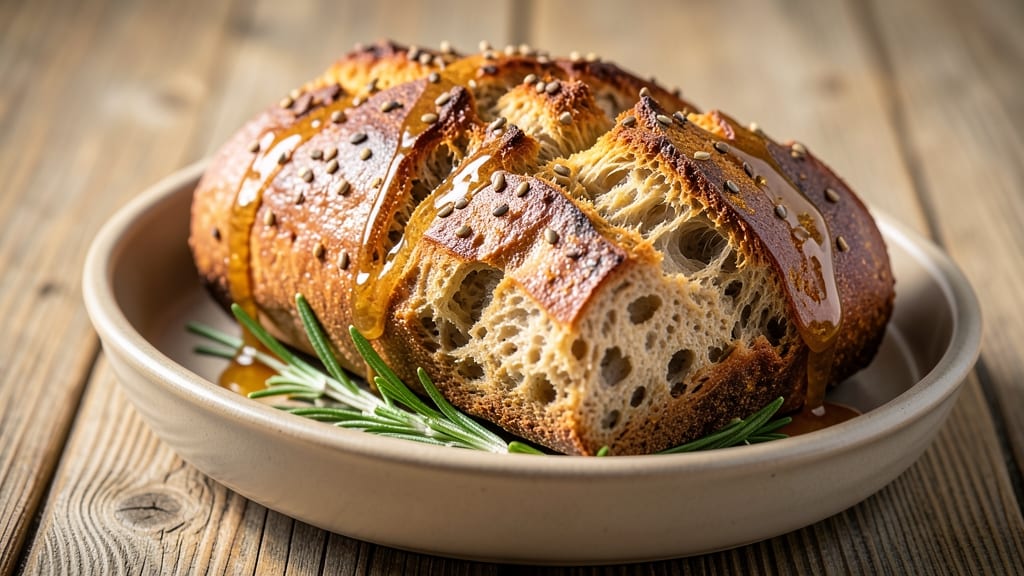
This anti-inflammatory sourdough bread recipe transforms traditional baking into a gut-healing powerhouse with turmeric, ginger, and whole-grain goodness. 🌱 The fermentation process not only enhances digestibility but also boosts nutrient absorption, while the anti-inflammatory spices create a flavor profile that’s both comforting and nourishing.
Perfect for those seeking a wholesome, nutrient-dense alternative to conventional bread.
What sets this recipe apart is the thoughtful blend of ingredients—whole wheat flour, flaxseeds, and a touch of honey—all working together to support gut health without sacrificing texture or taste.
The active starter culture and extended fermentation time (up to 24 hours) create a lighter, more digestible loaf compared to traditional sourdough. The addition of turmeric and ginger not only adds warmth and depth but also delivers powerful anti-inflammatory benefits.
By the time you pull this loaf from the oven, you’ll have a beautifully crusty exterior with a tender, airy crumb—rich in fiber, omega-3s, and antioxidants. The aroma alone will transform your kitchen into a cozy sanctuary, while the taste delivers a satisfying balance of earthy and slightly sweet notes.
This isn’t just bread; it’s a nourishing staple for your table.
Ideal for pairing with soups, salads, or enjoying on its own, this recipe is designed to be both beginner-friendly and adaptable. Whether you’re new to sourdough or a seasoned baker, the step-by-step process ensures success every time. Let’s get started on creating your gut-friendly loaf.
Ingredients for anti inflammatory sourdough bread
Whole grains, fermented magic, and anti-inflammatory spices—this gut-healing loaf needs just 11 ingredients.
| Ingredient | Amount | Notes |
|---|---|---|
| Organic Whole Wheat Flour 🌾 | 4 cups | Lightly sifted for even texture |
| Active Sourdough Starter 🍞 | 1 cup | 100% hydration, bubbly and active |
| Ground Flaxseeds 🌰 | ½ cup | Milled fresh for omega-3 boost |
| Filtered Water 💧 | 1 ¾ cups | Room temperature, 70°F |
| Raw Honey 🍯 | 2 tbsp | Local variety preferred |
| Ground Turmeric 🌿 | 1 tsp | Freshly ground for potency |
| Ground Ginger 🍃 | 1 tsp | Freshly grated preferred |
| Sea Salt 🧂 | 1 ½ tsp | Fine grain, Diamond Crystal |
| Extra-Virgin Olive Oil 🫒 | 2 tbsp | For dough and scoring |
| Cornmeal 🌽 | ¼ cup | For dusting baking sheet |
| Sesame Seeds 🌻 | 1 tbsp | Optional topping for crunch |
The whole wheat flour is non-negotiable here—look for organic, stone-ground varieties at Whole Foods or Trader Joe's for maximum fiber and nutrients. Bob's Red Mill is my go-to brand for consistent quality. Your sourdough starter should be lively with bubbles and a tangy aroma—if it's sluggish, feed it 24 hours before baking. The flaxseeds are a game-changer for omega-3s; Bob's Red Mill sells pre-ground, but I grind mine fresh for extra potency. For the spices, Penzeys carries premium turmeric and ginger that pack serious anti-inflammatory punch—worth the splurge for this recipe.
No honey? Maple syrup works 1:1, though it adds a distinct flavor. Skip the turmeric? Cinnamon at half the amount adds warmth without the same benefits. The water temperature matters—too hot kills the starter, too cold slows fermentation. If your starter smells like alcohol, it's overproofed—start fresh. For the olive oil, California-based brands like Corto or Lucini have the best flavor profile. And if you're gluten-sensitive, swap 1 cup of whole wheat for certified gluten-free oat flour—just know the texture will be denser.
This dough needs 12-24 hours of cold proofing—plan ahead. Store it in a glass jar covered with a damp towel in the fridge. The loaf keeps well for 5-7 days at room temperature, wrapped tightly in a cotton towel. For longer storage, slice and freeze—it reheats beautifully in a toaster or oven. The sesame seeds? Toast them in a dry pan for 2 minutes first—they'll add incredible crunch to your crust. Leftovers make perfect croutons or breadcrumbs for future recipes.
Why You'll Love This Recipe
- No-Fuss Fermentation: I swear by this—just toss in your starter, let it do the work, and walk away. The flaxseeds handle the bulk of the kneading for you, so no punchy arms or stubborn dough here.
- Honeyed Depth: That raw honey isn’t just sweet—it caramelizes into a subtle, golden richness while baking, balancing the earthy whole wheat. Honestly, the first slice makes me pause mid-bite.
- Weeknight Workhorse: It’s my go-to for breakfast toast, sandwiches, or even charred grilled cheese. Freezes like a dream too, so I bake a loaf on Sundays and stretch it through the week without stress.
Step-by-step instructions for anti-inflammatory sourdough bread
Let's craft a nourishing loaf that combines gut-friendly fermentation with potent anti-inflammatory spices.
👨🍳 Step 1: Mix the Wet Ingredients and Hydrate the Flax
In a medium bowl, whisk together the 1.75 cups filtered water, 2 tbsp raw honey, 2 tbsp extra-virgin olive oil, 1 tsp ground turmeric, and 1 tsp ground ginger until fully combined. The mixture should be smooth with no visible powder—this ensures even distribution of the anti-inflammatory compounds throughout the dough.
In a separate small bowl, combine the 0.5 cup ground flaxseeds with 0.5 cup of the water mixture. Let this sit for 5 minutes to form a gel-like consistency. This flax "egg" adds fiber and omega-3s while replacing traditional eggs. The gel should thicken noticeably—if it doesn't, add another 1 tbsp water and wait another 2 minutes.
👨🍳 Step 2: Combine All Ingredients for the Dough
In a large mixing bowl, combine the 4 cups organic whole wheat flour and 1.5 tsp sea salt. Lightly sift the flour to maintain even texture—this prevents dense pockets in your final loaf. Make a well in the center and pour in the remaining water mixture (about 1.25 cups) along with the flax gel.
Add the 1 cup active sourdough starter to the center and mix with a wooden spoon or dough whisk. The starter should be bubbly and active—if it's sluggish, let it ferment another 30 minutes at room temperature. Gradually incorporate the flour from the edges into the wet ingredients until you have a shaggy dough. Avoid overmixing at this stage; we want to preserve the gluten development for proper rise.
🥘 Step 3: Knead and Rest the Dough
Turn the dough onto a lightly floured surface and knead for 8-10 minutes until smooth and elastic. You'll know it's ready when it springs back slowly when poked. The dough should be slightly tacky but not sticky—add 1 tbsp flour if needed. This kneading develops gluten structure while incorporating all our anti-inflammatory ingredients evenly.
Shape the dough into a ball, place it in a lightly oiled bowl, cover with a damp towel, and let it rest at room temperature for 1 hour. This initial rest relaxes the gluten and allows the starter to activate fully. The dough should nearly double in size—if it doesn't, it may need another 30 minutes of proofing time. The warm environment helps the fermentation process that creates those gut-friendly probiotics.
🔥 Step 4: Shape and Proof the Loaf
After the initial rest, punch down the dough to release any large air bubbles. Divide it into two equal portions and shape each into a round boule. Place them on a parchment-lined baking sheet dusted with 0.25 cup cornmeal. The cornmeal creates a crisp barrier that prevents sticking and adds a subtle nutty flavor.
Cover the shaped loaves with the damp towel and let them proof at room temperature for 2-3 hours until they've risen about 50%. You'll see the tops dome slightly and small bubbles form on the surface. The proofing time varies with humidity—if your kitchen is dry, mist the dough occasionally with water to maintain moisture. This final proofing develops the signature open crumb structure and enhances the anti-inflammatory properties through proper fermentation.
🔥 Step 5: Score and Bake for Maximum Flavor
Preheat your oven to 375°F with a Dutch oven inside for 30 minutes. The Dutch oven creates steam that develops that beautiful crust while keeping the interior moist. Remove the Dutch oven and carefully transfer the loaves inside, placing them on the preheated bottom rack.
Score the tops of each loaf with a sharp razor or serrated knife in a crosshatch pattern. This prevents excessive expansion and creates those beautiful decorative slashes. Bake covered for 25 minutes, then remove the lid and bake for another 15-20 minutes until the crust is deep golden brown and sounds hollow when tapped.
Remove from the oven and let cool on a wire rack for at least 30 minutes before slicing. The internal temperature should reach 205°F at the center. While cooling, sprinkle the tops with 1 tbsp sesame seeds for added crunch and nutritional benefits. The seeds add texture contrast and a subtle nutty flavor that complements the warm spices.
Pro Tips For Making Anti Inflammatory Sourdough Bread
- WEIGH THE FLOUR: I learned this the hard way—whole wheat flour packs differently than white. Use a kitchen scale for precision; 1 cup of organic whole wheat isn’t the same as 1 cup of all-purpose. Aim for 450g total, and don’t eyeball it—your dough’s hydration balance depends on it.
- GRIND FLAXSEEDS FRESH: Store-bought ground flaxseeds go rancid fast, and that bitter taste ruins the bread’s subtle sweetness. Grind 3 tablespoons yourself right before mixing—it’s 2 minutes of work that keeps the omega-3s potent and the flavor clean. (Yes, even if you’re impatient like me.)
- STRETCH AND FOLD AT ROOM TEMP: Cold dough fights you. Let your whole wheat starter and flaxseed mix sit at 70°F (21°C) for 30 minutes before shaping—it’s the only way the gluten will relax enough for those signature open crumb pockets. Skip this, and you’ll end up with a dense brick.
- HONEY AFTER THE FIRST FERMENT: Adding raw honey at the start feeds the yeast too aggressively, making the dough rise too fast and collapse. Instead, fold in 2 tablespoons after bulk fermentation (when the dough has doubled). It sweetens the crust without throwing off the fermentation balance.
Dietary considerations for this recipe
Gluten Sensitivity Adaptations
For gluten-sensitive individuals, replace 1 cup of the whole wheat flour with certified gluten-free oat flour—I recommend Bob's Red Mill brand. The texture will be slightly denser, but the anti-inflammatory benefits remain intact.
The flaxseed gel and extended fermentation still work magic for digestion, though proofing times may extend by 30-60 minutes due to reduced gluten structure. Always use dedicated gluten-free tools to avoid cross-contamination. 🌾
Grain-Free Options
Skip the whole wheat flour entirely and substitute with 1 cup almond flour and 1 cup cassava flour for a grain-free version. The almond flour adds richness while cassava provides structure. Reduce the water by 0.25 cups—these flours absorb moisture differently.
The result is a heartier loaf with nutty undertones that pair beautifully with the turmeric and ginger. Store-bought almond flour works, but freshly ground yields better texture. 🌰
Nut-Free Substitutions
Replace the almond flour with 1 cup sunflower seed flour for a nut-free alternative. The seeds add a mild earthiness that complements the spices perfectly. For binding, use an additional 0.25 cup ground flaxseeds (total 0.75 cup) to maintain moisture and structure.
The sunflower flour also boosts vitamin E content, adding another layer of anti-inflammatory benefits. Check for certified gluten-free labels if needed. 🌻
Sweetener Alternatives
Swap the raw honey for maple syrup at a 1:1 ratio, though the flavor profile shifts slightly toward caramel notes. For a refined sugar option, use agave nectar—it has a neutral taste that lets the spices shine.
If avoiding sweeteners entirely, omit the honey and increase the turmeric to 1.5 tsp for enhanced warmth. The fermentation process will still develop complex flavors without added sweetness. 🍯
Spice Variations
Boost anti-inflammatory power by adding ½ tsp cinnamon alongside the turmeric and ginger. The combination creates a synergistic effect that enhances circulation and reduces oxidative stress. For a cooling contrast, include ¼ tsp cardamom—it pairs beautifully with the ginger's heat.
Always use freshly ground spices from brands like Penzeys for maximum potency. The spices should be finely ground to distribute evenly throughout the dough. 🌿
Seed Topping Options
Experiment with toppings beyond sesame seeds. Try chia seeds for extra omega-3s or pumpkin seeds for a nutty crunch. Toast the seeds in a dry pan for 2 minutes before sprinkling to enhance their flavor.
For a savory-sweet combo, mix 1 tbsp sesame seeds with 1 tsp cinnamon before baking. The seeds not only add texture but also contribute to the bread's nutritional profile. 🌱
Nutrition facts
Frequently asked questions
Why does this bread use flaxseeds instead of eggs?
The flaxseed gel replaces eggs while adding omega-3 fatty acids and fiber—key anti-inflammatory nutrients. The gel forms when flaxseeds combine with water, creating a binding effect similar to eggs without the cholesterol. Plus, it keeps the bread moist longer and enhances the gut-friendly properties through fermentation.
Can I make this bread without a Dutch oven?
Yes! Use a baking sheet lined with parchment paper and place a metal bowl filled with hot water on the lower oven rack to create steam. Bake at 375°F for 5-10 minutes longer than the Dutch oven method. The crust may be slightly less crispy, but the interior will still be tender and flavorful.
How do the turmeric and ginger enhance anti-inflammatory benefits?
Turmeric contains curcumin, a potent compound that reduces inflammation, while ginger contains gingerol, which helps with digestion and pain relief. The fermentation process actually increases the bioavailability of these compounds, making them more effective than if you ate them raw or cooked separately.
What if my sourdough starter isn't active enough?
Feed your starter with equal parts flour and water (e.g., 1:1 ratio) and let it sit at 70-75°F for 4-6 hours until bubbly. If it still smells like alcohol, discard it and start fresh—this indicates overproofing. A healthy starter should have a tangy aroma and visible bubbles within 2-4 hours after feeding.
Can I add other anti-inflammatory ingredients?
Try adding 1 tbsp ground chia seeds (for extra omega-3s) or ½ tsp cinnamon (which regulates blood sugar). For a savory twist, include 1 tsp dried rosemary—it's rich in antioxidants. Just