
Desserts
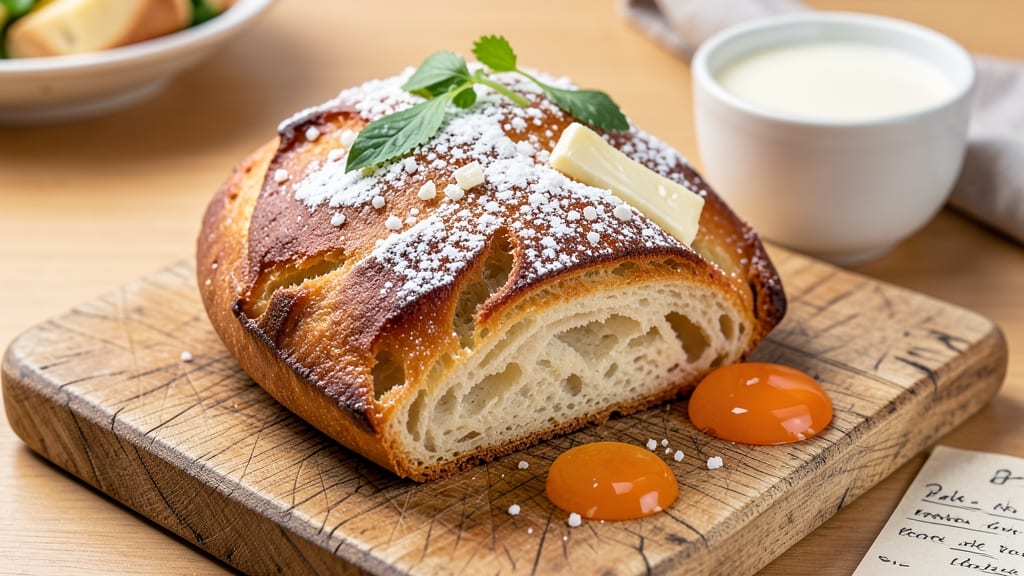
This Argentinian sweet bread recipe brings the comforting aroma of facturas—flaky, buttery pastries—straight to your kitchen. 💛 The secret lies in the rich dough, infused with milk and sugar, and the signature dulce de leche swirl that transforms simple ingredients into a breakfast staple loved across Argentina.
Perfectly golden and tender, these pastries are traditionally served with coffee or tea, making them ideal for morning treats or festive gatherings.
The dough combines flour, yeast, butter, and milk for a light yet sturdy texture, while the dulce de leche adds a caramelized sweetness that pairs beautifully with the flaky layers.
Shaping the dough into classic medialunas (half-moon shapes) or vigilantes (filled pastries) requires patience, but the result is worth every effort—crisp edges, soft centers, and a buttery aroma that fills your home. This recipe balances tradition with simplicity, ensuring even beginners can achieve professional results.
Once baked to a golden brown, these pastries are best enjoyed fresh, though they stay soft for a day or two if stored properly. The dulce de leche swirl adds a luxurious touch, making them feel like a special treat without requiring advanced skills.
Whether you're hosting a brunch or simply craving a taste of Argentina, this recipe delivers restaurant-quality pastries with minimal fuss.
For extra indulgence, brush the baked pastries with a light glaze or dust with powdered sugar. Serve alongside a strong cup of coffee or tea to experience them as Argentinians do—warm, buttery, and utterly satisfying. Let’s get started on creating these beloved treats!
Ingredients for argentinian sweet bread
Twelve essential ingredients transform into Argentina's beloved buttery, caramel-swirled pastries.
| Ingredient | Amount | Notes |
|---|---|---|
| All-Purpose Flour 🌾 | 4 cups | High protein, 11-12% for best texture |
| Unsalted Butter 🧈 | 1 cup | Cold, cubed for flaky layers |
| Granulated Sugar 🍚 | ½ cup | Fine grain preferred |
| Active Dry Yeast 🍞 | 2 ¼ tsp | Fresh yeast preferred if available |
| Whole Milk 🥛 | ¾ cup | Room temperature for activation |
| Large Eggs 🥚 | 1 whole | Room temperature for blending |
| Vanilla Extract 🌿 | 1 tsp | Pure extract for authentic flavor |
| Salt 🧂 | ½ tsp | Fine sea salt preferred |
| Dulce de Leche 🍯 | 1 cup | Store-bought or homemade caramel |
| Powdered Sugar 🍚 | ¼ cup | For dusting finished pastries |
| Egg Wash 🥚 | 1 whole | 1 egg beaten with 1 tbsp milk |
| Granulated Sugar 🍚 | ¼ cup | For egg wash enrichment |
The flour is non-negotiable here—King Arthur or Caputo Tipo 00 deliver that signature lightness. Costco or specialty Italian markets stock the latter, but high-protein all-purpose works in a pinch. Butter should be European-style (like Plugrá) if you can find it; domestic brands work but require extra care in handling. For the dulce de leche, La Salteña or La Serenísima are the gold standard, but homemade caramel works beautifully too. Yeast is best bought fresh from the refrigerated section—it activates faster and gives a more reliable rise.
No vanilla extract? Almond extract at half the amount works, though it alters the flavor profile. Running short on milk? Evaporated milk or heavy cream can substitute, but the dough will be denser. For the egg wash, aquafaba (chickpea brine) works in a bind—whisk it until frothy and add the sugar. The dulce de leche can be thinned with a splash of milk if it's too thick to pipe. If you're making a large batch, divide the dough into portions and refrigerate between shapes—this prevents overworking and keeps the texture tender.
Freshly shaped dough keeps for 24 hours wrapped in plastic in the fridge. For longer storage, freeze shaped pastries on a tray before bagging—they'll keep for up to 3 months. After baking, store in an airtight container with a paper towel to maintain softness. Brush with extra egg wash before serving for that restaurant-quality shine. These pastries reheat beautifully—5 minutes at 350°F restores their warmth and buttery aroma.
Why You'll Love This Recipe
- No-Knead Wonder: I swear by this dough—just mix, let it rise, and forget about it. The yeast does all the work while I sip coffee or watch a show.
- Buttery Sweet Magic: That warm, caramelized sugar crust with tender, buttery layers? It’s like biting into a hug from a Buenos Aires bakery.
- Breakfast or Snack Star: Toss it with jam for a quick breakfast or split it open for sandwiches—no rules, just deliciousness. My kids fight over the leftovers.
- Pantry-Friendly Luxury: Five simple ingredients, zero specialty tools. The milk keeps it rich, the butter makes it irresistible, and the sugar? Well, that’s just cheating.
Step-by-step instructions for Argentinian sweet bread with dulce de leche swirl
Master this iconic Argentine pastry with perfect layers and gooey caramel swirls.
👨🍳 Step 1: Activate the Yeast and Prepare the Dough Base
In a small bowl, combine the 0.75 cup whole milk (warmed to 110°F) with the 2.25 tsp active dry yeast and 0.5 cup granulated sugar. Let sit for 5-10 minutes until frothy—this confirms your yeast is alive and ready to work. If it doesn't bubble, start over with fresh yeast.
In a stand mixer fitted with the dough hook, combine the 4 cups all-purpose flour and 0.5 tsp salt. Add the yeast mixture, 1 whole large egg, 1 tsp vanilla extract, and the 1 cup cold unsalted butter (cut into cubes). Mix on low speed until the butter is incorporated, then increase to medium speed for 5-6 minutes until the dough forms a smooth, elastic ball that pulls away from the bowl sides.
🍳 Step 2: Knead and Chill for Optimal Texture
Turn the dough onto a lightly floured surface and knead gently for 2-3 minutes until smooth. This step develops gluten for structure without overworking the dough. Shape into a rectangle about 12x8 inches and wrap tightly in plastic wrap. Refrigerate for 1 hour—this cold rest relaxes the gluten and makes rolling easier.
Here's the thing—don't skip this chill time. The butter needs to firm up slightly so it creates those beautiful flaky layers when baked. If you're short on time, freeze the dough for 20 minutes instead, but bring it to room temperature before rolling.
🥘 Step 3: Layer and Swirl the Dulce de Leche
Roll the chilled dough into a 12x16-inch rectangle (about ¼-inch thick). Spread ½ cup dulce de leche evenly over the surface, leaving a ½-inch border around the edges. Starting from the long side, tightly roll the dough into a log, sealing the edge well. Wrap in plastic and refrigerate for another 30 minutes.
For the swirl effect, slice the log diagonally into 12 equal pieces (about 1-inch thick each). Arrange them in a single layer on a parchment-lined baking sheet, cutting sides facing up. Brush the tops with the prepared egg wash (1 egg beaten with 1 tbsp milk plus 0.25 cup granulated sugar), then sprinkle generously with 0.25 cup powdered sugar—this creates that signature caramelized crust.
🔥 Step 4: Bake to Golden Perfection
Preheat your oven to 375°F. Bake the bread for 25-30 minutes until the tops are deep golden brown and the internal temperature reaches 190°F. The bread should sound hollow when tapped on the bottom—this indicates proper doneness.
I know it's tempting to open the oven early, but resist! The residual steam is what creates those signature flaky layers. If the tops brown too quickly, loosely tent with foil after 15 minutes to prevent over-browning while the centers finish baking.
⏰ Step 5: Rest and Serve Warm
Let the baked bread cool on a wire rack for 10 minutes before serving. This resting period allows the layers to set properly and prevents the dulce de leche from oozing out prematurely. The bread should be warm but not hot—just right for slicing through those perfect swirls.
Slice with a serrated knife and serve immediately. The contrast of warm, flaky pastry with the cool, gooey dulce de leche makes every bite magical. Store leftovers in an airtight container for up to 3 days, though I doubt they'll last that long!
Pro Tips For Making Argentinian Sweet Bread
- Warm the Milk First: Cold milk kills yeast faster than you’d think. Heat the whole milk to about 110°F (43°C)—just warm enough to touch your wrist without burning—before mixing it with yeast and sugar. I learned this the hard way when my dough took forever to rise because the yeast was sluggish.
- Cut the Butter Cold: Don’t soften that butter—keep it firm but pliable. Cut it into small cubes and toss it into the dough last while mixing, so it melts just enough to create those signature flaky layers without disappearing completely. Trust me, you’ll notice the difference in texture.
- Punch Down Twice: After the first rise, punch down the dough once to deflate it, then let it rise again. The second punch-down right before shaping is non-negotiable—it evens out the yeast activity and makes the final bake more consistent. Skipping this step? Your bread might turn out dense or uneven.
- Brush with Milk, Not Water: That glossy finish isn’t just for looks—it’s what makes the crust tender. Brush the baked bread with warm whole milk (not water) while it’s still hot out of the oven. It’ll caramelize slightly and add a subtle sweetness that cuts through the richness of the butter. Yes, it’s an extra step, but it’s worth it.
Pro cooking tips for great argentinian sweet bread
Dough Temperature Secrets
The key to flaky layers lies in keeping your dough cold throughout the process. After mixing, I always chill the dough for at least 1 hour—this prevents the butter from melting too soon and ensures those signature layers. If your kitchen is warm, consider freezing the dough for 20 minutes instead. Just
Butter Handling Tips
Using cold, cubed butter is non-negotiable for this recipe. I like to cut my butter into ½-inch cubes and keep them in the freezer until just before mixing. This ensures they stay firm enough to create those beautiful flaky pockets. If your butter starts to soften too quickly, pop the dough back in the fridge for 10-15 minutes to reset. European-style butter (like Plugrá) works best, but domestic brands will do in a pinch if handled carefully.
Yeast Activation Tricks
Your yeast needs to be active for this dough to rise properly. I always test mine by mixing it with warm milk (110°F) and sugar, then waiting for 5-10 minutes for bubbles to form. If it doesn’t bubble, your yeast is dead—start over with fresh yeast.
Pro tip: I like to use fresh yeast from the refrigerated section of the grocery store for more reliable results. It activates faster and gives a better rise than dry yeast packets.
Dulce de Leche Swirl Mastery
For that perfect swirl, spread the dulce de leche evenly but leave a ½-inch border around the edges. This prevents the filling from oozing out during baking. I like to use a piping bag with a small round tip for precision, but a spoon works too.
After rolling the dough into a log, slice it diagonally into 12 equal pieces—this ensures each pastry has a consistent swirl pattern. The thicker the slices, the more dramatic the swirl effect when baked. 🍯
Egg Wash Perfection
The egg wash is what gives these pastries that glossy, golden finish. I like to mix 1 whole egg with 1 tbsp milk and ¼ cup granulated sugar for extra shine. Brush it on just before baking, then sprinkle generously with powdered sugar—this creates that signature caramelized crust.
For an extra touch, I sometimes add a pinch of cinnamon to the egg wash for warmth. Just be careful not to over-brush, or the sugar will melt too quickly and make a mess.
Baking Time Adjustments
Every oven is different, so keep an eye on your pastries after 20 minutes. They’re done when the tops are deep golden brown and the internal temperature hits 190°F. If they brown too quickly, loosely tent with foil after 15 minutes to prevent over-browning.
I like to tap the bottoms—they should sound hollow when done. Overbaking will dry them out, so pull them out just as they reach the perfect doneness. 🔥
Nutrition facts
Frequently asked questions
What's the difference between medialunas and vigilantes?
Both are classic Argentinian sweet breads, but medialunas are simple half-moon shaped pastries with no filling, while vigilantes are filled versions (often with dulce de leche or jam). This recipe makes medialunas with a caramel swirl—think of them as a cross between both! The shaping technique is identical to vigilantes, just without the extra filling layer.
Can I make this dough ahead of time?
Shape the dough into logs and refrigerate for up to 24 hours before slicing and baking. For longer storage, freeze shaped pastries on a tray, then transfer to a bag for up to 3 months. Thaw overnight in the fridge before baking—never at room temperature to prevent soggy layers.
What if my dough doesn't rise properly?
Check your yeast first—it should bubble within 5-10 minutes when mixed with warm milk. If not, use fresh yeast. Also ensure your kitchen is warm (75-80°F)—cold environments slow yeast activity. Let the dough rise in a draft-free spot, and don't skip the 1-hour chill before shaping.
Can I substitute dulce de leche?
Yes! Try caramel sauce, honey mixed with brown sugar, or even Nutella for a chocolate twist. For best results, thin thick fillings with 1 tsp milk before spreading. The swirl technique works with any filling—just adjust the amount to ½ cup total for the recipe.
How do I get extra flaky layers?
Keep everything cold—use cold butter and chill the dough between steps. Roll the dough thin (¼-inch) and fold it like a letter (letter-fold method) before the final roll. This creates more butter layers. Also, avoid overworking the dough—just knead until smooth.