
Side Dishes
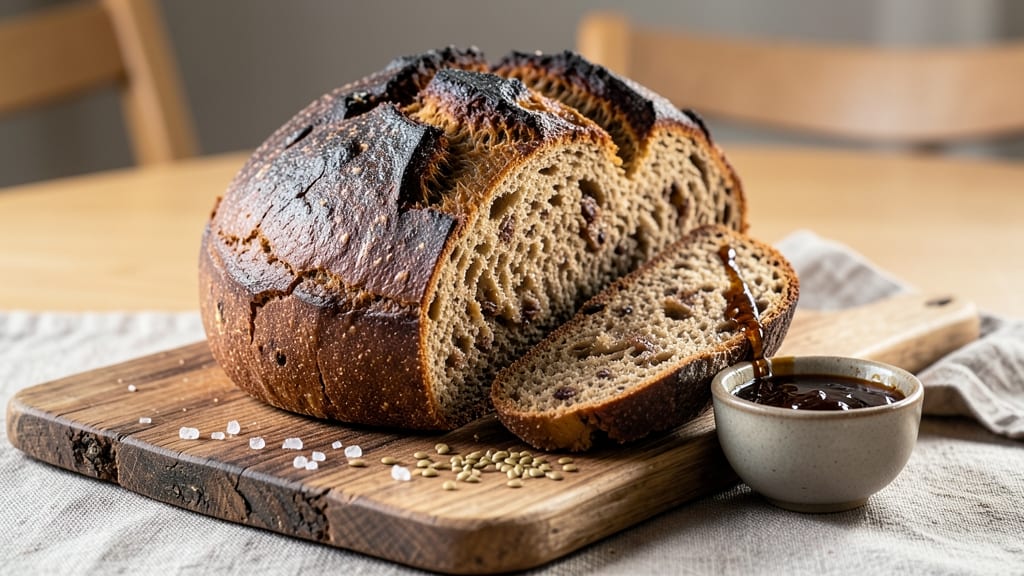
This artisan pumpernickel bread recipe delivers the deep, molasses-kissed crust and nutty crunch that makes it a bakery staple—perfect for sandwiches, toast, or serving alongside soups. 🔥 The secret lies in balancing traditional rye flour with molasses and coffee for that signature dark color and complex flavor, while a slow fermentation develops the bread's signature chewiness.
Unlike commercial loaves, this version uses a sourdough starter for tangy depth and a precise hydration ratio to ensure a moist yet sturdy crumb.
What sets this recipe apart is the two-stage fermentation—an overnight cold proof followed by a warm rise—that builds flavor without overproofing the dough. Caraway seeds and coriander add subtle warmth, while the molasses caramelizes during baking to create that signature glossy, crackly crust.
The dough is no-knead, making it approachable for home bakers, but the technique ensures a professional-quality loaf with a tight, even crumb and a dark, aromatic exterior.
The baking process is where the magic happens: a steam bath in the oven creates that iconic crust, while a Dutch oven locks in moisture for a tender interior.
Cooling the bread on a wire rack preserves its crisp edges, and the result is a loaf that slices cleanly with a satisfying crunch—the kind of bread that makes you pause before cutting into it.
This recipe stays true to tradition while adapting for modern kitchens, using simple ingredients to achieve restaurant-worthy results.
Once baked, this pumpernickel bread keeps well for 5–7 days when wrapped in a clean kitchen towel, making it ideal for meal prep.
For extra richness, brush the crust with melted butter after baking, or experiment with variations like adding whole rye berries for texture or reducing the molasses for a milder sweetness.
Whether you're a seasoned baker or trying your hand at sourdough, this recipe delivers a loaf that tastes like a trip to a European bakery.
Ingredients for artisan pumpernickel bread
Precision-balanced ingredients create the signature dark crust and nutty crumb of artisan pumpernickel bread.
| Ingredient | Amount | Notes |
|---|---|---|
| Active Sourdough Starter 🍞 | ½ cup | Unfed, bubbly starter (1:1 ratio) |
| Dark Rye Flour 🌾 | 2 cups | Traditional German rye flour |
| All-Purpose Flour 🌾 | 1 ½ cups | For structure and lift |
| Molasses 🍯 | ¼ cup | Unsulphured for authentic flavor |
| Instant Coffee Granules ☕ | 1 tbsp | For depth and color |
| Caraway Seeds 🌿 | 1 tsp | Toasted for enhanced aroma |
| Ground Coriander 🌿 | ½ tsp | Freshly ground preferred |
| Sea Salt 🧂 | 1 ½ tsp | Diamond Crystal preferred |
| Water 💧 | 1 ½ cups | Room temperature, filtered |
| Honey 🍯 | 1 tbsp | For starter feeding only |
| Whole Rye Berries 🌾 | ¼ cup | Optional, for texture |
| Unsalted Butter 🧈 | 2 tbsp | Melted, for crust brushing |
The sourdough starter is non-negotiable for authentic tang—feed it 1:1 honey to starter ratio 12 hours before use. For rye flour, King Arthur Dark Rye or Bob's Red Mill deliver the deepest flavor; avoid light rye substitutes. Caraway seeds should be toasted in a dry pan for 2 minutes to amplify their aroma—Penzeys Spices carries high-quality whole seeds. The molasses must be unsulphured; brands like Goya or Wholesome Sweeteners are reliable. Coffee granules add depth without bitterness—Folgers Classic Roast works well, but avoid flavored varieties.
No caraway seeds? Celery seeds at half the amount mimic the earthy note, though purists will notice the difference. Substituting dark brown sugar for molasses (1:1) lightens the flavor—ideal for milder loaves. Whole rye berries can be omitted entirely or replaced with dried cranberries for a subtle sweet contrast. For the coffee, instant granules are preferred, but strong brewed coffee reduced by half works in a pinch. The butter for brushing should be European-style (like Plugrá) for higher fat content and richer flavor development during baking.
The starter and mixed dough keep at room temperature for up to 24 hours before shaping, but refrigerate unused portions for 5–7 days wrapped in plastic. Pre-fermented dough can be frozen for 3 months—thaw overnight in the fridge before final proofing. Baked loaves maintain peak freshness for 5–7 days when wrapped in a clean kitchen towel (not plastic) to prevent sogginess. For longer storage, slice and freeze individual portions—toast directly from frozen for crispy results.
Why You'll Love This Recipe
- No-Knead Magic: I swear by this recipe because it’s the only bread I bake that doesn’t demand my full attention. Just toss in your sourdough starter, dark rye flour, and a splash of molasses—then let it rise while you watch Netflix. The coffee granules add depth without extra effort, and the dough comes together in minutes.
- Molasses-Kissed Depth: That first bite? Rich, caramel-like sweetness from the molasses cuts through the deep, earthy rye flavor. The coffee granules give it a subtle, toasty warmth—like a slow-brewed cup of coffee baked right into the bread. It’s the kind of flavor that makes you pause mid-slice.
- Breakfast to Brunch: I keep a loaf on hand for everything: thick toast with butter and jam, French toast that soaks up the molasses like a dream, or even crumbled over yogurt for a savory twist. It’s my go-to for lazy mornings or when I’m hosting—no one guesses it’s just a loaf of bread until they taste it.
- Leftovers That Last: This bread stays fresh for days, and if you slice it thin, it freezes like a champ. I batch-make it on Sundays and pull out slices for quick toast all week. Plus, the dark rye flour is cheaper than most specialty breads, so you’re getting restaurant-quality flavor without the markup.
Step-by-step instructions for artisan pumpernickel bread
This method delivers professional-quality pumpernickel with a signature molasses crust and dense, nutty crumb.
👨🍳 Step 1: Feed and Prepare the Sourdough Starter
In a clean bowl, combine the 0.5 cup active sourdough starter with 1.5 cups water and 1 tbsp honey. Stir until fully dissolved, then add 0.5 cup dark rye flour. Cover loosely with a damp towel and let ferment at 75°F for 4-6 hours until it shows noticeable activity and has nearly doubled in volume.
This feeding step ensures your starter is active and ready to contribute to the bread's development. Look for bubbles forming on the surface and a slightly domed appearance—these indicate proper fermentation. If using the optional 0.25 cup whole rye berries, toast them lightly in a dry pan over medium heat for 3-4 minutes until fragrant, then let cool before adding to the dough later.
🥘 Step 2: Mix the Dough with Precision
In the bowl of a stand mixer fitted with the dough hook attachment, combine the fed starter with 2 cups dark rye flour, 1.5 cups all-purpose flour, 0.25 cup molasses, 1 tbsp instant coffee granules, 1 tsp caraway seeds, 0.5 tsp ground coriander, and 1.5 tsp sea salt. Mix on low speed for 2 minutes until combined, then gradually add 1.5 cups water while mixing on medium speed for an additional 5 minutes.
The dough will be sticky and wet—this is normal for pumpernickel. Stop mixing when the dough pulls away from the sides of the bowl but still feels tacky to the touch. If using the toasted rye berries, fold them into the dough by hand at this stage. Cover the bowl with plastic wrap and let rest for 30 minutes at room temperature to allow the gluten to relax.
🔥 Step 3: Shape and Proof the Dough
Lightly flour a clean work surface and transfer the dough onto it. Gently shape the dough into a 9x5-inch loaf pan by pressing it down firmly, then folding the edges toward the center. The dough should fill the pan completely, rising about 1 inch above the rim. Brush the top with melted unsalted butter and cover loosely with a damp towel.
Place the dough in a warm spot (around 78°F) to proof for 8-12 hours until it has risen to about 1.5 times its original volume and the top springs back slowly when pressed gently with a finger. The longer proofing time develops deeper flavor. For best results, proof overnight in the refrigerator for 12-16 hours—this slow fermentation enhances the bread's complexity.
🔥 Step 4: Bake for Maximum Flavor Development
Preheat your oven to 375°F with a Dutch oven inside for 30 minutes. Remove the Dutch oven and carefully transfer the proofed dough (still in its pan) into the hot pot. Cover with the lid and bake for 45 minutes. Remove the lid and bake for an additional 20-25 minutes until the crust is deep brown and the internal temperature reaches 205°F.
The bread should have a rich, molasses-kissed crust with a deep nutty aroma. If the top browns too quickly, tent loosely with foil. For extra depth, you can bake it uncovered for 5 additional minutes at the end to intensify the crust color. Let the bread cool in the pan for 10 minutes before transferring to a wire rack to cool completely.
⏰ Step 5: Rest and Slice for Perfect Texture
Allow the bread to cool completely on a wire rack for at least 2 hours. This resting period ensures the crumb sets properly and makes slicing easier. The bread will be dense and moist with a slightly chewy texture and a deep, molasses-infused flavor. Store wrapped at room temperature for up to 5 days or freeze for up to 3 months for future use.
When slicing, use a sharp serrated knife and cut against the grain for clean, even slices. Each piece should reveal a dense, nutty crumb with visible specks of caraway and coriander. The molasses crust should be slightly sticky and rich—this is the hallmark of authentic pumpernickel.
Pro Tips For Making Artisan Pumpernickel Bread
- STIR THE MOLASSES FIRST: Mix the molasses into the liquid ingredients before adding it to the dry—it dissolves smoother and coats the dark rye flour evenly. I used to add it at the end, and the bread always had a weird, clumpy texture near the bottom.
- WEIGH YOUR RYE FLOUR: Dark rye flour packs tightly; scooping by volume gives you way too much. Use a scale for accuracy, and tap the measuring cup gently on the counter to settle the flour before leveling it off. Trust me, your dough’s hydration will thank you.
- COVER WITH A TOWEL: Skip the plastic wrap—it traps too much moisture and makes the dough sticky as glue. Instead, drape a clean kitchen towel loosely over the bowl while bulk fermenting. It breathes better, and the dough stays soft without sticking.
- BAKE WITH STEAM: Spray the Dutch oven lid with water and invert it over the loaf for the first 15 minutes. The steam helps the crust develop that deep, glossy sheen and prevents the top from cracking prematurely. (Yes, even if you’re impatient like me.)
Pro cooking tips for this recipe
Starter Mastery
Your sourdough starter is the heart of this bread—feed it 12 hours before baking with a 1:1 honey to starter ratio to ensure peak activity. I always check for bubbles and a domed surface before using it; this means it’s ready to contribute that signature tang.
For extra insurance, place your starter in a proofing box at 75°F if your kitchen runs cold. 💫
Dough Hydration Secrets
This dough is intentionally wet and sticky—that’s what creates the dense, moist crumb. Use a stand mixer with a dough hook to handle the high hydration, but don’t overmix. Stop when the dough pulls away from the bowl but still feels tacky.
If it’s too stiff, add 1 tbsp water at a time until you reach the right consistency. I swear by King Arthur Dark Rye Flour for that authentic depth of flavor.
Proofing Like a Pro
The overnight cold proof (12–16 hours in the fridge) is non-negotiable for maximum flavor development. This slow fermentation allows the dough to develop complex, nutty notes while preventing overproofing. Before baking, let the dough sit at room temperature for 1–2 hours to wake up the yeast.
Pro tip: Place your dough in a proofing box with a bowl of hot water to create a warm, humid environment if your kitchen is dry.
Dutch Oven Magic
A Dutch oven is your best friend for baking pumpernickel—it traps steam and creates that signature crackly crust. Preheat it in the oven for 30 minutes so it’s scorching hot when you add the dough.
After the initial 45 minutes covered, uncover the pot for the last 20–25 minutes to let the crust deepen. For an extra-glossy finish, brush the crust with melted European-style butter (like Plugrá) right after baking. 🔥
Crust Perfection
Let the bread cool completely in the pan for 10 minutes before transferring to a wire rack—this prevents the crust from cracking. The longer it cools, the more the molasses caramelizes, giving you that sticky, dark exterior.
If the crust isn’t dark enough after baking, broil the bread for 2–3 minutes at the end to intensify the color. Store it wrapped in a clean kitchen towel (not plastic) to keep it crisp.
Troubleshooting Tips
If your dough doesn’t rise enough, it might be underproofed—try extending the proofing time by 2–4 hours. For a denser crumb, reduce the all-purpose flour by ¼ cup and increase the rye flour instead.
If the crust turns too pale, bake it uncovered for the last 5 minutes or broil briefly. And if the bread tastes too sweet, reduce the molasses to ¼ cup next time. 💡
Nutrition facts
Frequently asked questions
Can I make this pumpernickel without a sourdough starter?
Yes, but the flavor will be less complex. Replace the 0.5 cup starter with 1.5 cups warm water and 1 packet (2¼ tsp) active dry yeast, dissolved in the water. Let it sit for 5 minutes until foamy before mixing with the dry ingredients. The bread will still develop molasses depth but lose that signature tang.
Why does my pumpernickel taste bitter?
Bitterness often comes from overproofing or too much molasses. For a milder loaf, reduce molasses to 2 tbsp and increase coffee to 2 tsp to balance flavors. Also check your proofing time—if the dough rises too much, it develops off-flavors. A cold overnight proof prevents this.
How do I store leftover pumpernickel?
Wrap cooled loaves in a clean kitchen towel (not plastic) to maintain crispness for 5–7 days at room temperature. For longer storage, slice and freeze portions—toast directly from frozen for best results. Avoid refrigerating unless storing for more than 3 days, as cold dries out the crumb.
Can I substitute rye flour with whole wheat?
Not recommended—rye flour's unique enzymes and flavor can't be replicated. For a lighter texture, use 50% rye and 50% whole wheat, but expect a less dense crumb. If you must substitute, dark whole wheat comes closest, though the bread will lack that signature nutty depth.
What's the secret to a crackly crust?
The crust develops from steam during baking and molasses caramelization. Use a Dutch oven for initial baking, then uncover for the last 20 minutes to deepen color. Brush with melted butter after baking for extra gloss. For extra crunch, broil for 2–3 minutes at the end.