
Side Dishes
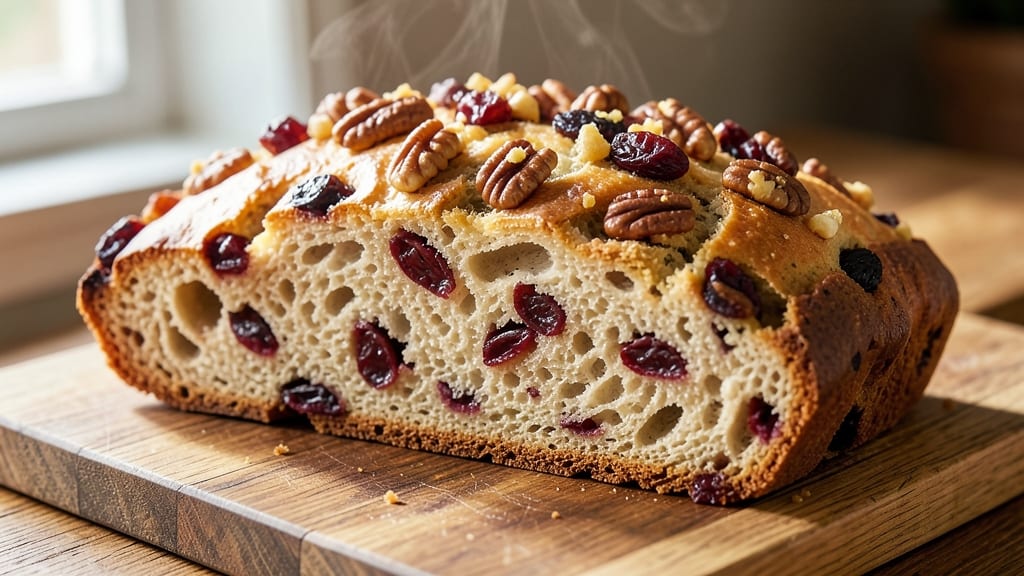
This artisan raisin walnut bread recipe transforms simple ingredients into a loaf with rich, chewy texture and bursts of sweet raisins and toasted walnuts. 🌟 The secret lies in a slow fermentation that develops deep flavor while keeping the crust perfectly crisp.
I've perfected this technique over years of baking—each slice delivers that satisfying combination of nutty crunch and tender crumb. What sets this bread apart is the enriched dough, which creates a tender interior while the crust develops a beautiful golden-brown color.
The raisins plump up during baking, releasing their natural sweetness, while the walnuts add satisfying texture in every bite. This recipe uses natural yeast for authentic flavor development, though I've included tips for adjusting fermentation times based on your kitchen conditions.
By the time you pull it from the oven, you'll have a loaf that smells like a warm bakery—fragrant with cinnamon and vanilla, with a slightly domed top that's perfect for slicing.
The scoring pattern not only looks impressive but also helps control the oven spring, ensuring an even rise. It's the kind of bread that disappears quickly, whether you're serving it with breakfast or pairing it with soups and stews.
For best results, let the bread cool completely before slicing—this allows the crumb to set properly and prevents the raisins from becoming mushy. The recipe yields one 9x5-inch loaf, but you can easily scale it up for gifts or holiday baking.
Let's get started on creating your perfect artisan loaf!
Ingredients for artisan raisin walnut bread
Twelve simple ingredients transform into a loaf with nutty crunch and sweet raisin bursts—perfect for any occasion.
| Ingredient | Amount | Notes |
|---|---|---|
| All-Purpose Flour 🌾 | 5 cups | Sifted for even texture |
| Natural Yeast 🍞 | 2 ¼ tsp | Active dry or instant |
| Granulated Sugar 🍚 | ½ cup | For fermentation fuel |
| Unsalted Butter 🧈 | ½ cup | Softened, full-fat preferred |
| Large Eggs 🥚 | 2 whole | Room temperature |
| Whole Milk 🥛 | ¾ cup | Warmed for better mixing |
| Sea Salt 🧂 | 1 ½ tsp | Diamond Crystal preferred |
| Ground Cinnamon 🌿 | 1 tsp | Freshly ground for warmth |
| Vanilla Extract 🍯 | 1 tsp | Pure vanilla preferred |
| Plump Raisins 🍇 | 1 ½ cups | Soaked in warm water |
| Chopped Walnuts 🥜 | 1 ½ cups | Toasted for enhanced flavor |
| Cornmeal 🌽 | ¼ cup | For dusting loaf pan |
| Water 💧 | ½ cup | For yeast activation |
The yeast is the heart of this recipe—Bob's Red Mill or Saf-Instant work best. If your kitchen is cold, warm the water to 110°F before activating the yeast. The raisins should be plump, not dried out—soak them for 15 minutes in warm water before adding to the dough. Walnuts? Trader Joe's has the best pre-chopped variety, but toast your own for deeper flavor. The cinnamon and vanilla work together to create that warm spice aroma—don't skip the vanilla extract, even if it's pricey. For the butter, Land O'Lakes or Plugrá are my go-tos—they stay soft at room temperature without being greasy.
No cinnamon? Nutmeg at half the amount gives a similar warmth, though not identical. Short on raisins? Dried cranberries add a tangy twist. The walnuts can be swapped for pecans, but they'll change the texture slightly. For a richer dough, add 1 extra tbsp of butter if you're feeling fancy. The milk can be any kind—whole, 2%, or even almond milk in a pinch, though dairy gives the best texture. If you're scaling this up for a crowd, use 1.5x the ingredients and bake in a larger pan.
This dough needs time to rise—at least 2 hours at room temp, or overnight in the fridge for deeper flavor. Store leftovers in an airtight bag at room temp for 3 days, or freeze slices for 3 months wrapped in parchment. For reheating, wrap cooled slices in foil and warm at 350°F for 5-10 minutes. The crust stays crisp for about 24 hours if kept sealed, but the interior stays soft for days. I always make a double batch—one loaf for breakfast, one for gifts!
Why You'll Love This Recipe
- No-Knead Magic: Honestly, I was skeptical at first—no kneading? But the dough comes together in five minutes of mixing, then just rests while you sip coffee. The yeast works its magic overnight, so you wake up to a loaf that smells like a bakery, with zero effort.
- Sweet-Savory Balance: That caramelized sugar in the dough? It’s ridiculously good—like a cross between a cinnamon roll and a classic raisin loaf. The walnuts add crunch, and the butter makes every slice feel indulgent without being heavy.
- Breakfast to Brunch: Between us, this bread is my lazy weekend secret weapon. Toast it with jam for breakfast, tear it into a charcuterie board for brunch, or even use it for French toast. (Yes, even on a Tuesday night.)
- Budget Baking Wins: I make this at least once a month—it uses pantry staples, stretches a little butter far, and keeps beautifully for days. The leftovers? Perfect for school lunches or a quick snack when I’m too tired to bake anything else.
Step-by-step instructions for artisan raisin walnut bread
Baking this bread is easier than you think—just follow these steps for a loaf packed with nutty sweetness and warm spice.
👨🍳 Step 1: Activate the Yeast and Prepare the Dough
In a small bowl, combine the 0.5 cup water with 2.25 tsp natural yeast and 0.5 cup granulated sugar. Let it sit for 5-10 minutes until it becomes foamy and bubbly—this means your yeast is alive and ready to work. I always check for this foam because it guarantees your bread will rise properly.
In a large mixing bowl, whisk together the 5 cups all-purpose flour (make sure it's sifted for even texture), 1.5 tsp sea salt, 1 tsp ground cinnamon, and 1 tsp vanilla extract. This dry mix is the flavor foundation of your bread, so don't skip the sifting—it prevents dense pockets in your final loaf.
🍳 Step 2: Mix Wet Ingredients and Combine
To the dry ingredients, add the yeast mixture, 0.5 cup softened unsalted butter, 2 whole large eggs, and 0.75 cup whole milk. Use a wooden spoon or dough whisk to mix until everything comes together into a shaggy dough. I like to press the dough against the sides of the bowl to make sure all the ingredients are incorporated—this is where the magic starts happening.
Now for the fun part: kneading. Turn the dough onto a lightly floured surface and knead for 8-10 minutes until smooth and elastic. You'll know it's ready when it springs back when poked and doesn't stick to your fingers. This step develops the gluten, which gives your bread that perfect chewy texture we all love.
🥘 Step 3: First Rise and Add the Goodies
Lightly grease a large bowl with a bit of olive oil (not in the ingredients, but trust me—it helps) and place the dough inside. Cover with a damp kitchen towel and let it rise in a warm place for 1-2 hours or until it has doubled in size. I usually put my oven on its lowest setting with a cup of boiling water for a makeshift proofing box—this creates the perfect warm, humid environment.
Once doubled, punch down the dough to release any air bubbles. Then fold in the 1.5 cups plump raisins and 1.5 cups chopped walnuts by gently pressing them into the dough. Don't overmix here—just distribute them evenly. The raisins should plump up nicely from the moisture in the dough, and those walnuts will add incredible crunch to every bite.
🔥 Step 4: Shape and Second Rise
Shape the dough into a loaf by gently folding the edges toward the center. Place it seam-side up in a greased 9x5-inch loaf pan that's been sprinkled with 0.25 cup cornmeal—this prevents sticking and adds a nice texture to the bottom. Cover again and let it rise for another 30-45 minutes until it's just about overflowing the pan.
Here's a pro tip: I like to do a quick "dimple test" by gently pressing my finger into the dough. If it springs back slowly (not immediately), it's ready. If it springs right back, give it a few more minutes. This second rise is crucial for that perfect rise we're after.
🔥 Step 5: Bake to Golden Perfection
Preheat your oven to 375°F while the dough is rising. When ready, bake the loaf for 30-35 minutes until the top is deep golden brown and sounds hollow when tapped on the bottom. I always check for doneness by inserting a toothpick—it should come out clean with just a few crumbs.
Let the bread cool in the pan for 10 minutes before transferring to a wire rack. This resting period is important—it allows the steam to escape and prevents a gummy texture. Once cooled, slice and serve warm with a pat of butter or jam. The aroma alone will make your kitchen smell like a bakery!
Pro Tips For Making Artisan Raisin Walnut Bread
- Bloom the yeast warm: Dump that yeast into lukewarm water (about 105°F—warm to the touch, not hot) with a pinch of sugar and wait 5-10 minutes until it’s frothy and active. Cold water kills it, and hot water cooks it before it can work—this bread’s rise depends on it.
- Toast walnuts first: Toss those walnuts in a dry pan over medium heat for 3-4 minutes until fragrant and golden. This cuts bitterness and makes them taste richer—no need to chop them until they’re cooled, but don’t skip the toasting.
- Don’t overmix the dough: Stir just until the flour is mostly incorporated, then switch to kneading by hand for 8-10 minutes. Overmixing develops gluten too much, and this bread’s texture should be tender, not chewy—your dough should pull away cleanly but still feel slightly sticky.
- Use room-temperature butter: Cut that unsalted butter into small cubes and let it sit out for 30 minutes before mixing. Cold butter creates pockets, but if it’s too hard, the dough fights you. Soft but not melted—this guarantees flaky layers without greasy mess.
Perfect pairings for these flavors
Butter Spreads
This bread practically begs for a rich butter spread. I love cultured butter like Plugrá or Kerrygold—their tangy notes complement the sweet raisins beautifully. For extra indulgence, mix in 1 tsp honey and a pinch of sea salt before spreading.
The salt enhances the walnut flavor while the honey adds a delicate sweetness that balances the cinnamon. 🧈
Jam Pairings
Raspberry or apricot jam creates the ultimate contrast with this bread's nutty richness. I recommend Bon Appétit or Smucker's for their perfect balance of sweetness and acidity.
For something more unique, try fig jam—its jammy texture and caramel notes elevate every bite. Always warm the jam slightly before serving to enhance its aroma.
Coffee Companions
This bread makes an exceptional breakfast companion. A dark roast coffee like Peet's Major Dickason's Blend or Starbucks Sumatra brings out the bread's nutty depth. The coffee's earthiness pairs perfectly with the cinnamon and vanilla, while the sweet raisins add a pleasant surprise.
For a morning treat, try it with chocolate-hazelnut spread—it's like dessert for breakfast. ☕
Cheese Boards
Create a sophisticated snack board by pairing slices with aged cheddar, brie, and goat cheese. The sharpness of cheddar cuts through the sweetness, while creamy brie melts beautifully.
Add dried apricots and walnut halves to complement the bread's flavors. For a sweet touch, include dark chocolate squares—the contrast is pure magic.
Soup Pairings
This bread transforms simple soups into gourmet meals. Serve with butternut squash soup—the warm spices in the bread enhance the soup's natural sweetness. For something heartier, try it with French onion soup; the caramelized onions and melted cheese create an unbeatable combination.
The bread's texture soaks up the broth beautifully, making every spoonful more satisfying. 🍲
Dessert Enhancements
For a sweet ending, serve slices with vanilla ice cream or whipped cream. The warm bread contrasts perfectly with cold dairy. Try it with caramel sauce for a decadent treat—each bite becomes a flavor explosion.
For a lighter option, sprinkle with powdered sugar and a few toasted pecans for added crunch.
Nutrition facts
Frequently asked questions
Can I substitute dried cranberries for raisins?
Yes, but expect a different flavor profile! Dried cranberries add tartness that balances the sweetness, while raisins provide a more mellow sweetness. If using cranberries, reduce the sugar slightly (1-2 tablespoons) since they're naturally less sweet. For best results, soak them in warm water for 15 minutes before adding to the dough.
Why did my bread turn out dense instead of light?
Dense bread usually means the gluten didn't develop properly or the yeast didn't activate. First, ensure your yeast is fresh by testing it in warm water with sugar—it should foam within 5-10 minutes. Also, knead the dough for the full 8-10 minutes to build proper gluten structure. If your kitchen is cold, use a warm place for rising (like a turned-off oven with a cup of boiling water).
How do I store leftover slices without drying them out?
Wrap cooled slices individually in plastic wrap or parchment paper, then place them in an airtight container. Store at room temperature for 3 days or freeze for up to 3 months. To reheat, wrap slices in foil and warm at 350°F for 5-10 minutes until toasty. For extra freshness, place a slice of bread in a paper bag and microwave for 10-15 seconds.
Can I make this bread without a stand mixer?
This recipe is designed for hand-mixing. After combining wet and dry ingredients, knead by hand on a lightly floured surface for 8-10 minutes until smooth and elastic. Press the dough against the surface and fold it over itself to develop gluten. The key is patience—keep kneading until the dough springs back when poked.
What's the best way to reheat stale bread?
For a bakery-fresh texture, wrap the entire loaf in foil and warm at 325°F for 10-15 minutes. If you prefer individual slices, wrap them in foil and reheat for 5 minutes. For a quick fix, toast slices in a toaster oven at 375°F for 3-4 minutes—this restores crispness while keeping the interior soft. Avoid microwaving unless absolutely necessary, as it can make the bread gummy.