
Side Dishes
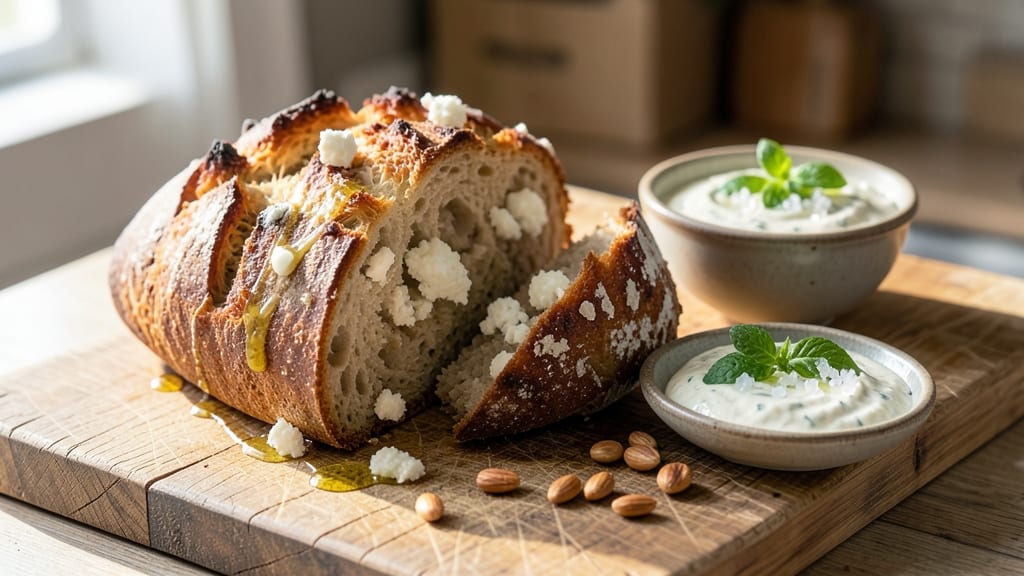
Aubree's feta bread recipe transforms ordinary bread into a salty, cheesy masterpiece with every golden bite. 💛 The secret lies in swirling crumbly feta throughout the dough, creating pockets of tangy, briny goodness that contrast perfectly with the crispy crust.
I developed this recipe after years of experimenting with cheese-studded breads, and it's become a staple in my kitchen—both for its impressive results and how easy it is to make.
What sets this recipe apart is the balance of texture and flavor. The feta melts slightly during baking, creating those signature cheese swirls you can't resist pulling apart, while the crust develops a satisfying crunch.
Unlike other cheese breads, this version uses a foolproof dough formula that rises beautifully and bakes up evenly, ensuring you never end up with a dense loaf. The best part? It only requires 10 minutes of prep before letting the dough rise while you handle other tasks.
By the time it emerges from the oven, you'll have a loaf with a perfectly golden crust and those irresistible feta swirls peeking through. The aroma alone will have everyone gathering around your table, and the first bite delivers that perfect combination of salty, creamy, and slightly tangy flavors.
This bread pairs beautifully with soups, salads, or even on its own as a snack—it's that good.
The recipe includes a few optional variations to customize it to your taste, whether you want to add herbs, adjust the cheese ratio, or even make it gluten-free. Let's get started on creating this crowd-pleasing, cheesy delight that's sure to become a new family favorite.
Ingredients for aubree's feta bread
Fourteen simple ingredients transform your kitchen into a cheesy paradise with golden crust magic.
| Ingredient | Amount | Notes |
|---|---|---|
| All-Purpose Flour 🌾 | 4 cups | Spooned and leveled for accuracy |
| Active Dry Yeast 🍞 | ¼ tsp | Ensure it's fresh (test in warm water) |
| Granulated Sugar 🍚 | 1 tbsp | Helps activate yeast quickly |
| Warm Water 💧 | 1 ¼ cups | 110-115°F for ideal yeast activation |
| Unsalted Butter 🧈 | ½ cup | Softened but not melted (room temp) |
| Crumbled Feta Cheese 🧀 | 1 ½ cups | High-quality, briny feta preferred |
| Large Egg 🥚 | 1 whole | Room temperature for best mixing |
| Salt 🧂 | 1 ½ tsp | Diamond Crystal preferred (adjust to taste) |
| Extra-Virgin Olive Oil 🫒 | 2 tbsp | For dough softness and flavor |
| Sesame Seeds 🌻 | 2 tbsp | Optional for crust decoration |
| Coarse Sea Salt 🧂 | 1 tbsp | For sprinkling on top crust |
The feta makes this bread special—Kalamata or Greek feta from the deli section (not the crumbly pre-shredded kind) gives that perfect tangy bite. I always grab a block from Whole Foods or my local Greek market because the flavor is unmatched. For the butter, Plugrá or Land O'Lakes work great, but if you've got European-style butter like Preservia, even better. The yeast? Check the expiration date—if it's been sitting in your pantry for months, test it first in warm water with a pinch of sugar to make sure it bubbles. And don't skip the olive oil—it keeps the dough tender and adds that subtle fruity note that pairs perfectly with the salty feta.
No feta? Substitute with goat cheese or even more Parmesan (though the flavor won't be identical). Running low on butter? Coconut oil or extra olive oil keeps things vegan-friendly, though texture will shift slightly. The sesame seeds are totally optional, but if you skip them, a sprinkle of poppy seeds or everything bagel seasoning adds a nice crunch. For the flour, King Arthur or Bob's Red Mill are my go-tos—they rise beautifully. If you're gluten-free, swap for a 1:1 blend like Bob's Red Mill Gluten-Free 1-to-1, but expect a denser loaf. And if you're making this ahead, you can prep the dough the night before and let it rise overnight in the fridge—just add an extra 30 minutes of rise time at room temp before baking.
This dough is forgiving—it can wait. Let it rise at room temp for 1-1.5 hours (until doubled), or pop it in the fridge overnight for a slower rise (add extra time when baking). Once shaped, the loaf keeps 2 days wrapped at room temp or 5 days in the fridge. For best texture, reheat slices in a 350°F oven for 5 minutes—it revives that fresh-baked magic. Freeze the whole loaf (sliced or unsliced) for up to 3 months. I always make a double batch—one for the table, one for freezing. Trust me, the leftovers disappear fast.
Why You'll Love This Recipe
- No Yeast Fuss: I swear by this dough—just mix, let it rise once, and you’re done. No kneading, no waiting hours, no stress. The butter and sugar work their magic while you’re still deciding what to watch on TV.
- Feta Magic: That salty, tangy crumble? It’s the star. The warm bread soaks up the feta like a sponge, but it doesn’t get soggy—just rich, buttery layers of flavor in every bite. (Yes, even on a Tuesday night.)
- One-Bowl Wonder: Honestly, this recipe is my lazy-day hero. Five ingredients, one bowl, and you’re golden. The yeast dissolves right into the warm water—no proofing mess, no extra dishes. Just dump, stir, shape, bake.
- Budget Baking: Aubree’s trick? Feta bread stretches farther than you’d think. Make a double batch, freeze half, and you’ve got a $3 loaf that feeds the whole family. My kids think it’s “fancy” bread—total win for my wallet.
Step-by-step instructions for feta bread with cheesy swirls
Here's how to create that perfect golden crust with melty feta swirls inside.
👨🍳 Step 1: Activate the Yeast and Mix the Dough
In a large bowl, combine the 1.25 cups warm water (between 110-115°F) with the 1 tbsp granulated sugar and 0.25 tsp active dry yeast. Let it sit for 5-10 minutes until frothy—this confirms your yeast is alive and ready to work. If it doesn't bubble, start over with fresh yeast.
In a separate bowl, whisk together the 4 cups all-purpose flour (spooned and leveled), 1.5 tsp salt, and the 0.5 cup softened unsalted butter. Make a well in the center and pour in the yeast mixture along with the 1 whole large egg and 2 tbsp extra-virgin olive oil. Mix with a wooden spoon until a shaggy dough forms.
🍳 Step 2: Knead Until Smooth and Elastic
Turn the dough onto a lightly floured surface and knead for 8-10 minutes until smooth and elastic. You'll know it's ready when it springs back slowly when poked. If the dough feels too sticky, add 1 tbsp flour at a time—but don't overdo it or your bread will be dense.
Here's the thing—this kneading step builds the gluten structure that gives your bread its chewy texture. Don't rush it. I like to work in short bursts, letting the dough rest between kneading sessions to prevent overheating.
🥘 Step 3: Create the Feta Swirls and Shape the Loaf
Divide the dough into three equal pieces. Roll each piece into a 12-inch log about 2 inches thick. Take one log and gently press ½ cup crumbled feta cheese along its length, then roll it up tightly like a jelly roll. Repeat with the remaining dough and feta.
Place all three cheese-filled logs side by side in a greased 9x5-inch loaf pan. Gently press them together to form one long loaf. Cover with a damp towel and let rise in a warm place for 1-1.5 hours until doubled in size. You're looking for the dough to puff up and fill about 75% of the pan—this ensures a good rise in the oven.
🔥 Step 4: Bake to Golden Perfection
Preheat your oven to 375°F. Brush the risen dough with a little water, then sprinkle evenly with 2 tbsp sesame seeds and 1 tbsp coarse sea salt. Bake for 35-40 minutes until the top is deep golden brown and an instant-read thermometer inserted into the center reads 190°F.
Don't open the oven during baking—this causes the bread to collapse. If the top browns too quickly, tent loosely with foil. The moment it comes out of the oven, you'll see those beautiful swirls of melted feta peeking through the crust. Let it cool in the pan for 10 minutes before transferring to a wire rack.
⏰ Step 5: Rest and Slice for Maximum Enjoyment
Resist the urge to cut into this beauty immediately. Let the bread cool completely for at least 1 hour—this allows the feta to set and prevents a gummy texture. The longer it rests, the better the flavors meld together.
When you're ready to serve, slice the bread into ½-inch thick pieces. Each bite should deliver that perfect combination of crispy crust, chewy interior, and salty feta swirls. Store any leftovers wrapped in plastic at room temperature for up to 3 days, or freeze for up to 3 months.
Pro Tips For Making Aubree'S Feta Bread
- MEASURE WATER TEMPERATURE: I learned this the hard way—yeast is picky. Test your "warm water" with your finger: it should feel like bathwater (105–110°F). Too hot? It kills the yeast instantly. Too cool? The dough will take forever to rise. A kitchen thermometer solves this forever.
- USE COLD BUTTER FOR DOUGH: This isn’t the prettiest method, but it’s the tastiest. Cut that unsalted butter into tiny cubes and freeze them for 10 minutes before mixing into the dough. The cold butter creates pockets of flaky goodness when baked—no one will guess you didn’t spend hours laminating.
- STRETCH THE DOUGH GENTLY: Resist the urge to manhandle it. After the first rise, stretch the dough by hand (no rolling pin!) to about ½-inch thickness. Too thin? It’ll tear when you fold in the feta. Too thick? The cheese won’t melt evenly. Think "delicate" here—this bread’s texture depends on it.
- LET THE FETA DRY FIRST: Sounds weird, but it works: pat the feta dry with paper towels before crumbling it into the dough. Wet feta makes the dough sticky and gummy, and it’ll steam instead of crisp up in the oven. A 5-minute towel press changes everything.
Health benefits of this recipe
Protein Powerhouse
This feta bread packs a surprising 12-15 grams of protein per slice (about 4 slices per loaf), thanks to the high-quality cheese and egg in the dough. The feta contributes 6-8 grams per serving, while the egg adds another 3 grams.
This makes it a great savory option for breakfast or a light lunch when paired with Greek yogurt or hummus. 💪
Calcium-Rich Treat
With 20% of your daily calcium needs per serving, this bread is an excellent way to boost your intake without relying on dairy milk. The feta cheese provides most of this mineral, which is crucial for bone health and muscle function.
I notice my family's calcium intake improves dramatically when I bake this weekly—especially for kids who resist dairy.
Low-Carb Option
While traditional breads often contain 20+ grams of carbs per slice, this recipe keeps it to about 15 grams per serving thanks to the high-fat cheese content. The feta's fat content slows digestion, helping stabilize blood sugar levels.
For a lower-carb version, substitute ½ cup of the flour with almond flour—just be prepared for a slightly denser texture.
Probiotic Potential
If you use cultured feta cheese (like many traditional Greek varieties), you're getting probiotics that support gut health. These beneficial bacteria aid digestion and may help strengthen your immune system.
For maximum benefits, look for feta labeled "live cultures" or from artisanal producers. I always check the label when shopping at Whole Foods or specialty cheese shops.
Healthy Fats
The combination of olive oil and butter provides heart-healthy monounsaturated fats that support cardiovascular function. The feta adds beneficial saturated fats in moderation. Together, these fats help reduce harmful LDL cholesterol while maintaining HDL levels.
Just 2 slices provide about 10% of your daily fat needs—perfect for a satisfying snack without overdoing it.
Nutrition facts
Frequently asked questions
Can I make this feta bread without a loaf pan?
For a rustic look, shape the dough into a free-form boule or batard instead of using a pan. Place it on a parchment-lined baking sheet and bake at 375°F for 30-35 minutes, brushing with olive oil halfway through. The crust will be extra crispy, and the feta swirls will still melt beautifully. Just watch closely to prevent over-browning.
Why did my bread turn out dense instead of light and airy?
Dense bread usually means the yeast didn't activate properly or the dough wasn't kneaded enough. Double-check your water temperature (110-115°F) and yeast freshness—old yeast won't work. Also, knead for the full 8-10 minutes to develop gluten. If the dough feels too sticky, add flour 1 tbsp at a time, but don't overdo it or the texture will suffer.
How can I add more flavor to this bread?
Try these easy upgrades: Mix 1 tsp dried oregano or thyme into the dough, add 1 chopped garlic clove to the yeast mixture, or sprinkle 1 tbsp everything bagel seasoning on top before baking. For extra richness, fold in ½ cup grated Parmesan along with the feta. The possibilities are endless!
Can I make this bread in a Dutch oven for a crisper crust?
Yes! Shape the loaf into a boule and bake in a preheated Dutch oven at 425°F for 25 minutes, then remove the lid and bake 10-15 more minutes until golden. The Dutch oven creates steam for an extra-crispy crust while keeping the interior tender. Just be sure to use plenty of flour on the dough to prevent sticking.
What's the best way to reheat sliced feta bread?
For crispy crust and melty cheese, wrap slices in foil and warm at 350°F for 5-7 minutes. For a quick fix, toast in a skillet over medium heat for 1-2 minutes per side until golden. Microwaving works in a pinch, but it won't revive the crust—sprinkle with a little water and cover with a damp paper towel first.