
Side Dishes
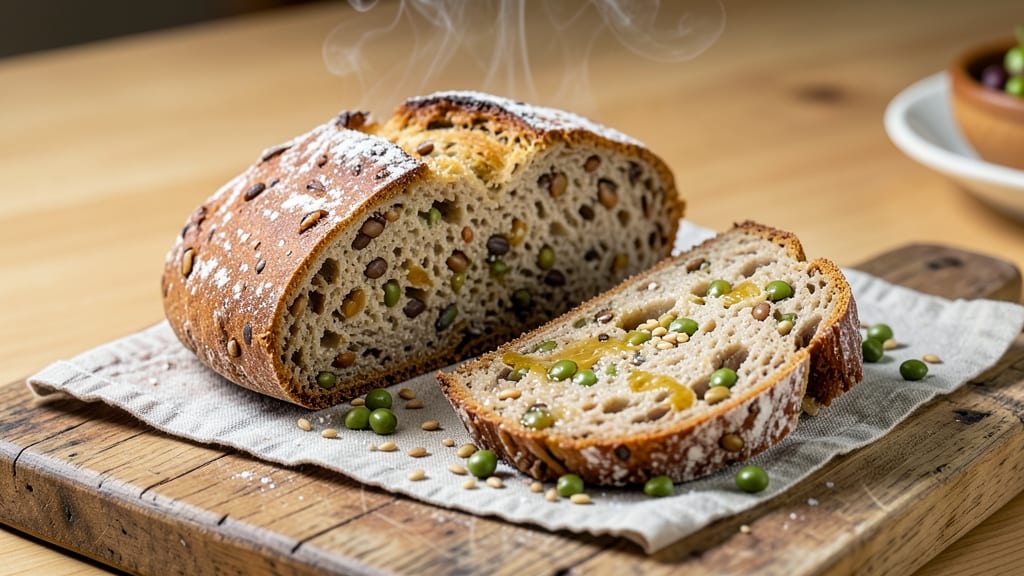
This authentic Ezekiel bread recipe delivers the same nutritious, sprouted whole grain loaf found in health food stores—but with a lighter, more digestible crust.
The traditional blend of wheat, barley, spelt, lentils, millet, and soybeans creates a bread packed with 18 grams of protein and 16 grams of fiber per serving, all while being completely vegan.
What sets this recipe apart is the careful balance of hydration and fermentation, which transforms tough grains into a tender, flavorful loaf.
The key to success lies in proper grain preparation—soaking and sprouting the grains overnight unlocks their nutrients and improves digestibility. Unlike commercial versions, this homemade method allows full control over ingredients, ensuring no added preservatives or artificial flavors.
The dough requires gentle handling during kneading and proofing to develop gluten without overworking the delicate grain blend.
By the time it emerges from the oven, you’ll have a lightly crusty, airy loaf with a subtle nutty flavor and satisfying chew. The texture is surprisingly tender for a whole-grain bread, making it perfect for sandwiches, toast, or as a side to soups and salads.
Every bite delivers the nutritional benefits of sprouted grains without compromising on taste.
For those new to Ezekiel bread, start with the basic recipe before experimenting with variations like adding seeds or herbs. The fermentation process is optional but recommended for enhanced flavor and digestibility. Let’s get started on this nourishing, whole-grain masterpiece.
Ingredients for authentic ezekiel bread
Six whole grains and three legumes transform into a protein-rich loaf with perfect digestibility.
| Ingredient | Amount | Notes |
|---|---|---|
| Organic Whole Wheat Berries 🌾 | 1 ½ cups | Soaked overnight, sprouted 12 hours |
| Organic Barley Berries 🌾 | 1 cup | Soaked overnight, sprouted 12 hours |
| Organic Spelt Berries 🌾 | ½ cup | Soaked overnight, sprouted 12 hours |
| Green Lentils 🌱 | ½ cup | Dry weight, soaked overnight |
| Organic Millet 🌾 | ½ cup | Soaked overnight, sprouted 12 hours |
| Organic Soybeans 🌱 | ½ cup | Dry weight, soaked overnight |
| Filtered Water 💧 | 4 cups | Room temperature for mixing |
| Active Dry Yeast 🍞 | 1 tsp | Vegan-certified, proofed in warm water |
| Raw Apple Cider Vinegar 🍎 | 1 tbsp | For fermentation, organic preferred |
| Unrefined Sea Salt 🧂 | 1 ½ tsp | Diamond Crystal preferred |
| Extra-Virgin Olive Oil 🫒 | 2 tbsp | Cold-pressed, for dough elasticity |
| Ground Flaxseed 🌿 | 1 tbsp | For binding, mixed with 3 tbsp water |
| Sesame Seeds 🌰 | 1 tbsp | For topping, toasted lightly |
The grains are the foundation—organic berries from Bob's Red Mill or bulk bins at Whole Foods ensure consistent quality. Lentils and soybeans add protein while millet contributes a subtle sweetness. Soak all grains overnight in filtered water with a splash of vinegar to soften them; sprouting for 12 hours unlocks enzymes for better digestibility. The yeast should be vegan-certified—check the label for hidden dairy additives. If using bulk grains, sift to remove debris before soaking. For best results, maintain a 1:3 grain-to-water ratio during soaking to prevent over-hydration.
No organic grains? Conventional grains work fine, though flavor may be slightly muted. Substitute quinoa for millet if needed, but reduce hydration by 10% since quinoa absorbs less water. The flaxseed binder can be replaced with chia seeds at the same ratio—just let them sit longer to thicken. For fermentation, apple cider vinegar is ideal, but lemon juice works in a pinch. If your yeast isn't active, proof it in warm water with 1 tsp sugar for 5 minutes before adding to the dough. The sesame seeds can be swapped for sunflower or pumpkin seeds for variety, but toast them first to enhance flavor.
Freshly sprouted grains stay vibrant for 3 days in the fridge, sealed in a jar with damp paper towels. The dough requires 2 hours of proofing at room temperature—don't rush this step for proper gluten development. For storage, wrap the cooled loaf in beeswax wrap or parchment paper and keep at room temperature for 3-4 days. Freeze slices for up to 3 months by wrapping individually in parchment. To revive stale bread, sprinkle with water and toast for 5 minutes at 350°F. The fermentation process can be paused after mixing by refrigerating the dough for up to 24 hours before proofing.
Why You'll Love This Recipe
- Let’s talk cost: these are whole grains, not refined flours, so you’re getting way more bang for your buck. A single batch feeds my family for a week, and the ingredients last longer than white bread. Plus, no weird additives—just real, organic stuff. I’ll be real: my grocery bill dropped after switching to this, and my pantry never feels bare.
- No-Soak Shortcut: I’ll admit—traditional Ezekiel bread takes days. But this version? Just soak those whole wheat, barley, and spelt berries overnight in warm water (yes, overnight, but set it and forget it). The next morning, you’re blending lentils and millet into a batter that’s ready to pour into a pan in under 10 minutes. No fancy equipment, no kneading, just a food processor and a baking sheet.
- Nutty Earthy Crunch: Between us, the flavor is next-level—that’s the lentils and millet doing their magic. The crust gets this satisfying crunch, while the inside stays soft and chewy, with a depth you don’t get from store-bought. Honestly, the first time I bit into it, I thought, “Wait, I made this?” The barley adds a subtle sweetness, and the spelt? It’s like a warm hug in your mouth.
- Meal Prep MVP: This bread holds up perfectly for days—slice it, freeze it, or even toast it straight from the fridge. I pack it in lunches, use it for sandwiches, or tear it into croutons for salads. It’s my go-to for breakfast toast, dinner sides, or even as a base for open-faced meals. (Yes, even on a Tuesday night when I’m too tired to think.)
Step-by-step instructions for authentic Ezekiel bread
This traditional sprouted whole grain loaf delivers authentic Ezekiel bread flavor and texture with a light, airy crust.
Prepare the Sprouted Grain Mixture
Combine all the soaked and sprouted grains—the 1.5 cups organic whole wheat berries, 1 cup organic barley berries, 0.5 cup organic spelt berries, 0.5 cup green lentils, 0.5 cup organic millet, and 0.5 cup organic soybeans—in a high-capacity food processor. Pulse until you achieve a coarse, meal-like consistency, similar to whole wheat flour but with visible grain particles.
This texture is critical for authentic Ezekiel bread—it should resemble wet sand rather than fine flour. If any grains remain too large, pulse briefly to break them down. Transfer the mixture to a large mixing bowl and set aside.
Activate the Yeast and Mix the Dough
In a separate small bowl, dissolve the 1 tsp active dry yeast in ½ cup of the 4 cups filtered water along with the 1 tbsp raw apple cider vinegar. Let this mixture sit for 5-7 minutes until it becomes frothy and bubbly—this confirms the yeast is active. If it doesn't bubble, your yeast may be dead, and you'll need to start over.
In the same large mixing bowl with the sprouted grain mixture, combine the yeast mixture, remaining 3½ cups filtered water, 1.5 tsp unrefined sea salt, and 2 tbsp extra-virgin olive oil. Stir vigorously with a wooden spoon or dough whisk until fully incorporated. The dough will be thick and sticky, resembling wet oatmeal rather than traditional bread dough.
Incorporate the Flaxseed Binding Agent
In a small bowl, combine the 1 tbsp ground flaxseed with 3 tbsp additional filtered water. Stir well and let it sit for 2-3 minutes until it thickens into a gel-like consistency—this acts as a natural binder in place of eggs. Add this flaxseed mixture to the grain mixture and stir thoroughly to fully integrate.
The dough should now be cohesive enough to hold its shape when scooped. If it appears too loose, add 1-2 tablespoons more ground flaxseed mixed with water until it reaches a thick, spreadable consistency. Cover the bowl with a damp kitchen towel and let it rest at room temperature for 30 minutes to allow the flaxseed to fully bind.
Shape and Proof the Loaf
Lightly grease a 9x5-inch loaf pan with olive oil or line it with parchment paper. Using a wet rubber spatula, carefully transfer the dough to the prepared pan, spreading it evenly to fill the pan completely—this ensures proper rise and even baking. Sprinkle the 1 tbsp sesame seeds evenly over the top for that classic Ezekiel bread texture.
Cover the loaf pan with a damp towel and let it proof in a warm place for 1-2 hours, or until the dough has risen noticeably and the top appears slightly domed. The proofing time may vary based on your kitchen temperature—if your home is cool, place the pan near a warm oven (with the oven off) to encourage proper rise.
Bake to Perfection
Preheat your oven to 350°F and place a small baking dish filled with 1 cup hot water on the lower rack to create steam during baking. This steam is essential for developing that light, airy crust characteristic of authentic Ezekiel bread. Once preheated, carefully transfer the loaf pan to the oven and bake for 50-60 minutes, or until the internal temperature reaches 190-195°F and the top is golden brown.
To test doneness, tap the loaf gently—it should sound hollow when tapped on the bottom. If the top browns too quickly, tent loosely with aluminum foil after 30 minutes to prevent over-browning while allowing the interior to fully cook. Remove from the oven and let the loaf cool in the pan for 10 minutes before transferring to a wire rack to cool completely.
Pro Tips For Making Authentic Ezekiel Bread
- SOAK THE GRAINS TWICE: Ezekiel bread’s texture hinges on proper hydration, but one long soak won’t cut it. Split the process: soak the grains (wheat, barley, spelt, lentils, millet) in warm water for 12 hours, then drain and re-soak in fresh water for another 4 hours. The second soak breaks down stubborn starches—trust me, your dough will be smoother and rise better.
- USE A HYDRATOR NOT A MIXER: This isn’t your grandma’s yeast bread. Ezekiel dough is delicate—overmixing develops gluten you don’t want. Use a stand mixer with the paddle attachment on low (speed 2) for just 2 minutes, or better yet, a food processor with a dough blade for 30 seconds. You’re blending, not kneading.
- SKIP THE SUGAR—ADD A LITTLE YEAST: Commercial recipes often call for sugar to feed the yeast, but Ezekiel’s grain-heavy base doesn’t need it. Instead, use a pinch of honey or a splash of warm water with your yeast (1 packet per 4 cups flour equivalent). The grains provide enough natural sugars—you’ll get a cleaner flavor and avoid that aftertaste.
- BAKE LOW AND SLOW: Ezekiel bread’s dense crumb needs patience. Preheat to 350°F (not 375°F or higher) and bake for 50–60 minutes, tented with foil for the first 30. The crust will brown faster than the center—resist the urge to rush it. Underbaked bread turns gummy; overbaked bread turns dry. Aim for an internal temp of 190°F.
Make-ahead tips for authentic ezekiel bread
Prep Ahead Strategy
The real secret to stress-free Ezekiel bread is prepping the grains in advance. Soak all grains—whole wheat berries, barley, spelt, lentils, millet, and soybeans—in filtered water with 1 tbsp apple cider vinegar for 12-14 hours before sprouting.
Transfer to a damp cloth-lined tray, cover, and let sprout for 12 hours at room temperature. Store sprouted grains in an airtight container in the fridge for 3 days—perfect for batch cooking. 🌱
Dough Prep Timeline
Mix the dough the night before and refrigerate it overnight for deeper flavor development. After combining all ingredients, cover tightly with plastic wrap and refrigerate for 12-24 hours. The cold slows fermentation, giving you more control over the rise.
When ready to bake, let the dough sit at room temperature for 1 hour before shaping and proofing. This method creates a more complex flavor profile. ⏰
Freezer-Friendly Slices
Slice the fully cooled loaf and wrap individual pieces in parchment paper, then store in a freezer bag for up to 3 months. To use, toast directly from frozen in the oven at 350°F for 5-7 minutes with a splash of water to restore moisture.
This works perfectly for quick sandwiches or toast—no thawing required! ❄️
Fermentation Shortcut
Skip the overnight fermentation by using instant yeast and proofing the dough for just 1 hour at room temperature. While not traditional, this method still yields a tender loaf. For best results, use ½ tsp instant yeast instead of active dry yeast and reduce proofing time by 30 minutes.
The flavor won't be as developed, but it's a great option for busy schedules. ⚡
Storage for Freshness
Keep the baked loaf wrapped in beeswax wrap or parchment paper at room temperature for 3-4 days. For longer storage, slice and freeze as described above.
To revive stale slices, sprinkle with water and warm in a 200°F oven for 5 minutes. This technique works wonders for maintaining that fresh-baked texture. 💫
Batch Cooking Tips
Double the recipe and bake two loaves simultaneously for meal prep. Store one loaf in the fridge and freeze the second for future use. Label freezer bags with dates to track freshness.
This approach ensures you always have Ezekiel bread on hand for sandwiches, toast, or salads without last-minute preparation. 📅
Nutrition facts
Frequently asked questions about authentic Ezekiel bread
Why does Ezekiel bread use sprouted grains?
Sprouting grains unlocks their natural enzymes and nutrients, making them more digestible and bioavailable. The sprouting process breaks down gluten and phytic acid, reducing bloating while enhancing flavor and texture. This traditional method also increases protein and fiber content compared to unsprouted versions.
Can I substitute any of the grains or legumes?
Yes, but maintain the same ratio of grains to legumes (60/40) for proper texture. Swap millet for quinoa or amaranth, and soybeans for chickpeas—just adjust hydration by 10% since different legumes absorb water differently. Avoid rice or corn as they alter the bread's nutritional profile significantly.
What makes this bread different from store-bought Ezekiel?
Homemade versions use fresh, sprouted ingredients without preservatives or artificial flavors. The fermentation process here develops deeper flavor, and the hydration level creates a lighter, more tender crumb. Store-bought loaves often contain added stabilizers to extend shelf life, which this recipe avoids entirely.
How do I know when the dough is properly proofed?
Look for a noticeable rise (about 50-75% increase in volume) and a slightly domed top. Press gently with a finger—if it springs back slowly (not too fast), it's ready. For cool kitchens, proof near a warm oven (light on) to maintain ideal 75-80°F temperature. Overproofing makes the bread dense.
Is this bread suitable for gluten-free diets?
No, this recipe contains traditional wheat berries which provide gluten. For a gluten-free version, replace all grains with certified gluten-free sprouted seeds like quinoa, buckwheat, and millet, and use a gluten-free yeast alternative. The texture will differ significantly from the original recipe.