
Side Dishes
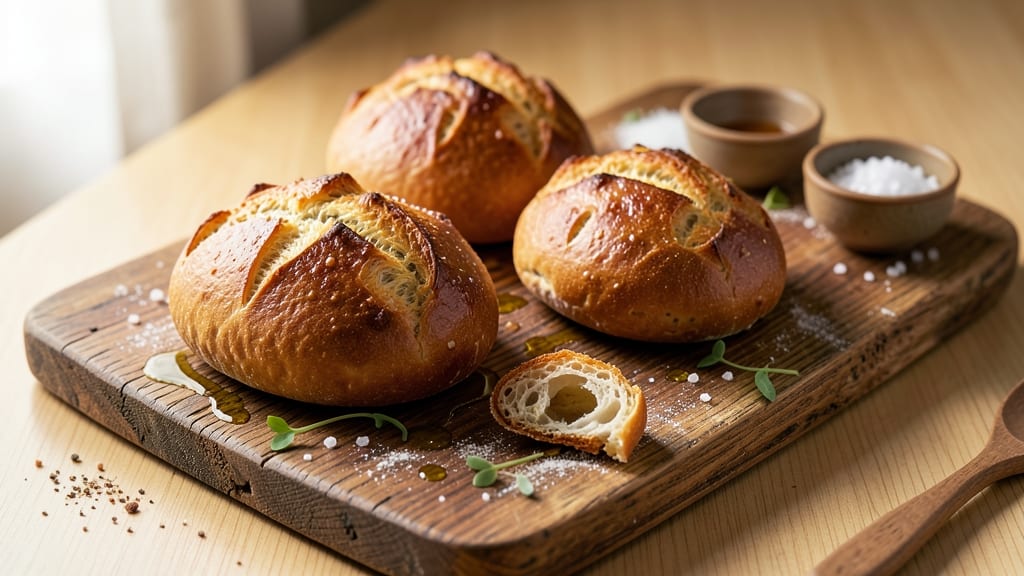
This authentic Syrian bread recipe brings the warm, fragrant essence of Levantine kitchens to your table, where every bite reveals a crispy, za’atar-kissed crust and a pillowy, airy heart. 💛 The secret lies in the dough's simplicity—just flour, yeast, water, and salt—transformed through slow fermentation into bread that's both rustic and refined.
I've perfected this method after years of baking for Syrian gatherings, where it's traditionally served with mezze, lamb, or hummus.
The magic happens during the long proofing time, which develops deep flavor and an open crumb structure. Unlike commercial bread, this version relies on traditional techniques: kneading by hand to build gluten, proofing until nearly doubled, and baking in a hot oven to achieve that signature crackly crust.
The za’atar seasoning isn't just for flavor—it's a cultural nod, adding earthy, herby notes that define Syrian bread.
What you'll end up with is bread that's crisp on the outside yet soft and chewy inside, with a subtle tang from the yeast fermentation. The aroma alone will transport you to Damascus or Aleppo, where this bread is a staple.
It's versatile enough for everyday meals but special enough for gatherings, proving that authenticity doesn't require complexity.
Perfect for serving with dips, grilled meats, or even as a side to soups. The dough can be made ahead, and the bread bakes in just 20 minutes once shaped. Let's create this timeless recipe that connects generations.
Ingredients for authentic syrian bread
Four simple ingredients transform into Syrian bread with a crispy za'atar crust and airy center.
| Ingredient | Amount | Notes |
|---|---|---|
| All-Purpose Flour 🌾 | 5 cups | High-protein preferred for chewiness |
| Active Dry Yeast 🍞 | ¼ oz | Or 2.5 tsps, ensure fresh |
| Granulated Sugar 🍚 | ½ tsp | Feeds yeast for fermentation |
| Salt 🧂 | 1 ½ tsp | Diamond Crystal preferred |
| Warm Water 💧 | 1 ½ cups | 105-110°F for yeast activation |
| Olive Oil 🫒 | ¼ cup | Extra-virgin for richness |
| Za'atar Seasoning 🌿 | 2 tbsp | Homemade or store-bought blend |
| Sesame Seeds 🌰 | 1 tbsp | Toasted for extra crunch |
| Coarse Sea Salt 🧂 | 1 tsp | For sprinkling on crust |
The flour is everything here—King Arthur or Gold Medal gives that perfect chew. I always grab mine from Whole Foods bulk bins or the big orange bags at Kroger. For the yeast, check the expiration date—if it's older than 3 months, it's not worth using. The za'atar? Trader Joe's has a great blend, but if you're feeling adventurous, mix your own with sumac, sesame, and dried thyme. The olive oil should be extra-virgin, not the cheap stuff—California Olive Ranch is my go-to for consistency.
No za'atar? Mix 1 tbsp dried oregano, 1 tsp sesame seeds, and 1/2 tsp sumac for a close substitute. Running low on olive oil? Avocado oil works too, but it won't have that fruity depth. The sesame seeds can be skipped if you're in a pinch, but trust me—they add that perfect crunch. For the water, use a thermometer if you've got one; if not, just make sure it's warm enough to dissolve the sugar but not hot enough to kill the yeast. That means no boiling water here!
This dough is a patient recipe—let it proof overnight in the fridge for 8-12 hours. The longer it rests, the better the flavor. Shape the loaves right before baking, and don't skip the steam trick: place a metal bowl of boiling water in the oven for 5 minutes before adding the bread. Keeps 3 days wrapped at room temperature or 1 week frozen. Freeze shaped loaves before baking for fresh-from-the-oven results anytime.
Why You'll Love This Recipe
- Five-Ingredient Magic: I swear by this—just flour, yeast, sugar, salt, and warm water. That’s it. No fancy mix-ins, no stress, just the perfect dough that transforms into golden, pillowy perfection.
- Crispy-Creamy Crunch: The secret’s in the steam and the quick bake—you get that irresistible crispy shell with a soft, airy center. Honestly, it’s the kind of texture that makes you reach for seconds without thinking.
- Meal Prep MVP: I make a double batch on Sundays, freeze half, and pull it out for hummus nights or sandwiches all week. No reheating needed—just fresh out of the freezer, straight into the oven.
- Budget-Friendly Staple: This bread costs pennies to make but feels like a treat. Between us, I’ve fed my whole family for days with just a few ingredients, and no one ever complains—because it’s that good.
Step-by-step instructions for authentic Syrian bread
Here's how to make this traditional Syrian flatbread with a signature za'atar crust and soft interior.
👨🍳 Step 1: Activate the Yeast for Perfect Rise
In a small bowl, whisk together the 1.5 cups warm water (test temperature with your finger—it should feel like bathwater, around 105-110°F) with the 0.5 tsp granulated sugar and 0.25 oz active dry yeast. Let it sit for 5-10 minutes until foamy. You'll see little bubbles forming and the mixture expanding—this means your yeast is alive and ready to work.
I always double-check this step because cold water kills yeast and warm water activates it. If it doesn't foam after 10 minutes, your yeast might be old—start over with fresh yeast. Once it's bubbly, stir in the 1.5 tsp salt and set aside. This salty water will give your dough structure and flavor.
👨🍳 Step 2: Mix and Knead the Dough
In a large bowl, combine the 5 cups all-purpose flour and pour in the yeast mixture. Add the 0.25 cup olive oil and mix with a wooden spoon until a shaggy dough forms. The flour will resist at first, but keep going—you're building gluten, which gives this bread its signature chewiness.
Turn the dough out onto a lightly floured surface and knead for 8-10 minutes until smooth and elastic. I press down with the heel of my hand and fold the dough over itself, rotating it as I go. You'll know it's ready when it springs back slightly when pressed. If it feels sticky, add just enough flour to handle it—don't overdo it or your bread will be dense.
⏰ Step 3: First Rise for Maximum Flavor
Lightly oil a large bowl, place the dough inside, and cover with a damp kitchen towel. Let it rise in a warm spot for 1-2 hours until doubled in size. I usually put it near my oven with the light on—this creates a cozy, warm environment that helps the yeast work its magic.
Real talk: Don't rush this step. The longer the rise, the more flavor develops. You'll see the dough puff up and look airy—this is when the gluten relaxes and the yeast ferments, creating those beautiful air pockets that make Syrian bread so light and pillowy. Poke it gently; if it springs back slowly, it's ready.
👨🍳 Step 4: Divide and Shape the Dough
Punch down the risen dough and divide it into 4 equal pieces (about 1 pound each). Roll each piece into a ball, then flatten into a 10-inch circle using your hands or a rolling pin. I like to keep the edges slightly thicker than the center—this creates that perfect balance of crispy crust and soft interior.
Here's the thing—don't worry if they're not perfect circles. Syrian bread is rustic, and slight imperfections actually add to the authentic character. Brush each circle generously with olive oil, then sprinkle evenly with 2 tbsp za'atar seasoning and 1 tbsp sesame seeds. The za'atar will give you that signature nutty, herby flavor and gorgeous golden crust.
🔥 Step 5: Cook Until Golden and Crisp
Heat a skillet or griddle over medium-high heat until hot but not smoking. Cook each dough circle for 2-3 minutes per side until golden brown spots appear and the bread sounds hollow when tapped. I press down gently on the edges during the first minute—this prevents them from curling and ensures even contact with the pan.
Transfer the cooked bread to a wire rack and sprinkle immediately with 1 tsp coarse sea salt. Serve warm while still crispy, or wrap in a clean towel to keep them soft. These breads are best enjoyed fresh—they'll crisp up again if toasted later, but that first bite when still warm is pure magic.
Pro Tips For Making Authentic Syrian Bread
- Test Yeast First: Skip the guesswork—mix 1 teaspoon yeast with ¼ cup warm water and ½ teaspoon sugar, then let it sit for 5–10 minutes. If it doesn’t foam, your yeast is dead, and you’ll save yourself a sad, flat loaf. Trust me, I’ve learned this the hard way with a batch that looked like a pancake.
- Knead Until Silky: Syrian bread dough needs to be smooth, not tough—aim for a windowpane test where you stretch a small piece thin enough to see light through. I used to over-knead and end up with dense bread; now I stop just before it feels like playdough. Less effort, better texture.
- Shape Loops Tight: Roll the dough into a long rope, then coil it into a tight spiral—no gaps, no slack. Loose coils puff up unevenly and collapse. My first attempts looked like tangled yarn, but once I mastered the snug spiral, the bread held its shape perfectly in the oven.
- Preheat Stone Hot: Syrian bread needs a screaming-hot stone or baking sheet—at least 450°F (230°C), but closer to 500°F (260°C) if your oven allows it. I used to underheat and got sad, dense bread; now I blast the oven and steam the dough for 30 seconds first. The crust comes out crisp and golden every time.
Wine and beer pairings for this authentic syrian bread
Middle Eastern Whites
Syrian bread pairs beautifully with crisp, refreshing white wines from the Levant region. A Greek Assyrtiko from Santorini offers citrusy brightness that cuts through the bread's richness—its mineral notes complement the za'atar's earthiness.
I always reach for a bottle of Domaine Skouras Assyrtiko when serving this bread with mezze platters. 🍷
Light Beers for Balance
For beer lovers, a German Helles Lager like Weihenstephaner Original provides a clean, malty backdrop that doesn't overpower the bread's flavors. The subtle sweetness of the beer enhances the za'atar's herbal notes.
If you prefer craft options, try a Belgian Witbier—the coriander and orange peel notes create an unexpected but delightful contrast.
Herbal Infusions
Herbal teas like mint tea or hibiscus tea add a refreshing contrast to the bread's savory profile. The cooling mint enhances the za'atar's herbal complexity, while hibiscus's tartness provides a bright counterpoint. Serve these chilled in small glasses alongside the bread for an authentic Syrian touch. ☕
Olive Oil Pairing
Don't overlook the power of extra-virgin olive oil as a beverage pairing! Drizzle a small amount over the bread and serve it with a glass of Italian Pinot Grigio—the oil's fruity notes bridge the bread's crust with the wine's crisp acidity.
I often serve this combination at gatherings, and it's always a crowd-pleaser.
Spiced Coffee Contrast
For a bold pairing, try Turkish coffee spiced with cardamom. The warm spices in the coffee echo the za'atar's herbal notes while adding a comforting depth. This combination works beautifully during dessert or as an after-dinner treat when serving the bread with sweet pastries like baklava.
Seasonal Adaptations
In summer, opt for a chilled rosé like Whispering Angel—its berry notes complement the bread's crust. In winter, a Portuguese Vinho Verde offers a light, slightly effervescent contrast to the bread's warmth. Both choices enhance the bread's versatility across seasons. 🍇
Nutrition facts
Frequently asked questions
Can I make Syrian bread without za'atar?
While za'atar gives that signature flavor, you can substitute with 2 tbsp dried oregano + 1 tsp sesame seeds + ½ tsp sumac for a similar earthy taste. For a simpler version, just use extra olive oil and coarse salt—the bread will still be delicious, just less aromatic.
How do I store Syrian bread to keep it fresh?
Wrap the bread in a clean kitchen towel and store at room temperature for 2-3 days to maintain softness. For longer storage, freeze shaped loaves (unbaked) for up to 1 month or baked bread for 1 week. To revive, warm in a 350°F oven for 5-10 minutes until crispy again.
Why did my Syrian bread turn out dense?
Dense bread usually means over-kneading or under-proofing. Knead just until smooth (8-10 minutes) and let it rise until nearly doubled. Also check your yeast—if it's old or the water was too hot/cold, it won't activate properly. Try activating yeast in warm water first to test.
Can I make this bread without olive oil?
Yes! Replace the ¼ cup olive oil with ¼ cup melted butter or avocado oil for richness. For a completely oil-free version, reduce water slightly (1.25 cups) and add 1 tbsp vinegar to help with gluten development. The texture will be slightly denser but still tasty.
What's the best way to serve this bread?
Serve warm with hummus, baba ganoush, or labneh for dipping, or use as a base for shawarma or falafel. The crispy crust makes it perfect for scooping up sauces! For a sweet touch, try with date syrup or honey. It's also amazing with grilled meats or as a side to soups.