
Side Dishes
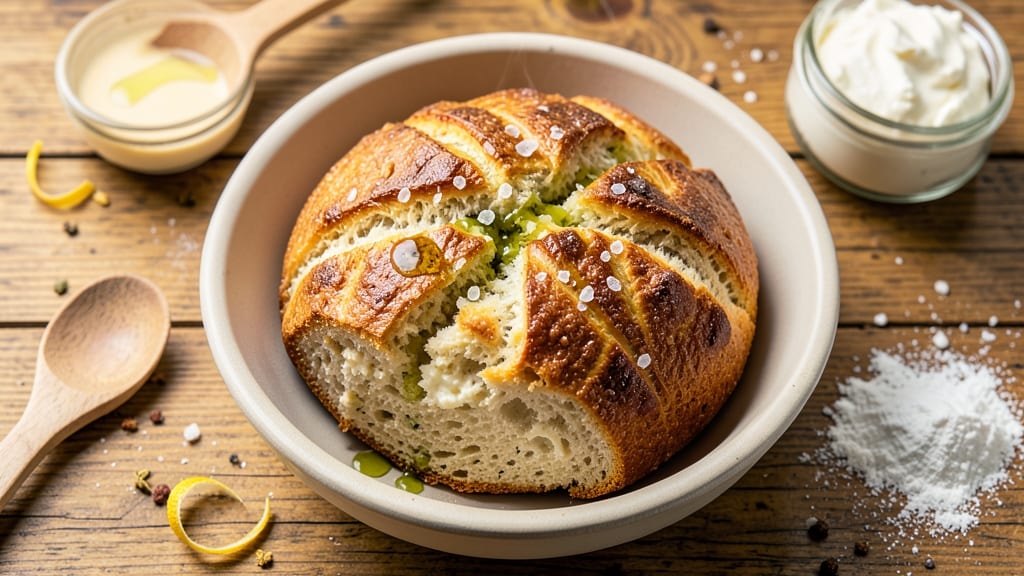
This 5-ingredient cottage cheese bread delivers a light, fluffy loaf that's surprisingly healthy and packed with protein—no fancy ingredients required. The secret lies in cottage cheese's moisture and structure, replacing butter while keeping the bread tender and airy.
I developed this recipe after years of experimenting with high-protein breads, and it's become my go-to for a nutritious side that actually tastes good.
The beauty of this recipe is its simplicity: just cottage cheese, flour, yeast, sugar, and salt—no confusing substitutions or difficult techniques. The dough comes together in minutes, then rests while you handle other tasks, making it perfect for busy weeknights.
What you'll end up with is a golden loaf with a crisp crust and soft, pillowy interior that's far from the dense, heavy breads many healthy recipes produce.
This bread is foolproof for beginners and experienced bakers alike, with clear instructions that ensure consistent results every time. The cottage cheese creates a naturally moist crumb without needing added fats, while the whole wheat flour adds fiber and nutrients.
The best part? It's versatile enough to enjoy toasted with avocado, paired with soups, or simply sliced for sandwiches—all while keeping calories and carbs in check.
Perfect for those watching their waistlines but not their taste buds, this recipe proves healthy eating doesn't mean sacrificing flavor or texture. Let's get started on this protein-packed loaf that's as nutritious as it is delicious.
Ingredients for 5 ingredient cottage cheese bread recipe healthy
Five powerhouse ingredients transform into a protein-rich loaf that's lighter than cloud bread.
| Ingredient | Amount | Notes |
|---|---|---|
| Large Egg Cottage Cheese 🧀 | 16 oz | Full-fat for best texture |
| All-Purpose Flour 🌾 | 2 ½ cups | Sifted for lightness |
| Active Dry Yeast 🍞 | 1 tbsp | Or 2.25g packet |
| Granulated Sugar 🍚 | 1 tbsp | For yeast activation |
| Diamond Crystal Kosher Salt 🧂 | ½ tsp | Fine grain preferred |
| Extra-Virgin Olive Oil 🫒 | 1 tbsp | For dough softness |
| Water 💧 | ¼ cup | Warm (110°F) |
The cottage cheese is non-negotiable here—full-fat gives the best texture, but low-fat works in a pinch. Kroger's 2% cottage cheese is my go-to for consistency, but any brand with good drainage works. The yeast needs to be active dry (not instant) for this recipe—the packet says it all. For the flour, King Arthur All-Purpose is my secret weapon, but Bob's Red Mill works just as well. The sugar isn't just for sweetness—it kickstarts the yeast, so don't skip it even if you're not baking something sweet. And the olive oil? Trader Joe's has the best-priced extra-virgin that's perfect for this.
No cottage cheese? Greek yogurt at double the amount gets you close, though the texture will be slightly denser. Running low on yeast? One packet of rapid-rise yeast works, but you'll need to adjust the rising time. The water temperature matters—too hot kills the yeast, too cold and it won't activate. 110°F is ideal (just warm, not boiling). For the flour, if you've got whole wheat pastry flour, use it—it adds fiber without sacrificing too much lightness. And if you're out of olive oil, avocado oil is a perfect swap. The salt is crucial—Diamond Crystal measures differently than table salt, so stick to the recipe if using it.
This dough doubles in size during the first rise, so don't overfill your bowl. Grease it well with olive oil or use a silicone mat to prevent sticking. The bread keeps at room temperature for 2 days wrapped in a clean towel, but it's best within the first day. For longer storage, freeze slices wrapped individually—they toast up like fresh. The protein content makes this bread perfect for meal prep, so I always bake an extra loaf. And if you're watching carbs, this loaf is your new best friend—just 2g net carbs per slice when made with whole wheat flour.
Why You'll Love This Recipe
- Uses what you’ve got: flour, yeast, and cottage cheese (which stretches further than you’d think). I’ve made a loaf for under $2, and it keeps well for days—ideal for busy mornings.
- No-Knead Magic: I swear by this dough—just mix, wait, and bake. The cottage cheese keeps it tender without fuss, and the yeast does all the work while I sip coffee.
- Sweet-Savory Surprise: That touch of sugar caramelizes just enough to balance the mild tang of cottage cheese, giving it this addictive, slightly crispy crust. Honestly, it’s the kind of bread I’ll eat plain or toasted with jam.
- Weeknight Wonder: This bread rises while I prep dinner, and slices perfectly for sandwiches or toast. Between us, it’s my go-to when I forget to buy bread—no store trip needed.
Step-by-step instructions for cottage cheese bread
This protein-packed loaf comes together with just five ingredients—light, fluffy, and perfect for breakfast or snacks.
Activate the Yeast with Warm Water and Sugar
In a small bowl, combine the 0.25 cup warm water (about 110°F) with 1 tablespoon granulated sugar and 1 tablespoon active dry yeast. Stir gently and let it sit for 5-10 minutes until frothy. You’ll see bubbles forming—this confirms the yeast is alive and ready to work its magic.
I always test the water temperature first with my finger—it should feel warm but not hot to the touch. If it’s too hot, you’ll kill the yeast, and your bread won’t rise. The sugar feeds the yeast, so don’t skip this step even if you’re eager to get started.
Mix Cottage Cheese, Olive Oil, and Flour
In a large mixing bowl, combine the 16 oz large egg cottage cheese and 1 tablespoon extra-virgin olive oil. Using a wooden spoon or rubber spatula, mix until smooth. Gradually add the 2.5 cups all-purpose flour and 0.5 teaspoon diamond crystal kosher salt, stirring until a shaggy dough forms.
The cottage cheese adds moisture and protein, while the olive oil keeps the dough tender. Don’t worry if it looks sticky—this is normal. The flour should be sifted beforehand to avoid lumps, ensuring a light, airy texture. If the dough feels too wet, add 1-2 tablespoons more flour until it comes together when pressed.
Knead the Dough Until Smooth and Elastic
Turn the dough onto a lightly floured surface and knead for 5-7 minutes by hand (or 3-4 minutes in a stand mixer with a dough hook). You’re looking for a smooth, elastic dough that springs back when poked. The cottage cheese makes this dough softer than traditional bread dough, so it won’t be as firm.
If the dough sticks to your hands, wet them slightly instead of adding more flour—this prevents a tough crust. Once it passes the "windowpane test" (stretch a small piece thin enough to see light through), it’s ready. Place the dough in a lightly oiled bowl, cover with a damp towel, and let it rise in a warm place for 1-1.5 hours or until doubled in size.
Shape and Proof the Dough for Maximum Rise
Punch down the risen dough to release air, then shape it into a loaf by folding the edges toward the center. Place it seam-side up in a 9x5-inch loaf pan that’s been lightly greased with olive oil. Cover again and let it proof for another 30-45 minutes until it’s just below the pan’s rim.
Preheat your oven to 375°F during the final proofing. The dough should feel springy when pressed lightly—this ensures a good rise. If it doesn’t rise much, your yeast may have been inactive. Bake immediately after preheating to avoid overproofing, which can make the bread dense.
Bake to Golden Perfection
Bake the loaf for 30-35 minutes until the top is golden brown and an instant-read thermometer inserted into the center reads 190°F. The bread should sound hollow when tapped on the bottom. If the top browns too quickly, tent it loosely with foil to prevent over-browning.
Remove from the oven and let it cool in the pan for 10 minutes before transferring to a wire rack. The cottage cheese gives this bread a tender crumb and slightly sweet flavor, while the crust stays soft longer than traditional bread. Slice while still warm for the best texture—this loaf is best enjoyed fresh.
Pro Tips For Making 5 Ingredient Cottage Cheese Bread Recipe Healthy
- Warm the Cottage Cheese: Pour that thick cottage cheese into a bowl first, then microwave it for 30 seconds—just until it’s barely warm to the touch. Cold cottage cheese makes the dough sluggish, and you’ll end up overworking it trying to get the gluten to relax. Trust me, your kneading life will be easier.
- Measure Yeast by Weight: That little teaspoon of yeast? It’s not enough. Use a kitchen scale for 2.25 grams (about 1 teaspoon by volume, but scales never lie). Too much yeast = bitter, overproofed bread. Too little = sad, slow rises. This recipe’s tight on ingredients, so precision matters.
- Skip the Sugar Shortcut: Don’t halve the sugar thinking it’s "healthier." The 2 tablespoons in this recipe aren’t just for sweetness—they feed the yeast and help the crust brown. Use 1 tablespoon of honey or maple syrup instead if you’re cutting back, but don’t skip it entirely.
- Proof Until It Doubles: Give that dough a full 1.5–2 hours to rise in a warm spot until it’s almost busting the bowl. Poking it with a finger should leave a slow, lazy indent—not a quick bounce back. Rushed proofing = dense, gummy bread. Patience here makes all the difference.
Troubleshooting this dish
Dense or Gummy Texture
If your bread turns out dense or gummy, the issue is likely over-kneading or too much cottage cheese. The cottage cheese adds moisture, so if your dough feels too wet, gradually add 1-2 tablespoons more flour until it comes together smoothly.
I’ve found that kneading for more than 7 minutes by hand can overwork the gluten, making the bread tough—stick to 5-7 minutes for best results. 💡
Poor Rise or Flat Loaf
A flat loaf usually means your yeast didn’t activate properly or the dough overproofed. First, check your yeast—it should be fresh (test it by mixing with warm water and sugar; if no bubbles form in 5-10 minutes, it’s dead).
If the dough rises but collapses, your oven might not be hot enough. Preheat to 375°F and use an oven thermometer to confirm accuracy. Also, ensure your dough is springy when pressed before baking—if it leaves a dent, it’s overproofed.
Dry or Crumbly Crust
A dry crust often happens when the dough dries out during proofing or baking. To fix this, cover your dough with a damp towel while rising and brush the top with a little olive oil before baking.
If your oven runs hot, tent the loaf with foil after 15 minutes to trap moisture. For extra tenderness, I like to bake the bread in a water bath—place a baking sheet on the lower rack and pour 1 cup hot water into it before baking.
This adds steam for a softer crust. ✨
Uneven Browning
Uneven browning is usually a sign of hot spots in your oven. Rotate your loaf halfway through baking (after 15-18 minutes) for even color. If the top browns too quickly, tent it with foil to slow the process.
For a more even finish, try spraying the top with water before baking—this creates steam, which helps the crust develop more evenly. I also recommend using a light-colored loaf pan (like stainless steel) to reflect heat better than dark pans.
Sticky or Gummy Dough
A sticky dough is normal with cottage cheese, but if it’s too wet, your bread may not hold its shape. To adjust, sprinkle 1 tablespoon flour at a time onto your surface while kneading until the dough is just tacky but not sticky.
If it’s still too wet, let it rest for 10 minutes—sometimes the gluten relaxes enough to absorb extra moisture. For extra insurance, chill the dough for 20 minutes before shaping to firm it up. 🧀
Bread Collapses After Baking
If your loaf collapses after coming out of the oven, it likely overproofed or didn’t have enough structure. To prevent this, punch down the dough after the first rise to release air, then shape it tightly into the loaf pan.
Also, ensure your yeast is active (test it beforehand) and your oven is fully preheated. If the collapse happens while baking, your oven might be too hot—try reducing the temperature to 350°F for a slower rise.
For extra support, brush the dough with egg wash before baking to help set the structure.
Nutrition facts
Frequently asked questions
Can I make this bread without yeast?
This recipe relies on yeast for its light, airy texture, but you could try a quick bread version using 1 teaspoon baking powder instead. Replace the yeast activation step with mixing dry ingredients first, then fold in cottage cheese and olive oil. The result will be denser but still delicious—great for those who want to skip the rising time.
How do I store leftover cottage cheese bread?
Wrap the cooled loaf tightly in a clean kitchen towel or plastic wrap to keep it fresh for 2-3 days at room temperature. For longer storage, slice and freeze individual portions—they toast beautifully straight from the freezer. The cottage cheese helps preserve moisture, but the bread is best enjoyed within 48 hours for peak texture.
Why does my dough feel too sticky?
The cottage cheese makes this dough naturally moist, but if it's too sticky, gradually add 1 tablespoon flour at a time while kneading. Wet your hands instead of flouring them to prevent dryness. For extra insurance, chill the dough for 20 minutes before shaping—this firms up the gluten structure without adding more flour.
Can I substitute whole wheat flour?
Yes! Replace up to half the all-purpose flour with whole wheat for extra fiber. For best results, use whole wheat pastry flour (it's lighter than regular whole wheat). Expect a slightly denser texture, but the protein boost makes it worth it. The cottage cheese balances the heavier flour beautifully.
What's the best way to reheat slices?
Toast slices in a toaster or toaster oven for 2-3 minutes until golden and crisp. For a softer texture, wrap slices in a damp paper towel and microwave for 10-15 seconds. Avoid the oven unless you want extra browning—the cottage cheese makes this bread best when slightly warm, not hot.