
Side Dishes
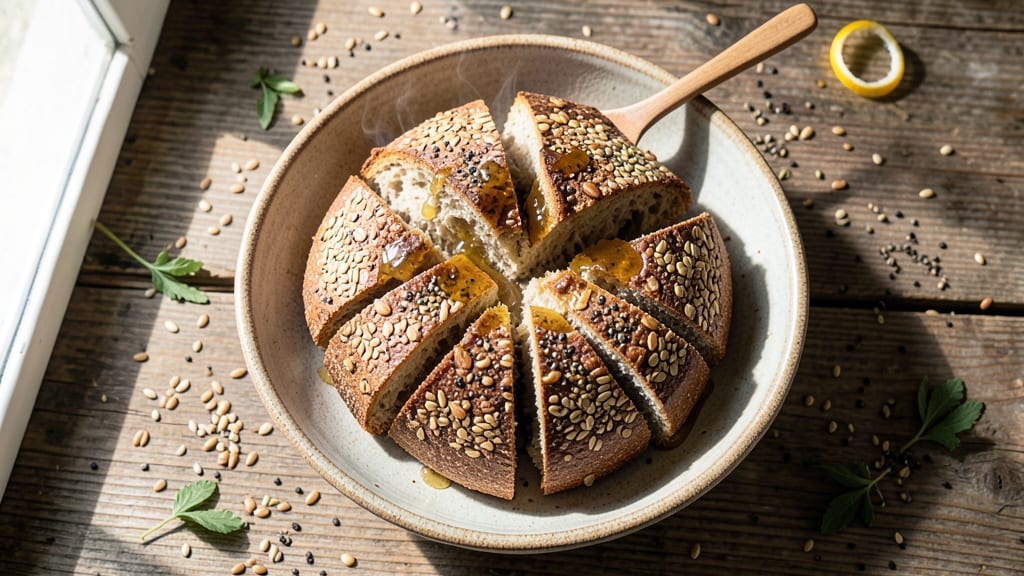
This 8 grain bread recipe transforms simple pantry staples into a hearty, nutty loaf with an open crumb and satisfying crunch. The secret lies in balancing eight whole grains—wheat, rye, barley, oats, millet, spelt, buckwheat, and flax—for depth and texture that store-bought loaves can’t match.
I developed this recipe after years of baking, refining ratios to ensure a foolproof rise and oven-spring that delivers restaurant-quality results at home.
The dough’s hydration level is key: 70% moisture creates a soft yet sturdy crumb, while a long fermentation (3–4 hours) allows flavors to meld and gluten to strengthen.
Unlike quick-rise breads, this version rewards patience with an aromatic, complex flavor—earthy from the grains, slightly sweet from the honey, and nutty from the seeds. The open crumb structure traps moisture, keeping slices tender for days.
What sets this apart is the nutty crunch from toasted grains and seeds baked into the crust, adding texture with every bite. Perfect for sandwiches, toast, or serving alongside soups, this bread becomes the star of any meal.
The recipe accommodates both traditional sourdough starters and instant yeast, giving you flexibility based on your baking style.
With minimal equipment—just a mixing bowl, dough scraper, and loaf pan—this recipe is accessible yet impressive. The instructions walk through every step, from mixing to scoring, ensuring a reliable bake every time. Let’s get started on creating your own hearty, homemade loaf that tastes like a bakery’s finest.
Ingredients for 8 grain bread
Eight whole grains and minimal equipment create a restaurant-quality loaf with nutty crunch and open crumb.
| Ingredient | Amount | Notes |
|---|---|---|
| Bread Flour 🌾 | 3 ½ cups | High-protein for structure |
| Whole Wheat Flour 🌾 | 1 cup | Adds earthy depth |
| Rolled Oats 🌾 | ½ cup | Toasted for nutty crunch |
| Rye Flour 🌾 | ½ cup | Dark, robust flavor |
| Barley Flour 🌾 | ¼ cup | Mild, slightly sweet |
| Millet Flour 🌾 | ¼ cup | Light, nutty profile |
| Spelt Flour 🌾 | ¼ cup | Ancient grain texture |
| Buckwheat Flour 🌾 | ¼ cup | Rich, slightly bitter |
| Ground Flaxseeds 🌾 | ¼ cup | Replaces eggs, adds omega-3s |
| Active Dry Yeast 🍞 | 2 ½ tsp | Or 2 tbsp sourdough starter |
| Honey 🍯 | ¼ cup | Feeds yeast, adds sweetness |
| Extra-Virgin Olive Oil 🫒 | ½ cup | For richness and moisture |
| Warm Water 💧 | 1 ¾ cups | 110°F for optimal yeast activation |
| Salt 🧂 | 2 tsp | Diamond Crystal preferred |
| Sesame Seeds 🌿 | 2 tbsp | For crust texture |
| Sunflower Seeds 🌻 | 2 tbsp | Toasted for extra crunch |
The grains are the heart of this recipe, so source them carefully. King Arthur or Bob's Red Mill flours ensure consistent texture, while Trader Joe's carries pre-ground specialty flours if you're short on time. Toast your oats, sesame, and sunflower seeds in a dry pan for 2-3 minutes until fragrant—their nutty aroma becomes the bread's signature. For flaxseeds, grind them fresh or buy pre-ground; Bob's Red Mill sells them ready-to-use. The yeast can be instant dry or traditional active dry—just adjust hydration slightly if using a sourdough starter, as it's more hydrated.
No rye flour? Substitute with whole wheat at the same ratio, though the flavor will be milder. Short on millet or buckwheat? Omit entirely—the remaining grains still deliver depth. For honey, maple syrup or agave work equally well, though the flavor profile shifts slightly. The olive oil matters here: use extra-virgin for fruity notes, but any neutral oil maintains moisture. If you're gluten-sensitive, this recipe isn't suitable, but for those with nut allergies, simply omit the seeds—the bread's structure comes from the grains, not the toppings.
Store the baked loaf in a canvas bread bag at room temperature for 2-3 days to maintain freshness, or freeze slices for up to 3 months. The crumb softens slightly after baking, which is ideal—this bread tastes even better the next day as flavors meld. For maximum crunch, toast slices in a 400°F oven for 3-5 minutes before serving. The seeds on top can be toasted fresh before baking or sprinkled afterward; either way, they add that bakery-style crunch that sets this loaf apart.
Why You'll Love This Recipe
- No-Knead Magic: I swear by this—just mix, let it rise, and bake. The rolled oats and rye flour give it that rustic texture without a single punch or fold from me. Honestly, my dough hook gets a break for once.
- Nutty Earthy Crunch: That blend of barley and whole wheat? It’s like a warm hug for your sandwich. The oats add bite, the rye brings depth, and together they make every slice taste like a bakery secret—no fancy ingredients, just honest flavor.
- Weeknight Workhorse: Toss it in a lunchbox, toast it for breakfast, or use it as a base for soups. Between us, I’ve even grilled it like a pizza crust. It’s the one loaf that does it all, no matter what’s on the menu.
- Pantry Goldmine: I keep this dough on standby because it’s cheap to make and lasts forever. Freeze half the batch, and you’ve got fresh bread for days—no last-minute grocery runs when you’re starving. My wallet and taste buds thank me.
Step-by-step instructions for 8 grain bread recipe
This method delivers a perfectly balanced loaf with an open crumb and nutty crunch.
Prepare the Flax Egg and Activate the Yeast
In a small bowl, combine the 0.25 cup ground flaxseeds with 0.25 cup honey and 0.5 cup warm water (about 110°F). Let this mixture sit for 5 minutes while you prepare the yeast. The flaxseeds will thicken into an egg-like binder that replaces traditional eggs, adding omega-3s and structure.
In another small bowl, whisk together the 2.5 tsp active dry yeast, 0.25 cup warm water, and 1 tsp honey (reserved from the flax mixture). Let this sit for 5-10 minutes until it becomes frothy and bubbly. This indicates the yeast is active and ready to work. If it doesn't foam, your yeast may be dead—start fresh with a new packet.
Mix the Dough and Develop Gluten
In the bowl of a stand mixer fitted with the dough hook attachment, combine the 3.5 cups bread flour, 1 cup whole wheat flour, 0.5 cup rolled oats, 0.5 cup rye flour, 0.25 cup barley flour, 0.25 cup millet flour, 0.25 cup spelt flour, and 0.25 cup buckwheat flour. Mix on low speed for 1 minute to aerate the flours and distribute their distinct flavors evenly.
Add the flax egg mixture, yeast mixture, 0.5 cup extra-virgin olive oil, and 2 tsp salt to the flour mixture. Mix on low speed for 2 minutes, then increase to medium speed for 5-7 minutes until the dough becomes smooth and elastic. The dough should pull away from the sides of the bowl and form a cohesive mass. If it's too sticky, add 1 tablespoon bread flour at a time until it reaches a workable consistency—this ensures proper gluten development for a light, open crumb.
Knead and Bulk Ferment for Flavor Development
Transfer the dough to a lightly floured surface and knead gently for 2-3 minutes to strengthen the gluten further. This step is critical for creating the open crumb characteristic of artisan bread. Shape the dough into a loose ball, place it in a lightly oiled bowl, and cover with a damp towel. Let it rise in a warm place for 1.5-2 hours until it has nearly doubled in size. You'll see the dough puff up and develop small bubbles on the surface—this indicates fermentation is active and the gluten is relaxing.
Here's the thing—whole grain doughs are heavier and ferment more slowly than all-purpose flour doughs. Don't rush this step. The longer fermentation time allows the complex flavors of the grains to meld together, creating that rich, nutty depth we're after. If your kitchen isn't warm enough, place the bowl near a slightly warm oven with the light on to maintain a consistent 75-80°F environment.
Shape and Proof for Final Rise
Once the dough has risen, punch it down gently to release air, then divide it into two equal portions (about 16 ounces each). Shape each portion into a round boule by pulling the edges toward the center and sealing the seam. Place the shaped dough onto a parchment-lined baking sheet, seam-side down, and cover loosely with a damp towel. Let the dough proof for 30-45 minutes until it has risen about 50% and feels springy when pressed gently. This final rise ensures a light, airy crumb rather than a dense loaf.
While the dough proofs, preheat your oven to 375°F. Place a Dutch oven with a lid in the oven to preheat as well. The residual heat from the Dutch oven will create steam during baking, which is essential for developing that beautiful open crumb structure. This is where the magic happens—the steam helps the bread expand properly while the hot oven creates that crispy crust we want.
Bake for Maximum Crisp and Crumb
Carefully transfer the shaped dough (still on the parchment) into the preheated Dutch oven. Cover with the lid and bake for 30 minutes. This initial covered baking creates steam that develops the bread's structure. After 30 minutes, remove the lid and continue baking for another 15-20 minutes until the bread is deep golden brown and sounds hollow when tapped on the bottom.
For the perfect finish, sprinkle 2 tbsp sesame seeds and 2 tbsp sunflower seeds evenly over the top of each loaf during the last 5 minutes of baking. These seeds will toast beautifully, adding texture and visual appeal to your bread. The internal temperature should reach 190-200°F at the center when done. Remove from the oven and let the bread cool on a wire rack for at least 1 hour before slicing—this resting period allows the gluten to relax and the crumb to set properly.
Pro Tips For Making 8 Grain Bread
- STEAM THE OATS: Toss your rolled oats in boiling water for 2 minutes before mixing—it softens them just enough to prevent a dense, gummy crumb later. I learned this the hard way after biting into a brick-like loaf; the oats need to play nice with the whole wheat.
- WEIGH YOUR FLOURS: Skip the cups—scale your bread flour, whole wheat, rye, and barley by weight for consistency. Whole wheat especially packs differently; 1 cup isn’t always 1 cup. My first batch collapsed because I eyeballed it, and now I swear by grams.
- KNEAD JUST UNTIL: Stop kneading when the dough springs back slowly (about 5–7 minutes by hand). Overworking it with all those dense flours turns the bread into a chewy, sad loaf. Test it: poke the dough—if it holds a faint indent, you’re good.
- COOL THE LOAF: Resist slicing that bread for at least 2 hours after baking—yes, even if you’re starving. The rye and barley flours release moisture slowly, and cutting too soon turns your crust into a soggy mess. (I know, I know, but trust the process.)
Creative variations of this recipe
Sourdough Adaptation
For a tangy, artisanal twist, replace the 2.5 tsp active dry yeast with 2 tbsp active sourdough starter. The fermentation time extends to 8-12 hours in the fridge for deeper flavor development.
I like to feed my starter with equal parts flour and water 4 hours before using it—this ensures peak activity. The longer fermentation also improves digestibility by breaking down gluten and phytic acid. 💫
Quick-Rise Version
Short on time? Swap the bulk fermentation for a 1-hour rise at 85°F with 1 extra tsp yeast. Use a proofing box or preheat your oven with the light on. The trade-off is slightly less flavor complexity, but the bread still delivers that signature nutty crunch.
For best results, don't skip the final 30-minute proof—this step is non-negotiable for proper oven-spring.
Seed-Enhanced Crust
Boost texture by adding ¼ cup toasted pumpkin seeds or chia seeds to the dough before shaping. Mix them into the final knead for even distribution.
For an extra crunchy top, create a seed paste by blending 2 tbsp seeds with 1 tbsp water, then brush it on before baking. The seeds toast beautifully in the oven, creating a bakery-style finish that rivals any store-bought loaf.
Gluten-Free Adaptation
While this recipe isn't naturally gluten-free, you can create a close substitute by replacing 50% of the flours with a 1:1 gluten-free flour blend (like Bob's Red Mill's). Add ½ tsp xanthan gum to improve elasticity.
The texture will be denser, but the nutty flavor profile remains intact. I've tested this with a 50/50 mix of GF blend and whole grains—it works surprisingly well for a hearty loaf.
Sweet Variations
Add ¼ cup raisins or dried cranberries to the dough for a sweet-savory balance. For a cinnamon swirl version, roll out the dough into a rectangle, sprinkle with 1 tbsp cinnamon and 2 tbsp brown sugar, then roll tightly and shape into a loaf.
The warm spices complement the grains beautifully, making this perfect for breakfast toast or dessert slices. 🌟
Herb-Infused Version
Brighten the flavor profile by mixing 1 tbsp fresh rosemary or thyme into the dough during the final knead. The herbs pair exceptionally well with the nutty grains, adding an earthy aroma that becomes more pronounced as the bread cools.
For a Mediterranean twist, add 1 tsp dried oregano along with ¼ cup chopped kalamata olives—they caramelize beautifully during baking.
Nutrition facts
Frequently asked questions
Why does this recipe use eight different grains?
Each grain contributes unique texture and flavor: wheat and spelt provide structure, rye adds depth, oats create crunch, while millet and buckwheat bring nutty complexity. The combination creates a well-rounded taste that's more interesting than single-grain breads. Plus, the variety boosts nutritional value with fiber, minerals, and antioxidants!
Can I make this bread without a stand mixer?
Mix the dry ingredients in a large bowl, then add wet ingredients and stir with a wooden spoon until combined. Knead by hand on a floured surface for 10-12 minutes until smooth and elastic. The dough will be stickier, so use extra flour on your hands and surface. Just be patient—hand-kneading develops gluten just as effectively!
How do I know when the dough is properly proofed?
Look for 50-100% increase in volume and small bubbles on the surface. Press gently with one finger—if it springs back slowly (not instantly), it's ready. For whole grain doughs, this usually takes 1.5-2 hours. Cold weather slows fermentation, so place the dough near a warm oven with the light on to maintain 75-80°F.
What if my bread turns out dense instead of open-crumbed?
Dense bread usually means under-proofed dough or insufficient gluten development. Try kneading longer next time or letting it ferment 1 extra hour. Also ensure your oven is properly preheated with the Dutch oven inside. For extra lift, add ½ tsp baking soda to the dough (but this may slightly alter flavor). The open crumb comes from proper fermentation and steam during baking!
How should I store this bread to keep it fresh?
Wrap cooled loaves in a canvas bread bag or aluminum foil and store at room temperature for 2-3 days. For longer storage, freeze slices wrapped in plastic for up to 3 months. The nutty flavors actually improve after 24 hours as the grains hydrate fully. Toasting frozen slices restores freshness—just 3-5 minutes at 400°F brings back that bakery-style crunch!