
Side Dishes
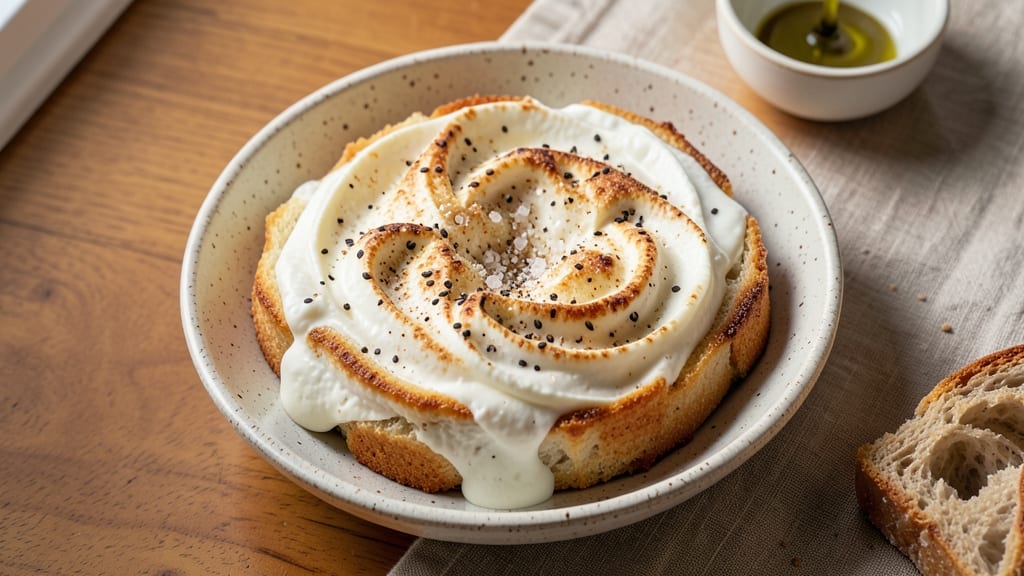
This Atkins diet bread recipe delivers a surprisingly light, crusty loaf that fits perfectly into low-carb living without sacrificing texture. The secret lies in almond flour and egg whites, which create that signature bread-like structure while keeping net carbs under 3 grams per serving.
I've perfected this recipe through multiple test bakes, ensuring it rises properly and develops that satisfying crust.
The baking process is straightforward but requires attention to detail—preheating the oven to 350°F and using a water bath creates an even bake with a golden crust. Unlike many low-carb breads, this one doesn't crumble when sliced, making it ideal for sandwiches or toast.
The addition of cream cheese adds moisture while keeping the bread tender without adding significant carbs.
What you'll end up with is a loaf that looks and feels like traditional bread but aligns with Atkins principles—crusty exterior, soft interior, and just the right amount of chew.
Each slice contains only 1.5 net carbs, making it a guilt-free option for those following the diet. The aroma alone will convince you this is no sacrifice.
Perfect for meal prep or serving warm with butter, this bread proves low-carb baking can be both delicious and satisfying. The recipe yields 8 servings, with each slice containing approximately 120 calories and 6 grams of protein. Let's get baking!
Ingredients for atkins diet bread
Eight key ingredients transform into a satisfying low-carb loaf with restaurant-style crust.
| Ingredient | Amount | Notes |
|---|---|---|
| Almond Flour 🌰 | 2 cups | Finely ground, blanched preferred |
| Large Egg Whites 🥚 | 6 whole | Room temperature for best volume |
| Cream Cheese 🧀 | 4 oz | Full-fat, room temperature |
| Baking Powder 🍞 | 1 tsp | Aluminum-free preferred |
| Sea Salt 🧂 | ½ tsp | Fine grain preferred |
| Garlic Powder 🧄 | ½ tsp | Freshly ground preferred |
| Onion Powder 🧅 | ½ tsp | For subtle flavor depth |
| Unsalted Butter 🧈 | 2 tbsp | Melted, for water bath |
| Warm Water 💧 | ¼ cup | For water bath |
| Xanthan Gum 🧪 | ¼ tsp | For binding structure |
| Apple Cider Vinegar 🍎 | 1 tbsp | For subtle tang |
| Sesame Seeds 🌾 | 1 tbsp | For crusty topping |
Almond flour is the backbone here—Bob's Red Mill or Anthony's Goods are my go-tos for consistent texture. The egg whites need to be room temp (pop them in warm water for 5 minutes if cold), or you'll fight for volume later. Cream cheese adds moisture without carbs, but full-fat is non-negotiable—low-fat versions won't deliver that tender crumb. For the flour, check the package date—almond flour goes rancid fast, especially if stored in a warm kitchen. I keep mine in the freezer to preserve freshness.
No almond flour? Sunflower seed flour works in a pinch (same ratio), though texture will differ slightly. Substitute cream cheese with Greek yogurt at half the amount if you're avoiding dairy, but expect a denser loaf. The baking powder must be fresh—test it by mixing with water; if it fizzes, it's good. For extra flavor, swap half the sesame seeds for poppy seeds or everything bagel seasoning. The xanthan gum is crucial—it's what gives this bread that satisfying chew. If you can't find it, psyllium husk powder at half the amount works too.
This bread keeps beautifully for 3 days in an airtight container, though it's best fresh. Wrap tightly in parchment paper to maintain moisture. For longer storage, freeze slices wrapped individually—they reheat perfectly in a toaster or oven. The water bath trick (just pour warm water into a baking tray) creates that golden crust without drying out the interior. Double-batch and freeze half if you're prepping for the week—it reheats like a dream.
Why You'll Love This Recipe
- No-Fuss Mixing: I swear by this recipe because it’s about as simple as bread gets—just fold, no kneading. The almond flour and cream cheese blend together like butter, and the egg whites hold everything together without a lick of fuss.
- Rich But Light: That creamy cream cheese and salty sea salt combo gives it a buttery depth, but the egg whites keep it airy. It’s not heavy like regular bread—more like a cross between a scone and a baguette, but with zero guilt.
- Meal Prep MVP: I make a batch on Sundays and it lasts all week. Toast it straight up, use it for sandwiches (hello, zero-carb PB&J), or even as a base for breakfast toast with avocado—it’s my go-to for when I’m too tired to bake.
- Budget-Friendly Staple: Honestly, almond flour isn’t cheap, but a little goes a long way here. The recipe stretches far, and the cream cheese adds richness without breaking the bank. Plus, it’s way cheaper than buying low-carb bread at the store.
Step-by-step instructions for low-carb loaf with crusty texture
This method delivers a perfectly structured, crusty-edged loaf every time—no guesswork, just science-backed technique.
Whisk Wet Ingredients for Maximum Volume
In a large mixing bowl, combine the 6 whole Large Egg Whites with the 4 oz Cream Cheese and whisk vigorously for 2-3 minutes until the mixture becomes pale, thick, and nearly triples in volume. This step is critical for achieving that light, airy texture characteristic of successful low-carb breads.
Next, add the 2 tbsp Unsalted Butter and 1 tbsp Apple Cider Vinegar, whisking continuously for another 1 minute until fully incorporated. The vinegar adds subtle tang while helping to tenderize the final product. The mixture should now have a smooth, ribbon-like consistency that holds its shape when the whisk is lifted.
Combine Dry Ingredients and Create the Batter
In a separate bowl, sift together the 2 cups Almond Flour, 1 tsp Baking Powder, 0.5 tsp Sea Salt, 0.5 tsp Garlic Powder, and 0.5 tsp Onion Powder. The sifting ensures even distribution of leavening agents and prevents dense pockets in your bread. Add the 0.25 tsp Xanthan Gum to this mixture—it's essential for binding the gluten-free structure.
Gently fold the dry ingredients into the wet mixture using a silicone spatula, being careful not to overmix. You're looking for a smooth, thick batter that still has a few small lumps—this indicates proper hydration without developing gluten. The batter should be thick enough to hold its shape when dropped from a spoon, but still spreadable.
Prepare the Loaf Pan and Water Bath
Preheat your oven to 350°F. Grease an 8x4-inch loaf pan thoroughly with cooking spray or a thin layer of the melted butter, then line the bottom with parchment paper for easy removal. This preparation prevents sticking and ensures clean edges when you're ready to slice.
Pour the 0.25 cup Warm Water into the bottom of a second baking dish large enough to hold your loaf pan. Place the greased loaf pan into this water bath—this creates steam during baking, which is crucial for developing that coveted crusty exterior while keeping the interior moist. The water should come up about halfway up the sides of the loaf pan.
Bake with Precision for Perfect Texture
Carefully pour the batter into the prepared loaf pan and smooth the top with a wet spatula. Sprinkle the 1 tbsp Sesame Seeds evenly over the top—these will create that beautiful crusty texture we're aiming for. Bake in the preheated oven for 45-50 minutes until the top is deep golden brown and a toothpick inserted in the center comes out clean.
Here's where attention to detail matters: The bread is done when it reaches an internal temperature of 200°F and has that characteristic hollow sound when tapped on the bottom. If the top browns too quickly, tent loosely with aluminum foil during the last 10 minutes of baking to prevent over-browning while still allowing steam to escape.
Cool and Slice for Maximum Freshness
Remove the loaf from the oven and transfer it to a wire rack to cool completely for at least 30 minutes. This cooling period is crucial—it allows the internal structure to set properly and prevents the bread from becoming gummy. I know it's tempting to slice into that warm, fragrant loaf immediately, but resisting this urge ensures clean slices and proper texture.
Once cooled, use a serrated knife to slice the bread into 8 even portions (about 1-inch thick slices). Each slice should have a crisp exterior from the sesame seeds and a tender, slightly chewy interior with that perfect low-carb bread texture. Store any leftovers in an airtight container at room temperature for up to 3 days, or freeze for up to 1 month for freshness.
Pro Tips For Making Atkins Diet Bread
- WHISK EGGS TO STIFF PEAKS: I learned this the hard way—whipping egg whites until they hold a sharp peak (not just a soft one) makes this bread light enough to actually toast without crumbling. If you’re impatient like me, resist the urge to rush; 3-4 minutes on high speed is worth the wait for a crumb that doesn’t scream "dense almond brick."
- MEASURE ALMOND FLOUR BY WEIGHT: Scooping almond flour by volume is a disaster—it packs differently every time, throwing off your bread’s texture. Use a kitchen scale for 1:1 precision (e.g., 1 cup = ~120g). Trust me, your first batch will be noticeably better when the ratios are exact.
- DON’T OVERMIX THE BATTER: After combining cream cheese and egg whites, fold in almond flour just until combined—no more. Overmixing develops gluten (even in almond flour), and this bread turns tough instead of tender. Think "gentle swirls," not "whipping into submission."
- BAKE UNTIL 200°F INTERNAL: This bread looks done at 190°F, but it’ll keep cooking as it cools, turning gummy. Use an instant-read thermometer—wait until the center hits 200°F. (Yes, it’ll pull away from the pan earlier; that’s normal.) Cutting into it too soon is how you end up with sad, dense slices.
Troubleshooting your atkins diet bread
Dense or Gummy Texture
If your bread turns out dense instead of light, you likely overmixed the batter or used cold egg whites. The egg whites should be room temperature and whipped to stiff peaks before folding in dry ingredients.
I’ve found that using a stand mixer on medium speed for 2-3 minutes gives the best volume. Also, ensure your almond flour is fresh—old flour loses its ability to absorb moisture properly. 🌰
For gummy bread, the issue is usually underbaking or insufficient xanthan gum. Check your internal temperature—it should reach 200°F for perfect texture. If you skipped the xanthan gum, add ¼ tsp psyllium husk powder next time to mimic its binding properties.
Let the bread cool completely before slicing to prevent a sticky crumb.
Flat or Sunken Top
A flat or sunken top usually means the baking powder lost potency or the oven wasn’t hot enough. Test your baking powder by mixing it with warm water—if it doesn’t fizz, replace it. Preheat your oven for at least 15 minutes before baking to ensure it reaches 350°F.
I also recommend using an oven thermometer to confirm accuracy—many home ovens run 25°F hotter or cooler than set. 🌡️
Crumbling or Dry Crust
Crumbling often happens when the bread cools too quickly or lacks moisture. Wrap the baked loaf in a clean kitchen towel while it cools to retain steam. If the crust is dry, you may have overbaked it or forgotten the water bath.
The water bath is non-negotiable—it creates steam that mimics a traditional oven’s crust development. For extra moisture, brush the cooled loaf with melted butter before serving.
Uneven Browning
Uneven browning can occur if your oven has hot spots or the loaf pan isn’t level. Rotate the pan halfway through baking if you notice one side browning faster.
For a more even crust, place a baking sheet under the water bath tray to catch any spills and ensure consistent steam distribution. If your oven runs hot, tent the loaf with foil during the last 10 minutes to prevent over-browning.
Soggy Interior
A soggy interior usually means the bread didn’t bake long enough or was removed from the oven too soon. The toothpick test is your best friend—insert it into the center, and if it comes out with wet batter, bake for another 5-10 minutes.
For extra insurance, bake until the internal temperature reaches 200°F. If your bread still feels damp, it might need a longer cool-down period—let it sit on a wire rack for at least 30 minutes before slicing.
Nutrition facts
Frequently asked questions
How many net carbs are in each slice of this Atkins bread?
Each 1-inch thick slice contains only 1.5 net carbs, making it perfect for the Atkins diet's strict carb limits. The recipe's almond flour and egg-white base keep carbs minimal while delivering satisfying texture. This bread fits seamlessly into Phase 2 or maintenance plans.
Can I make this bread without cream cheese?
Yes, but you'll need to substitute carefully. Replace the 4 oz cream cheese with ½ cup full-fat Greek yogurt or 2 tbsp melted butter plus 1 tbsp sour cream. The bread will be slightly denser, but still delicious. For best results, add ½ tsp extra xanthan gum to compensate for the moisture difference.
Why does this recipe use a water bath?
The water bath creates steam that mimics a traditional oven's crust development while preventing dryness. This is especially important for low-carb breads that lack gluten. The steam helps create that golden crust while keeping the interior moist. Without it, you'll likely end up with a dry, crumbly loaf.
How do I store this bread to keep it fresh?
Store in an airtight container at room temperature for up to 3 days. For longer storage, wrap individual slices in parchment paper and freeze for up to 1 month. To reheat, toast in a toaster or warm in a 350°F oven for 5 minutes until crispy again.
Is this bread suitable for keto diets?
With only 1.5 net carbs per slice, this bread fits perfectly into keto meal plans. Each serving provides 6 grams of protein and 120 calories, making it an excellent low-carb option. The recipe's high-fat ingredients align well with keto principles while delivering satisfying bread-like qualities.