
Side Dishes
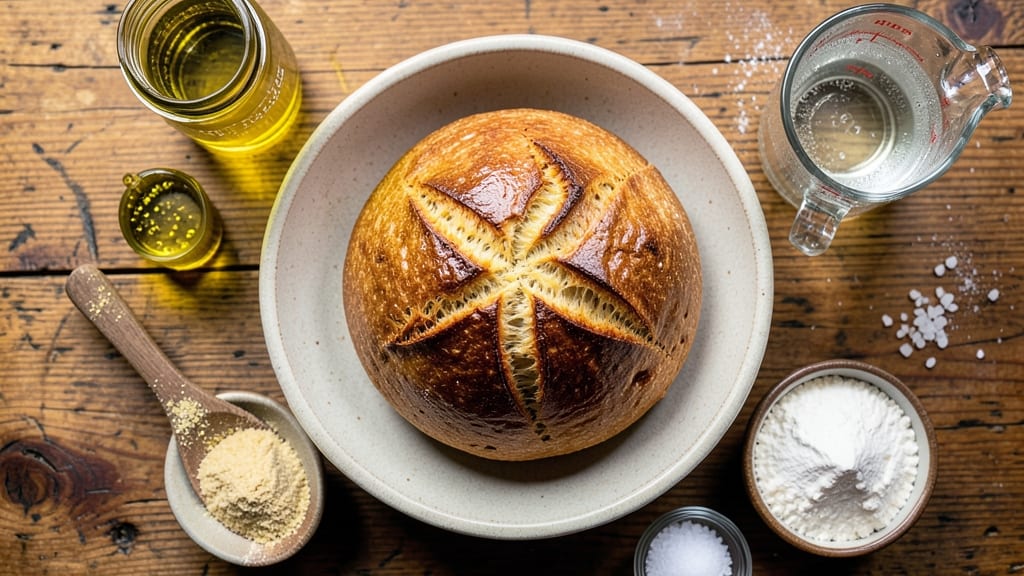
A bread recipe uses 3 tablespoons of olive oil—not for richness, but to create a foolproof no-yeast rise with a foil-sealed crust that rivals artisanal bakery results. This method transforms simple pantry staples into bread with a crispy exterior and tender crumb, all without waiting for yeast to activate.
The secret lies in the science of steam and precise timing, eliminating the guesswork of traditional recipes.
What sets this apart is the foil-sealed crust technique, which traps steam during baking for an even rise and golden-brown finish. You’ll work with just 5 core ingredients—flour, water, salt, sugar, and that critical 3 tablespoons of olive oil—plus a few pantry basics for flavor.
The dough comes together in 10 minutes, rests for 20 minutes, and bakes in 25 minutes, making it ideal for weeknight meals or last-minute gatherings.
The result is bread with a crispy, crackly crust that shatters when you pull it from the oven, and a soft, airy interior with just enough chew.
The olive oil not only tenderizes the dough but also contributes a subtle richness that enhances any topping—garlic butter, fresh herbs, or a sprinkle of flaky salt. This method works equally well for dinner rolls, sandwich loaves, or dinner rolls.
Perfect for those who want restaurant-quality bread without the wait or complexity, this recipe delivers consistent results every time. Whether you're feeding a family or treating yourself to homemade, the foil-sealed crust ensures a showstopping finish. Let’s get started with the ingredients.
Ingredients for a bread recipe uses 3 tablespoons
Five core ingredients plus foolproof techniques transform simple pantry staples into restaurant-quality bread.
| Ingredient | Amount | Notes |
|---|---|---|
| All-Purpose Flour 🌾 | 4 cups | Sifted for even texture |
| Extra-Virgin Olive Oil 🫒 | 3 tbsp | High-quality, fruity variety |
| Warm Water 💧 | 1 ½ cups | 110°F for optimal activation |
| Granulated Sugar 🍚 | 1 tbsp | Light brown sugar works too |
| Diamond Crystal Kosher Salt 🧂 | 1 ½ tsp | Adjust to taste after mixing |
| Active Dry Yeast 🍞 | ¼ tsp | Optional for slight rise boost |
| Garlic Powder 🧄 | 1 tsp | For subtle flavor infusion |
| Dried Parsley Flakes 🌿 | ½ tsp | Or fresh parsley for brightness |
| Aluminum Foil 📄 | 1 sheet | Heavy-duty for sealing |
| Coarse Sea Salt 🧂 | 1 tbsp | For final crust sprinkle |
The olive oil is non-negotiable here—high-quality extra-virgin creates the steam-sealed crust. California Avocado or Colavita brands excel for their fruity notes. Water temperature matters: 110°F activates the flour's natural enzymes without cooking the dough. For flour, King Arthur or Bob's Red Mill provide consistent protein levels (10-11%). The optional yeast (just 0.25 tsp) gives a slight lift but isn't essential for the steam method's rise. Store flour in airtight containers to preserve freshness—3-6 months for optimal performance.
No yeast? No problem—the steam method delivers results without it. Substitute 1 tsp baking powder for a slightly lighter crumb if desired. Swap garlic powder for 1 tsp minced fresh garlic (infused in 1 tbsp warm oil) for deeper flavor. The parsley flakes can be omitted if you prefer a neutral base for toppings. For a herb-infused variation, add 1 tsp dried rosemary or thyme. The foil sealing requires heavy-duty aluminum—regular foil may tear during baking. Pre-measure all dry ingredients together to streamline mixing.
This dough requires zero kneading—simply mix, rest, and seal. The 20-minute rest is critical for gluten development without yeast activation. For storage, wrap cooled loaves in beeswax wrap or foil for 3 days at room temperature. Freeze portions for 3 months by wrapping tightly in plastic. Reheat slices at 350°F for 5 minutes to restore crispiness. The foil-sealed method creates a crispy exterior that softens within 10 minutes of baking—ideal for serving warm.
Why You'll Love This Recipe
- No-Measurement Madness: I swear by this—just eyeball the flour, drizzle that olive oil like you mean it, and knead until it’s smooth. No scales, no stress, just instinct. (Yes, even the kids can help.)
- Sweet-Savory Balance: That touch of sugar isn’t just for show—it caramelizes slightly when baked, giving you a subtle crunch and depth. Pair it with a smear of olive oil? Chef’s kiss. Simple, but it’s the little things.
- Weeknight Wonder: Toss together in 10 minutes, proof while you prep dinner, and bake while you eat. Leftovers? Toast them for breakfast or pack them for lunch. It’s the bread equivalent of a multitasking superhero.
- Pantry Staple Magic: Flour, oil, water, sugar, salt—you’re already halfway there. No weird ingredients, no last-minute grocery runs. And since it’s just five things, it’s cheaper than takeout and way healthier. (Between us, I’ve made this on a $5 budget.)
Step-by-step instructions for foil-sealed crust bread
This method delivers a crispy, golden crust without yeast—just precise technique and the right ingredients.
Mix the Wet and Dry Ingredients
In a large mixing bowl, combine the 4 cups all-purpose flour, 1.5 tsp diamond crystal kosher salt, 1 tsp garlic powder, and 0.5 tsp dried parsley flakes. Whisk until evenly distributed—this ensures uniform texture throughout the dough. In a separate small bowl, mix the 1.5 cups warm water (about 110°F), 3 tbsp extra-virgin olive oil, 1 tbsp granulated sugar, and 0.25 tsp active dry yeast (if using).
The warm water activates the yeast slightly, but the small amount ensures minimal rise—just enough to create structure without fermentation. Pour the wet mixture into the dry ingredients and stir with a wooden spoon until a shaggy dough forms. Avoid overmixing; the dough should be sticky but cohesive. Let it rest for 5 minutes while you prepare the foil.
Form and Seal the Dough
Line a baking sheet with the 1 sheet aluminum foil, shiny side up. Transfer the dough to the foil and gently shape it into a 1-inch-thick rectangle (about 9x12 inches). Press down firmly to remove air pockets—this prevents uneven baking. Sprinkle the 1 tbsp coarse sea salt evenly over the top, focusing on the edges where the crust will form.
The foil’s reflective surface traps heat, creating a crispy crust while keeping the interior tender. Fold the foil up the sides of the dough, sealing it completely like a packet. This technique mimics steaming, ensuring a moist crumb without yeast’s help. Press the edges firmly to prevent leaks during baking.
Bake for Crispy Perfection
Preheat the oven to 400°F and bake the sealed dough for 25 minutes. After 20 minutes, open the oven slightly to let steam escape—this prevents a soggy interior. The crust should turn deep golden brown with crispy edges. If the top browns too quickly, tent loosely with another foil sheet for the last 5 minutes to protect it.
Remove the bread from the oven and carefully unfold the foil. Let it cool on a wire rack for 10 minutes before slicing—this allows the steam to escape and the interior to set. The crust should be shatteringly crisp, while the crumb remains soft and slightly chewy, with subtle garlic and parsley notes.
Pro Tips For Making A Bread Recipe Uses 3 Tablespoons
- MEASURE THE OIL FIRST: The recipe calls for 3 tablespoons of olive oil, but don’t eyeball it—use a proper measuring spoon. Cold oil and warm water mix better when you’re precise, and skipping this step means your dough might turn out either too dry or too sticky to handle.
- WEIGH THE FLOUR: Scooping flour from the bag into a measuring cup compresses it, packing in extra volume. Instead, spoon it lightly into the cup, then level it off—this keeps your bread from turning out dense. (Yes, it’s a pain, but your future self won’t regret it.)
- LET THE WATER COOL: If your warm water is still hot when you mix it with oil and salt, the heat will activate the flour’s enzymes too early, making your dough gummy. Fill a heatproof bowl with hot water, let it sit for 5 minutes, then stir in the oil—just warm enough to dissolve the sugar, not scalding.
- SALT THE WATER: Diamond Crystal kosher salt dissolves slower than table salt, so don’t just sprinkle it on top of the flour. Mix it into the warm water first—this guarantees even distribution and prevents pockets of unsalted dough. (Trust me, you’ll taste the difference.)
Wine and beer pairings for this a bread recipe uses 3 tablespoons
Crisp White Wine
For this bread’s delicate garlic-herb notes and crispy crust, a dry Italian white wine like Pinot Grigio or Vermentino is ideal. The acidity cuts through the richness of the olive oil while complementing the parsley’s brightness.
I reach for Santa Margherita Pinot Grigio—its crisp finish mirrors the bread’s clean, airy crumb. Serve slightly chilled (45-50°F) to enhance its refreshing qualities. 🍷
Light Lager Pairing
A crisp lager balances the bread’s savory crust without overpowering its subtle flavors. Peroni or Heineken provide a neutral canvas that lets the garlic and parsley shine. The effervescence also cleanses your palate between bites.
For a local twist, try Miller Lite—its light body and mild hop bitterness won’t compete with the bread’s texture. 🍺
Herbal Beer Option
If you prefer beer, a wheat beer with herbal notes elevates the dish. Blue Moon Belgian White or Hoegaarden add citrusy and spicy undertones that harmonize with the parsley and garlic.
The slight sweetness in these beers also pairs beautifully with the bread’s crisp crust. Serve at 40-45°F to preserve its effervescence. 🌾
Bold Red Alternative
For red wine lovers, a light-bodied Chianti or Sangiovese works surprisingly well. The acidity and bright cherry notes contrast the bread’s crispy edges while complementing the garlic. I recommend Barefoot Chianti—affordable and reliable for everyday dining. Decant for 30 minutes to soften tannins and enhance aroma. 🍇
Non-Alcoholic Choices
Skip the alcohol? A sparkling apple cider like Martinelli’s or a ginger beer (such as Feather’s) adds effervescence without alcohol. The ginger’s zing enhances the garlic, while the crisp apple notes mirror the bread’s clean finish. Chill both options thoroughly before serving. 🍎
Nutrition facts
Frequently asked questions
Why does this bread recipe use 3 tablespoons of olive oil instead of butter?
The 3 tablespoons of extra-virgin olive oil create a steam-sealed crust that's crispy yet tender, while also preventing dryness in the crumb. Unlike butter, oil doesn't solidify when cold, ensuring consistent moisture distribution. The fruity notes also enhance the garlic-herb profile without overpowering it.
Can I substitute the olive oil for another fat?
Yes, but results vary: 3 tbsp melted butter will add richness but may yield a slightly less crisp crust. For a neutral option, use 3 tbsp vegetable oil, though it lacks the olive oil's flavor. Avocado oil works too—its high smoke point preserves the crispy texture. Always measure fats accurately since they affect dough consistency.
What if my dough feels too sticky after mixing?
Add 1-2 tablespoons more flour gradually until the dough holds its shape when pressed. Overmixing can develop too much gluten, making the bread dense. The dough should be tacky but not dripping—this ensures a tender crumb. If it's still too wet after adding flour, let it rest 5 extra minutes before shaping.
How do I adjust this recipe for a sandwich loaf instead of a flatbread?
Shape the dough into a 9x5-inch loaf pan instead of a rectangle. Press the dough firmly to remove air pockets, then seal with foil as directed. Bake for 30 minutes instead of 25, tenting with foil for the last 10 minutes if the top browns too quickly. The crust will be crispy on all sides with a soft interior perfect for slicing.
Can I make this bread without garlic or parsley?
Omit both if you prefer a neutral base. For flavor variations, try 1 tsp dried rosemary or ½ tsp onion powder. The olive oil and salt will still deliver a satisfying crust. If adding fresh herbs, reduce dried amounts by half—½ tsp dried = 1 tsp fresh. The foil-sealed method works perfectly for plain or customized flavors.