
Side Dishes
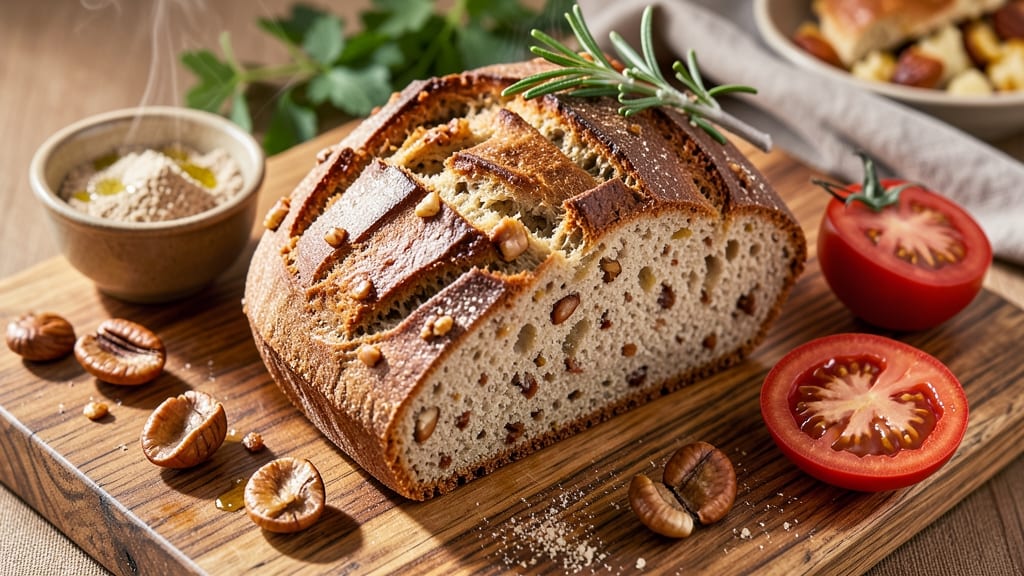
This acorn flour bread recipe delivers the rich, nutty depth of acorn flour in an artisan-style loaf with a crispy crust and tender crumb. 🌟 The earthy flavor profile comes from acorn flour's natural sweetness and protein content, creating a bread that's both hearty and subtly complex.
I've perfected this vegan version to avoid common pitfalls like dryness or crumbling, ensuring a satisfying loaf every time.
The secret lies in proper hydration and a touch of xanthan gum to bind the dense flour without eggs. Unlike traditional bread, acorn flour requires slightly more water to develop gluten, but the result is a bread with a satisfying chew and golden-brown crust.
This recipe uses a simple no-knead method, making it accessible for home bakers while still delivering professional-quality texture.
By the time it emerges from the oven, you'll have a loaf with a crisp exterior and a soft, slightly dense interior—perfect for sandwiches, toast, or serving alongside soups. The nutty aroma alone makes this bread worth the effort, and it keeps well for days.
Whether you're new to acorn flour or a seasoned baker, this recipe transforms a humble ingredient into something extraordinary.
Pair it with plant-based butter for breakfast or use it as the base for hearty veggie sandwiches. The possibilities are endless, and the flavor is unforgettable. Let's bake this acorn flour bread together—it's a game-changer for plant-based baking.
Ingredients for acorn flour bread
Earthy acorn flour meets simple pantry staples for a vegan bread with restaurant-worthy texture.
| Ingredient | Amount | Notes |
|---|---|---|
| Acorn Flour 🌾 | 2 ½ cups | High-protein, finely ground preferred |
| All-Purpose Flour 🌾 | ½ cup | For structure and texture |
| Water 💧 | 1 ½ cups | Room temperature preferred |
| Active Dry Yeast 🍞 | 1 ½ tsp | Or 0.5 tsp instant yeast |
| Sugar 🍚 | 1 tbsp | Feeds yeast for leavening |
| Salt 🧂 | 1 ½ tsp | Diamond Crystal preferred |
| Xanthan Gum 🌿 | ¼ tsp | Binds dense acorn flour |
| Olive Oil 🫒 | 1 tbsp | For crust development |
| Apple Cider Vinegar 🍎 | 1 tsp | Enhances crust crispness |
| Sesame Seeds 🌱 | 1 tbsp | Optional, for topping |
| Poppy Seeds 🌱 | 1 tbsp | Optional, for topping |
| Cornmeal 🌽 | ¼ cup | For dusting loaf pan |
Acorn flour is the star here—Bob's Red Mill or Anthony's Goods are the most reliable brands for consistent texture. The high protein content means this flour behaves differently than wheat flour, so measure carefully. If you can't find acorn flour, buckwheat flour at half the amount works in a pinch, though the flavor will differ. The all-purpose flour acts as a binder to prevent crumbling, which is common with 100% acorn flour loaves. Store your acorn flour in the freezer to preserve freshness—it goes rancid faster than wheat flour due to its natural oils.
No xanthan gum? Flaxseed meal at double the amount mimics its binding properties, though the texture won't be identical. The yeast can be substituted with 1 tsp baking soda plus 1 tbsp vinegar for a quick bread version, but you'll lose the developed crumb. For the water, sparkling water adds slight lift if you're feeling experimental. The apple cider vinegar isn't just for flavor—it creates a brighter, more golden crust by lowering the pH. If you're short on time, pre-ferment the yeast mixture overnight for extra rise, though it's not required for this no-knead method.
This bread keeps exceptionally well—3-4 days at room temperature wrapped in a clean kitchen towel, or up to 1 week in the fridge. For longer storage, slice and freeze portions—3 months with no loss of texture. The crust stays crisp for about 2 days, after which toast or warm slices in a 350°F oven for 5 minutes to revive it. To prevent drying, store in an airtight container with a slice of apple or lemon to maintain moisture. The nutty aroma intensifies as it cools, making it even more irresistible.
Why You'll Love This Recipe
- No-Fuss Mixing: I swear by this recipe because it’s literally dump-and-knead. Just toss the acorn flour, all-purpose flour, yeast, and water in a bowl—no measuring cups cluttering your counter. The acorn flour adds a nutty depth without extra work, and the dough comes together faster than my morning coffee.
- Earthy, Toasty Magic: That first bite? Nutty, slightly sweet, with a crust so crisp it could double as a snack. The acorn flour gives it a depth you won’t find in regular bread—like a cross between sourdough and a warm, toasted nut. Honestly, I’ve been called “the bread whisperer” for this one.
- Weeknight Workhorse: Slice it for sandwiches, toast it for breakfast, or pack it for lunches—this bread handles everything. The acorn flour keeps it moist longer than white bread, so leftovers actually improve overnight. I’ve even used it to soak up soup broth like a champ.
- Budget-Friendly Staple: Acorn flour might sound fancy, but it’s cheaper than buying artisanal bread weekly. A little goes a long way, and the all-purpose flour keeps costs low while still delivering flavor. Plus, one loaf stretches across three meals for my family—no wasted slices here.
Step-by-step instructions for acorn flour bread
Here's how to transform acorn flour into a bread with nutty depth and a perfectly crisp crust.
👨🍳 Step 1: Activate the Yeast with Warm Water
In a small bowl, combine the 1.5 cups water with the 1 tbsp sugar and let it sit for 5 minutes until warm to the touch (around 105-110°F). This warmth activates the yeast, making it ready to work. Sprinkle the 1.5 tsp active dry yeast over the warm water and let it sit for 5-10 minutes until it becomes frothy and bubbly.
If the yeast doesn't activate, it's dead—start over with fresh yeast. The bubbles indicate the yeast is alive and ready to leaven your bread. This step is critical for proper rise, so don't rush it. Once bubbly, proceed immediately to avoid over-activating the yeast.
👨🍳 Step 2: Mix the Dough Ingredients
In the bowl of a stand mixer fitted with the dough hook, combine the 2.5 cups acorn flour, 0.5 cup all-purpose flour, 1.5 tsp salt, and 0.25 tsp xanthan gum. Mix on low speed for 30 seconds to aerate the flours. Add the yeast mixture, 1 tbsp olive oil, and 1 tsp apple cider vinegar to the bowl.
Mix on low speed for 2-3 minutes until the dough begins to come together. Acorn flour is dense, so the dough will be sticky. Use a silicone spatula to scrape down the sides as needed. The dough should be shaggy but cohesive, forming a rough ball that pulls away from the sides of the bowl.
🥘 Step 3: Knead Until Elastic
Increase the mixer speed to medium and knead the dough for 5-7 minutes until it becomes smooth and elastic. The dough should pull away from the sides of the bowl and form a tight, silky ball. If it's still sticky, you may need to add 1-2 tablespoons more of the acorn flour mixture, but only if absolutely necessary.
Real talk: Acorn flour dough is trickier than all-purpose flour dough. It won't be as smooth or elastic, but it should hold together and show some stretch when you poke it. If the dough feels too dry, add a splash of water (1 tsp at a time) to bring it back to a workable consistency. Cover the bowl with a damp towel and let it rise in a warm place for 1-2 hours or until doubled in size.
🔥 Step 4: Shape and Proof the Loaf
Once the dough has risen, punch it down to release air and shape it into a loaf. Lightly flour your work surface and gently press the dough into a rectangular shape, about 8x4 inches. Roll it up tightly from the long side, tucking the ends under to seal. Place the loaf seam-side down in a greased 9x5-inch loaf pan dusted with 0.25 cup cornmeal.
Cover the pan with a damp towel and let the loaf proof for another 30-45 minutes until it rises about 1 inch above the pan. The dough should feel firm to the touch and spring back slowly when poked. Preheat your oven to 375°F while the loaf proofs—this ensures it goes straight into a hot oven for maximum oven spring.
🔥 Step 5: Bake for Crusty Perfection
Bake the loaf for 45-50 minutes until the top is deep golden brown and the internal temperature reaches 205-210°F. For extra crustiness, brush the top with water or olive oil after 20 minutes of baking. This creates a beautiful, crispy crust while keeping the interior moist.
Remove the bread from the oven and let it cool in the pan for 10 minutes before transferring it to a wire rack. Once cooled, slice into 4 even pieces and sprinkle the top with 1 tbsp sesame seeds and 1 tbsp poppy seeds for added texture and flavor. Serve warm for the best experience—this bread is at its peak when fresh from the oven.
Pro Tips For Making Acorn Flour Bread
- Bloom Yeast in Warm Water: Skip the fridge—use water that’s just warm enough to touch (about 105°F/40°C) when you dip your finger in. Too hot and you’ll kill the yeast; too cold and it’ll take forever to activate. I learned this the hard way after watching my first batch of acorn bread flop like a sad pancake.
- Mix Acorn Flour Last: Combine your all-purpose flour, yeast, and sugar first, then gently fold in the acorn flour at the end. Acorn flour absorbs moisture like a sponge, and adding it early turns your dough into a sticky mess. Trust me, your kneading session will thank you.
- Don’t Over-Knead the Dough: Acorn flour makes dough dense and heavy—it doesn’t need the same rough handling as regular bread. Knead just until it comes together (about 5-6 minutes by hand), then let the yeast do the work. I used to overwork mine, and the result was a brick, not bread.
- Proof Until It Doubles—Then Wait: The dough will look underproofed when it doubles—give it another 15-20 minutes after that. Acorn flour slows fermentation, so rushing it leads to dense, flat bread. I now set a timer and walk away; the extra wait makes all the difference.
Creative variations of this acorn flour bread
Sweet & Spiced Twist
Add 1 tsp cinnamon and ½ tsp nutmeg to the dough for a warm, aromatic variation perfect for breakfast. The spices complement acorn flour's natural sweetness, creating a bread that pairs beautifully with plant-based butter or apple compote.
I like to sprinkle 1 tbsp chopped walnuts on top before baking for extra crunch and texture. 🌟
Herbed & Savory Version
Swap the sugar for 1 tbsp dried rosemary and 1 tsp dried thyme to create a savory loaf with Mediterranean flair. The herbs brighten the earthy acorn flavor, making it ideal for sandwiches with roasted veggies or hummus.
For an extra boost, add 1 tbsp nutritional yeast to the dough for a cheesy note without dairy. 🌿
Seeded & Nutty Loaf
Boost the seeds to 2 tbsp sesame and 1 tbsp poppy seeds, then add ¼ cup chopped sunflower seeds for a hearty, protein-packed bread. Toast the seeds in a dry pan for 2 minutes before sprinkling to enhance their flavor.
This version has a satisfying crunch and pairs well with soups or plant-based pesto. 🌱
Sourdough Adaptation
Replace the yeast with ½ cup active sourdough starter for a tangier, more complex flavor. Increase the water to 1.75 cups to account for the starter's moisture. Let the dough ferment at room temperature for 8-12 hours for deep flavor development.
This method requires patience but yields a bread with incredible depth and a chewy texture. 💪
Gluten-Free Option
For a gluten-free version, replace the all-purpose flour with ½ cup gluten-free 1:1 baking flour and add ½ tsp psyllium husk powder to improve structure. The dough will be stickier, so use a silicone scraper to handle it.
Bake at 350°F for 50-55 minutes to prevent over-browning. This adaptation keeps the nutty flavor while making it accessible for gluten-sensitive bakers. ✨
Multigrain Fusion
Mix in ½ cup rolled oats and ¼ cup ground flaxseeds for a multigrain loaf with added fiber and texture. Pulse the oats and flaxseeds in a food processor for 10 seconds to mimic flour consistency.
This version has a coarser crumb and pairs wonderfully with avocado toast or as a side for hearty meals. 🌾
Nutrition facts
Frequently asked questions
Can I make this acorn flour bread without a stand mixer?
Mix the ingredients by hand in a large bowl using a wooden spoon or silicone spatula. For kneading, turn the dough onto a lightly floured surface and knead for 8-10 minutes by hand until smooth and elastic. The dough will be stickier than wheat flour dough, so wet your hands occasionally to prevent sticking.
Why does my acorn flour bread turn out dense or crumbly?
Acorn flour has less gluten than wheat flour, so it needs extra hydration and binding agents. If your bread is dense, try adding 1 extra tablespoon of water or 0.25 tsp more xanthan gum. For crumbling, ensure you're using a mix of acorn and all-purpose flour (never 100% acorn) and knead until the dough is elastic. The dough should hold together when poked gently.
How do I store acorn flour to keep it fresh?
Store your acorn flour in an airtight container in the freezer to prevent rancidity. Unlike wheat flour, acorn flour contains natural oils that can go stale faster. If stored properly, it stays fresh for up to 3 months. For short-term use, keep it in a cool, dark pantry for 1-2 weeks. Always check for off smells before using.
Can I substitute acorn flour with another nut flour?
While you can try almond or cashew flour, the flavor and texture will differ significantly. Acorn flour has a unique earthy sweetness and higher protein content that creates a distinct crumb. If you must substitute, use half acorn flour and half buckwheat flour for a similar nutty profile, but expect a denser result. For best results, stick with acorn flour for that authentic taste.
How can I make this bread more moist?
Add 1 tablespoon of olive oil or melted coconut oil to the dough for extra moisture. You can also try replacing 0.5 cup of water with unsweetened almond milk or sparkling water for a lighter texture. For stale bread, revive slices by warming in a 350°F oven for 5 minutes or toasting lightly.