
Side Dishes
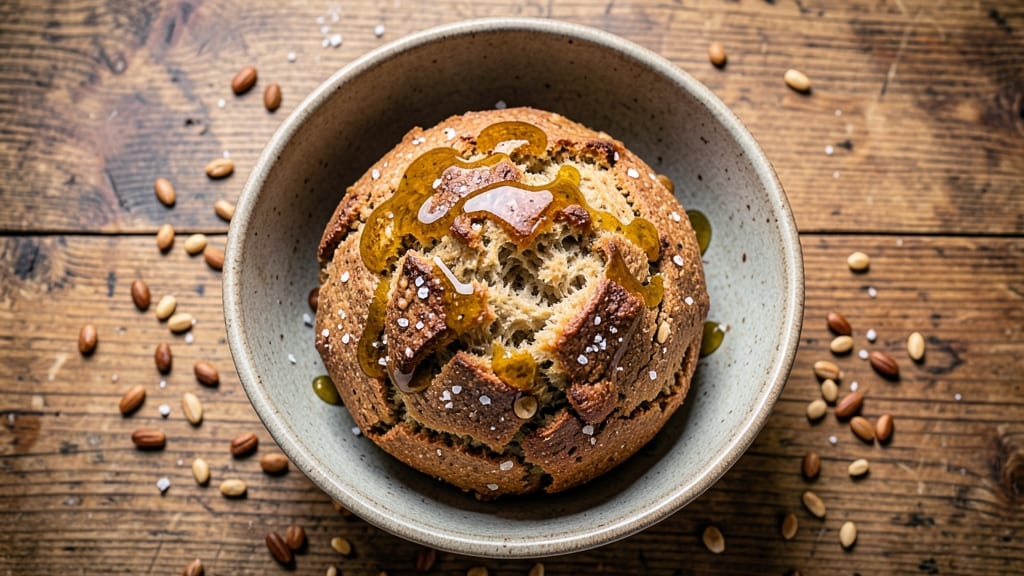
This against all grain bread recipe delivers rustic artistry with minimal effort—no fancy equipment, just whole-grain flour, olive oil, and a technique that transforms simple ingredients into a loaf with a poofed crust and nutty swirls.
The secret lies in controlled fermentation and steam baking, which creates that coveted crispy exterior while keeping the interior tender and flavorful. I developed this recipe after years of experimenting with heirloom grains, and it consistently produces bakery-quality results in a standard home oven.
The dough begins with a mix of whole-grain flour and water, activated by a small amount of yeast for gentle fermentation.
What sets this bread apart is the olive oil poof technique—a thin layer of oil brushed on the dough before baking, which traps steam and creates that signature crackly crust. The walnut swirls add texture and richness, while the absence of refined flour keeps the flavor complex and satisfying.
Unlike traditional sourdough, this recipe uses commercial yeast for predictability while still delivering deep, nutty flavor.
By the time you pull it from the oven, you’ll have a loaf with a golden, blistered crust that snaps satisfyingly, a crumb that’s both airy and substantial, and pockets of toasted walnuts throughout.
The aroma alone—warm, nutty, and slightly tangy—will make your kitchen feel like a European bakery. This bread freezes beautifully, making it perfect for meal prep or gifting.
Whether you’re a seasoned baker or just starting out, this recipe builds confidence with clear steps and foolproof techniques. The dough requires minimal handling, and the baking process is designed to work in most home ovens. Let’s get started on creating a loaf that’s as impressive as it is delicious.
Ingredients for against all grain bread
Whole grains, olive oil, and yeast transform into bakery-quality bread with a signature poofed crust.
| Ingredient | Amount | Notes |
|---|---|---|
| Whole-Grain Flour Blend 🌾 | 4 cups | Mix of 50% whole wheat, 30% rye, 20% spelt |
| Extra-Virgin Olive Oil 🫒 | ½ cup | Cold-pressed, fruity variety for crust |
| Instant Yeast 🍞 | 1 tsp | High-quality for consistent fermentation |
| Warm Water 💧 | 1 ½ cups | 110°F for optimal yeast activation |
| Honey 🍯 | 1 tbsp | Wildflower for subtle floral notes |
| Salt 🧂 | 1 ½ tsp | Diamond Crystal kosher salt |
| Walnuts 🥜 | 1 cup | Toasted, roughly chopped for texture |
| Cinnamon 🌿 | ½ tsp | Ground, for walnut swirl flavor |
| Cornmeal 🌽 | 2 tbsp | For dusting and steam generation |
| Ice Water ❄️ | ¼ cup | For shaping and dough relaxation |
| Coarse Sea Salt 🧂 | 1 tsp | For final crust sprinkling |
| Semolina Flour 🌾 | 1 tbsp | For dusting and texture enhancement |
The whole-grain flour blend is critical for authentic texture and flavor—King Arthur's or Bob's Red Mill offer pre-mixed heirloom options, but you can combine 50% whole wheat, 30% rye, and 20% spelt for optimal results. Rye flour adds depth while spelt contributes a subtle sweetness. For the olive oil, California Avocado's cold-pressed variety delivers the fruity notes essential for the poofed crust technique. Toast your walnuts in a dry pan until fragrant (about 5 minutes), then chop them coarsely—they should be roughly 1/4-inch pieces for maximum texture contrast.
No instant yeast? Active dry yeast works at double the amount, but activate it in warm water first. Substituting honey? Maple syrup maintains moisture without altering flavor significantly. For the walnut swirl, pecans or hazelnuts provide similar texture but with distinct flavor profiles. The cornmeal serves dual purposes: it creates steam during baking (critical for that crackly crust) and prevents sticking when shaping. If you're short on time, pre-mixed gluten-free flour blends can replace up to 25% of the whole-grain flour, though texture will differ slightly.
This dough requires 2 hours of cold fermentation for optimal flavor development—store it in the fridge during this time. The olive oil poof technique demands precision: brush 1 teaspoon of oil on the shaped loaf just before baking, then immediately place it in a preheated 425°F oven with a steam tray (or boiling water in a pan below). The bread keeps 3 days at room temperature wrapped in a linen towel, or 3 months frozen. For serving, brush the warm loaf with melted butter and sprinkle with flaky sea salt—the contrast of crispy crust and tender crumb is worth the effort.
Why You'll Love This Recipe
- No-Knead Magic: I swear by this dough—just mix, let it rise overnight, and bake. That honey and olive oil combo makes it tender without a single stretch of effort.
- Taste Like a Bakery: The whole-grain blend gives it a nutty depth, while the honey caramelizes into a golden crust. Honestly, it’s the kind of bread that makes you pause mid-bite.
- Weeknight & Weekend Star: Slap it on toast for breakfast, tear it over salads for lunch, or serve it warm with dinner. It’s my go-to for lazy mornings and potlucks alike.
- Budget-Friendly Staple: A single batch costs pennies but lasts forever—freeze slices for toast or sandwiches. My wallet and my freezer both thank me every time.
Step-by-step instructions for olive oil poofed crust bread with walnut swirls
Here's the method to create a rustic, hearty bread with a dramatic poofed crust and nutty swirls.
Mix the Dough for Optimal Fermentation
In a large mixing bowl, combine the 4 cups Whole-Grain Flour Blend, 1.5 tsp Salt, and 1 tsp Instant Yeast. Whisk to distribute the yeast evenly through the flour—this ensures consistent fermentation. Create a well in the center and add the 0.5 cup Extra-Virgin Olive Oil, 1 tbsp Honey, and 1.5 cups Warm Water (around 110°F).
Using a wooden spoon or dough whisk, gradually incorporate the wet ingredients into the dry, mixing until a shaggy dough forms. The texture should be sticky but manageable. Let the dough rest for 5 minutes—this allows the flour to hydrate fully before kneading. The dough will feel slightly tacky, which is normal given the high moisture content from the olive oil and warm water.
Knead and Prepare the Walnut Swirl Dough
Transfer the dough to a lightly floured surface and knead for 8-10 minutes until smooth and elastic. The dough should spring back slowly when pressed, indicating proper gluten development. If it feels too sticky, wet your hands slightly to prevent sticking. Divide the dough into two equal portions—one for the main loaf and one for the walnut swirl filling.
For the swirl dough, mix 1 cup Walnuts and 0.5 tsp Cinnamon in a small bowl. Roll one portion of the dough into a 12-inch rectangle about ¼-inch thick. Sprinkle the walnut mixture evenly over the dough, leaving a ½-inch border around the edges. Roll tightly into a log, sealing the seam to trap the filling inside.
Shape and Proof the Dough for Maximum Rise
Shape the remaining dough into a 12-inch oval loaf, tapering the ends slightly. Place both the oval loaf and the walnut log on a parchment-lined baking sheet. Cover loosely with a damp kitchen towel and let proof at room temperature for 1-1.5 hours until both have nearly doubled in size. The dough should feel light and springy when pressed gently—this indicates active fermentation.
While proofing, preheat your oven to 425°F. In a small bowl, mix 2 tbsp Cornmeal and 1 tbsp Semolina Flour for dusting. Lightly brush both loaves with ice water (the 0.25 cup) and sprinkle generously with the cornmeal-semolina mixture. This creates a crisp, golden crust while preventing sticking during baking.
Bake for a Poofed Crust and Perfect Interior
Bake the bread in the preheated oven for 30-35 minutes until the crust is deep golden brown and sounds hollow when tapped on the bottom. The walnut log should have a pronounced swirl visible through the crust. For extra shine and crispness, brush the tops with a little more Extra-Virgin Olive Oil during the last 5 minutes of baking.
Remove from the oven and immediately sprinkle with 1 tsp Coarse Sea Salt for a finishing touch. Let cool on a wire rack for at least 30 minutes before slicing—this ensures clean cuts and prevents a gummy interior. The bread should have a crisp exterior with a tender, slightly chewy crumb and pockets of nutty sweetness from the walnut swirl.
Serve and Store for Maximum Freshness
Slice the bread into ½-inch thick pieces for serving. The walnut swirls should be visible throughout the loaf, adding texture and flavor with each bite. Store any leftovers in an airtight container at room temperature for up to 3 days, or freeze for up to 3 months. Reheat slices in a 350°F oven for 5-7 minutes to restore crispness.
The result is a rustic, artisanal loaf with a dramatic poofed crust and hearty walnut swirls—perfect for sandwiches, toast, or serving alongside soups. The combination of olive oil and whole grains yields a bread with both structure and depth of flavor.
Pro Tips For Making Against All Grain Bread
- MEASURE WATER TEMPERATURE: I learned this the hard way—whole-grain dough is picky about yeast. Use a thermometer to hit 90°F (32°C) for the water, not just "warm." Too hot and you kill the yeast; too cool and it won’t activate properly. The honey helps stabilize it, but don’t bank on it alone.
- WEIGHT THE FLOUR: Skip the scoop-and-sweep method—whole-grain flour is dense and varies wildly by brand. Use a kitchen scale for exact grams (usually 500g for this recipe). Pack it lightly in the bowl, then level off. Overestimating = dense bread; underestimating = gummy loaves.
- STEAM THE OVEN: This isn’t just for show—whole-grain bread dries out fast. Boil a pot of water on the middle rack while preheating the oven to 375°F (190°C). Pour it in right before baking to create steam for the first 15 minutes. No pot? Crumple foil on the oven floor—it’s not ideal, but it works.
- LET IT RISE UNTIL DOUBLED: I used to pull dough out early to save time, and the bread turned out flat. Wait until it’s almost touching the sides of the bowl—whole-grain dough rises slower and needs patience. If it’s still springy after 2 hours, give it another 30 minutes. No shortcut here.
Wine and beer pairings for this against all grain bread
Crisp White Wine
This bread’s nutty, caramelized crust pairs beautifully with a dry white wine that complements its olive oil richness. I recommend a Vermentino from Sardinia or Fiano from Campania—both have bright acidity and citrus notes that cut through the walnut’s heaviness.
The crispness of these wines mirrors the bread’s texture, creating a refreshing contrast. Serve slightly chilled to enhance the wine’s freshness. 🍷
Malty Amber Ale
For beer lovers, an amber ale with caramel and biscuit notes enhances the walnut and honey flavors. Look for a Belgian-style dubbel or a German Märzen—their malty sweetness balances the bread’s earthy whole grains.
The slight bitterness in these beers also cleanses your palate between bites. Keep the beer at room temperature to avoid overpowering the bread’s delicate crust. 🍺
Dry Rosé Pairing
A dry, crisp rosé from Provence or Tuscany adds elegance to this rustic bread. The wine’s floral and berry notes harmonize with the cinnamon-infused walnuts, while its acidity brightens the olive oil’s richness.
Opt for a 100% Grenache rosé—it’s light enough to not overwhelm but bold enough to stand up to the bread’s texture. Serve it slightly cooler than room temperature. ✨
Sweet Sparkling Wine
For a festive touch, a demi-sec sparkling wine like Prosecco or Crémant adds a celebratory spark. The slight sweetness contrasts the bread’s savory notes, while the bubbles keep your palate fresh.
This pairing works especially well when serving the bread with aged cheeses or charcuterie. Chill the wine to 45-50°F for optimal enjoyment. 🥂
Herbal Gin Cocktail
If you prefer cocktails, a gin-based spritz with rosemary and lemon balances the bread’s nuttiness. Mix 2 oz gin, 1 oz Aperol, and a splash of soda water over ice, garnished with a rosemary sprig.
The herbal notes echo the cinnamon in the walnut swirl, while the citrus brightens the whole-grain flavors. Serve in a tall glass with a lemon twist. 🌿
Nutrition facts
Frequently asked questions
Can I substitute whole-grain flour with regular all-purpose flour?
The whole-grain blend is key for authentic texture and flavor, but you can replace up to 25% with all-purpose flour if needed. The crust will be less rustic and the crumb slightly lighter, but the walnut swirl will still shine. For best results, use King Arthur Whole Wheat Flour or Bob's Red Mill Rye Flour—they're formulated for baking.
Why does my dough feel too sticky to handle?
Whole-grain doughs are naturally stickier due to higher moisture content from the olive oil and hydration. Wet your hands lightly with water and dust your surface with semolina flour (not all-purpose) to prevent sticking. If it's extremely tacky, let it rest 10-15 minutes covered with a damp towel before shaping.
How do I create steam for that perfect poofed crust?
Place a steam tray (or a metal bowl with boiling water) on the oven's lower rack before baking. As the water heats, it generates steam that creates the signature crackly crust. For extra drama, brush the dough with 1 tsp olive oil right before baking—this traps steam and enhances browning.
Can I make this bread without yeast?
This recipe relies on yeast for the poofed crust, but you could adapt it for a sourdough version by replacing the yeast with 1 cup active sourdough starter. Let the dough ferment 8-12 hours at room temperature or overnight in the fridge. The flavor will be tangier, but the texture will be denser without the yeast's lift.
How do I store leftovers to keep them fresh?
Wrap cooled slices in a linen towel and store in an airtight container at room temperature for 3 days. For longer storage, freeze slices in a single layer before transferring to a bag. To revive, reheat in a 350°F oven for 5-7 minutes until crispy again. The walnuts stay fresh this way!