
Side Dishes
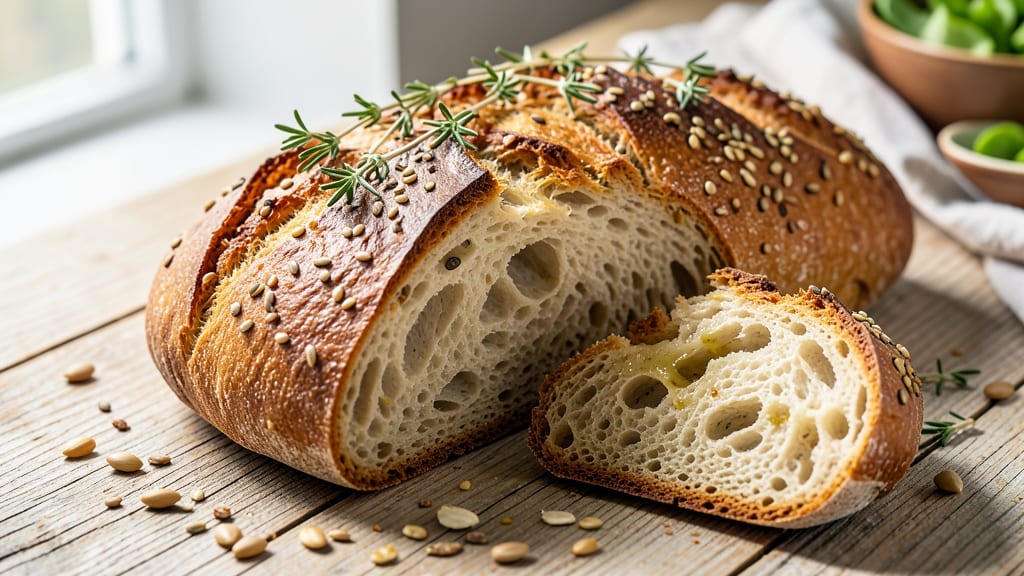
This Alpine bread recipe brings the rustic charm of Swiss mountain bakeries to your kitchen with its signature crusty crunch and aromatic herbal notes. 🌟 The secret lies in a traditional blend of rye flour and whole grains, combined with seeds like flax and sunflower for that authentic Alpine texture.
Unlike standard loaves, this bread develops a deep caramelized crust while maintaining a tender, open crumb—perfect for soaking up hearty soups or pairing with melted Gruyère.
The dough requires a sourdough starter for natural fermentation, which enhances flavor and improves digestibility. With a hydration level of 70%, this recipe balances structure and softness, creating a loaf that's both sturdy enough to hold its shape and tender enough to melt in your mouth.
The shaping technique—forming a round boule—ensures even baking and that coveted crackly crust.
Baking at 450°F with steam creates the ideal conditions for that signature Alpine crust, while the addition of dried herbs like thyme and rosemary infuses each slice with mountain-inspired aroma.
The result is a loaf that's crisp on the outside, soft in the center, and packed with nutty, herbal depth—far superior to store-bought versions.
Serve warm with butter, olive oil, or alongside Swiss cheeses for the ultimate Alpine dining experience. This recipe delivers restaurant-quality results with a method that's surprisingly approachable for home bakers. Let's get started!
Ingredients for alpine bread
Rustic Alpine ingredients crafted for that signature crusty crunch and herbal depth.
| Ingredient | Amount | Notes |
|---|---|---|
| Active Sourdough Starter 🍞 | ½ cup | Fed and bubbly, 100% hydration |
| Rye Flour 🌾 | 2 cups | Dark rye for authentic Alpine flavor |
| All-Purpose Flour 🌾 | 2 cups | Bread flour preferred for structure |
| Flaxseeds 🌱 | ¼ cup | Whole seeds for texture and nutrition |
| Sunflower Seeds 🌻 | ¼ cup | Toasted for enhanced flavor |
| Dried Thyme 🌿 | 1 tbsp | Fresh thyme preferred if available |
| Dried Rosemary 🌿 | 1 tbsp | Finely chopped for even distribution |
| Sea Salt 🧂 | 1 ½ tsp | Fine grain for even dissolving |
| Olive Oil 🫒 | ½ cup | Extra-virgin for richness |
| Water 💧 | 2 ½ cups | Room temperature for ideal hydration |
| Honey 🍯 | 1 tbsp | Wildflower preferred for complexity |
| Ice Water ❄️ | ¼ cup | For final dough adjustment |
The rye flour is non-negotiable for that authentic Alpine character—King Arthur or Bob's Red Mill are my go-tos, but any dark rye works. The flaxseeds and sunflower seeds? Buy them whole and toast them lightly in a dry pan—this brings out their nutty flavors and prevents them from turning bitter. For the dried herbs, Penzeys or local specialty stores carry the highest quality, but the grocery store's dried section will do in a pinch. Just make sure they're labeled 'culinary' and not 'ornamental'—those have zero flavor. The sourdough starter should be at its peak activity, with bubbles along the sides and surface—this ensures proper fermentation for that open crumb structure.
No rye flour? Substitute with whole wheat flour at a 1:1 ratio, though the flavor will be slightly less complex. Swapping seeds? Pumpkin seeds or sesame seeds work beautifully—they just need toasting. Fresh herbs are ideal, but dried thyme and rosemary at half the amount still deliver that mountain aroma. For the honey, avoid ultra-filtered varieties—look for 'raw' or 'unfiltered' labels for that deeper flavor. Running low on olive oil? Avocado oil or melted coconut oil are neutral alternatives, though they won't add the same fruity depth. And if your dough feels too sticky, add ice water one tablespoon at a time—it tightens the gluten without killing the flavor.
This dough is best used within 24 hours of mixing, though it can be refrigerated for up to 48 hours if wrapped tightly in plastic. For longer storage, freeze the shaped boule (before baking) for up to 3 months3-4 days wrapped in a cotton towel, or up to 1 week in the fridge. To revive stale bread, wrap in foil and warm in a 350°F oven for 10-15 minutes—it'll taste like it just came out of a Swiss bakery. And if you're making multiple loaves, bake them back-to-back—the oven retains enough heat to develop that perfect crust.
Why You'll Love This Recipe
- I’ll be real: sourdough can feel intimidating, but this recipe uses less starter than most, and the rest is pantry staples. Rye flour is cheaper than you’d think, and those seeds? They bulk it up so a loaf costs next to nothing. Good bread shouldn’t break the bank.
- No-Knead Magic: I swear by this—just mix, shape, and let the sourdough do the work. That rye flour gives it a deep, earthy backbone, but the flaxseeds keep it tender without fuss. My hands stay clean, and the dough doesn’t fight me.
- Nutty Crunch Surprise: Honestly, the sunflower and flaxseeds are the real MVP here. They toast up golden in the oven, adding this unexpected crunch that makes every bite feel like a little reward. It’s the kind of texture that turns "bread" into "something special."
- Picnic or Pantry: Between us, this bread is my go-to for everything. Tear it for lunchboxes, toast thick slices for breakfast, or freeze half for when you’re too tired to bake. The rye keeps it sturdy, so it doesn’t turn to mush in your bag—or your sandwich.
Step-by-step instructions for Alpine bread with herbal Swiss flavor
Master this rustic technique for a bread with crisp crust and aromatic herbal notes.
👨🍳 Step 1: Prepare the Dough Base with Precision
In a large mixing bowl, combine the 0.5 cup active sourdough starter, 2 cups rye flour, 2 cups all-purpose flour, 0.25 cup flaxseeds, 0.25 cup sunflower seeds, 1 tbsp dried thyme, 1 tbsp dried rosemary, and 1.5 tsp sea salt. Mix thoroughly with a wooden spoon until all dry ingredients are evenly distributed and no flour pockets remain.
Add the 0.5 cup olive oil and 1 tbsp honey, mixing until the oil is fully incorporated and the mixture resembles coarse crumbs. This creates the perfect foundation for the Alpine flavor profile while ensuring proper gluten development. The seeds should be evenly dispersed throughout the dry ingredients for consistent texture in every bite.
🍳 Step 2: Hydrate Gradually for Optimal Texture
Slowly pour in the 2.5 cups room temperature water while mixing continuously. The dough will initially appear shaggy but will begin to come together after about 3-4 minutes of vigorous mixing. Use your hands to work the dough until it forms a cohesive mass that pulls away from the sides of the bowl.
Here's the thing—Alpine bread thrives on proper hydration without becoming too sticky. If the dough feels too wet after mixing, add 1-2 tablespoons more of the all-purpose flour to achieve a pliable but not sticky consistency. The dough should be soft enough to handle but not so wet that it sticks to your fingers excessively.
🥘 Step 3: Knead and Develop Gluten for Structure
Turn the dough onto a lightly floured surface and knead for 8-10 minutes until smooth and elastic. I press down firmly with the heel of my hand and fold the dough from one side to the other, rotating the dough with each fold. This technique builds strength without overworking the gluten, which is crucial for maintaining the bread's open crumb structure.
You'll know you've achieved proper gluten development when the dough springs back slowly when poked with your finger and forms a smooth, taut surface. The dough should feel slightly tacky but not sticky—this is the ideal consistency for Alpine bread. If it feels too dry, lightly mist with water; if too sticky, dust with a tiny bit more flour.
⏰ Step 4: First Rise for Flavor Development
Place the dough in a lightly oiled bowl, cover with a damp kitchen towel, and let rise at room temperature for 1.5-2 hours until it has nearly doubled in size. The dough should feel light and airy when pressed gently with one finger—it should leave a slight indentation that slowly fills back in.
This initial rise allows the sourdough starter to activate fully, developing those complex Alpine flavors. I like to check the dough every 30 minutes during this period. If the kitchen is particularly warm, the dough may rise faster—adjust the time accordingly to prevent overproofing. The goal is to achieve just under full rise for optimal oven spring later.
🔥 Step 5: Shape and Final Proof for Crust Development
Gently shape the dough into a round loaf by pinching the edges and pulling the dough upward toward the center. Place it seam-side up in a lightly greased pullman pan or round baking dish. Cover again and let rise for another 30-45 minutes until the dough has risen about 50% above the pan's rim.
Preheat your oven to 425°F with a Dutch oven inside for 30 minutes to create a steam environment. Just before baking, brush the dough with a bit of water and sprinkle with additional sea salt if desired. This creates the signature crisp crust while maintaining that tender crumb. The bread is ready when the internal temperature reaches 190-195°F and the crust has a deep golden color.
Pro Tips For Making Alpine Bread
- TOAST THE SEEDS FIRST: I learned this the hard way—raw flaxseeds and sunflower seeds just sit there like dull marbles in your dough. Toss them in a dry pan over medium heat for 3-4 minutes until they smell nutty and toasted. This makes them crispier in the bread and prevents that weird, damp texture when they absorb too much moisture during mixing.
- HYDRATE THE RYE: Rye flour loves water more than a sponge loves a pool. If your dough feels stiff or crumbly when mixing, add 1-2 extra tablespoons of water to the rye flour before combining with the rest of the ingredients. This keeps the final texture open and chewy instead of dense and gummy.
- DON’T OVER-KNEAD THE SOUR: Alpine bread relies on that sourdough starter for lift, but too much handling kills its bubbles faster than a deflating balloon. Mix just until the flours and seeds are evenly distributed—no need to punch or fold aggressively. Overworking the dough flattens the gluten and weakens the rise.
- STEAM THE FIRST 15 MINUTES: Sounds weird, but it works: Place a metal tray on the oven rack below your bread pan and pour 1 cup of boiling water into it when you bake. The steam helps the crust form evenly without burning, especially with rye’s tendency to darken fast. I know, I know—it’s one more thing to remember, but your crust will thank you.
Flavor customization for alpine bread
Herbal Variations
Swap the thyme and rosemary for fresh tarragon and lavender buds (about 1 tsp each) for a floral Alpine twist. The lavender adds a delicate sweetness that pairs perfectly with Gruyère cheese.
For a more robust flavor, try fresh sage leaves (chopped) and dried marjoram—this combo gives a savory depth that works beautifully with roasted meats. 🌿
Seed Swaps
Replace flaxseeds and sunflower seeds with pumpkin seeds and sesame seeds for a nutty, toasted flavor. Toast the seeds in a dry skillet for 3-4 minutes until fragrant before mixing into the dough.
For a sweeter variation, use poppy seeds and honey seeds—these add a subtle sweetness that balances the rye's earthiness. 🌻
Sweet Alpine Twist
Add 1 tbsp cinnamon and ½ tsp cardamom to the dough for a sweet Alpine-inspired loaf. This version pairs wonderfully with apple butter or honey for dipping. For extra richness, stir in ¼ cup chopped dried apricots during the final kneading stage—this adds natural sweetness and chewiness. 🍯
Whole Grain Boost
Replace 1 cup of all-purpose flour with whole wheat flour or spelt flour for a heartier texture. For an extra nutty flavor, add ½ cup toasted buckwheat groats—these contribute a deep earthiness that complements the rye. If you prefer a lighter crumb, use ½ cup oat flour instead. 🌾
Gluten-Free Adaptation
For a gluten-free version, replace the all-purpose and rye flours with a 1:1 gluten-free flour blend (like Bob's Red Mill 1-to-1). Add 1 tbsp psyllium husk powder to improve structure and 1 extra tbsp olive oil to bind the dough.
Reduce the water slightly to 2 cups to prevent stickiness. 💪
Crust Enhancers
For an extra crisp crust, brush the baked loaf with melted butter while still warm and sprinkle with coarse sea salt or crushed black pepper.
For a smoky flavor, add ½ tsp smoked paprika to the dough or brush the crust with olive oil infused with garlic after baking. 🔥
Nutrition facts
Frequently asked questions
Can I make this Alpine bread without a sourdough starter?
Yes, but the flavor will be less complex. Replace the 0.5 cup sourdough starter with 1.5 tsp active dry yeast and 1 extra tbsp honey to feed it. Let the dough rise for 1 hour instead of the 1.5-2 hours—the yeast will work faster. The texture will be slightly less open, but still delicious with that Alpine crust!
Why does my Alpine bread turn out dense instead of crusty?
Dense bread usually means underproofed dough or insufficient steam during baking. Make sure your dough rises until it's nearly doubled in size before shaping. For baking, use a Dutch oven with steam—pour 1 cup hot water in the oven bottom before adding the bread. Also check your oven temperature—450°F is crucial for that signature Alpine crust!
How do I store Alpine bread to keep it fresh?
Wrap the cooled loaf tightly in a cotton towel or beeswax wrap, then place in a paper bag at room temperature for 2-3 days. For longer storage, freeze the baked loaf (unwrapped) for up to 3 months. To revive stale bread, wrap in foil and warm at 350°F for 10 minutes—it'll taste like it just came out of a Swiss bakery!
Can I add cheese to this Alpine bread?
Try mixing in ½ cup grated Gruyère or Comté during the final kneading stage. For extra richness, fold in ¼ cup chopped walnuts along with the cheese. The melted cheese will create pockets of gooey goodness when baked. This version pairs perfectly with hearty soups or as a side for fondue!
What's the best way to reheat sliced Alpine bread?
For crispy crust and warm interior, wrap slices in foil and heat at 375°F for 5-7 minutes. For extra crunch, place slices on a baking sheet and toast in the oven for 3-4 minutes until golden. Avoid the microwave—it makes the crust soggy and ruins that perfect Alpine texture!