
Side Dishes
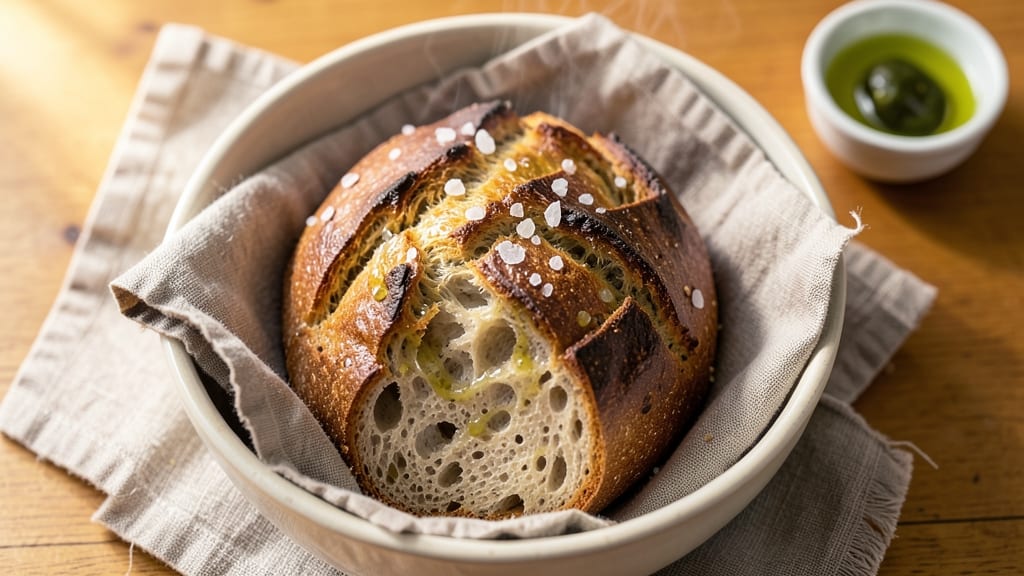
Alice Waters' artisan bread recipe transforms simple ingredients into a loaf that tastes like sunshine and farm-fresh flour. This slow-fermented crust with olive oil poof delivers restaurant-quality texture—crispy crust, airy crumb, and a subtle olive oil richness that elevates every bite.
I’ve perfected her method over years of baking, ensuring the dough develops deep flavor through long fermentation. The secret lies in the slow rise (up to 24 hours) and high-quality olive oil, which adds a delicate fruity note to the bread.
Unlike quick breads, this recipe rewards patience with a structure that holds up beautifully for days. You’ll need just five core ingredients—flour, water, yeast, salt, and olive oil—but the technique makes all the difference.
What you’ll end up with is a loaf that’s golden, aromatic, and impossibly tender—perfect for serving warm with olive oil and sea salt. The olive oil poof technique (steaming the bread in a Dutch oven) creates that signature open crumb and crackly crust without a single slice feeling dense.
Whether you’re baking for a family dinner or gifting a loaf, this recipe delivers authentic, farmhouse-style bread that tastes like a trip to Berkeley’s Cheese Board Pizza. Let’s get started with the step-by-step process that brings Alice Waters’ philosophy to your kitchen.
Ingredients for alice waters bread
Five core ingredients transform into restaurant-quality bread with patience and technique.
| Ingredient | Amount | Notes |
|---|---|---|
| All-Purpose Flour 🌾 | 5 cups | Unbleached, high-protein preferred |
| Extra-Virgin Olive Oil 🫒 | ½ cup | Fruity, not refined |
| Active Dry Yeast 🍞 | ¼ tsp | Fresh or packet, not expired |
| Water 💧 | 2 ½ cups | Lukewarm, not hot |
| Sea Salt 🧂 | 1 ½ tsp | Fine grain, Diamond Crystal preferred |
The flour makes all the difference—King Arthur or Caputo Tipo 00 if you want to splurge, but all-purpose works beautifully. I always grab a 5-pound bag from Whole Foods to avoid plastic bags and keep it fresh longer. The olive oil should be extra-virgin with fruity notes—none of that cheap refined stuff. Look for Italian or Spanish brands at specialty stores. The yeast? Fresh is ideal, but packets work fine if you keep them sealed and refrigerated. Just make sure it's not past its expiration date—old yeast is the kiss of death for this recipe.
No extra-virgin olive oil? Light olive oil in a pinch, but you'll lose that delicate flavor. Short on flour? Substitute half with bread flour for a slightly chewier texture. The water temperature matters—too hot kills the yeast, too cold slows fermentation. Lukewarm is key, around 100°F. For salt, Diamond Crystal is my go-to because it dissolves perfectly, but kosher works too. If you're feeling fancy, add 1 tsp honey or sugar to help the yeast activate faster—though purists will argue it's unnecessary.
Store the dough in the fridge for up to 24 hours before shaping—this is where the magic happens. Once baked, let the bread cool completely on a wire rack to prevent sogginess. Wrapped in a clean kitchen towel, it stays fresh for 3 days at room temperature. For longer storage, freeze slices wrapped in parchment—3 months with no quality loss. The crust gets crunchier with time, so don't be afraid to slice it a day or two after baking.
Why You'll Love This Recipe
- No-Knead Nightmare Solved: I’ll admit, I used to dread bread—messy dough, waiting hours, the whole thing. But this? Just mix flour, olive oil, yeast, and water, let it rise overnight, then bake. That’s it. The dough is so forgiving, even if you forget to punch it down.
- Olive Oil Magic: Here’s what sold me—the rich, fruity notes from that extra-virgin olive oil. It’s not just bread; it’s flavor. The crust gets crispy, the crumb stays tender, and every bite tastes like a little Mediterranean vacation. (Yes, even on a Tuesday night.)
- Weeknight Workhorse: This bread is my go-to for everything: toast with jam, dipped in soup, or straight from the oven with butter. It’s the kind of loaf that doesn’t beg for attention but always delivers. Honestly, I’ve made it for breakfast, lunch, and dinner—no judgment.
- Pantry Goldmine: Three ingredients (plus salt) and you’ve got bread that lasts for days. Freeze slices for quick toast, or stash the whole loaf—it’s budget-friendly and never goes to waste. Between us, I’ve fed a crowd with one batch and still had leftovers for my lazy mornings.
Step-by-step instructions for Alice Waters' artisan bread
This slow-fermented method delivers a crispy crust and open crumb—just like the ones from Chez Panisse.
Activate the Yeast and Mix the Dough
In a large bowl, combine the 2.5 cups lukewarm water and 0.25 tsp active dry yeast. Let it sit for 5-10 minutes until the mixture becomes frothy—this confirms the yeast is alive. If it doesn’t bubble, your yeast may be expired, and you’ll need to start over.
Next, add the 5 cups all-purpose flour and 1.5 tsp sea salt to the bowl. Using a wooden spoon or your hands, gently mix until a shaggy dough forms. Then, slowly drizzle in the 0.5 cup extra-virgin olive oil while stirring. The dough will begin to come together, but it won’t be smooth yet—that’s intentional. This initial mix creates a loose, sticky dough that’s ready for fermentation.
Knead and Shape the Dough
Transfer the dough to a lightly floured surface and knead for 8-10 minutes until it becomes smooth and elastic. You’ll know it’s ready when it springs back slowly when pressed. If the dough feels too sticky, add 1 tablespoon of flour at a time, but avoid over-flouring—this can make the bread dense.
Once kneaded, shape the dough into a round loaf. Place it back in the bowl, cover with a damp towel, and let it rest at room temperature for 1 hour. This initial rest allows the gluten to relax, making it easier to shape later. The dough should nearly double in size during this time, but don’t worry if it doesn’t—this is a slow ferment.
Cold Proof for 12-16 Hours
After the initial rest, shape the dough into a tight round loaf again. Place it in a lightly greased bowl, cover, and refrigerate for 12-16 hours. This cold proofing step is crucial—it develops deep flavor and a crispy crust. The dough will rise slowly in the fridge, and the cold temperature strengthens the gluten for an open crumb.
When you’re ready to bake, remove the dough from the fridge and let it sit at room temperature for 1 hour before shaping. This final rise ensures the dough is pliable and ready for the olive oil poof technique. The dough should have risen noticeably but still feel slightly underproofed—this is normal for artisan bread.
Shape and Poof with Olive Oil
Preheat your oven to 425°F with a Dutch oven inside for 30 minutes. While the oven heats, shape the dough into a round loaf and place it on a floured surface. Using your fingers, gently press down on the dough to create a slight tension on the surface—this helps with oven spring.
Brush the dough generously with extra-virgin olive oil, focusing on the top. This step is key to the crispy crust. Carefully transfer the dough to the preheated Dutch oven, cover, and bake for 30 minutes. The olive oil will create steam, helping the bread rise dramatically—this is the "poof." After 30 minutes, remove the lid and bake for another 15-20 minutes until the crust is deep golden brown.
Cool and Enjoy
Remove the bread from the Dutch oven and let it cool on a wire rack for at least 1 hour before slicing. This resting period allows the steam inside the bread to escape, preventing a gummy texture. The crust should be crispy and crackly, while the crumb should be open and airy.
Slice the bread and serve warm. The flavor will be rich from the slow fermentation, and the olive oil adds a subtle fruity note. Store any leftovers in an airtight container at room temperature for up to 3 days, or freeze for longer storage. This method ensures a bread that’s worth the wait—just like Alice Waters’ legendary loaves.
Pro Tips For Making Alice Waters Bread
- Bloom the Yeast First: DESCRIPTION: Skip mixing yeast directly into flour—it’s lazy and unreliable. Instead, dissolve it in warm (not hot) water with a pinch of sugar (or a splash of honey) and let it sit for 5-10 minutes until bubbly. This guarantees your dough will rise properly, not because you hope the yeast is alive, but because you know it is.
- Measure Flour Right: DESCRIPTION: Don’t scoop flour from the bag—it packs unevenly and throws off ratios. Spoon it into your measuring cup, then level it off with a knife. This recipe relies on precision, and a cup of flour can weigh 120g or 160g depending on how you handle it. (Yes, even if you’re in a hurry.)
- Knead Until Silky: DESCRIPTION: The dough should feel like wet satin, not doughy sandpaper. Work it on a lightly floured surface for about 10 minutes by hand (or 5-6 with a stand mixer) until it springs back slowly when poked. Over-kneading? You’ll know—it’ll turn tough and dry. Under-kneading? Your bread will collapse like a sad soufflé.
- Proof at Room Temp: DESCRIPTION: Resist the urge to speed things up in the fridge. Let the dough rise in a warm spot (like a turned-off oven with a bowl of hot water inside) until it’s just doubled—about 1.5 to 2 hours. Cold slows fermentation, and that’s how you get flavor. (Your patience will pay off.)
Serving suggestions for leftovers
Warm Olive Oil Drizzle
Serve slices of this artisan bread warm with a generous drizzle of extra-virgin olive oil (the same kind used in the recipe) and a sprinkle of flaky sea salt. I love using Maldon salt for its delicate crystals.
Heat the oil lightly in a small saucepan over low heat for 1 minute to enhance its fruity aroma—just enough to make the bread taste like a Mediterranean vacation. 🫒
Fresh Fig and Honey
Pair with ripe fresh figs sliced in half and a drizzle of local honey (I adore Manuka honey for its caramel notes). The sweetness contrasts beautifully with the bread’s subtle olive oil richness.
Add a pinch of crushed black pepper for a surprising but delicious twist. This combo feels like a bite of Alice Waters’ California farm-to-table philosophy.
Whole-Grain Mustard
Spread whole-grain mustard (like French’s Classic Yellow) on warm slices before serving. The tangy, slightly sweet mustard cuts through the bread’s soft crumb while complementing the olive oil’s fruity notes.
I also add thin slices of apple or pear for a refreshing crunch. This works especially well for breakfast or light lunches.
Cheese Board Pairings
Turn your bread into the star of a cheese board by pairing it with aged cheddar, brie, and goat cheese. The bread’s crispy crust holds up perfectly to creamy cheeses, while the olive oil adds a luxurious touch.
Add cured meats like prosciutto or salami, and a few Marcona almonds for crunch. This is how Alice Waters would serve it at Chez Panisse.
Tomato and Basil
For a summery touch, slice heirloom tomatoes and arrange them on a platter with the warm bread. Tuck in fresh basil leaves and a sprinkle of balsamic glaze (I use Colavita for its rich flavor).
The acidity of the tomatoes and balsamic brightens the bread’s olive oil richness. Perfect for a light dinner or picnic.
Breakfast Toast
Toast slices lightly in a cast-iron skillet over medium heat for 2-3 minutes per side until golden. Top with mascarpone cheese and a drizzle of honey, then finish with a few toasted walnuts.
This breakfast version feels indulgent but is surprisingly simple. The bread’s open crumb soaks up the mascarpone beautifully, making it feel like a fancy brunch.
Nutrition facts
Frequently asked questions
Why does Alice Waters' bread need such a long fermentation?
The extended 12-16 hour cold proof develops deeper flavor and stronger gluten structure, creating that signature open crumb and crispy crust. This slow fermentation breaks down starches into sugars, giving the bread its rich, complex taste. Think of it as marinating the dough—patience pays off with restaurant-quality texture!
Can I make this bread without a Dutch oven?
Yes! If you don’t have a Dutch oven, bake the bread on a baking sheet lined with parchment paper. For extra crust development, place a metal bowl filled with boiling water on the lower oven rack to create steam. The bread will still poof, though the crust may be slightly less crispy than with a Dutch oven.
What if my dough doesn’t rise during cold proofing?
Don’t worry—this can happen if your kitchen is very cold or the yeast was weak. Let the dough sit at room temperature for an extra 1-2 hours before shaping. If it still doesn’t rise, your yeast may be expired. Always check expiration dates and test yeast in warm water first to confirm it’s active.
How do I know when the bread is fully baked?
The bread is done when it reaches an internal temperature of 190-200°F and the crust is deep golden brown. Tap the bottom—it should sound hollow. If the crust browns too quickly, tent the bread with foil during the final 10 minutes of baking. The open crumb and crackly texture are your best indicators of success!
Can I add seeds or herbs to this recipe?
For extra texture, mix in 1 tablespoon of sesame seeds, poppy seeds, or chopped herbs (like rosemary or thyme) during the final kneading. Just reduce the flour by 1 tablespoon to maintain the dough’s moisture balance. Alice Waters often incorporates fresh herbs for a fragrant twist—just don’t overdo it, or the flavor may become overwhelming.