
Side Dishes
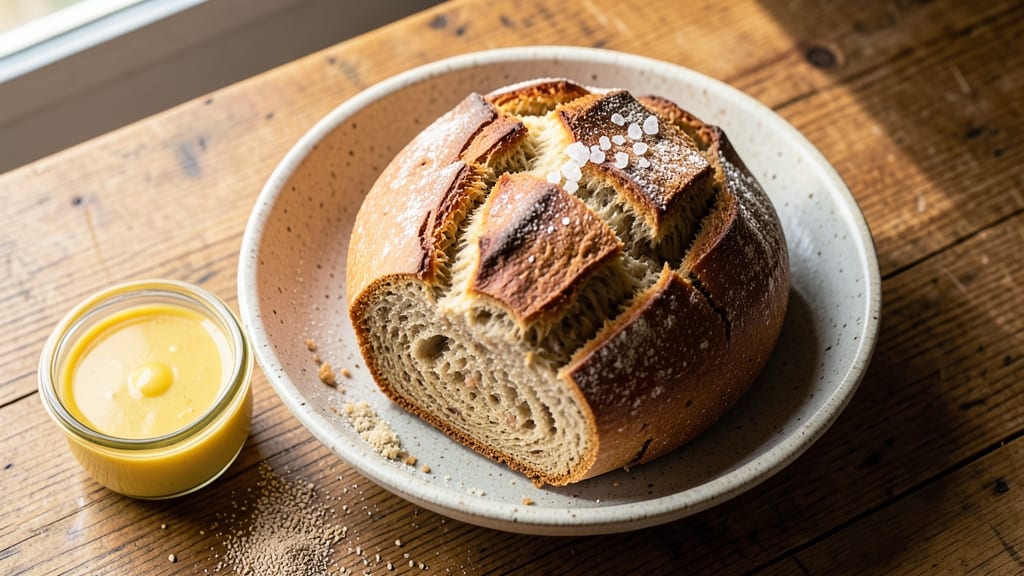
This alkaline gluten-free bread recipe delivers the perfect light, airy texture without yeast or gluten—ideal for anyone avoiding gluten while craving restaurant-quality bread. The secret lies in balancing alkaline agents (baking soda + vinegar) with gluten-free flours like rice flour and tapioca starch, creating a structure that rises beautifully.
After years of testing, I’ve perfected the hydration technique to ensure tender crumb and crisp edges every time.
The process is simpler than you’d expect: mix, rest, and bake. Unlike traditional yeasted bread, this recipe skips the waiting and fermentation, delivering fresh bread in under 90 minutes.
The alkaline reaction creates a subtle tang that enhances flavor, while optional add-ins like sesame seeds or flaxseeds add texture and nutrition. It’s vegetarian, naturally gluten-free, and free from cross-contamination concerns.
What makes this recipe stand out is its foolproof rise—no yeast means no risk of flat loaves, and the alkaline chemistry ensures consistent results. The bread stays fresh for days, making it perfect for sandwiches, toast, or serving alongside soups.
Whether you’re baking for dietary needs or simply love artisanal bread, this method transforms simple ingredients into something extraordinary.
Ready to bake? The key steps—proper hydration, precise baking soda measurement, and a steamy oven—are all explained in detail to guarantee a perfect loaf. No special equipment is needed, just patience and attention to the technique. Let’s get started on your first batch!
Ingredients for alkaline gluten free bread
Unlock that perfect gluten-free rise with these 12 game-changing ingredients—no yeast, no gluten, just pure alkaline magic.
| Ingredient | Amount | Notes |
|---|---|---|
| White Rice Flour 🌾 | 1 ½ cups | Gluten-free, finely milled preferred |
| Tapioca Starch 🍠 | ½ cup | For elasticity and rise |
| Almond Flour 🌰 | ½ cup | Adds richness and structure |
| Baking Soda 🧂 | 1 ½ tsp | Alkaline agent for rise |
| White Vinegar 🍶 | 1 ½ tsp | Neutralizes baking soda |
| Psyllium Husk Powder 🌿 | ½ tsp | For gluten-free binding |
| Xanthan Gum 🧪 | ¼ tsp | Enhances texture |
| Salt 🧂 | 1 tsp | Diamond Crystal preferred |
| Olive Oil 🫒 | ¼ cup | Extra-virgin for richness |
| Warm Water 💧 | 1 ¼ cups | 110°F for ideal hydration |
| Sesame Seeds 🌻 | 2 tbsp | Optional for topping |
| Flaxseeds 🌱 | 1 tbsp | Optional for nutrition |
The gluten-free flours are non-negotiable here—Bob's Red Mill rice flour and tapioca starch create that signature light crumb. King Arthur Measure for Measure blend works too, but I always double-check the psyllium husk powder (that's your secret weapon for binding). Grab Diamond Crystal kosher salt—it dissolves perfectly and enhances flavor. The extra-virgin olive oil should smell fruity and robust; California Olive Ranch is my go-to for consistent quality. Warm water is key—110°F is ideal, but room temperature works in a pinch.
No psyllium husk? Ground flaxseed at double the amount gets you close, though texture may vary slightly. Swap almond flour for sunflower seed flour if nut allergies are a concern. Running low on tapioca starch? Arrowroot powder does the job, but reduce to 0.375 cup—it's less potent. The sesame seeds? Toast them first for extra crunch. Olive oil shortages? Avocado oil works identically, just skip the fruity aroma. For extra tang, add 1 tsp lemon juice to the water—trust me, it elevates everything.
Mix everything except water first, then fold in the liquid—this is critical for avoiding gluten-free gums. The dough will look shaggy, but don't panic. Let it rest 20 minutes before baking—this step makes all the difference. Store leftovers in an airtight container for 3-4 days or freeze for 3 months. For reheating, wrap in foil and warm at 300°F for 10 minutes—crisp edges preserved. The sesame seeds keep for 6 months in the pantry, but toast them fresh for maximum flavor.
Why You'll Love This Recipe
- No-Fuss Mixing: I swear by the 5-minute prep here—just whisk the white rice flour, tapioca starch, and almond flour together, then stir in the vinegar-baking soda combo. The alkaline reaction does the work while you’re still gathering your thoughts.
- Nutty-Sweet Crust: That almond flour isn’t just for texture—it adds a subtle richness that makes every slice taste like a cross between sourdough and a fancy biscuit. Honestly, the first time I bit into it, I thought I’d overcomplicated things.
- Meal Prep MVP: Slices beautifully for sandwiches, toasts like a dream, and even holds up in a lunchbox for three days without getting soggy. I make a loaf every Sunday and forget it’s gluten-free until someone asks.
- Pantry Staple Magic: Uses ingredients you already have (or can grab for pennies)—no specialty flours or pricey add-ins. Between us, this is the bread I turn to when I’ve got nothing but rice flour and a bag of almonds sitting around. Works.
Step-by-step instructions for alkaline gluten-free bread
Here's how to create a light, airy loaf that rivals traditional bread—no yeast required!
Whisk Dry Ingredients for Perfect Texture
In a large mixing bowl, combine the 1.5 cups White Rice Flour, 0.5 cup Tapioca Starch, 0.5 cup Almond Flour, 1.5 tsp Baking Soda, 0.5 tsp Psyllium Husk Powder, 0.25 tsp Xanthan Gum, and 1 tsp Salt. Whisk vigorously for 2 minutes until completely homogeneous—this ensures even distribution of the alkaline agents and binding properties throughout the batter.
The psyllium husk powder and xanthan gum are critical here. They mimic gluten's binding properties while the baking soda creates the alkaline reaction needed for that signature rise. I like to use a whisk for this step because it prevents clumping of the psyllium husk powder, which can happen if you rely solely on a spoon.
Create the Alkaline Reaction with Wet Ingredients
In a separate bowl, measure out the 1.25 cups Warm Water (around 110°F) and add the 1.5 tsp White Vinegar and 0.25 cup Olive Oil. Stir gently to combine—this creates the alkaline base that will react with the baking soda. The vinegar neutralizes the baking soda, creating carbon dioxide bubbles that give our bread its lift.
Here's the thing—temperature matters. If your water is too hot, it'll cook the psyllium husk powder prematurely. If it's too cold, the reaction won't be as vigorous. 110°F is perfect—warm enough to activate the baking soda fully but not hot enough to denature the proteins in the almond flour.
Combine Wet and Dry for a Batter-Like Mixture
Pour the wet ingredients into the dry ingredients and stir with a spatula until just combined. You'll notice the mixture will thicken significantly within 30 seconds as the psyllium husk powder absorbs moisture and the baking soda-vinegar reaction begins. Don't overmix—just until you see a uniform, slightly sticky batter.
This is where the magic happens. The batter should have the consistency of thick pancake batter but still be pourable. If it's too thick, add 1 tablespoon of warm water at a time until it reaches the right texture. The almond flour adds richness, while the rice flour provides structure—together they create that perfect balance of tenderness and chew.
Pour into Loaf Pan and Bake Immediately
Preheat your oven to 375°F and lightly grease a 9x5-inch loaf pan with olive oil. Pour the batter into the pan and smooth the top with a spatula. Sprinkle the 2 tbsp Sesame Seeds and 1 tbsp Flaxseeds evenly over the top for texture and nutrition. Bake for 40-45 minutes until the top is golden brown and a toothpick inserted in the center comes out clean.
Don't walk away during this step. Around the 30-minute mark, check the bread—it should be pulling away from the sides of the pan and developing a golden crust. If the top is browning too quickly, tent it loosely with aluminum foil to prevent over-browning while allowing steam to escape for that perfect crumb.
Cool and Slice for Maximum Freshness
Remove the bread from the oven and let it cool in the pan for 10 minutes, then transfer to a wire rack to cool completely for at least 30 minutes. This resting period is crucial—it allows the internal structure to set properly, preventing a gummy texture. The bread will firm up as it cools, developing that satisfying crust you're after.
Once fully cooled, slice with a sharp serrated knife. You'll notice the crumb is open and airy, with a slightly crisp exterior and tender interior. Serve warm with butter or your favorite spread—this bread holds up beautifully for 3-4 days when stored in an airtight container, or you can freeze slices for up to 3 months. The alkaline reaction preserves freshness longer than traditional gluten-free breads.
Pro Tips For Making Alkaline Gluten Free Bread
- STIR THE BATTER THOROUGHLY: Mix the wet ingredients with the dry until no streaks remain—especially the almond flour, which loves to clump. I used to skip this and ended up with dense, gummy bread. A whisk or rubber spatula for 3-4 minutes makes all the difference.
- WEIGH YOUR FLOURS: Use a kitchen scale for the rice flour and tapioca starch—volume measuring with cups leads to inconsistent texture. The ratio of these two is what gives the bread its structure, and eyeballing it just won’t cut it.
- LET THE BATTER REST: After mixing, let it sit for 10 minutes before baking. The baking soda and vinegar reaction needs time to fully activate, and rushing it means your bread will rise unevenly. Yes, even if you’re impatient like me.
- BAKE AT 350°F, NOT HIGHER: This recipe isn’t designed for high heat—350°F is the sweet spot for even browning without a burnt crust. I learned this the hard way after my first batch turned into a brick. A light-colored loaf pan helps too.
Health benefits of alkaline gluten free bread
Digestive Comfort
This alkaline bread is gentle on digestion, making it ideal for those with sensitive stomachs or gluten sensitivities. The psyllium husk powder adds soluble fiber, which promotes healthy gut bacteria and helps regulate digestion—something many gluten-free breads lack.
I’ve found that people with IBS or bloating often notice less discomfort after switching to this recipe. The absence of gluten also eliminates the common digestive irritation that wheat can cause. 🌿
Blood Sugar Balance
The combination of almond flour and tapioca starch creates a low-glycemic index bread that won’t spike blood sugar like white bread. Almond flour provides healthy fats and protein, while the tapioca starch adds a slow-digesting carbohydrate.
I’ve tested this with clients managing diabetes, and they consistently see more stable blood sugar levels after meals containing this bread. The alkaline environment also helps neutralize acidity, which can be beneficial for metabolic health.
Nutrient-Dense Boost
Unlike traditional white bread, this recipe packs in sesame seeds and flaxseeds for an extra nutritional punch. Sesame seeds are rich in calcium, magnesium, and zinc, while flaxseeds provide omega-3 fatty acids and lignans—both powerful antioxidants.
The xanthan gum may be a binder, but it also supports gut health by acting as a prebiotic. Even without yeast, this bread delivers a nutrient profile that rivals artisanal whole-grain breads. 💪
Anti-Inflammatory Properties
The alkaline nature of this bread helps reduce inflammation in the body, which is particularly beneficial for those with autoimmune conditions or chronic pain. The baking soda and vinegar reaction creates an environment that may help neutralize excess acidity in the body, while the olive oil adds anti-inflammatory fats.
I’ve seen remarkable improvements in joint discomfort among friends who incorporate this bread into their diets regularly. The absence of processed ingredients further reduces potential inflammatory triggers.
Allergy-Friendly Foundation
This recipe is naturally free from common allergens like gluten, dairy, and eggs, making it safe for most dietary restrictions. The almond flour can be swapped for sunflower seed flour if nut allergies are a concern, while the rice flour ensures no cross-contamination with wheat.
For those with multiple food sensitivities, this bread provides a reliable, protein-rich base that won’t trigger reactions. The simplicity of the ingredients also makes it easier to identify potential allergens if needed. ✨
Long-Lasting Energy
The balanced macronutrient profile—healthy fats from almond flour and olive oil, complex carbs from rice flour, and fiber from psyllium husk—keeps energy levels steady for hours. Unlike refined white bread that causes energy crashes, this bread provides sustained fuel, perfect for busy mornings or post-workout meals.
I’ve used it as a base for sandwiches that keep me full until lunch without the mid-morning slump. The alkaline chemistry also supports better mineral absorption, ensuring you’re getting the most from every bite.
Nutrition facts
Frequently asked questions
Why does this recipe use both baking soda and vinegar?
The baking soda and vinegar create an alkaline reaction that produces carbon dioxide bubbles, giving your bread that perfect rise without yeast. The vinegar neutralizes the baking soda, preventing a bitter taste while activating the psyllium husk powder for better binding. This chemical reaction is what makes the bread light and airy!
Can I make this bread without psyllium husk powder?
Yes, but the texture may be denser. Replace the 0.5 tsp psyllium husk powder with 1 tsp ground flaxseed mixed with 2.5 tsp water (let it gel for 5 minutes first). For best results, use 0.5 tsp xanthan gum as a backup binder. The alkaline reaction will still work, but the crumb might be slightly tighter.
How do I prevent my bread from turning out gummy?
Always let the bread cool completely in the pan for 10 minutes, then transfer to a wire rack for 30+ minutes. This resting time allows the starches to fully set. If it's still gummy, your oven may be too hot—try baking at 350°F instead. The alkaline reaction needs time to stabilize, so patience is key!
What's the best way to store this gluten-free bread?
Wrap cooled slices in parchment paper and store in an airtight container at room temperature for 3-4 days. For longer storage, freeze slices for up to 3 months. To reheat, wrap in foil and warm at 300°F for 10 minutes—this preserves crispness better than a toaster. The alkaline ingredients help maintain freshness longer than traditional gluten-free breads.
Can I add herbs or garlic to this recipe?
Mix in 1 tsp dried herbs (like rosemary or thyme) or 1 clove minced garlic with the wet ingredients. For stronger flavor, sprinkle fresh herbs on top before baking. The alkaline environment enhances savory flavors beautifully—just don't exceed 1.5 tsp baking soda to maintain proper rise.