
Side Dishes
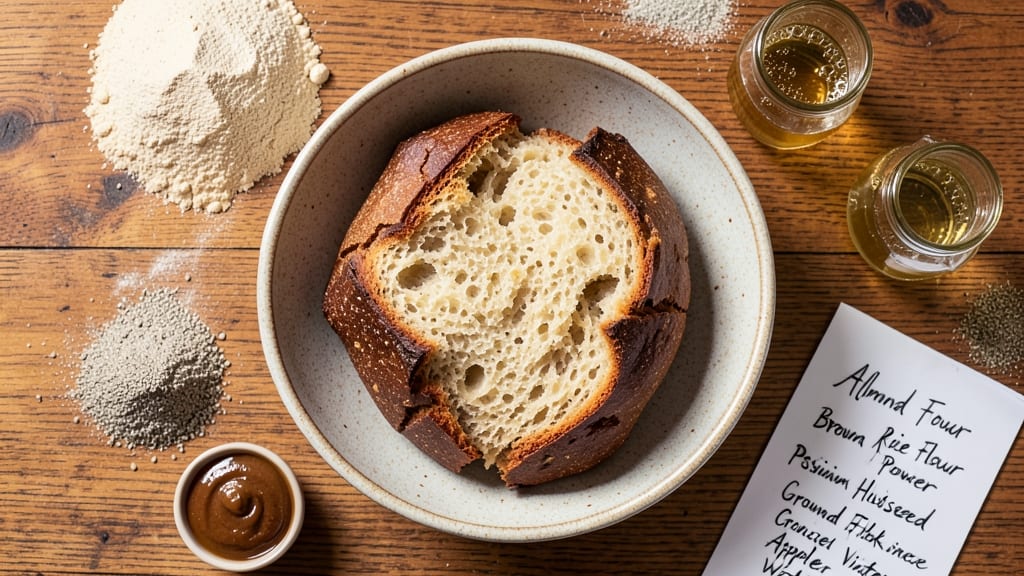
This almond flour bread recipe without eggs delivers a gluten-free loaf with nutty crunch and pillowy softness—perfect for those avoiding gluten, eggs, or refined grains. The secret lies in a flaxseed binder that mimics eggs while keeping the texture light and airy, not dense.
I developed this recipe after struggling to find a bread that met all dietary needs without sacrificing taste or texture.
What sets this apart is the hydration balance—almond flour absorbs moisture differently than wheat flour, so we use a mix of warm water and apple cider vinegar to activate the gluten-free flours properly. The result?
A loaf with a golden crust, tender crumb, and just enough chew to satisfy. No special equipment needed—just patience during the slow rise for maximum flavor development.
By the time it's baked, you'll have a versatile loaf that toasts beautifully, makes perfect sandwiches, and pairs well with soups or dips. The nutty flavor comes through in every slice, making it a standout for gluten-free diets without tasting like a substitute. Ready to bake?
Here's how to achieve that restaurant-quality texture at home.
The flaxseed egg substitute is the game-changer here—it binds the dough while adding subtle earthiness that complements the almond flour. We also incorporate psyllium husk powder, which acts as a natural thickener and helps create that airy crumb without eggs.
The dough will be slightly sticky, but don't panic—this is normal and ensures a moist final product. For best results, let the dough rest for 30 minutes before shaping, which allows the flours to hydrate fully and prevents cracking during baking.
A light spray of water on the loaf before baking creates that golden, crispy crust while keeping the inside tender. The slow rise in a warm place (like a turned-off oven with a bowl of hot water) develops deeper flavor and improves texture.
This bread is naturally gluten-free, egg-free, and can be made nut-free with sunflower seed flour if needed. Serve warm with butter, as toast for breakfast, or as the base for open-faced sandwiches. The possibilities are endless, and the process is simpler than you'd think. Let's get baking!
Ingredients for almond flour bread recipe without eggs
Eight ingredients transform into a loaf that rivals traditional bread—nutty, tender, and completely egg-free.
| Ingredient | Amount | Notes |
|---|---|---|
| Almond Flour 🌰 | 3 ½ cups | Finely ground, unsweetened |
| Brown Rice Flour 🌾 | ½ cup | For better texture |
| Psyllium Husk Powder 🌿 | 2 tbsp | Acts as natural thickener |
| Ground Flaxseed 🌾 | ½ cup | For flaxseed binder |
| Warm Water 💧 | 1 ½ cups | 110°F for proper activation |
| Apple Cider Vinegar 🍎 | 2 tbsp | Activates gluten-free flours |
| Maple Syrup 🍯 | ¼ cup | Natural sweetener |
| Coconut Oil 🥥 | ½ cup | Melted for moisture |
| Salt 🧂 | 1 ½ tsp | Diamond Crystal preferred |
| Baking Powder 🍞 | 1 ½ tsp | Aluminum-free |
| Vanilla Extract 🌸 | 1 tsp | Pure vanilla preferred |
The almond flour is the star here, so Bob's Red Mill or Anthony's Goods are my go-tos—both brands have finely ground flour without grit. If you're sensitive to nuts, sunflower seed flour works beautifully as a 1:1 swap, though the flavor will be more neutral. Psyllium husk powder might be hiding in the supplement aisle, but Bob's Red Mill sells it in the baking section too. The flaxseed needs to be ground fresh—pre-ground loses its binding power quickly, so grab whole flaxseeds and pulse them in a coffee grinder for 10 seconds. For the coconut oil, Trader Joe's has the best-priced organic version, and it melts perfectly for this recipe.
No maple syrup? Agave nectar or date syrup works just as well—stick to the same amount. Running low on psyllium husk? Xanthan gum at half the amount is a decent backup, though the texture won't be quite as tender. The baking powder must be aluminum-free—check the label, as regular baking powder can make the bread taste metallic. For a richer flavor, add 1 tsp cinnamon or cardamom to the dry ingredients. And if your kitchen thermometer says your water is too hot, just let it cool for a minute—lukewarm is perfect for activating the flours without cooking them.
This dough is sticky, but that's exactly what we want—it ensures a moist loaf. Grease your hands when handling it, and don't overwork the dough or it'll get tough. The loaf keeps beautifully for 4-5 days wrapped in a clean kitchen towel, or you can freeze it for up to 3 months. To reheat, wrap the cooled loaf in foil and warm it in a 350°F oven for 10 minutes. I always slice it with a serrated knife—it's that tender. For extra crunch, brush warm slices with melted coconut oil before serving.
Why You'll Love This Recipe
- No-Fuss Mix-In: I swear by the psyllium husk powder—just a splash of warm water and it binds like magic. No eggs, no fuss, no waiting for dough to rise. Honestly, it’s the kind of recipe that lets me make bread while scrolling through my phone.
- Nutty Rich Crunch: The almond flour gives it that buttery, toasty depth you’d expect from a loaf, but with none of the heaviness. Between us, I’ve had people ask if it’s brioche—until they see the ingredient list and laugh.
- Leftover Hero: This bread stays fresh for days, even without refrigeration. I freeze slices for toast or sandwiches, and it toasts up just as perfectly the second time around. (Yes, even on a Tuesday night.)
- Budget-Friendly Staple: Brown rice flour stretches the almond flour, and ground flaxseed adds fiber without breaking the bank. It’s the kind of loaf I can bake weekly without wincing at the grocery bill—plus, it’s packed with protein.
Step-by-step instructions for gluten-free almond flour bread
Here's how to create a light, fluffy loaf that rivals traditional bread—without gluten or eggs.
Create the Flaxseed Egg Substitute
In a small bowl, combine the 0.5 cup ground flaxseed with the 1.5 cups warm water (about 110°F). Stir vigorously for 2 minutes until completely dissolved—you should see a thick, gel-like consistency. This flaxseed mixture acts as our egg substitute, binding the bread together without any animal products.
Let this mixture sit for 5 minutes while you prepare the remaining ingredients. The longer it sits, the more gel-like it becomes, which improves texture. If you notice any dry spots after mixing, whisk in 1-2 teaspoons of additional warm water to achieve a smooth, homogeneous gel.
Mix the Dry Ingredients Thoroughly
In a large mixing bowl, whisk together the 3.5 cups almond flour, 0.5 cup brown rice flour, 2 tbsp psyllium husk powder, 1.5 tsp salt, 1.5 tsp baking powder, and 1 tsp vanilla extract. The psyllium husk powder is crucial here—it acts as a natural thickener and helps create that signature pillowy texture. Sift the dry ingredients if possible to avoid clumps, especially with the almond flour.
After mixing, you should have a fine, slightly gritty powder. If you notice any large almond flour chunks, break them up with your fingers or a fork. This step ensures even distribution of all ingredients, which is vital for a consistent rise and texture throughout the loaf.
Combine Wet and Dry Ingredients
To the dry mixture, add the melted 0.5 cup coconut oil, 0.25 cup maple syrup, 2 tbsp apple cider vinegar, and the flaxseed gel you prepared earlier. Using a sturdy spatula, gently fold everything together until just combined—you should see a thick, shaggy batter with no dry spots remaining. Overmixing can develop gluten-like properties in the almond flour, so be careful not to overwork the dough.
The batter should be thick enough to hold its shape when dropped from a spoon, but still spreadable. If it's too stiff, add 1-2 teaspoons of warm water to loosen it. The apple cider vinegar will react with the baking powder, creating lift in the bread. This is where the magic happens—don't skip the folding step, as it ensures even distribution of all ingredients.
Prepare and Bake the Loaf
Preheat your oven to 350°F and line a 9x5-inch loaf pan with parchment paper, leaving an overhang on the sides for easy removal. Grease the parchment paper lightly with coconut oil or nonstick spray. Pour the batter into the prepared pan and smooth the top with a spatula. Tap the pan gently on the counter a few times to remove any air bubbles that may have formed.
Bake for 50-55 minutes, or until the top is golden brown and a toothpick inserted into the center comes out clean. The bread is done when it springs back slightly when pressed gently in the center. If the top browns too quickly, tent the pan with aluminum foil after 30 minutes to prevent over-browning while allowing the center to cook through.
Cool and Serve for Best Results
Remove the bread from the oven and let it cool in the pan for 10 minutes, then transfer it to a wire rack to cool completely. This cooling period is critical—rushing it can result in a gummy texture. The bread will firm up as it cools, developing that perfect balance of nutty crunch and pillowy softness.
Slice the loaf while still slightly warm for the best texture, but allow it to cool completely before storing. This bread keeps well at room temperature for 3-4 days or can be frozen for up to 3 months. The nutty flavor from the almond flour shines through, making it perfect for toast, sandwiches, or simply enjoyed with butter and jam.
Pro Tips For Making Almond Flour Bread Recipe Without Eggs
- Mix the Psyllium First: The psyllium husk powder is your bread’s glue—don’t just toss it in dry. Whisk it into the warm water alone first, then let it sit for 5 minutes until it turns into a thick, jelly-like paste. This step actually changes how the dough behaves; skipping it means your bread might crumble or taste gummy.
- Weigh Your Almond Flour: Scooping almond flour straight from the bag packs it down, and you’ll end up with a dense, heavy loaf. Use a kitchen scale for precision—aim for 1 cup = ~100g—and spoon it into your measuring cup instead of scooping. Trust me, your bread’s texture will thank you.
- Don’t Overmix the Dough: Once you combine everything, stop mixing the second the dough comes together. Overworking it turns the almond flour into a paste, and your bread will taste like almond butter instead of having a light, airy crumb. Two turns of a spoon is all you need.
- Preheat Pan and Oven: This isn’t just about baking faster—it’s about getting that golden crust. Heat your loaf pan in the oven for 10 minutes while preheating to 350°F (175°C), then pour in the dough straight from the bowl. The residual heat helps the psyllium set up properly, so you’re not left with a sad, flat brick.
Storing and reheating this recipe
Room Temperature Storage
Your almond flour bread stays fresh for 4-5 days when stored at room temperature. Wrap it tightly in a clean kitchen towel or place it in an airtight container with a slice of apple or lemon to prevent drying. I avoid plastic bags—they trap moisture and make the crust soggy.
For extra protection, store it in a cool, dark place like a bread box or pantry. The nutty flavor actually deepens slightly over time, making it even more delicious the next day. 🌰
Refrigerator Revival
If you notice the bread drying out, revive it by wrapping it in a damp towel and microwaving for 10-15 seconds. For a crispier texture, toast slices in a 350°F oven for 3-5 minutes with a light brush of melted coconut oil.
I recommend reheating individual slices rather than the whole loaf—this prevents the center from becoming gummy. The refrigerator extends shelf life to 7 days, though I find the texture starts to decline after 5 days.
Freezer Magic
Freezing is the best way to preserve this bread for up to 3 months. Let it cool completely, then wrap tightly in plastic wrap followed by aluminum foil to prevent freezer burn. Label with the date—trust me, you'll forget!
To thaw, leave it at room temperature for 2-3 hours or reheat directly from frozen in a 300°F oven for 15-20 minutes wrapped in foil. The texture remains tender when reheated properly, making it perfect for quick breakfasts. ❄️
Toast Perfection
For the best toast, slice the bread while still slightly warm and toast in a preheated 400°F oven for 5-7 minutes or until golden brown. A toaster oven works too—just watch closely to avoid burning.
I love brushing warm toast with melted coconut oil and sprinkling with cinnamon or flaky sea salt. The almond flavor really shines when toasted, making it taste like a gourmet treat. Pro tip: Let it cool for 1 minute after toasting to prevent burning your tongue!
Sandwich Secret
This bread makes incredible sandwiches when lightly toasted and buttered. For extra moisture, brush slices with olive oil or avocado oil before assembling. The nutty flavor pairs perfectly with deli meats, hummus, or avocado. I recommend making sandwiches the day you bake the bread—the freshest slices hold up best.
For a gluten-free picnic, wrap halves in beeswax wrap with a slice of cheese or pâté for a portable, delicious meal. 🥪
Nutrition facts
Frequently asked questions
Why does this almond flour bread need psyllium husk powder?
Psyllium husk powder acts as a natural thickener and binder that mimics gluten's structure. It creates that signature pillowy texture while absorbing excess moisture from the almond flour, preventing a crumbly result. Without it, the bread would be much denser and less tender. Think of it as the secret ingredient that makes this gluten-free loaf rise properly!
Can I substitute sunflower seed flour for almond flour?
Yes! Sunflower seed flour works perfectly for nut-free versions. Use a 1:1 ratio and expect a slightly milder, more neutral flavor. The texture will be slightly denser but still delicious. For best results, add 1 extra tablespoon of psyllium husk powder per cup of sunflower flour to compensate for its different binding properties.
What if my dough is too sticky to handle?
Sticky dough is normal with almond flour, but you can work with it! Wet your hands with water and use a light dusting of almond flour on the counter. The dough should be pliable but not wet—if it's too sticky, add 1 teaspoon of psyllium husk powder to help bind it. Never add more liquid, as this will make it gummy when baked.
Why did my bread turn out dense instead of light? Dense bread usually means one of three things: overmixing the batter, insufficient psyllium husk, or not letting it cool properly.
How can I make this bread sweeter?
Add 1-2 tablespoons of honey or maple syrup to the wet ingredients, or sprinkle 1-2 teaspoons of cinnamon into the dry mix. For a richer flavor, try 1 tablespoon of tahini (sesame paste) mixed into the wet ingredients. These additions enhance sweetness while keeping the bread's natural nutty profile intact.