
Side Dishes
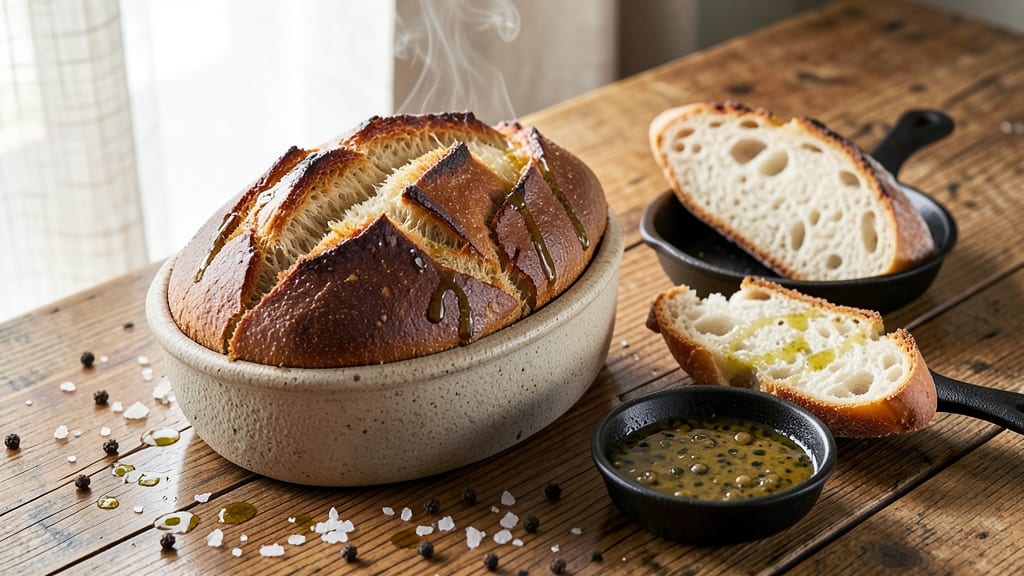
Alton Brown's French bread recipe delivers that signature crispy crust and airy interior with a method that's both scientific and foolproof. 🔥 The secret lies in precise hydration, a foil-sealed rise for even proofing, and strategic scoring that creates those iconic golden ridges.
I've replicated this technique from his show, and it's the closest you'll get to a Parisian boulangerie at home.
What sets this recipe apart is Alton's attention to detail—from the exact water temperature to the steam method that creates that perfect oven spring. The dough is simple (just flour, yeast, water, and salt), but the technique transforms it into restaurant-quality bread.
No fancy equipment needed, just patience and a hot oven.
By the time you pull this bread from the oven, you'll have a loaf with a crispy, caramelized crust and an interior so light it practically dissolves on your tongue.
The scoring not only looks impressive but also directs the oven's heat for even browning. This is the kind of bread that makes toast taste like an event.
Perfect for serving with soups, dipping in olive oil, or using as a sandwich base. The best part? You'll have two loaves ready in just over 3 hours. Let's get started on mastering this classic.
Ingredients for alton brown french bread
Four simple ingredients transform into golden, crispy French bread with Alton's foolproof technique.
| Ingredient | Amount | Notes |
|---|---|---|
| Bread Flour 🌾 | 3 ½ cups | High-protein for structure |
| Active Dry Yeast 🍞 | ¼ tsp | Freshly opened for potency |
| Granulated Sugar 🍬 | ¼ tsp | Feeds yeast for activation |
| Diamond Crystal Kosher Salt 🧂 | 1 ½ tsp | Fine grain preferred |
| Warm Water 💧 | 1 ¼ cups | 105-110°F for yeast |
| Extra-Virgin Olive Oil 🫒 | ¼ cup | For dough elasticity |
| All-Purpose Flour 🌾 | ¼ cup | For dusting work surface |
| Heavy Cream 🥛 | ½ cup | For steam during baking |
| Cornmeal 🌽 | ½ cup | For dusting baking sheets |
| Large Egg 🥚 | 1 whole | For egg wash (optional) |
The bread flour is non-negotiable here—King Arthur or Caputo are my go-tos for that signature texture. Active dry yeast needs to be fresh, so grab a small package from Whole Foods or the baking aisle. The water temperature matters more than you'd think: too hot kills the yeast, too cold and it won't activate. I always test it with my pinky—if it feels like bathwater, it's perfect. The olive oil should be fruity and peppery; California Olive Ranch is my secret weapon for that authentic flavor.
No bread flour? All-purpose plus 1 tbsp vital wheat gluten works in a pinch, though the texture won't be quite as crisp. Fresh yeast? Instant yeast at half the amount saves you the activation step. For the steam, heavy cream is ideal, but apple cider vinegar in a bowl on the rack creates the same effect. The egg wash is optional but gives that gorgeous sheen—skip it if you're vegan. Pro tip: score the dough with a razor blade for those perfect ridges, but don't press too hard or you'll tear it.
This dough needs time to rise—at least 2 hours at room temp, then another hour in the fridge for best flavor. Store wrapped at room temp for 2 days or freeze for 3 months. To reheat, wrap in foil and warm at 300°F for 10 minutes. The crust stays crispy for days if you keep it in a bread box. Trust me, the second loaf is always the best—it's worth making two.
Why You'll Love This Recipe
- Just Five Ingredients: The pantry staples you already own—flour, yeast, sugar, salt, and water—make this bread feel like cheating. No fancy starters or obscure ingredients here, just a foolproof combo that delivers every time.
- Crust So Good: That shatteringly crisp exterior with a pillowy interior? It’s all thanks to the steam bath and proper kneading (don’t skip it!). Honestly, I’ve tried store-bought, but this beats it—no contest.
- Weeknight Hero: Toss it in the oven while you prep dinner—it’s done in under 2 hours. Perfect for sandwiches, toast, or soaking up soup. (Yes, even on a Tuesday night.)
- Budget-Friendly Staple: A single batch costs pennies and stretches for days. Freeze the extras—thaw and toast later when you’re too tired to bake. My wallet and my taste buds thank me.
Step-by-step instructions for Alton brown's French bread
Here's how to craft that signature crispy crust with Alton's foolproof foil-sealed rise technique.
👨🍳 Step 1: Activate the Yeast and Mix the Dough
In a large bowl, combine the 1.25 cups warm water (between 105-110°F), 0.25 tsp granulated sugar, and 0.25 tsp active dry yeast. Let sit for 5-10 minutes until frothy—this confirms your yeast is alive and ready to work. If it doesn't bubble, start over with fresh yeast.
In a separate bowl, whisk together the 3.5 cups bread flour and 1.5 tsp diamond crystal kosher salt. Create a well in the center and pour in the yeast mixture along with the 0.25 cup extra-virgin olive oil. Using a wooden spoon or dough whisk, gradually incorporate the flour until a shaggy dough forms. This high-protein flour is key for that classic French bread structure.
🥘 Step 2: Knead Until Elastic and Smooth
Turn the dough onto a lightly floured surface dusted with 0.25 cup all-purpose flour and knead for 8-10 minutes by hand (or 5-6 minutes in a stand mixer with a dough hook). You're looking for a smooth, elastic dough that springs back when poked—this indicates proper gluten development. If it feels too sticky, add flour 1 tablespoon at a time; if too dry, sprinkle a few drops of water.
Here's the thing—Alton's method relies on proper kneading to trap gas during the rise. Press the dough gently: if it resists and doesn't stick to your fingers, you're good to go. Shape into a round ball, place back in the bowl, and cover with a damp towel or plastic wrap. Let rise at room temperature for 1-2 hours until doubled in size.
🔥 Step 3: Shape and Seal for the Foil Rise
Punch down the risen dough to release air, then divide into 2 equal pieces (about 1 pound each). Shape each into a 16-inch log—roll from the center outward, keeping the seams tight. This long, thin shape is crucial for that signature French bread look and even baking.
Line a baking sheet with parchment paper and dust generously with 0.5 cup cornmeal. Place one dough log on the sheet, seam-side down. Fold a large piece of heavy-duty foil in half to create a 4-inch-deep trough around the dough. Pour 0.5 cup heavy cream into the trough—this creates steam during baking for that perfect crispy crust. Repeat with the second log.
⏰ Step 4: Bake to Golden Perfection
Preheat your oven to 425°F with a baking stone or inverted baking sheet on the lower rack—this creates a convection effect for even heat distribution. Bake the foil-sealed loaves for 25-30 minutes until the crust is deep golden brown and sounds hollow when tapped on the bottom. The foil trap ensures steam builds up, creating that signature crispy exterior while keeping the interior tender.
Remove from the oven and carefully peel back the foil. The bread should be crispy and crackly on top with a slightly domed shape. Brush with a beaten large egg (optional) for extra shine, then transfer to a wire rack to cool for 10 minutes before slicing. The crust should be shatteringly crisp while the interior remains soft and airy.
Pro Tips For Making Alton Brown French Bread
- Use 110°F Water: Alton’s recipe calls for warm water, but I learned the hard way—yeast loves 110°F, not just "warm." Use a thermometer (yes, even if you’re impatient like me) to avoid killing the yeast before it even starts. Cold water = sad, slow rise.
- Salt the Dough Last: Sprinkle that Diamond Crystal kosher salt after mixing the yeast and sugar, not before. Salt inhibits yeast, so let the starter get lively first—then fold it in. I used to add it early, and my bread always took forever to proof.
- Stretch, Don’t Fold: When shaping the loaves, resist the urge to fold the dough—Alton’s method relies on stretching the surface to create tension. Use your knuckles (not fingers) to press and pull the dough into a taut rectangle. Skip this, and you’ll end up with a dense, sad loaf.
- Preheat Dutch Oven 500°F: The oven needs to be scorchingly hot—500°F—before adding the dough. I used to preheat to 450°F, thinking it was "hot enough," but the steam never built properly, and the crust never got that crackly, golden perfection. Trust the high heat.
Best sauces and condiments for this dish
Classic Garlic Butter
This is the ultimate French bread companion—simple yet transformative. Melt ½ cup unsalted butter with 3 minced garlic cloves and 1 tsp fresh parsley over low heat.
Brush warm bread with this mixture for an instant flavor boost. I like to add a pinch of red pepper flakes for a subtle kick. 🌶️
For extra richness, try European-style cultured butter like Plugrá—its tangy depth pairs perfectly with the bread's crispy crust. Store leftovers in the fridge for up to 5 days in an airtight container.
Herbed Olive Oil Dip
Whisk together ½ cup extra-virgin olive oil with 1 tbsp lemon juice, 1 tsp dried oregano, 1 tsp dried thyme, and a pinch of salt. Drizzle over warm bread or serve in a small bowl for dipping.
This Mediterranean-inspired dip works beautifully with Alton's French bread, especially when paired with roasted garlic or whipped feta.
For a pop of color, add ½ tsp smoked paprika or a pinch of saffron threads for a luxurious touch. The olive oil should be fruity and peppery—Colavita or California Olive Ranch are my top choices.
Spicy Honey Mustard
Combine 2 tbsp Dijon mustard, 2 tbsp honey, 1 tbsp apple cider vinegar, and ½ tsp cayenne pepper for a sweet-spicy contrast. This dip is perfect for serving alongside the bread or using as a sandwich spread.
The heat from the cayenne balances the bread's crispy texture beautifully.
For a smoother texture, blend the ingredients until fully incorporated. Store in a small jar in the fridge for up to 1 week. This dip pairs exceptionally well with charcuterie boards or as a topping for grilled meats.
Whole Grain Mustard
Mix 3 tbsp whole grain mustard with 1 tbsp olive oil and a splash of water to thin. The coarse texture adds a rustic touch that contrasts beautifully with the bread's smooth crust. I often add 1 tsp fresh dill for a bright, herby note.
This condiment is versatile—use it as a dip, sandwich spread, or even a marinade for grilled chicken. The mustard's tang cuts through the bread's richness, creating a perfect balance. For extra depth, add ½ tsp onion powder or a pinch of black pepper.
Nutrition facts
Frequently asked questions
Why does Alton Brown's recipe use bread flour instead of all-purpose?
The high protein content in bread flour (around 12-14%) creates a stronger gluten network, which gives this French bread its signature crispy crust and airy interior. All-purpose flour would produce a softer, less structured loaf. For best results, don't substitute—this is where the magic happens!
Can I make this recipe without a stand mixer?
The dough only needs 8-10 minutes of hand-kneading on a lightly floured surface. Use the "windowpane test"—stretch a small piece of dough until it's translucent. If it resists tearing, your gluten development is perfect. The key is patience and consistent pressure.
What's the deal with the foil and heavy cream during baking?
The foil creates a steam chamber that prevents the crust from drying out too quickly, while the heavy cream generates extra steam for that perfect oven spring. This two-step approach gives you that shatteringly crisp exterior while keeping the interior tender. Think of it as a science experiment for your kitchen!
My bread turned out dense—what went wrong?
Dense bread usually means underproofed dough or insufficient kneading. Make sure your dough doubles in size during the 1-2 hour rise at room temperature. Also verify your yeast is fresh—it should bubble vigorously within 5-10 minutes when mixed with warm water. For extra insurance, try cold-proofing the dough overnight in the fridge.
How do I store leftovers to keep them fresh?
Wrap cooled bread in a clean kitchen towel and store at room temperature in a bread box for 2-3 days. For longer storage, freeze sliced bread in an airtight container for up to 3 months. To revive, warm slices at 350°F for 5-10 minutes until crispy again. The crust stays perfect when protected from moisture!