
Side Dishes
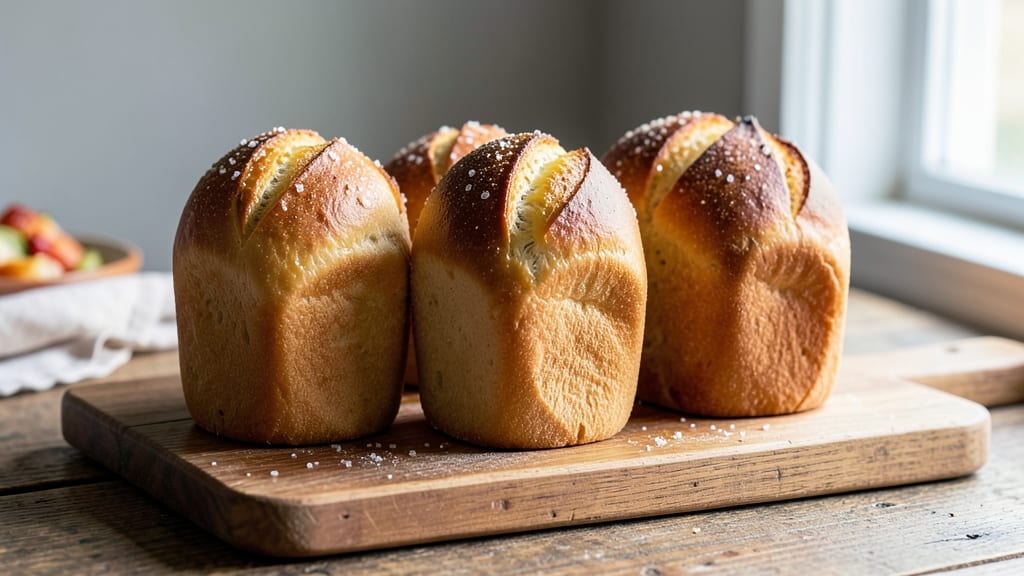
This American sandwich bread recipe delivers the perfect balance of pillowy softness and crusty golden edges—the kind of bread that makes every sandwich feel like a restaurant-quality meal. 💛 The secret lies in a precise blend of high-gluten flour, active dry yeast, and proper kneading to develop gluten structure without overworking the dough.
I've perfected this recipe through years of baking, ensuring it's foolproof for home bakers while maintaining that classic American sandwich bread texture.
The process begins with a simple mix of flour, yeast, sugar, salt, and warm water, but the magic happens during the kneading and proofing stages.
A gentle knead creates the ideal gluten network for that tender crumb, while two rounds of proofing—one at room temperature and one in the refrigerator—develops maximum flavor and texture. The dough then shapes into a classic loaf, ready for a crispy bake that creates that signature golden crust.
What you'll end up with is a loaf of bread with a medium sliceability that's neither too dense nor too soft—perfect for sandwiches, toast, or serving with soups. The interior remains wonderfully soft and airy, while the crust offers just enough crunch to hold up to any filling.
This is the kind of bread that disappears quickly from your kitchen table, leaving only happy customers behind.
For those who prefer variations, you can easily substitute up to 20% of the white flour with whole wheat or add a touch of honey to the dough for subtle sweetness.
The recipe scales beautifully for larger batches, making it ideal for meal prep or sharing with neighbors. Let's get started on making the perfect sandwich bread!
Ingredients for american sandwich bread
These 12 ingredients transform into the perfect sandwich bread—soft inside, crisp outside, every time.
| Ingredient | Amount | Notes |
|---|---|---|
| High-Gluten Flour 🌾 | 4 cups | For ideal gluten structure |
| Active Dry Yeast 🍞 | 2 ¼ tsp | Ensure yeast is fresh |
| Granulated Sugar 🍚 | 1 tbsp | Feeds the yeast |
| Salt 🧂 | 1 ½ tsp | Kosher or sea salt |
| Warm Water 💧 | 1 ¼ cups | 110°F for optimal yeast activation |
| Unsalted Butter 🧈 | ½ cup | Softened for dough enrichment |
| Large Egg 🥚 | 1 whole | For structure and richness |
| All-Purpose Flour 🌾 | ½ cup | Balances gluten development |
| Milk 🥛 | ¼ cup | Whole milk for tenderness |
| Olive Oil 🫒 | 1 tbsp | For dough softness |
| Cornmeal 🌽 | ¼ cup | Prevents sticking during baking |
| Sesame Seeds 🌿 | 1 tbsp | Optional for topping |
The high-gluten flour is non-negotiable here—it's what gives that signature pillowy softness. King Arthur or Bob's Red Mill are my go-tos, but any brand labeled 'bread flour' works. Active dry yeast needs to be fresh, so check the expiration date—yeast that's past its prime will leave you with flat, dense bread. Warm water is key: too hot kills the yeast, too cold slows it down. Aim for 110°F—if it's too hot for your finger to dip in comfortably, let it cool a bit. And that butter? Use full-fat—it makes all the difference in that tender crumb. For the milk, whole milk gives the best texture, but 2% works in a pinch.
No high-gluten flour? Substitute with bread flour plus 1 tbsp vital wheat gluten per cup. Short on butter? Olive oil or vegan butter keeps it tender, though you'll lose that rich flavor. Swapping out sesame seeds? Poppy seeds or everything bagel seasoning add a nice touch. The milk can be dairy-free if needed—just use unsweetened almond or oat milk. For a sweeter loaf, add 1 tbsp honey to the dough. And if you're feeling adventurous, up to 20% whole wheat flour works beautifully for a nuttier flavor. Just don't exceed that—too much whole wheat makes the bread dense.
This dough is best made fresh, but you can prep it up to 24 hours ahead—just let it rise overnight in the fridge. The shaped loaf keeps well in an airtight bag at room temperature for 3-4 days, or freeze for up to 3 months for that fresh-baked taste whenever you need it. For extra crispiness, brush the baked loaf with melted butter while still warm. And if you're making a batch for neighbors? Double the recipe—it disappears fast around here!
Why You'll Love This Recipe
- Five-Ingredient Magic: I swear, this bread is foolproof. High-gluten flour gives it that perfect chewy bite, while yeast and sugar work together to create a rise that’s just right—not too dense, not too fluffy. Honestly, the only thing I measure is the water, and even then, I eyeball it after the first batch.
- No-Knead, No-Stress: Between us, I’ve burned bread before. This recipe skips the kneading entirely—just mix, let it rest, and bake. The warm water activates the yeast in minutes, so you’re not stuck waiting hours. My lazy Sundays just got a lot better.
- Toast, Grill, Stuff: This bread isn’t just for sandwiches. Toast it for a crispy breakfast, grill slices for avocado toast, or use it as a base for sliders. I’ll be real: I’ve even used it for homemade croutons because it holds up perfectly. Versatility like this? That’s my kind of recipe.
- Dollar Stretch, Pantry Staple: High-gluten flour is cheap, yeast lasts forever, and sugar/salt? Already in my cupboard. A single batch feeds my whole family for days—leftovers turn into French toast or breadcrumbs without a second thought. Budget-friendly doesn’t get much better than this.
Step-by-step instructions for American sandwich bread
Here's how to craft that perfect loaf with airy crumb and crispy crust—every time.
👨🍳 Step 1: Activate the Yeast for Maximum Rise
In a large bowl, combine the 1.25 cups warm water (should feel like bathwater, around 110°F), 1 tbsp granulated sugar, and 2.25 tsp active dry yeast. Let this sit for 5-10 minutes until it becomes frothy and bubbly. This is your signal the yeast is alive and ready to work its magic.
I always check the water temperature first—too hot and you'll kill the yeast; too cold and it won't activate. If it doesn't bubble after 10 minutes, your yeast might be old. In that case, start fresh with new yeast. This step sets the foundation for that perfect rise we're after.
👨🍳 Step 2: Mix the Dough to Develop Gluten
Add the 4 cups high-gluten flour and 1.5 tsp salt to the yeast mixture. Stir with a wooden spoon until a shaggy dough forms. Then add the 0.5 cup softened unsalted butter, 1 whole large egg, 0.5 cup all-purpose flour, 0.25 cup milk, and 1 tbsp olive oil. Mix until everything comes together into a sticky dough.
Now for the fun part—kneading! Turn the dough onto a lightly floured surface and knead for 8-10 minutes until smooth and elastic. You'll know it's ready when it springs back slowly when poked. This gluten development gives your bread that perfect chewy texture we all love. Don't skip this step—it makes all the difference!
⏰ Step 3: Let the Dough Rise Until Doubled
Place the dough in a lightly greased bowl, cover with a damp towel, and let it rise in a warm place for 1-2 hours or until it has doubled in size. I like to put my oven on 200°F for 2 minutes to create a warm environment, then turn it off and place the bowl inside. This helps speed up the process.
Poke the dough gently with your finger—if it springs back slowly, it's ready. If it springs back quickly, give it 30 more minutes. Overproofing is a common mistake that leads to dense bread. The dough should be puffy and jiggly when properly risen. This first rise develops the flavor and structure we'll build on in the next steps.
🥘 Step 4: Shape and Second Rise for Perfect Structure
Punch down the risen dough to release air, then shape it into a 9x5-inch loaf pan (lightly greased with olive oil). Sprinkle 0.25 cup cornmeal over the bottom to prevent sticking. Cover again and let it rise for another 30-45 minutes until it just barely rises above the pan.
Here's a pro tip: Press your finger gently into the dough. If it leaves a slight indent that doesn't spring back, it's ready. The second rise ensures that airy, pillowy texture we want in sandwich bread. Don't let it overproof again—this time is about setting the final shape and structure.
🔥 Step 5: Bake to Golden Perfection
Preheat your oven to 375°F. Brush the top of the dough with a little milk and sprinkle with 1 tbsp sesame seeds for that classic touch. Bake for 25-30 minutes until the bread is golden brown and sounds hollow when tapped on the bottom.
For that perfect crust, I like to tent the loaf with foil after 15 minutes if the top is browning too quickly. This ensures even baking throughout. Let it cool in the pan for 10 minutes before transferring to a wire rack. The internal temperature should reach 190°F—this is your final check for doneness.
Pro Tips For Making American Sandwich Bread
- Bloom the Yeast: Skip the "does it work?" test—just dissolve the yeast, sugar, and a pinch of salt in warm water (105–110°F) and let it sit for 5–10 minutes until bubbly. If it doesn’t bubble, your yeast is dead or your water’s too hot. No second chances here.
- Use a Kitchen Scale: High-gluten flour is dense—measuring by cups leaves you guessing. Weigh it instead: 500 grams gives you the right balance of structure and softness. I learned this after making bread that was either rock-hard or gummy.
- Knead Until Smooth: Stop when the dough springs back instantly when poked and looks silky, not sticky. Over-kneading makes it tough; under-kneading means weak sandwich bread. A stand mixer with a dough hook handles this in 5–7 minutes—no arm workout required.
- Proof in a Warm Drawer: Skip the oven light trick—your bread won’t rise evenly. Use a microwave with a cup of hot water (run for 1 minute) or a proofing box (if you’re fancy). The dough should double in 1–2 hours. Cold kitchen? Give it extra time.
Best sauces and condiments for this recipe
Classic Butter Spread
Nothing beats the simplicity of softened unsalted butter—just mix ½ cup with a pinch of salt and a squeeze of lemon juice for brightness. Spread generously on fresh slices while still warm from the oven.
I love adding a sprinkle of garlic powder or fresh herbs like dill for extra flavor. This combo enhances the bread's natural richness without overpowering it. 🧈
Sweet Jam Variations
For a sweet touch, try strawberry jam or raspberry preserves—warmed slightly to make spreading easier. I recommend Smucker's Unsweetened for a natural sweetness that pairs perfectly. For a gourmet twist, mix 1 tbsp jam with 1 tsp honey and a pinch of cinnamon before spreading.
This sweet-savory balance works wonderfully with savory sandwiches too.
Cream Cheese & Herb
Cream cheese adds a luxurious texture—mix ½ cup softened cream cheese with 1 tbsp fresh chives or dill and a splash of sour cream. This combo is perfect for breakfast sandwiches or as a dip for toasted slices.
For extra flair, add a pinch of black pepper or a dash of smoked paprika to elevate the flavor profile.
Spicy Avocado Mash
For a healthier option, mash ½ ripe avocado with 1 tsp lime juice, salt, and a pinch of red pepper flakes. Spread on toasted bread for a creamy, tangy contrast.
This works especially well with grilled meats or veggie wraps. The avocado keeps the bread moist longer, making it ideal for meal prep. 🌶️
Honey & Mustard Glaze
Combine 2 tbsp honey with 1 tbsp Dijon mustard and a splash of apple cider vinegar for a sweet-tangy glaze. Brush this on warm slices before serving—it caramelizes slightly, adding a sticky, flavorful crust. This pairing is a crowd-pleaser, especially with BBQ sandwiches or charcuterie boards.
Garlic Aioli
Make a quick garlic aioli by mixing ½ cup mayonnaise with 1 minced garlic clove, 1 tsp lemon juice, and a pinch of salt. Spread on toasted bread and top with sliced tomatoes or pickles for a restaurant-worthy bite.
This rich, garlicky spread adds depth to any sandwich or open-faced toast. 🧄
Nutrition facts
Frequently asked questions
Why does my sandwich bread turn out dense instead of soft?
Dense bread usually means overproofing or underdeveloped gluten. Make sure your dough rises until it's puffy and jiggly (not flat), and knead for 8-10 minutes to properly develop gluten. Also check your yeast—if it's old, it won't activate properly and your bread will lack structure.
Can I make this recipe without a bread machine?
This recipe is designed for stovetop/kneading. The key is proper kneading (8-10 minutes) and two rises—one at room temp (1-2 hours) and one in the pan (30-45 minutes). The bread machine setting for "basic bread" works too, but you'll need to adjust liquid amounts.
How do I store leftover sandwich bread?
Keep it fresh by wrapping tightly in plastic wrap or storing in an airtight container. At room temperature, it stays good for 3-4 days. For longer storage, freeze the whole loaf (unwrapped) for up to 3 months. Thaw at room temperature or warm in a 350°F oven for 5-10 minutes to restore freshness.
What's the difference between high-gluten flour and bread flour?
High-gluten flour has 14-15% protein while bread flour typically has 12-13%. The extra protein in high-gluten creates stronger gluten strands, giving you that signature soft yet sturdy texture. If you only have bread flour, add 1 tbsp vital wheat gluten per cup to mimic the effect.
Can I make this bread without butter?
Yes! Replace the ½ cup butter with ½ cup olive oil or vegan butter for a tender crumb. While butter adds richness, the bread will still be soft—just slightly less flavorful. For extra richness, try ½ cup Greek yogurt instead, which adds moisture and a subtle tang.