
Side Dishes
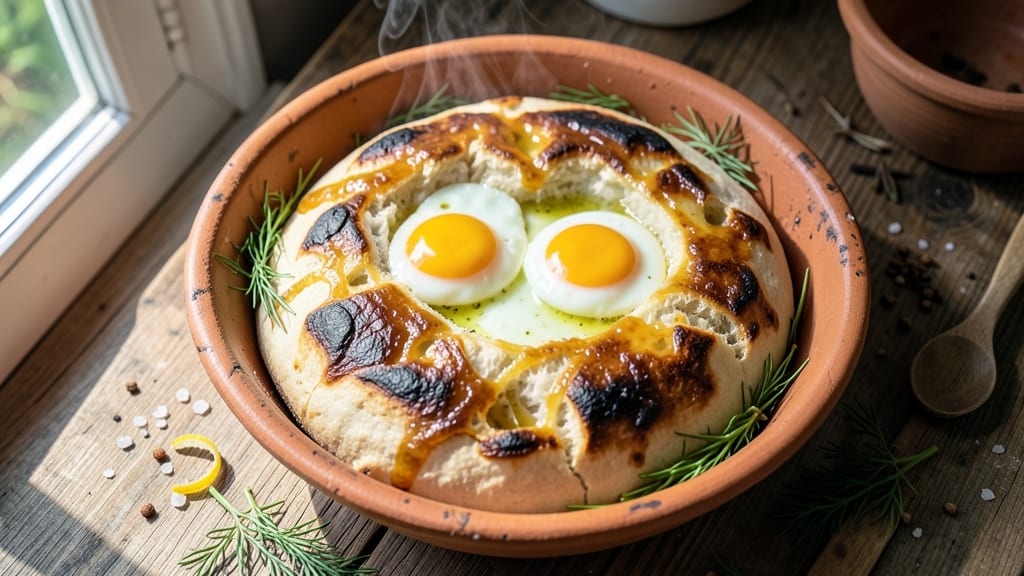
This Armenian bread matnakash recipe delivers a rustic, golden crust loaded with melted cheese and fragrant za'atar—perfect for elevating any meal.
The secret lies in a simple yet sturdy dough that encases a filling of eggs, cheese, and herbs, baked until the edges are crisp and the cheese pulls into gooey strands.
I first tasted matnakash in an Armenian village kitchen, where it was served warm with pickles and fresh herbs—a dish that feels like a hug in bread form.
The dough itself is straightforward: flour, water, yeast, and a pinch of salt, shaped into a thick, round crust that gets brushed with olive oil and sprinkled with za'atar before baking. The filling—eggs, melted cheese, and fresh herbs—creates a creamy, savory center that contrasts beautifully with the crispy, spiced crust.
This recipe balances tradition with simplicity, ensuring you can recreate that village-kitchen magic at home without specialized tools.
What makes matnakash truly special is its versatility—serve it as a side with salads, pickles, or grilled meats, or enjoy it as a standalone dish with a dollop of yogurt or sour cream.
The aroma of za'atar and melted cheese fills the kitchen as it bakes, making it impossible to resist. Once you try this, you’ll understand why it’s a staple in Armenian homes and why it’s quickly becoming a favorite in modern kitchens.
Ready in just 45 minutes, this recipe is perfect for weeknight dinners or special gatherings. The dough rises while you prepare the filling, and the baking time is hands-off, leaving you with a dish that’s as impressive as it is delicious. Let’s get started on this flavor-packed tradition.
Ingredients for armenian bread matnakash
Simple dough meets bold flavors—za'atar, melted cheese, and fresh herbs for a crispy, cheesy hug.
| Ingredient | Amount | Notes |
|---|---|---|
| All-Purpose Flour 🌾 | 3 ½ cups | Unbleached, for best texture |
| Active Dry Yeast 🍞 | ¼ tsp | Or 1 packet instant yeast |
| Granulated Sugar 🍚 | ¼ tsp | Activates yeast quickly |
| Warm Water 💧 | 1 ¼ cups | 110°F, not hot to the touch |
| Unsalted Butter 🧈 | ½ cup | Melted, full-fat preferred |
| Large Eggs 🥚 | 2 whole | Room temperature |
| Shredded Mozzarella Cheese 🧀 | 1 ½ cups | Low-moisture, freshly grated |
| Extra-Virgin Olive Oil 🫒 | ¼ cup | Plus extra for brushing |
| Za'atar Spice Blend 🌿 | 2 tbsp | Store-bought or homemade |
| Fresh Dill 🌱 | ¼ cup | Chopped, stems removed |
| Fresh Parsley 🌿 | ¼ cup | Chopped, for freshness |
| Salt 🧂 | 1 ½ tsp | Kosher or sea salt |
| Black Pepper 🌶️ | ½ tsp | Freshly ground |
Za'atar is the soul of this recipe. Look for it in Middle Eastern markets or the international aisle at Whole Foods—it should have a mix of sesame seeds, sumac, and dried herbs. If you can't find it, mix 1 tbsp sesame seeds, 1 tbsp sumac, 1 tsp dried oregano, and 1 tsp dried thyme for a close version. The mozzarella? Low-moisture is key—it melts better and doesn't make the crust soggy. Shred it yourself for the best texture. Fresh dill and parsley are ideal, but dried works in a pinch at half the amount. The yeast needs to be fresh—if your packet's past its expiration, toss it.
No za'atar? Smoked paprika plus a pinch of sumac can mimic some of that earthy depth. Short on mozzarella? Parmesan or fontina add richness, though they'll change the texture slightly. The dough should be soft but not sticky—add a splash of water if needed, but don't overdo it. For the crust, olive oil is non-negotiable—it keeps the bread crispy and adds that authentic flavor. If you're feeling fancy, brush the top with a little garlic-infused oil before baking. The eggs should be at room temperature so they blend smoothly into the dough. Trust me, this makes a difference.
This dough keeps for 2 days in the fridge, wrapped tightly in plastic. The filling can be prepped ahead and stored for 1 day—just assemble and bake fresh. For extra crispiness, bake at 425°F until the edges are deep golden. Serve warm with a sprinkle of extra za'atar and a side of pickles or yogurt. Leftovers? 3 days in the fridge, but honestly, it won't last that long. Freeze the whole thing for up to 3 months—just bake straight from frozen at 375°F for an extra 10 minutes.
Why You'll Love This Recipe
- No Yeast Headache: I swear by this dough—just flour, yeast, sugar, and warm water. No fancy starters or waiting hours; my kitchen smells like a bakery in 45 minutes, not 4. (Yes, even on a Tuesday night when I’m exhausted.)
- Buttery Golden Magic: That crispy, caramelized crust with a pillowy center? Pure satisfaction. The butter melts into the dough just enough to make every bite feel like a little hug—no fancy ingredients, just honest, rich flavor.
- Leftovers Win: Freeze half the batch and reheat in seconds. Perfect for lazy mornings or when guests pop by unannounced. My kids grab them straight from the fridge—no shame in it.
- Budget Bakery Hack: Five ingredients, zero waste. This bread costs pennies to make but feels like a splurge. I’ve fed a crowd of six with one batch, and no one ever asks for store-bought again.
Step-by-step instructions for Armenian bread matnakash
Let's create this cheesy, za'atar-spiced Armenian bread with a golden crust and gooey center.
Activate the Yeast and Mix the Dough
In a small bowl, combine the 1.25 cups warm water (about 110°F—test with your finger, it should feel warm but not hot) with the 0.25 tsp granulated sugar and 0.25 tsp active dry yeast. Let it sit for 5-10 minutes until frothy. If it doesn't bubble, the yeast is inactive—start over with fresh yeast.
In a large mixing bowl, whisk together the 3.5 cups all-purpose flour, 1.5 tsp salt, and 0.5 tsp black pepper. Make a well in the center and pour in the yeast mixture along with the 0.25 cup extra-virgin olive oil and 0.5 cup melted unsalted butter. Mix with a wooden spoon until a shaggy dough forms.
Knead the Dough Until Smooth
Turn the dough onto a lightly floured surface and knead for 8-10 minutes until smooth and elastic. You'll know it's ready when it springs back when poked and doesn't stick to your fingers. If it feels too sticky, add 1 tablespoon flour at a time until it comes together nicely.
Place the dough in a lightly oiled bowl, cover with a damp towel, and let it rise in a warm place for 1-2 hours or until doubled in size. I like to turn on my oven light to create a warm environment—this helps the dough rise faster without overproofing.
Shape and Fill the Matnakash
Punch down the risen dough and divide it into 4 equal portions. Roll each portion into a 12-inch round on a floured surface, about ¼-inch thick. In the center of each round, create a well by pressing your fingers gently into the dough to form a shallow pocket.
Fill each pocket with ¼ of the shredded mozzarella cheese (about 0.375 cup per round) and a pinch of the 2 tbsp za'atar spice blend. Gather the dough edges around the filling and pinch them together to seal, forming a half-moon shape. Place the filled dough on a parchment-lined baking sheet, seam-side up.
Proof and Bake to Golden Perfection
Cover the shaped matnakash with a damp towel and let them proof for 30-45 minutes until puffy. Preheat your oven to 375°F while they proof. Brush the tops generously with a little extra olive oil and sprinkle with the remaining za'atar, 0.25 cup chopped fresh dill, and 0.25 cup chopped fresh parsley.
Bake for 25-30 minutes until the crust is deep golden brown and the cheese is fully melted and bubbly. The edges should be crispy, and the center should still be slightly soft—this is where the magic happens. If the tops brown too quickly, tent loosely with foil.
Rest and Serve Warm
Remove the matnakash from the oven and let them rest for 5-10 minutes before serving. This resting time allows the cheese to set slightly, making it easier to slice. Cut into wedges and serve warm, with extra za'atar on the side if you like.
Each bite should deliver that perfect balance of crispy crust, melted cheese, and aromatic za'atar. The bread is best enjoyed fresh while the cheese is still gooey and the herbs are fragrant. Store any leftovers wrapped in foil at room temperature for up to 2 days—though I doubt they'll last that long!
Pro Tips For Making Armenian Bread Matnakash
- Proof at Room Temp: Skip the fridge—let your yeast mixture sit in a warm (not hot) spot for 1-2 hours until it doubles. I tried cold-proofing once and ended up with dense, flat bread. Warmth works faster and gives you that light, airy texture matnakash deserves.
- Butter in Layers: Fold cold butter into the dough in thin sheets, not chunks. After burning through three batches where the butter melted too fast, I learned this: small, even layers keep the bread flaky without greasing the pan.
- Skip the Overmixing: Mix just until the dough comes together—overworking it makes matnakash tough. I used to knead like I was punishing the flour, but the best versions I’ve made were barely handled. Let the gluten relax.
- Preheat Pan Properly: Cast iron or heavy skillet needs to be screaming hot before adding dough. I learned this the hard way—cool pans steam the bread instead of crisping it. Wait until you see smoke, then cook low and slow.
Best sauces and condiments for these flavors
Za'atar Oil Drizzle
Elevate your matnakash with a simple yet transformative za'atar oil drizzle. Mix 2 tbsp extra-virgin olive oil with 1 tbsp za'atar spice blend and a pinch of flaky sea salt.
Drizzle generously over the baked matnakash just before serving—this adds a fragrant, nutty depth that complements the melted cheese. For extra richness, warm the oil slightly before drizzling. 🌿
Garlic Yogurt Dip
A cool, creamy garlic yogurt dip balances the richness of matnakash perfectly. Whisk ½ cup plain Greek yogurt with 1 minced garlic clove, 1 tsp lemon juice, ½ tsp salt, and a sprinkle of black pepper.
Serve as a dip or drizzle over the bread. I love adding a pinch of sumac for a tangy kick that mirrors the za'atar flavors. ✨
Spicy Tomato Relish
Brighten the dish with a spicy tomato relish that cuts through the cheese. Finely chop 1 cup ripe tomatoes, ¼ red onion, and 2 tbsp fresh parsley. Mix with 1 tbsp red wine vinegar, ½ tsp smoked paprika, and ¼ tsp cayenne pepper.
Let it sit for 15 minutes before serving—this adds a refreshing, tangy contrast. 🌶️
Fresh Herb Butter
For a luxurious touch, make a fresh herb butter to serve alongside matnakash. Mix ¼ cup softened unsalted butter with 1 tbsp chopped fresh dill, 1 tbsp chopped parsley, and a pinch of salt.
Spread on warm slices or serve as a side dip. This herbaceous butter pairs beautifully with the za'atar and melted cheese. 💛
Pickled Vegetable Medley
Add a crunchy, tangy element with a quick-pickled vegetable medley. Thinly slice 1 cucumber, 1 carrot, and ½ red onion, then pack into a jar with 1 cup hot water, 1 tbsp apple cider vinegar, 1 tsp sugar, and ½ tsp salt.
Let it cool for 30 minutes before serving. The bright acidity cleanses the palate between bites. 🥒
Nutrition facts
Frequently asked questions
Can I make matnakash without za'atar?
If you don't have za'atar, substitute with 1 tbsp smoked paprika plus ½ tsp sumac for that earthy, nutty depth. For a simpler swap, use 1 tsp dried oregano and ½ tsp garlic powder—it won't be identical, but it'll still taste delicious. The key is balancing the savory notes with the melted cheese.
Why is my matnakash dough too sticky?
Sticky dough usually means too much moisture or not enough flour. If it's too wet, add 1 tablespoon flour at a time while kneading until it becomes smooth but still slightly tacky (not dry). Over-kneading can also make dough sticky—stop when it springs back when poked. For extra insurance, chill the dough for 15 minutes before shaping to firm it up.
How do I store leftover matnakash?
Keep leftovers wrapped in foil at room temperature for 2 days—the crust stays crispy this way. For longer storage, freeze the whole matnakash (unwrapped) on a tray for 1 hour, then transfer to a bag. Reheat frozen pieces at 350°F for 10-15 minutes until warm. The cheese won't be as gooey after freezing, but the flavor remains rich.
Can I make matnakash with other cheeses?
Yes! While mozzarella is traditional, try fontina for extra creaminess or gruyère for a nutty twist. Feta adds tanginess (mix with mozzarella), but it may make the crust softer. Avoid high-moisture cheeses like cottage cheese—they can make the dough soggy. Stick to 1.5 cups total of shredded cheese for the best texture.
Is matnakash gluten-free?
Traditional matnakash contains wheat flour, but you can adapt it! Use a 1:1 gluten-free flour blend (like Bob's Red Mill) and add ½ tsp xanthan gum to mimic elasticity. The dough may be slightly crumbly, so handle it gently when shaping. Expect a denser texture, but the cheese filling will still shine.