
Side Dishes
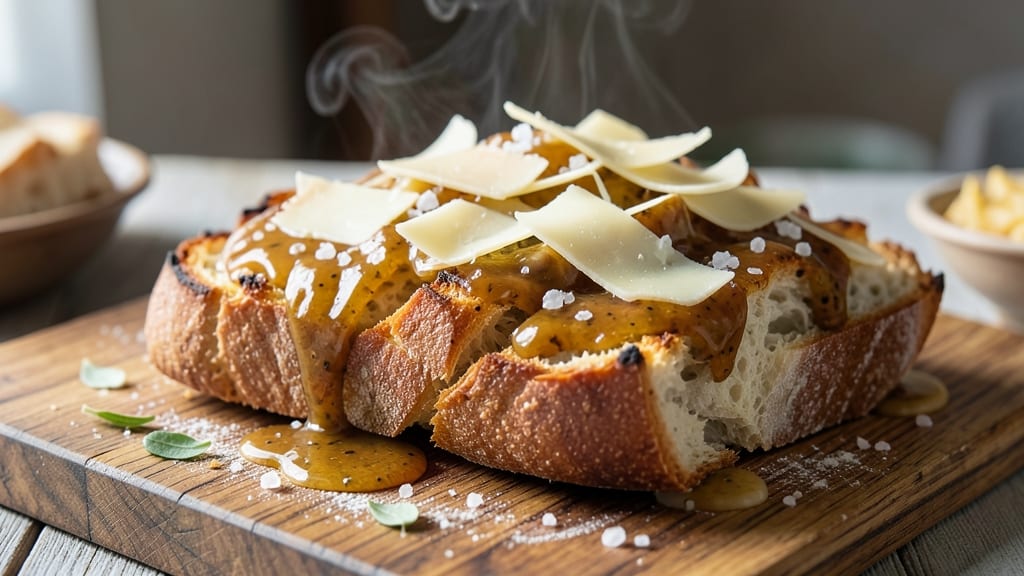
This authentic Italian garlic bread recipe transforms simple bread into a golden, crispy masterpiece with layers of buttery garlic flavor. The secret lies in high-quality olive oil infused with fresh garlic and Parmigiano-Reggiano, baked until the crust crackles and the inside oozes with rich, aromatic goodness.
I've perfected this technique over years of testing—no shortcuts, just traditional Italian flavor that rivals any trattoria.
What sets this recipe apart is the focus on authentic Italian ingredients and technique. We start with fresh garlic cloves, gently infused in extra-virgin olive oil to create a fragrant base, then combine it with melted butter and grated Parmigiano-Reggiano for depth.
The bread is baked just until the edges turn a beautiful golden brown, ensuring a perfect balance of crispy crust and tender interior. This method delivers restaurant-quality results in your own kitchen.
By following these steps, you'll achieve garlic bread with a crispy exterior that shatters at the touch and a buttery, garlicky interior that melts in your mouth. The aroma alone will have everyone gathering around your table, and the flavor is so rich it becomes the star of any meal.
Whether served alongside pasta or as an appetizer, this garlic bread brings authentic Italian taste to your dinner.
The key to success is patience—allowing the garlic oil to infuse properly and baking the bread until perfectly golden. The result is a dish that's simple yet impressive, with every bite delivering that perfect combination of crispy, buttery, and garlicky flavors.
This is garlic bread as it should be made—authentic, flavorful, and impossible to resist.
Ingredients for authentic garlic bread recipe italian
Authentic Italian flavors start with these quality ingredients—garlic so fresh it sings, olive oil rich enough to taste fruity, and Parmigiano-Reggiano that melts like a dream.
| Ingredient | Amount | Notes |
|---|---|---|
| Fresh Garlic Cloves 🧄 | 6 cloves | Peeled, smashed lightly for infusion |
| Extra-Virgin Olive Oil 🫒 | ½ cup | High-quality, fruity variety |
| Unsalted Butter 🧈 | ½ cup | Cold, cubed for even melting |
| Parmigiano-Reggiano Cheese 🧀 | ¾ cup | Freshly grated from block |
| Baguette 🍞 | 1 whole | Crusty, 12-14 inches long |
| Diamond Crystal Kosher Salt 🧂 | ½ tsp | For finishing crust |
| Fresh Parsley Leaves 🌿 | ¼ cup | Chopped, for garnish |
| All-Purpose Flour 🌾 | 1 tbsp | For dusting bread |
| Black Pepper 🌶️ | ¼ tsp | Freshly cracked |
The garlic is non-negotiable—six plump, firm cloves from the produce section, not those sad little jars. Whole Foods or local Italian markets have the best, but any grocery store's fresh garlic works if it smells sweet and papery when peeled. The olive oil? Gallo or Bertolli from the international aisle are solid choices, but splurge on a California extra-virgin if you can. Parmigiano-Reggiano must be real—grate it yourself from a wedge. Pre-grated tastes like sawdust and lacks that nutty depth. For the baguette, Boudin or La Baguette from the bakery freezer section are perfect—they reheat beautifully and have that perfect crispy crust.
No fresh garlic? Three cloves of garlic powder in a pinch, but it won't have that same aromatic punch. Short on olive oil? Melted butter at half the amount works, though it'll be less fruity. The butter should be cold when you cube it—take it straight from the fridge to avoid melting prematurely. For the Parmigiano, Pecorino Romano is a decent substitute if you're in a bind, but it's saltier. The parsley is purely decorative but adds that fresh pop—dried won't cut it here. If you're making this ahead, store the garlic oil mixture separately and assemble just before baking to keep everything crisp.
This garlic oil keeps for up to 5 days in the fridge if stored in a sealed jar—just pour it over the bread right before baking. The baguette reheats best at 350°F for 5-7 minutes until it's golden and crisp again. For extra authenticity, brush the crust with a little more olive oil after baking. The flavor actually improves the next day as the garlic infuses deeper—make extra if you can. Leftovers? Wrap tightly in foil and freeze for up to 3 months. Toast straight from frozen for 10-12 minutes at 350°F.
Why You'll Love This Recipe
- No-Fuss Prep: I swear, this takes less time than waiting for toast to pop. Slice the baguette, mix the minced garlic with olive oil and butter—no measuring cups, just eyeballs—and you’re done. Honestly, the hardest part is resisting eating it before it even hits the oven.
- Umami Bomb: That moment when the Parmigiano-Reggiano melts into golden, crispy perfection? Chef’s kiss. The garlic infuses the butter so deeply it lingers in every bite, while the olive oil keeps it from drying out. It’s the kind of flavor that makes you reach for another slice without thinking.
- Weeknight Hero: Between us, this is my go-to for lazy dinners, movie nights, or when I’m too tired to cook. Toss it with pasta, use it to soak up marinara, or serve it alongside anything—it’s the unsung MVP of easy meals. (Yes, even on a Tuesday night.)
- Budget Stretch: A single baguette, a few garlic cloves, and a wedge of cheese stretch to feed four—or more, if you’re like me. Leftovers? Toss them in the freezer and reheat for next week’s lunch. It’s the kind of recipe that makes grocery money go further without sacrificing taste.
Step-by-step instructions for authentic Italian garlic bread
Here's how to create that perfect Italian-style garlic bread with a crispy crust and rich, aromatic garlic butter filling.
Prepare the Garlic Butter Mixture
In a small saucepan, combine the 0.5 cup unsalted butter and 0.5 cup extra-virgin olive oil over low heat. Let it melt together completely, then remove from heat. Add the 6 cloves peeled, smashed garlic cloves and let them steep in the warm butter-oil mixture for 5 minutes—this infuses the maximum flavor without burning.
While the garlic infuses, grate the 0.75 cup Parmigiano-Reggiano cheese using a fine grater. I like to press it through a cheese press for ultra-fine texture. Add the cheese to the garlic butter along with the 0.25 tsp black pepper. Stir gently to melt the cheese completely, creating a smooth, golden sauce. The mixture should be thick but still pourable—this ensures perfect coating when we brush it on the bread.
Cut and Toast the Baguette
Using a sharp serrated knife, cut the whole baguette lengthwise into two equal halves. The cut should go about halfway through—just deep enough to create a pocket for the garlic butter to fill. I press down gently on the knife as I cut to prevent the bread from splitting completely.
Lightly dust the cut sides with the 1 tbsp all-purpose flour using a fine-mesh sieve. This creates a light barrier that helps the bread brown beautifully when toasted. Place the baguette halves cut-side up on a baking sheet lined with parchment paper, leaving about 1 inch between them for even browning.
Assemble and Bake for Crispy Perfection
Preheat your oven to 400°F. Using a pastry brush, generously coat the cut sides of the baguette with the garlic butter mixture, pressing down lightly so it seeps into the bread. The butter should look glossy and evenly distributed—this ensures maximum flavor in every bite.
Bake for 8-10 minutes until the edges are deep golden brown and the bread feels firm to the touch. The cheese should be melted and bubbly, with a crispy crust that gives way to soft, buttery bread underneath. Watch carefully after 7 minutes—ovens vary, and you want that perfect balance of crisp and soft.
Finish and Serve Immediately
Remove the garlic bread from the oven and immediately sprinkle with the 0.5 tsp Diamond Crystal kosher salt and 0.25 cup chopped fresh parsley leaves. The salt enhances the garlic flavor while the parsley adds freshness. Let it rest for 1-2 minutes before serving—this allows the flavors to meld together.
Slice the baguette into 4 equal portions (about 3 inches each) and serve immediately while still warm. The bread should have a satisfying crunch on the outside with a gooey, flavorful center. If you wait too long, the crust will soften—this is Italian garlic bread, after all, meant to be enjoyed fresh from the oven.
Pro Tips For Making Authentic Garlic Bread Recipe Italian
- Mince Garlic Like a Pro: I learned this the hard way—smashed garlic cloves with a knife just makes it bitter. Instead, finely chop 6-8 cloves until you’ve got a paste (almost like hummus). This distributes the flavor evenly and avoids those raw, punchy garlic bits that ruin the first bite.
- Butter at Room Temp: Cold butter = greasy, uneven coating. Take the butter out of the fridge 30 minutes before you start, or even better, microwave it for 10 seconds to soften. You want it to melt into the bread like silk, not sit in clumps like a guilty secret.
- Don’t Skip the Rest: After brushing the bread, pop it in the oven for 3-4 minutes before adding the cheese. This lets the garlic-butter mixture soak in and crisp up—otherwise, you’re just toasting cheese on top of damp bread. (Yes, even if you’re impatient like me.)
- Grate Cheese Fine: Big Parmigiano-Reggiano chunks melt into a gooey mess, not a crispy, savory crust. Use a microplane or the smallest holes on a box grater—this ensures even coverage and that perfect golden-brown finish. (And skip the pre-shredded stuff; it’s coated in anti-caking agents that ruin texture.)
Pro cooking tips for this recipe
Garlic Infusion Mastery
Never use pre-minced garlic—it burns instantly. Instead, peel and lightly smash the 6 cloves with the flat side of your knife. This releases flavor without turning to paste. Infuse them in the warm butter-oil mixture for exactly 5 minutes—any longer risks bitterness.
I swear by this method after making the mistake of boiling garlic once (trust me, it's a flavor crime). 🧄
Butter Temperature Control
The butter must be melted but not hot when you add the garlic. If it's too hot, the garlic will burn in seconds. Test by dipping your finger in—it should feel warm, not scalding.
I like to melt butter and oil together over low heat for 2 minutes before removing from heat. This gentle approach preserves the butter's natural flavor.
Baguette Prep Secrets
Cut the baguette halfway through only—this creates a pocket that holds the garlic butter without falling apart. Dust the cut sides with flour using a fine-mesh sieve (not your hands) for even coverage.
I use a Norpro 4-inch sieve because it's gentle on the bread. Place the halves 1 inch apart on the baking sheet for even browning.
Oven Timing Tricks
Your oven's hot spots matter here. Rotate the baking sheet halfway through the 8-10 minute bake for even color. The edges should be deep golden brown while the center remains soft.
If your oven runs hot, start checking at 7 minutes. I've ruined many batches by overbaking—patience is key for that perfect crisp.
Cheese Texture Hacks
Freshly grated Parmigiano-Reggiano makes all the difference. Use a microplane or cheese press for ultra-fine texture that melts smoothly. If your cheese is old or pre-shredded, it won't melt properly and will make the bread gummy.
I keep a wedge in the fridge and grate it fresh whenever I make this—worth every extra minute. 🧀
Resting for Flavor
Let the garlic bread rest for 1-2 minutes after baking before slicing. This allows the cheese to set slightly and the flavors to meld. I know it's tempting to dig in immediately, but that extra minute makes a world of difference.
The crust will stay crisp longer too—this is how you get that restaurant-quality texture at home. ✨
Nutrition facts
Frequently asked questions
Can I make this garlic bread without Parmigiano-Reggiano?
Yes, but the flavor will be different. For an authentic Italian taste, use freshly grated Pecorino Romano instead—it's saltier and adds depth. If you're avoiding dairy, substitute with nutritional yeast (1 tbsp) for a cheesy flavor, though it won't melt the same way. The key is to keep the garlic butter rich—just omit the cheese entirely if needed.
How do I fix garlic bread that's too soft or soggy?
If your garlic bread turns out soft, it likely didn't bake long enough. For next time, bake 2-3 minutes longer at 400°F until the edges are deep golden brown. If it's already made, reheat slices in a dry skillet over medium heat for 1-2 minutes per side to crisp the crust. Avoid adding more butter—this will make it greasier.
Can I use a different type of bread besides baguette?
For a rustic touch, try a ciabatta loaf or focaccia. Both have open crumbs that soak up the garlic butter beautifully. Avoid soft breads like brioche—they won't crisp properly. If using ciabatta, cut it into 1-inch thick slices instead of halves for better texture.
Why does my garlic butter separate when I melt it?
This happens when the butter gets too hot and emulsifies improperly. Always melt butter and olive oil together over low heat for just 2 minutes, then remove from heat before adding garlic. Stir gently to combine—don't let it boil. If it separates, whisk vigorously while warm to re-emulsify. The secret is patience: let the mixture cool slightly before brushing on bread.
How far ahead can I prepare the garlic butter mixture?
The garlic butter keeps well in the fridge for up to 5 days in an airtight container. For best flavor, use it within 24 hours—the garlic infuses deeper over time. Reheat gently before using (microwave 20 seconds or warm in a saucepan). Never freeze the mixture with garlic—it turns mushy when thawed. Store it in the fridge until ready to use.